Loading…
Loading video…

16,136 views
Ever wonder how your smartphone charger prevents electricity from flowing backward and damaging your device? The small signal diode model is the key to understanding this electronic protection, used in everything from Apple iPhone chargers to Tesla charging stations. Modeling of diode forward characteristics explained reveals how engineers predict diode behavior using exponential and constant-voltage-drop models, enabling precise circuit design for consumer electronics across America. Watch the full video on JoVE Coach to master this concept with expert-led visuals and step-by-step explanations.
The small signal diode model represents one of the most fundamental concepts in electronics engineering, forming the backbone of circuit analysis taught in AP Physics courses and undergraduate electrical engineering programs nationwide. When a diode operates in forward bias—meaning current flows easily from anode to cathode—engineers must accurately predict its behavior to design reliable circuits found in everything from LED displays in Times Square to power supplies in NASA's space missions.
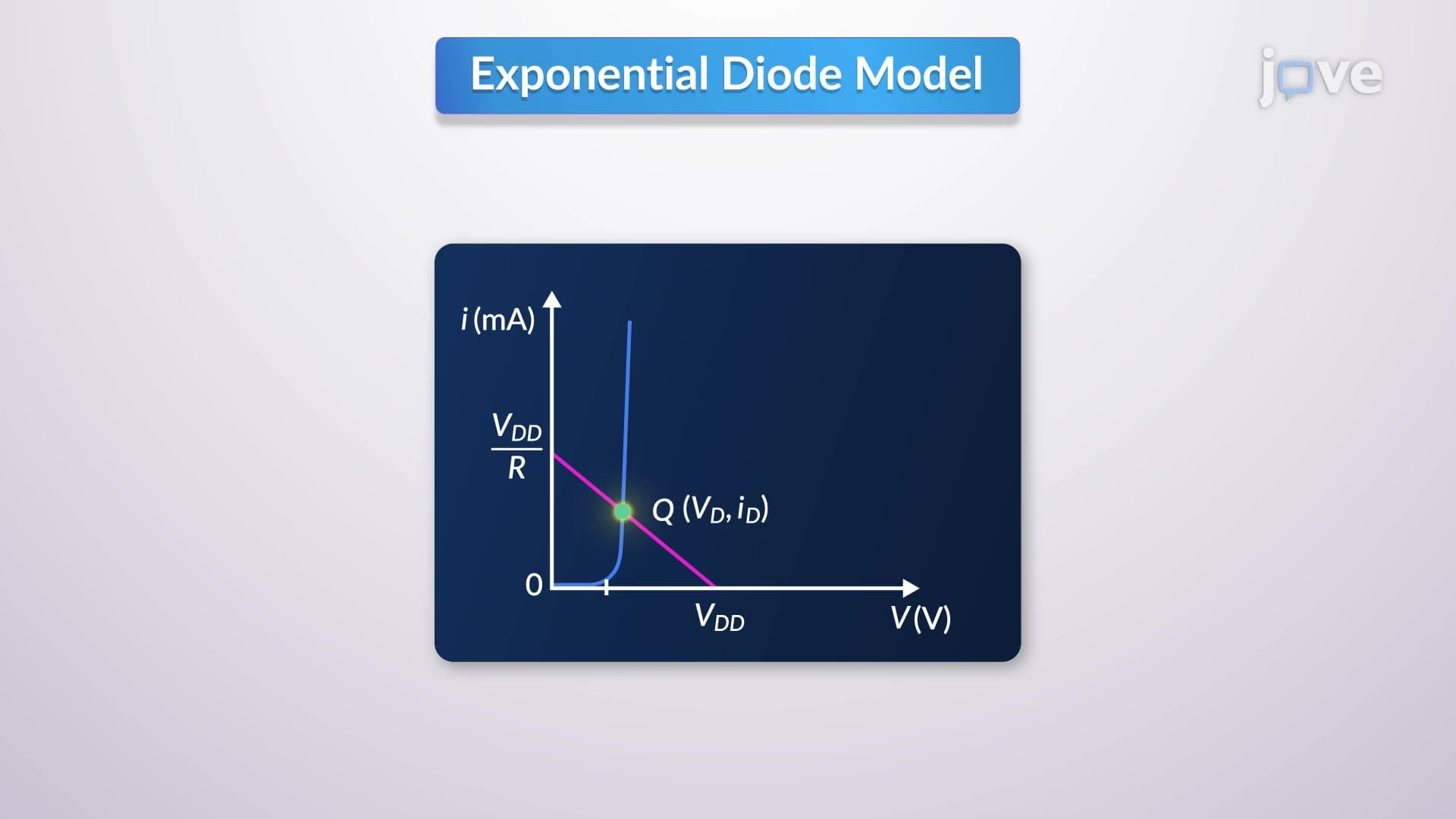
The exponential diode model provides the most accurate representation of diode behavior, particularly crucial when source voltages exceed 0.5 volts. This model recognizes that diode current increases exponentially with applied voltage, following the relationship I = Is(e^(V/nVt) - 1), where Is represents saturation current and Vt equals thermal voltage. Students preparing for the MCAT or AP Physics C exams frequently encounter this relationship, as it demonstrates how quantum mechanics governs macroscopic electronic behavior. In practical applications, companies like Intel use exponential modeling when designing microprocessor power management circuits where precise current predictions prevent chip damage.
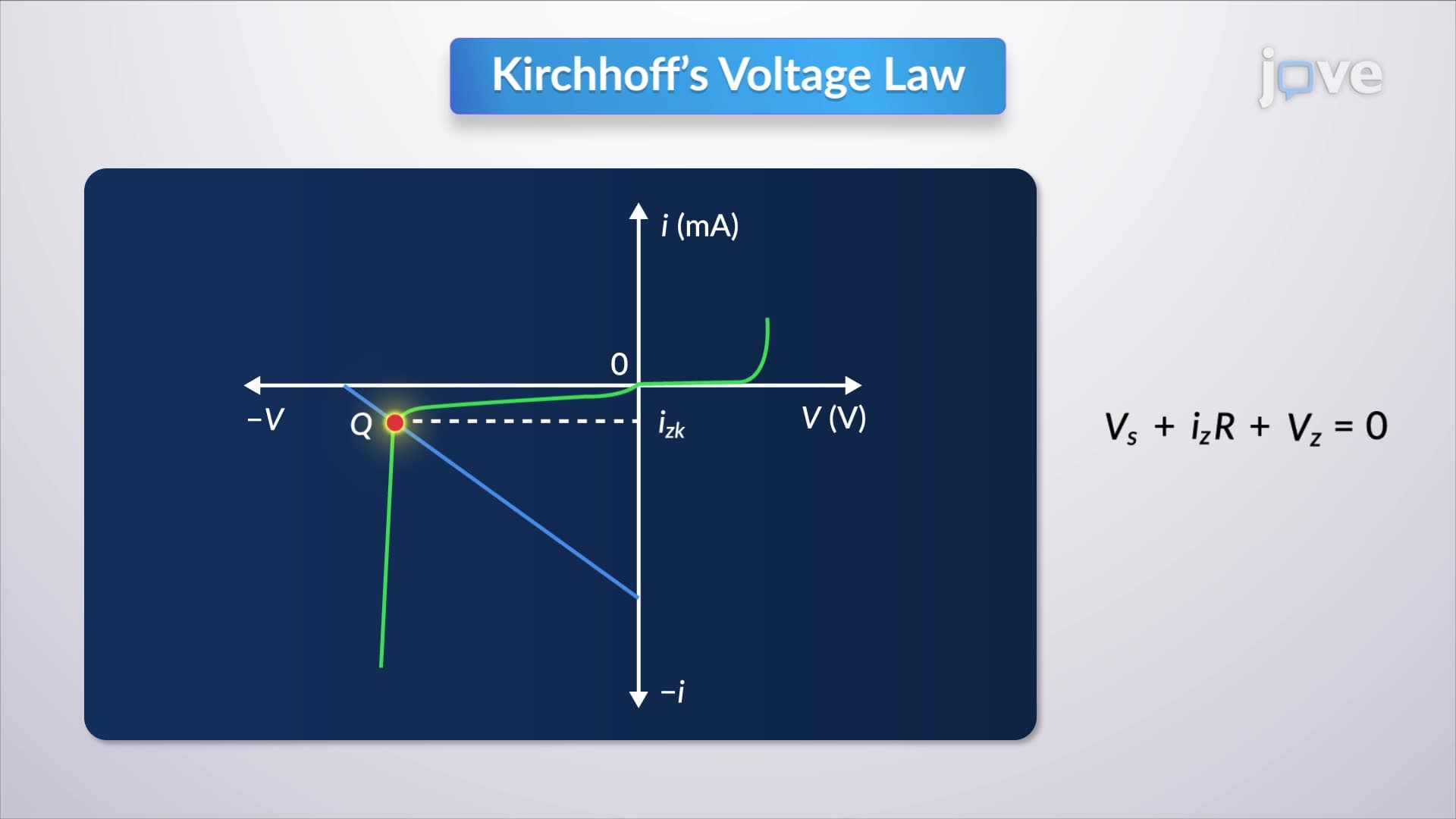
The intersection of the load line with the diode characteristic curve—point Q—reveals the actual operating conditions within any circuit. This graphical analysis technique, essential for college-level circuit analysis courses, transforms complex mathematical relationships into visual problem-solving tools. The load line equation, derived from Kirchhoff's voltage law, creates a straight line representing all possible combinations of diode voltage and current that satisfy the circuit constraints. Engineering students at institutions like MIT and Stanford regularly use this approach to solve complex power supply design problems.
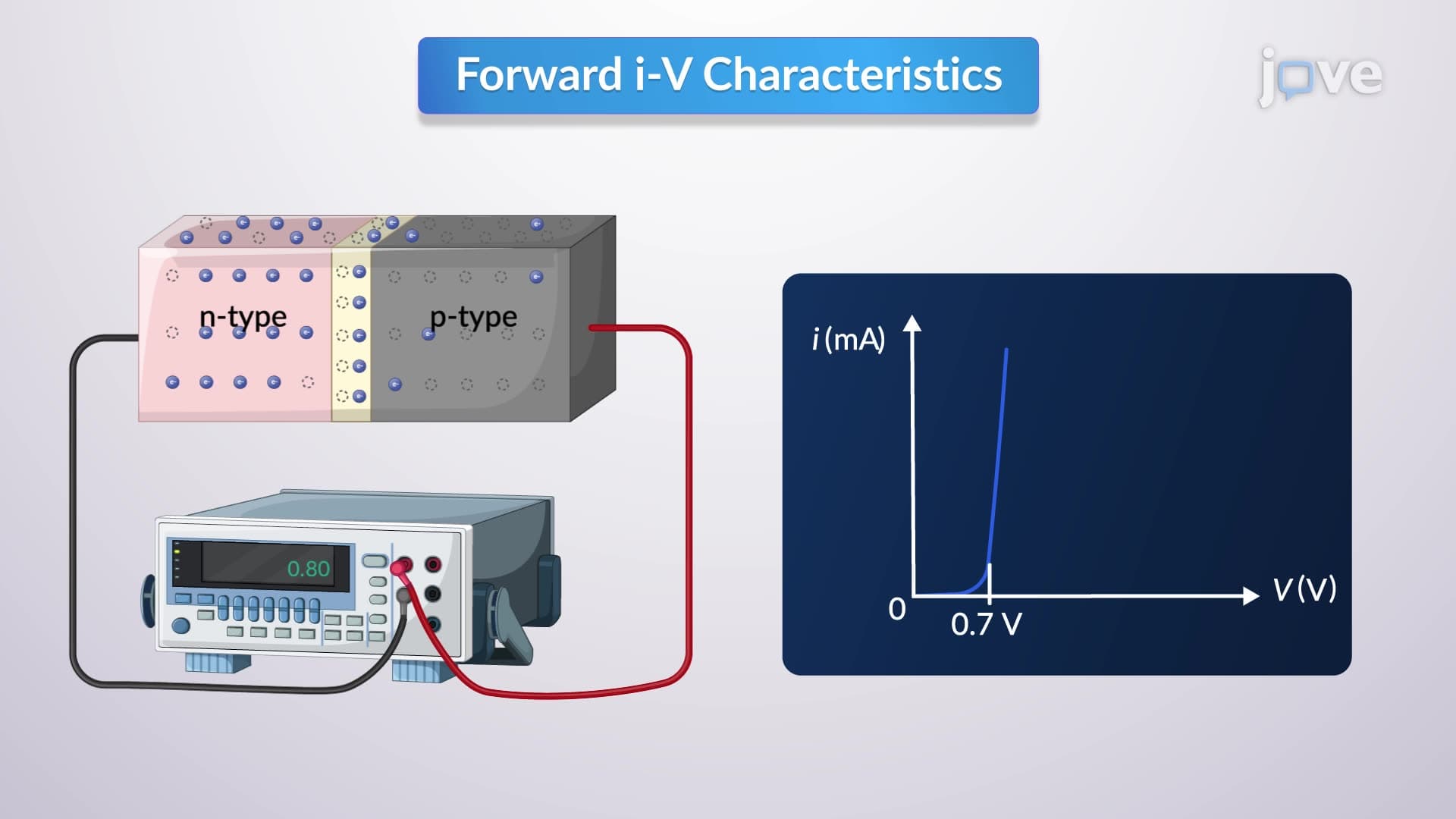
For many practical applications, the constant-voltage-drop model simplifies analysis by assuming a fixed 0.7V forward voltage drop across silicon diodes. This approximation proves invaluable in preliminary circuit design and appears frequently on standardized tests including the FE exam for engineering professionals. Companies like General Electric rely on this simplified approach during initial circuit sketches, knowing that more detailed modeling can follow during final design phases. The 0.7V assumption works effectively when dealing with typical operating currents in consumer electronics.
Frequently Asked Questions
Modeling of diode forward characteristics involves using mathematical equations and graphical methods to predict how diodes behave when current flows from anode to cathode. This small signal diode model definition encompasses both exponential and simplified constant-voltage approaches that engineers use to design reliable circuits. Understanding these models enables precise prediction of diode current and voltage in real circuits, from smartphone chargers to automotive electronics, ensuring devices operate safely and efficiently across varying conditions.
The small signal diode model frequently appears on AP Physics C electricity and magnetism exams, typically involving load line analysis and operating point calculations. College midterms in circuit analysis courses often test students' ability to choose between exponential and constant-voltage-drop models based on circuit conditions. MCAT preparation materials include diode behavior questions within physics sections, emphasizing practical applications in medical devices like heart monitors and surgical equipment used throughout American hospitals.
Use the exponential model when precise current calculations are essential, particularly in low-voltage circuits or when source voltages approach the diode's forward voltage threshold. The 0.7V constant-voltage-drop model works effectively for preliminary analysis and when diode currents significantly exceed saturation values. Engineering professionals at companies like Boeing choose exponential modeling for critical avionics systems but rely on simplified approaches during initial spacecraft power system sketches, demonstrating how context determines model selection.
Solar panel installations across states like California and Texas rely on precise diode modeling to optimize power conversion efficiency and prevent reverse current damage during nighttime conditions. Electric vehicle charging stations throughout American cities use sophisticated diode models to ensure safe, efficient power transfer to battery systems. Medical devices in hospitals nationwide, from MRI machines to patient monitoring equipment, depend on accurate diode behavior predictions to maintain reliable operation and patient safety.
Understanding what is small signal diode model in detail becomes manageable with solid algebra skills and basic physics knowledge of voltage and current relationships. High school students who have completed Algebra II can grasp load line concepts, while those with AP Physics background easily handle exponential relationships. The small signal diode model concept builds naturally on Ohm's law principles already familiar from introductory physics courses, making it accessible to motivated students regardless of prior electronics experience.
Focus on practicing load line construction and Q-point identification using graph paper, as visual skills prove crucial during timed examinations. Create comparison charts highlighting when to apply exponential versus constant-voltage-drop models, emphasizing threshold voltages and current ranges. Work through multiple circuit examples involving different source voltages and resistor values, building pattern recognition for quick model selection during AP or college exam situations where time constraints limit detailed calculations.
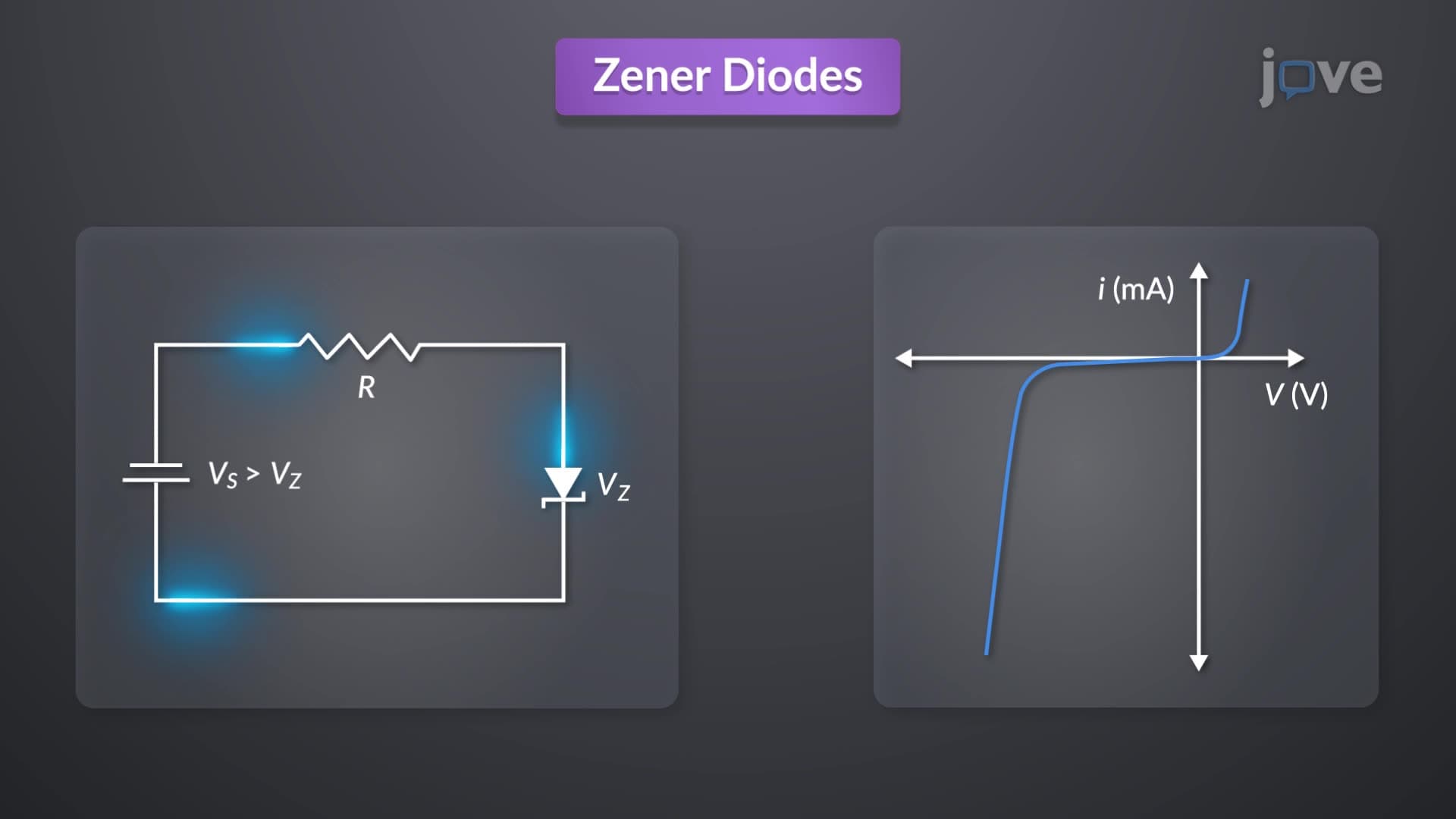
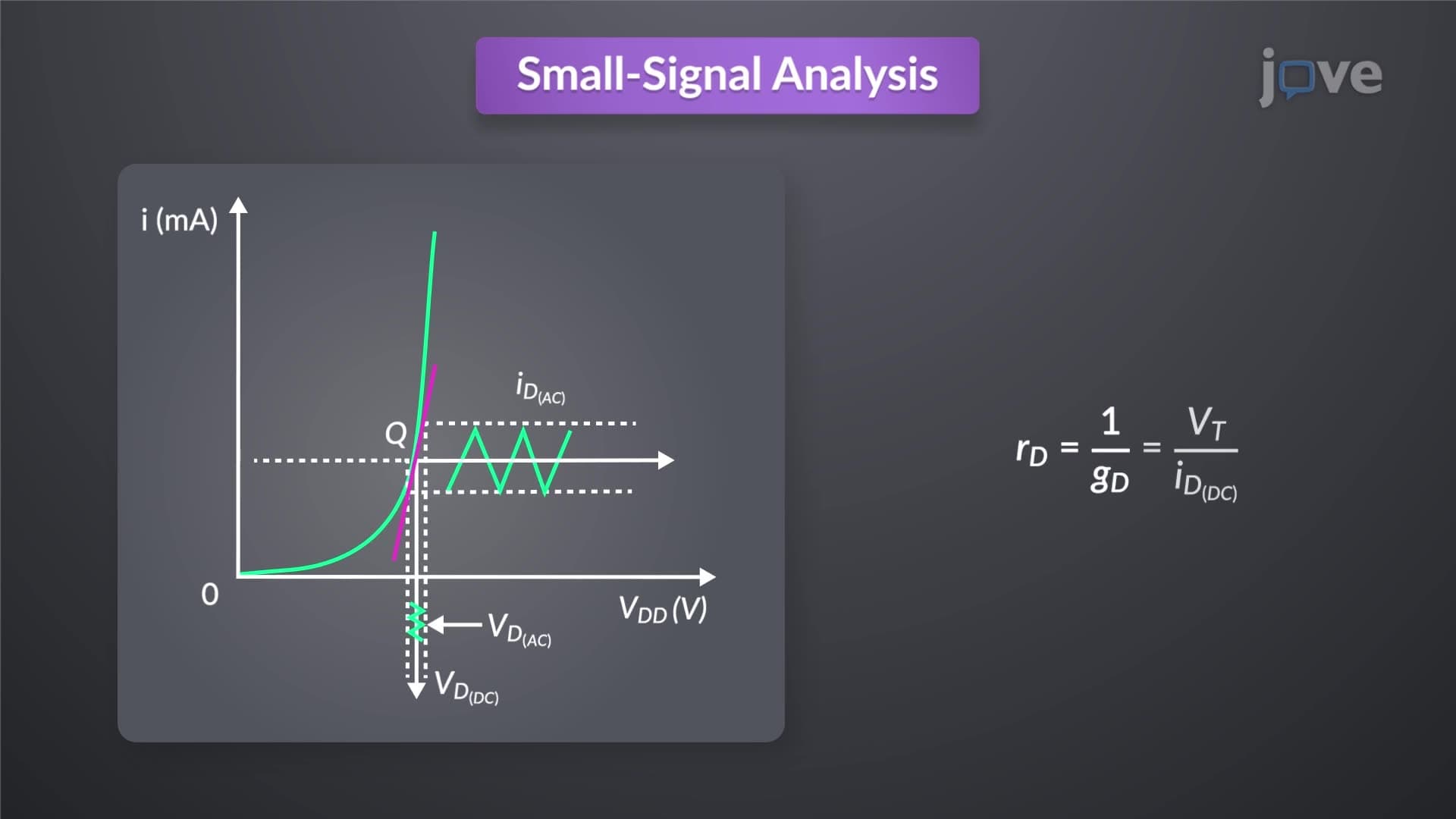
Students ready for deeper exploration should investigate AC small-signal analysis, where diode incremental resistance becomes crucial for amplifier design in audio equipment and radio communications. Temperature effects on diode characteristics provide insight into reliability engineering practices used by automotive manufacturers like Ford and General Motors. Advanced topics include Zener diode modeling for voltage regulation and photodiode analysis relevant to fiber optic communications infrastructure connecting American cities.
Professional engineers use oscilloscopes and curve tracers to measure actual diode current-voltage relationships, comparing experimental data with theoretical predictions from both exponential and simplified models. Companies like Texas Instruments maintain extensive component libraries with measured diode parameters, enabling accurate SPICE simulations before prototype construction. This verification process ensures that diode models used in circuit design accurately represent component behavior across temperature ranges and operating conditions typical in American consumer and industrial applications.
Related Micro-courses



Related Subjects
 Civil Engineering 30 micro-courses›Mechanical Engineering 28 micro-courses›