Loading…
Loading video…

16,136 views
Ever wondered how your smartphone charger transforms AC voltage from wall outlets into steady DC power? A voltage doubler circuit uses clever engineering principles similar to clamper circuits to multiply input voltages without transformers. These circuits appear everywhere in electronics—from camera flash units in professional photography studios to power supplies in medical equipment across US hospitals. Understanding what is clamper circuit reveals the foundation behind voltage multiplication techniques that power countless devices around us. Watch the full video on JoVE Coach to master this concept with expert-led visuals and step-by-step explanations.
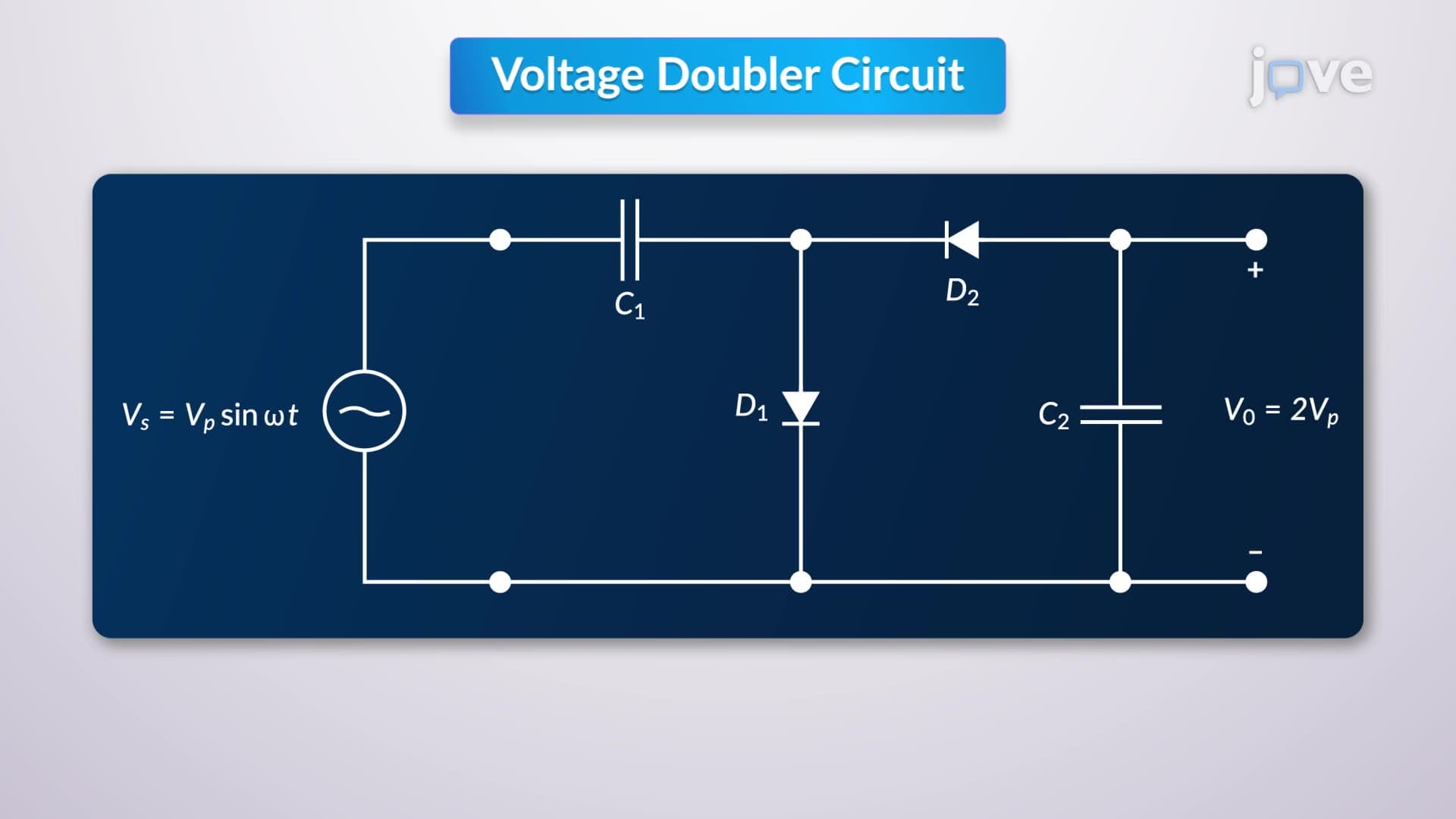
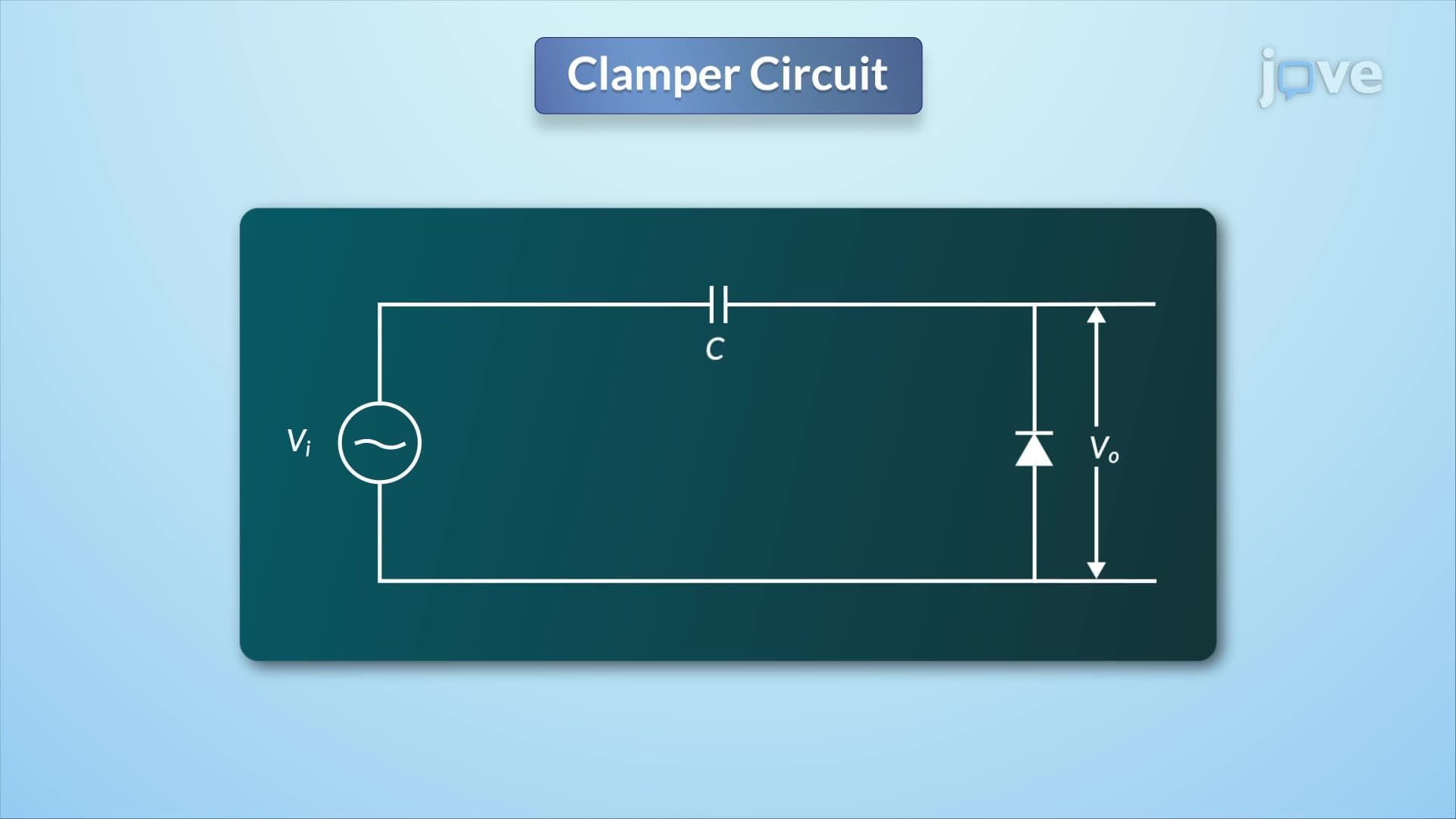
A voltage doubler circuit represents a specialized type of clamper circuit that effectively doubles the input voltage amplitude while shifting its DC level. These circuits operate on the fundamental principle of energy storage in capacitors combined with the rectifying action of diodes. Unlike transformers that require magnetic coupling, voltage doubler circuits achieve voltage multiplication through purely electronic switching and energy storage mechanisms.
The voltage doubler circuit definition encompasses any circuit configuration that produces an output voltage approximately twice the peak input voltage. This multiplication occurs through a two-phase process: energy storage during one half-cycle and energy delivery during the opposite half-cycle. The capacitor acts as a temporary energy reservoir, while the diode provides directional control of current flow.
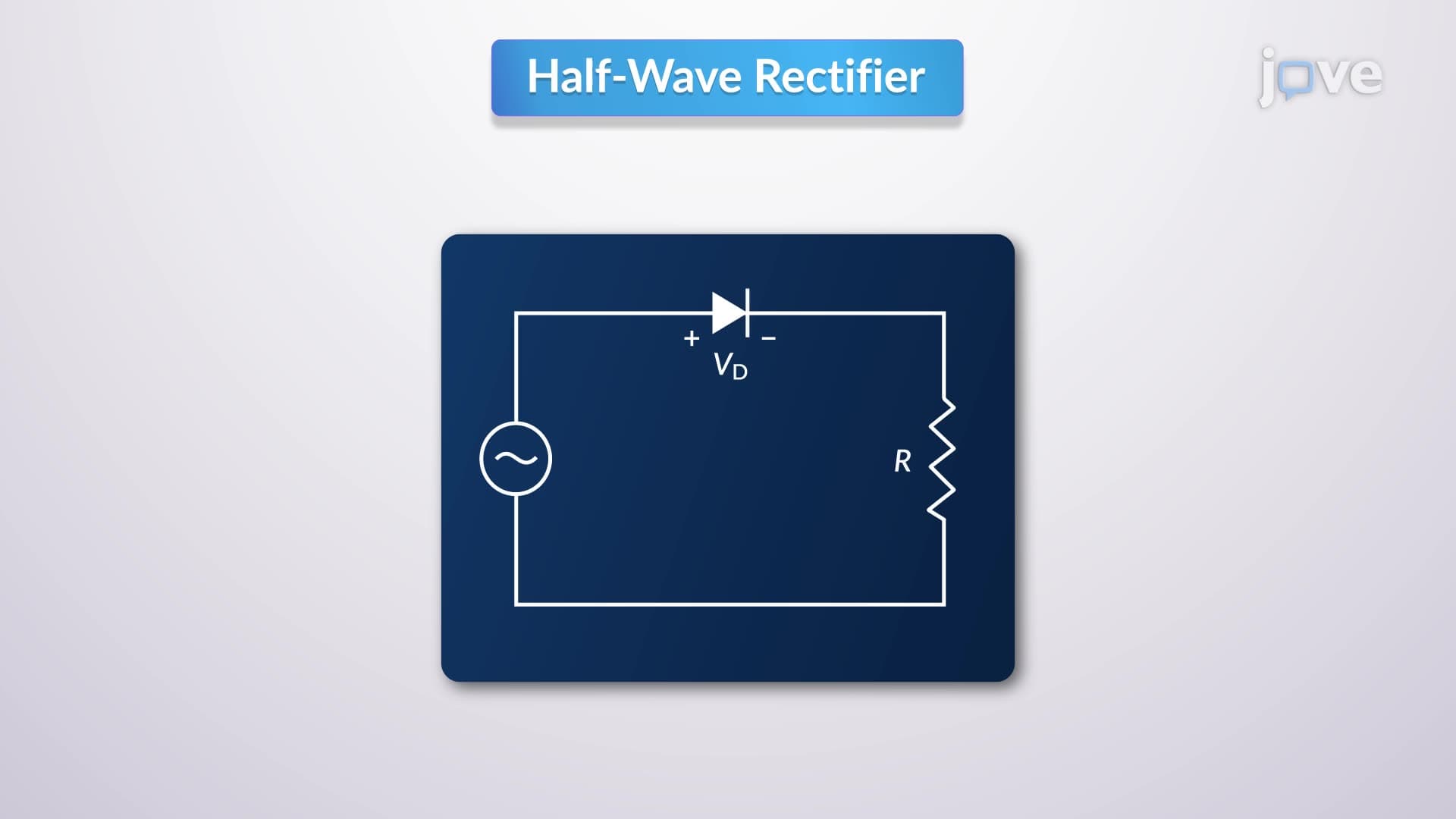
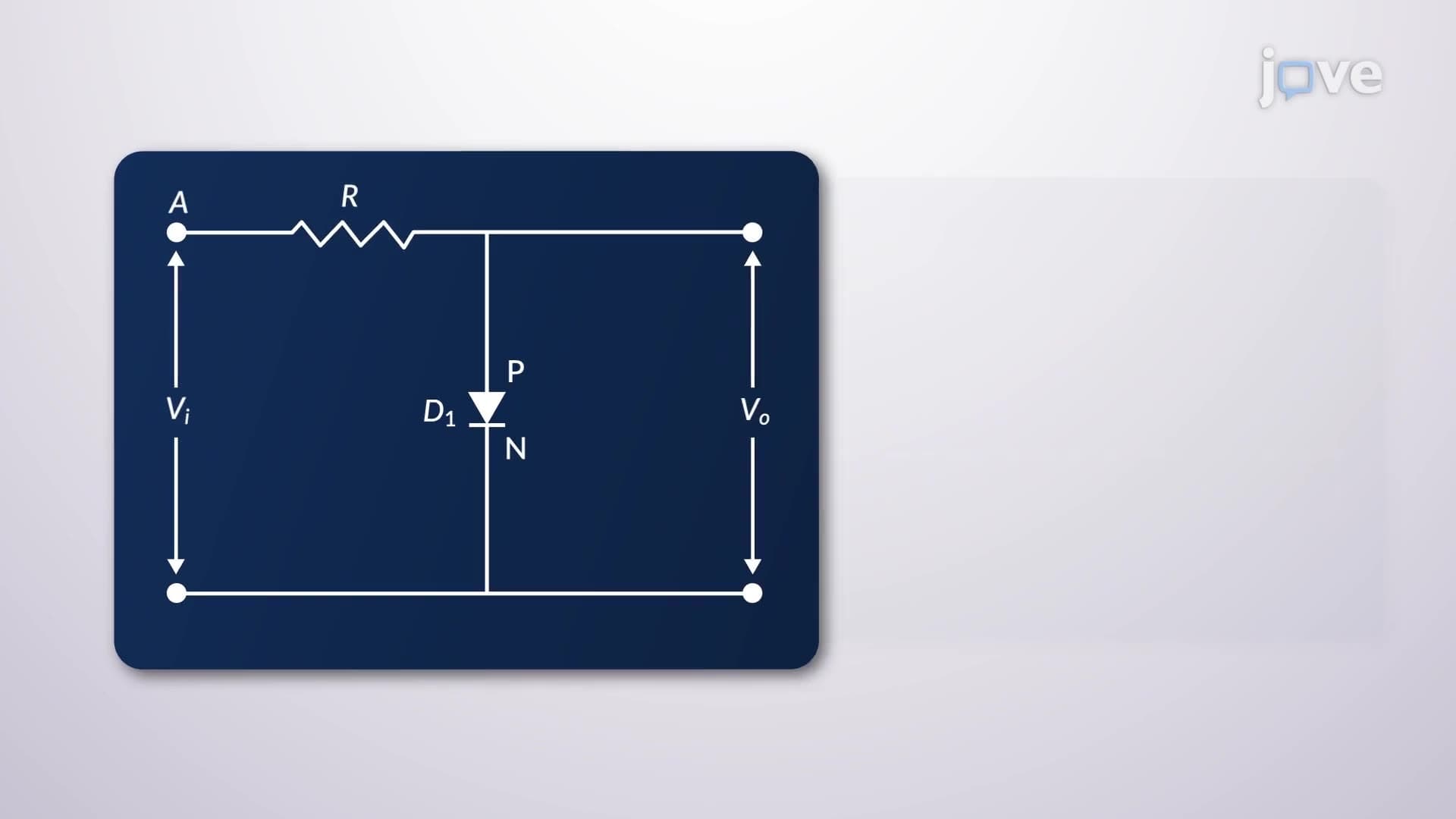
When examining what is voltage doubler circuit in detail, we must consider both the charging and discharging phases. During the negative half-cycle of the input waveform, the diode conducts (forward-biased), creating a low-resistance path. The capacitor charges to the peak input voltage value, storing electrical energy. The output voltage across the diode remains near zero during this phase due to the diode's forward voltage drop.
During the positive half-cycle, the diode becomes reverse-biased and blocks current flow. Now, the input voltage and the charged capacitor voltage add together in series, creating the voltage doubling effect. The output voltage across the diode equals the sum of the input voltage and the capacitor voltage, theoretically reaching twice the input peak voltage.
Real-world voltage doubler circuit overview applications must account for load resistance effects. When current flows through a connected load, the capacitor begins discharging according to the RC time constant. This discharge reduces the output voltage exponentially, creating a ripple effect. Engineers typically minimize this ripple by selecting large capacitance values or implementing additional filtering stages.
Temperature variations, component tolerances, and load fluctuations all impact circuit performance. In US medical device manufacturing, voltage doubler circuits must meet strict FDA regulations for stability and reliability. Similarly, consumer electronics applications require compliance with FCC electromagnetic interference standards.
Students preparing for AP Physics exams frequently encounter clamper and voltage doubler problems involving energy conservation and circuit analysis. College-level courses in electrical engineering programs at institutions like MIT and Stanford extensively cover these topics in circuit theory coursework. The MCAT occasionally includes questions about biological signal processing applications where clamper circuits restore DC levels in bioelectric measurements.
Professional applications span from high-voltage power supplies in X-ray machines at Mayo Clinic facilities to camera flash circuits used by photographers covering major league baseball games across US stadiums.
Frequently Asked Questions
A clamper circuit shifts the DC level of an input signal using a capacitor and diode combination. Voltage doubler circuits are specialized clamper configurations that not only shift voltage levels but also double the peak output voltage compared to the input. Both circuits rely on capacitive energy storage and diode switching to achieve their respective functions.
A voltage doubler circuit is an electronic circuit that produces an output voltage approximately twice the input voltage peak value. It uses a capacitor to store energy during one half of the input cycle and releases that stored energy during the opposite half-cycle, effectively adding the capacitor voltage to the input voltage. No transformers or external power sources are needed for this voltage multiplication.
These circuits commonly appear in circuit analysis problems requiring students to calculate output voltages, energy storage, and time constants. AP Physics C exams may include capacitor charging/discharging calculations, while college midterms often focus on load effects and ripple analysis. Students should master both steady-state and transient response calculations for comprehensive understanding.
While not common, voltage doubler principles may appear in MCAT physics sections, particularly in contexts involving biomedical instrumentation or signal processing. The exam typically focuses on fundamental capacitor and diode behavior rather than complex circuit analysis. Understanding basic charging/discharging concepts proves more valuable than memorizing specific circuit configurations.
Camera flash units in smartphones use voltage doubler circuits to create high-voltage pulses for xenon flash tubes. Many laptop chargers employ similar principles in their switching power supplies. Additionally, older CRT television sets and computer monitors used voltage multiplier circuits (extensions of voltage doublers) to generate the high voltages needed for electron beam acceleration.
Basic voltage doubler circuit understanding requires only algebra and simple exponential functions. High school students with solid algebra skills can grasp the fundamental concepts without calculus. However, detailed transient analysis and optimization problems in college-level courses do benefit from calculus knowledge, particularly for RC time constant calculations and energy optimization.
Focus on drawing clear circuit diagrams for both half-cycles of operation, then trace current paths and voltage polarities step-by-step. Practice calculating capacitor voltages during charging and discharging phases using RC time constants. Create comparison tables showing input versus output voltages for different circuit configurations to reinforce the doubling concept.
Consider studying voltage multiplier circuits (tripler, quadrupler configurations) and Cockcroft-Walton generators used in particle accelerators. Switch-mode power supplies and DC-DC converters represent practical extensions of these principles. For pre-engineering students, exploring resonant voltage multipliers and their applications in wireless power transfer provides excellent preparation for advanced coursework.
Related Micro-courses


Related Subjects
 Civil Engineering 30 micro-courses›Mechanical Engineering 28 micro-courses›