Loading…
Loading video…

6,514 views
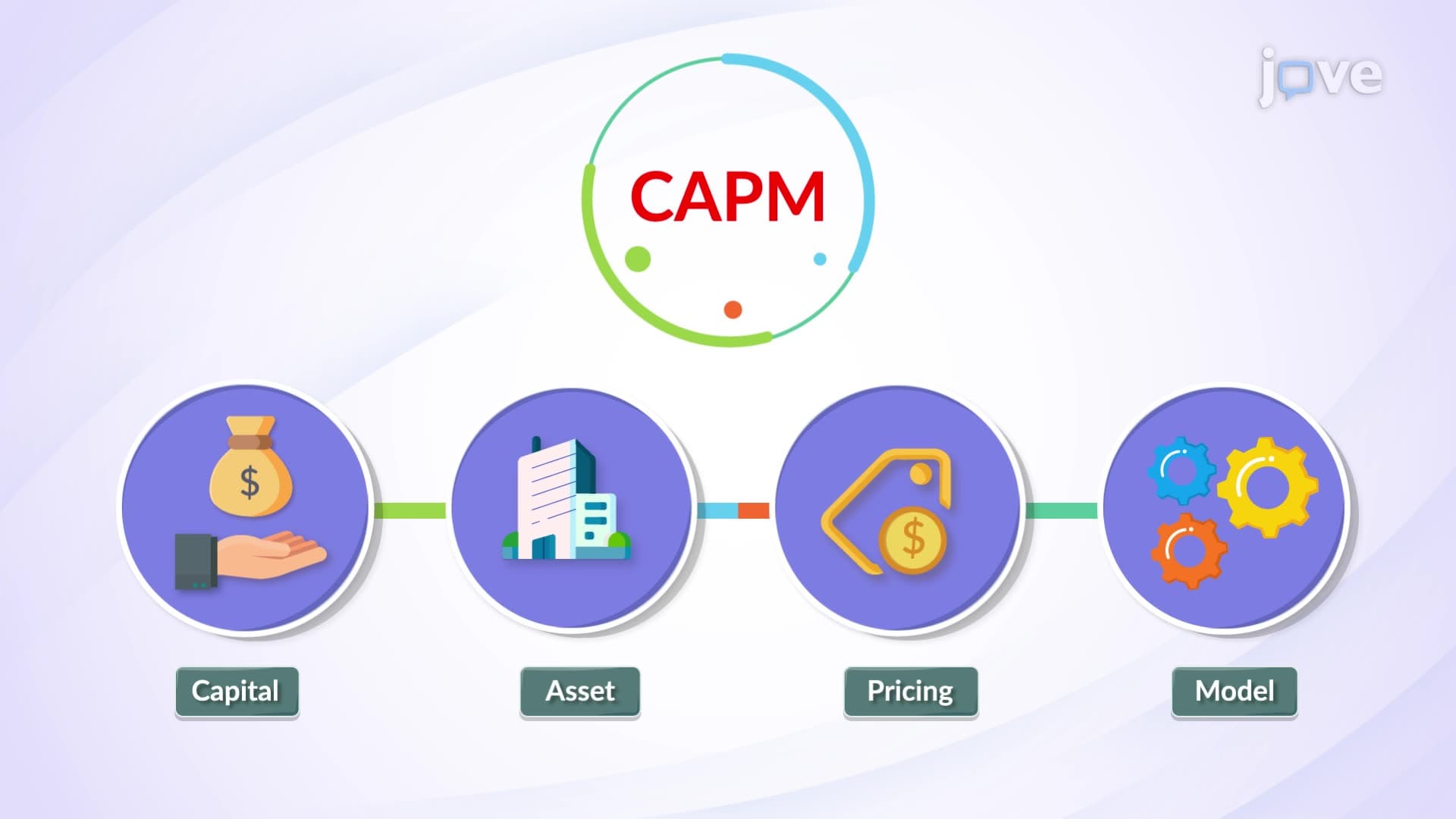
Portfolio managers at firms like Goldman Sachs rely on sophisticated risk-return frameworks to optimize multi-billion-dollar investment strategies. The capital asset pricing model serves as the cornerstone methodology for evaluating whether securities deliver adequate returns relative to their market risk exposure. This powerful analytical tool enables finance professionals to make data-driven decisions across portfolio management, corporate capital allocation, and asset pricing scenarios. Watch the full video on JoVE Coach to master this concept with expert-led visuals and step-by-step explanations.
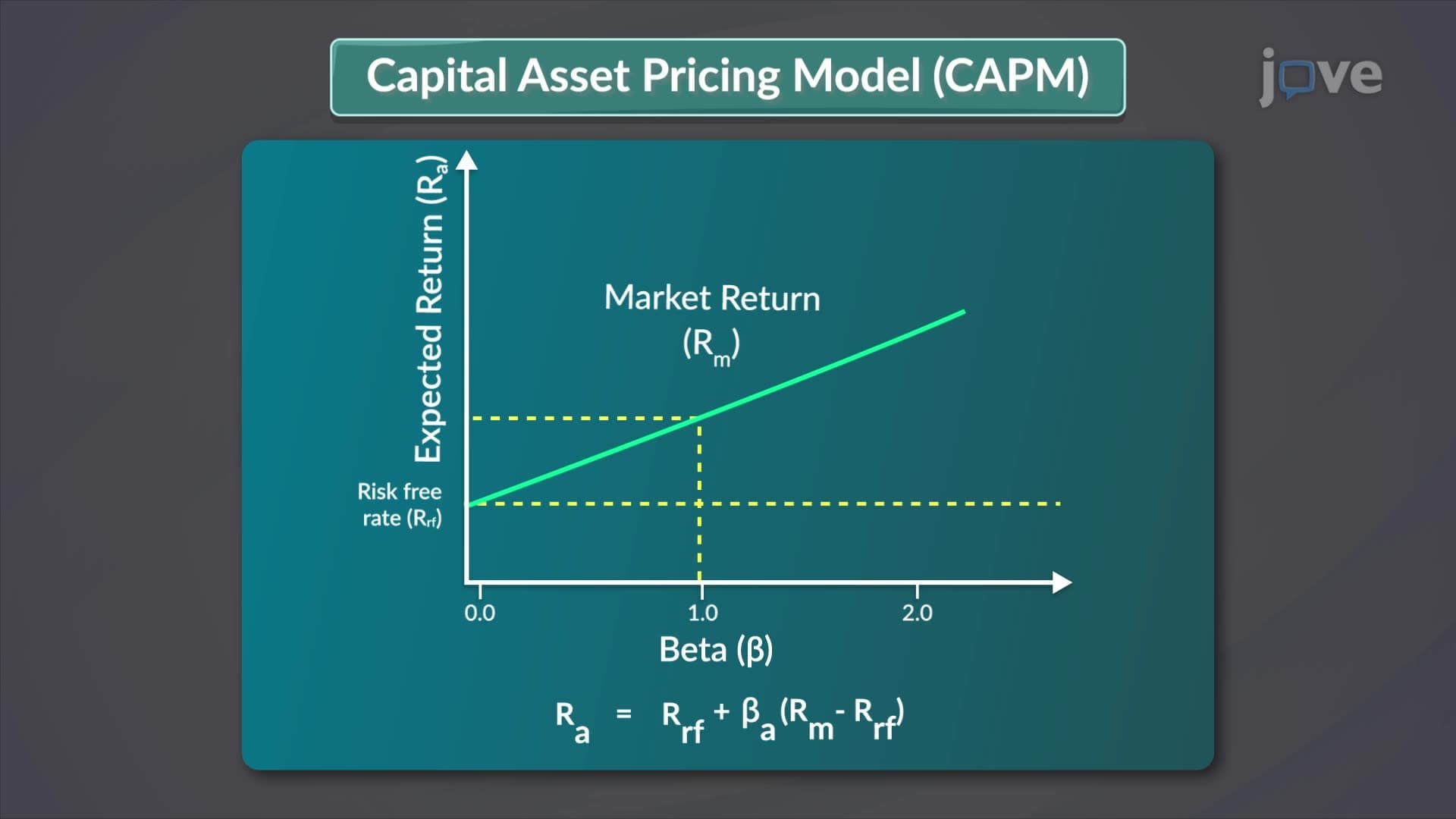
When JPMorgan Chase's investment committee evaluates a $500 million acquisition opportunity, they need a reliable framework to determine whether the expected returns justify the inherent risks. The capital asset pricing model provides this critical analytical foundation by establishing the minimum return required for any investment based on its systematic market risk.
Investment professionals use CAPM to separate skill from luck in portfolio performance. Consider Fidelity's flagship Magellan Fund—portfolio managers continuously compare actual returns against CAPM predictions to identify whether outperformance stems from genuine alpha generation or simply taking on additional market risk. When a security consistently underperforms its CAPM-expected return, it signals potential fundamental weaknesses requiring immediate attention.
This systematic approach enables portfolio managers to construct more efficient portfolios by identifying securities offering superior risk-adjusted returns. Rather than chasing high absolute returns, sophisticated investors focus on maximizing returns per unit of systematic risk—the core insight CAPM provides.
Chief Financial Officers at companies like Microsoft leverage CAPM to establish hurdle rates for strategic initiatives. When evaluating whether to invest $2 billion in cloud infrastructure expansion, executives use CAPM-derived cost of capital estimates to determine if projected returns exceed minimum shareholder expectations. Projects failing to clear this CAPM-based threshold destroy shareholder value, regardless of their absolute profitability.
The model also guides optimal capital structure decisions. Companies with lower systematic risk can support higher leverage ratios, as their CAPM-based cost of equity remains manageable even with increased financial risk.
Fixed-income professionals rely heavily on CAPM principles when pricing corporate bonds and determining appropriate yield spreads. A BBB-rated corporate bond from Ford Motor Company requires a risk premium reflecting both credit risk and systematic market exposure. CAPM provides the framework for establishing this risk-return relationship, ensuring investors receive adequate compensation for assuming additional systematic risk.
This application extends beyond traditional securities to complex derivatives and structured products, where CAPM-based pricing models help establish fair market values in institutional trading environments.
Frequently Asked Questions
The capital asset pricing model is a fundamental framework that calculates the minimum return investors should expect from any security based on its systematic market risk. It helps finance professionals make objective investment decisions by establishing whether potential returns adequately compensate for assumed risks. This prevents emotional decision-making and provides a quantitative foundation for portfolio optimization, corporate finance decisions, and asset pricing across all investment contexts.
Present CAPM analysis by comparing each investment's expected return against its calculated required return using the model. Show executives that investments exceeding their CAPM-required returns create shareholder value, while those falling short destroy it. Frame your recommendations around risk-adjusted returns rather than absolute performance numbers. This approach demonstrates sophisticated financial analysis and helps leadership understand the true risk-return tradeoffs of strategic decisions.
The biggest error is treating CAPM as a precise prediction tool rather than a relative comparison framework. Smart professionals use CAPM to rank investment alternatives and establish minimum return thresholds, not to forecast exact future returns. Present CAPM results as "this investment requires at least X% return to justify its risk level" rather than "this investment will deliver exactly X% return." This positions you as a thoughtful analyst who understands the model's limitations while leveraging its comparative power.
Apple uses CAPM extensively when evaluating major capital expenditures like new manufacturing facilities or R&D investments. Their finance team calculates Apple's cost of equity using CAPM, then applies this as the hurdle rate for evaluating whether projects like the $1 billion Austin campus expansion will generate adequate returns. Projects must exceed Apple's CAPM-derived cost of capital to receive board approval, ensuring only value-creating initiatives move forward regardless of their absolute profitability levels.
While CAPM involves mathematical calculations, the core concept—linking expected returns to systematic risk—is intuitive for most business professionals. You need to understand that higher-risk investments should deliver higher returns and that CAPM quantifies this relationship. Many financial software platforms and Excel templates handle the calculations automatically, allowing you to focus on interpreting results and making strategic recommendations rather than complex mathematics.
CAMP expertise demonstrates sophisticated financial analysis skills that separate senior professionals from junior analysts. It enables you to speak confidently about risk-return tradeoffs in executive meetings, support strategic decisions with quantitative analysis, and evaluate complex investment opportunities objectively. Finance leaders who understand CAPM principles often advance to roles involving portfolio management, corporate development, or strategic planning where these analytical capabilities become essential daily tools.
The Weighted Average Cost of Capital (WACC) represents the natural next step, as it builds directly on CAPM principles by incorporating both equity and debt costs into a comprehensive capital cost framework. WACC enables more sophisticated capital budgeting decisions and helps determine optimal capital structures for growing companies, making it invaluable for senior finance roles involving strategic planning and corporate development initiatives.
Related Micro-courses
Related Subjects