Loading…
Loading video…

24,240 views

Why can you instantly recall your favorite song lyrics from years ago, but forget where you placed your car keys minutes later? The system of memory operates through three interconnected processes that determine what information sticks and what disappears. Consider how a Stanford University student preparing for finals relies on encoding lecture notes, storing key concepts, and retrieving information during exams. Understanding Memory: Processes and Types reveals how these cognitive mechanisms shape everything from academic performance to daily decision-making. Watch the full video on JoVE Coach to master this concept with expert-led visuals and step-by-step explanations.
Memory represents one of psychology's most studied cognitive processes, forming the cornerstone of human learning and adaptation. The system of memory operates as an integrated network where information flows through distinct yet interconnected stages. This sophisticated process enables everything from a UCLA pre-med student memorizing anatomical structures to a high school athlete learning complex football plays.
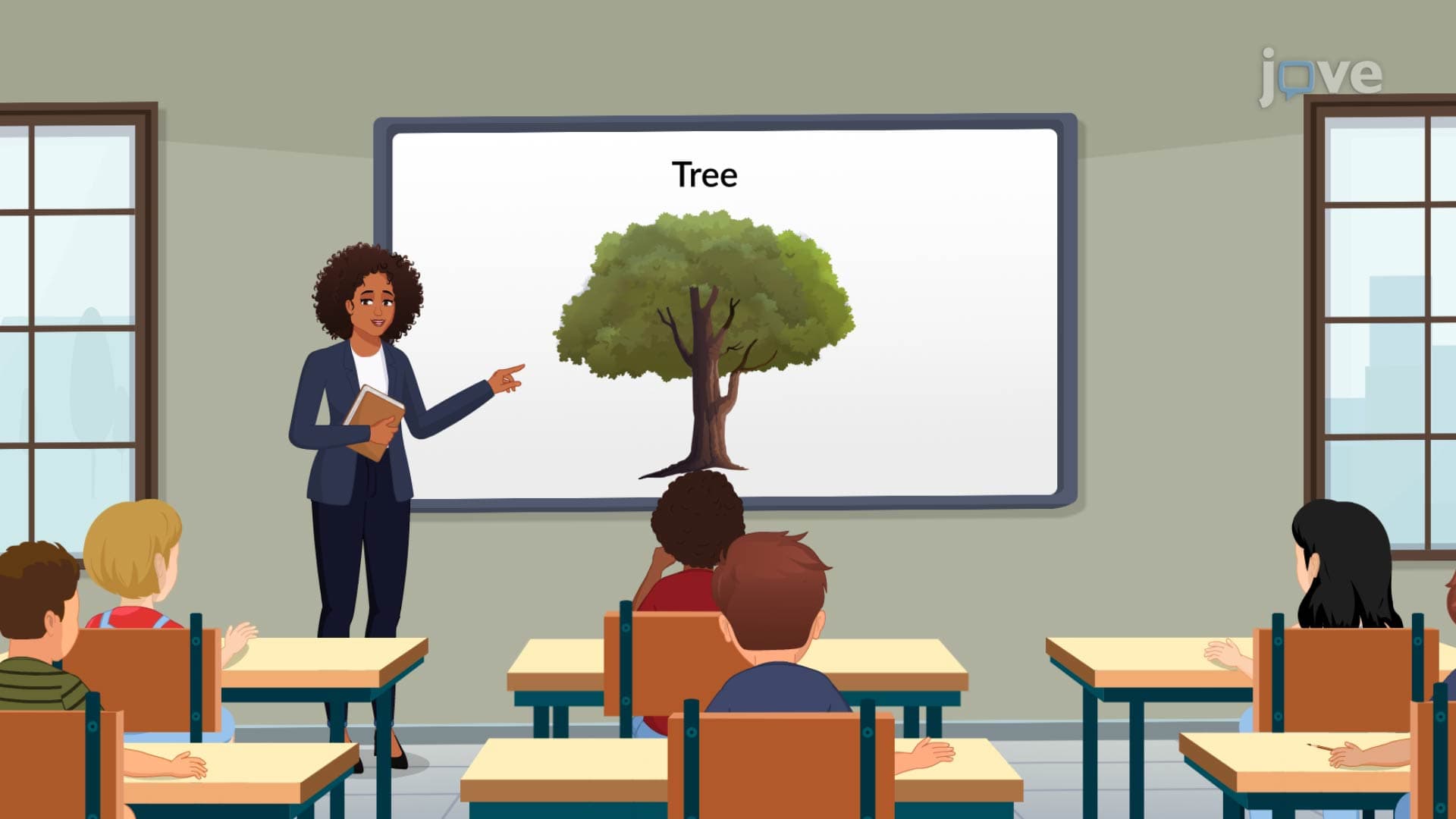
Encoding transforms sensory input into a format the brain can process and store. This initial stage determines whether information enters the system of memory or disappears forever. Successful encoding requires attention, elaboration, and often repetition. For instance, when Harvard students attend organic chemistry lectures, they engage multiple encoding strategies—visual diagrams, auditory explanations, and kinesthetic note-taking—to maximize information capture.
Different encoding types produce varying retention rates. Semantic encoding (meaning-based) typically creates stronger memories than acoustic (sound-based) or visual encoding. This explains why understanding concepts rather than rote memorization leads to better performance on AP Biology or SAT Subject Tests. Students who connect new information to existing knowledge create more robust neural pathways, enhancing both storage and later retrieval.
Once encoded, information must be consolidated and maintained through storage processes. The system of memory includes multiple storage systems with different capacities and durations. Short-term memory holds approximately 7±2 items for 15-30 seconds, while long-term memory has virtually unlimited capacity for indefinite periods.
Storage effectiveness depends on factors like sleep, emotional significance, and rehearsal patterns. MIT research shows that students who review material within 24 hours of initial learning demonstrate significantly improved retention compared to those who delay review. This finding directly impacts study strategies for standardized tests like the MCAT or college entrance exams.
Retrieval represents the final stage where stored information becomes consciously accessible. This process involves reconstructing rather than simply replaying memories, which explains why eyewitness testimony can be unreliable. Successful retrieval depends on cues, context, and the strength of initial encoding and storage.
Understanding retrieval principles helps students optimize exam performance. Practice testing, a retrieval-based learning strategy, consistently outperforms passive review methods for long-term retention and application.
Frequently Asked Questions
Understanding Memory: Processes and Types refers to the comprehensive study of how humans encode, store, and retrieve information through cognitive mechanisms. It encompasses the three-stage model where sensory input becomes lasting knowledge through systematic neural processes. This framework explains everything from learning new vocabulary to developing complex problem-solving skills essential for academic and professional success.
The system of memory definition describes an integrated network of cognitive processes that transform experiences into retrievable knowledge through encoding, storage, and retrieval stages. Each component serves specific functions while working together to enable learning, decision-making, and adaptive behavior. This system forms the foundation for all educational achievement and skill development.
AP Psychology frequently tests memory concepts through multiple-choice questions about encoding types, storage duration, and retrieval failures like interference. The MCAT Psychological, Social, and Biological Foundations section emphasizes memory's role in learning and behavior modification. Students should master classical experiments, memory disorders, and practical applications for optimal performance on both assessments.
Beyond AP Psychology and the MCAT, memory concepts appear on the USMLE for medical students, NCLEX for nursing candidates, and GRE Psychology Subject Tests. College-level cognitive psychology and neuroscience courses regularly examine these principles through midterms and final exams. Understanding memory fundamentals provides crucial preparation for these high-stakes assessments.
Memory research directly informs teaching strategies in US schools, from elementary phonics instruction to graduate-level medical training. Stanford Medical School uses spaced repetition techniques based on memory science to help students master complex anatomical information. Similarly, many American universities implement retrieval practice in STEM courses to improve long-term learning outcomes and reduce failure rates.
No prior psychology coursework is necessary to grasp fundamental memory concepts covered in introductory courses. High school students can successfully master these principles with basic scientific reasoning skills and attention to detail. The concepts build logically from simple to complex, making them accessible to motivated learners at any educational level.
Implement spaced repetition over cramming, use active retrieval through practice testing, and create meaningful connections between new and existing knowledge. Research shows these evidence-based techniques significantly improve performance on everything from SAT Subject Tests to professional licensing exams. Focus on understanding rather than memorization for optimal long-term retention and application.
Consider studying memory disorders like Alzheimer's disease, the neuroscience of forgetting, and individual differences in memory capacity. Advanced coursework in cognitive neuroscience, behavioral psychology, or neuropsychology builds upon these foundational concepts. These specialized areas prepare students for research careers or clinical applications in healthcare and education settings.
Related Micro-courses
Related Subjects
 Social Psychology 15 micro-courses›