Loading subject page…

- Introduction to Psychology
- Memory
- Elaborative Rehearsals
Micro-course: Memory
24,241 views
Learn key concepts and earn your certificate.

















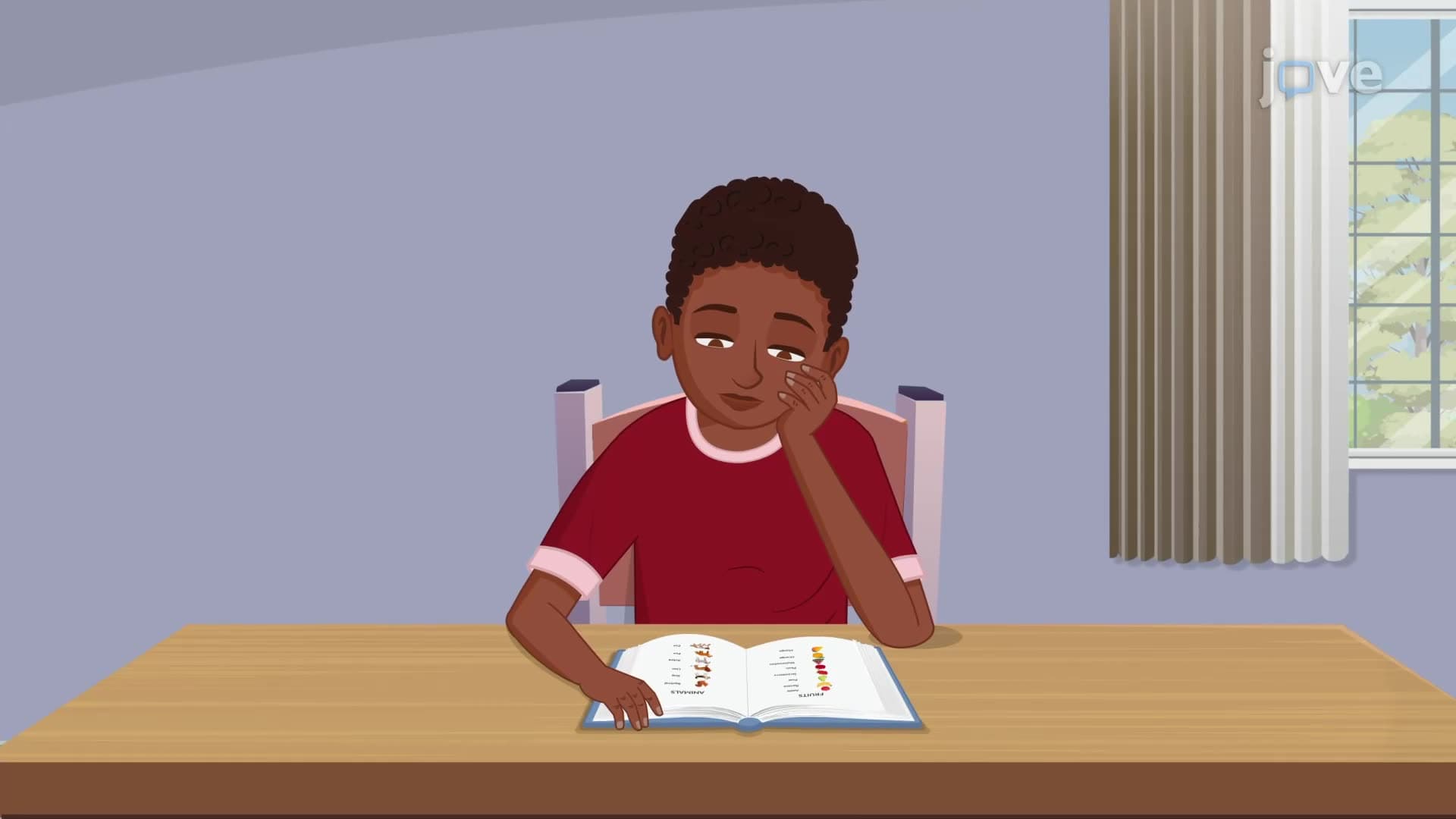


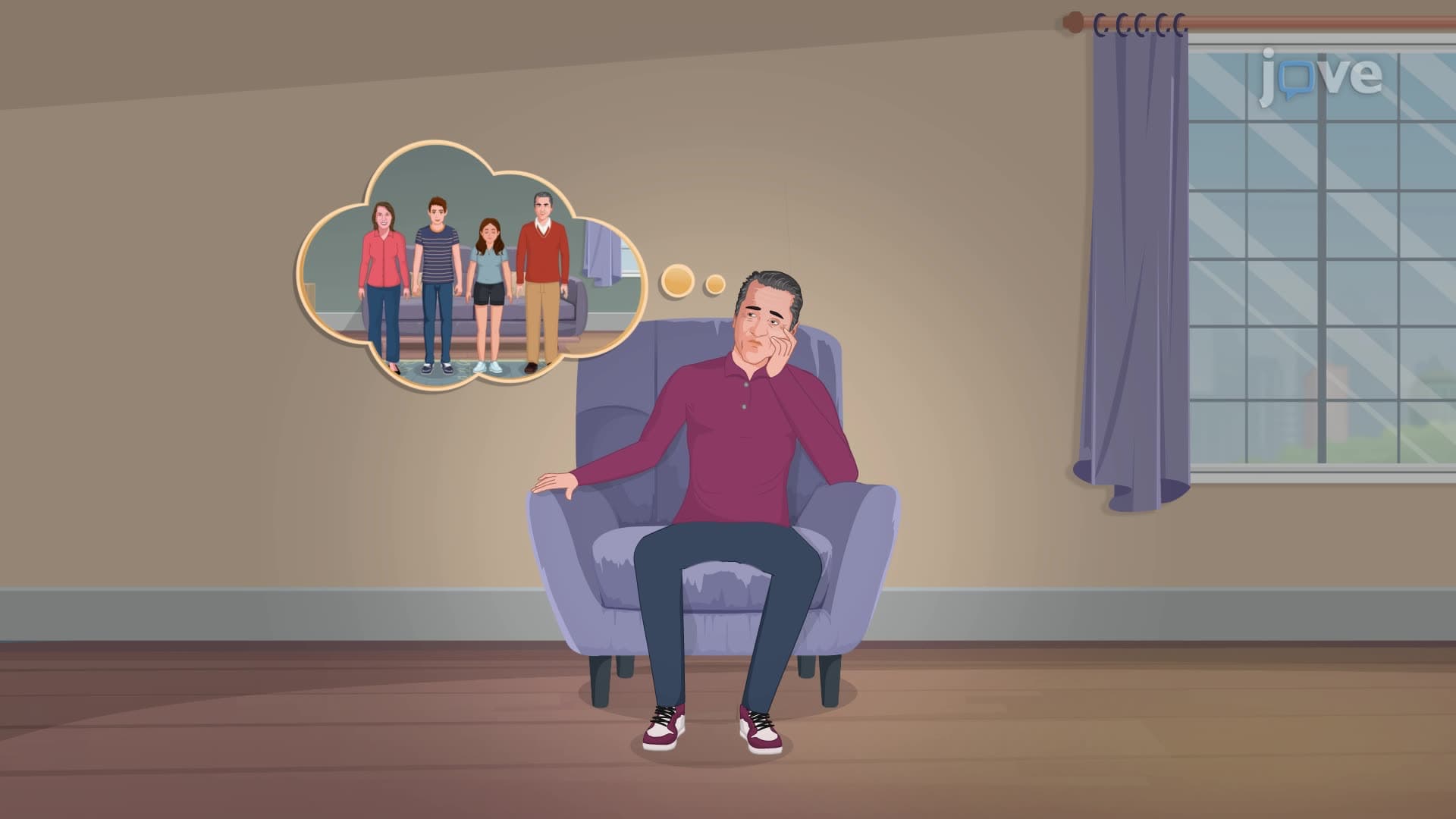

Elaborative Rehearsals


00:00
01:07
Video Summary: What Is Elaborative Rehearsals
Did you know that simply repeating information over and over is one of the least effective ways to remember it? Mnemonic devices and elaborative rehearsal techniques work by connecting new information to existing memories, creating powerful mental pathways that last. When UCLA students learn Spanish vocabulary by linking "perro" (dog) to images of their childhood pets, they're using elaborative rehearsal-a memory strategy that transforms temporary thoughts into permanent knowledge. Watch the full video on JoVE Coach to master this concept with expert-led visuals and step-by-step explanations.
- Understand what elaborative rehearsals are and how they differ from simple repetition-based memory strategies
- Identify the key components that make mnemonic devices effective for long-term memory formation
- Analyze how the levels of processing theory explains why elaborative rehearsal outperforms maintenance rehearsal
- Compare elaborative rehearsal techniques with basic rote memorization methods used in academic settings
- Apply elaborative rehearsal strategies to improve performance on standardized tests like the SAT and AP Psychology
- Recognize real-world examples of elaborative rehearsal in educational and professional contexts
- Evaluate which types of information benefit most from elaborative versus maintenance rehearsal approaches
- Explore how elaborative rehearsal connects to broader cognitive psychology principles and memory research
Understanding Elaborative Rehearsal Fundamentals
Elaborative rehearsal represents a sophisticated cognitive strategy that transforms how we encode information into long-term memory. Unlike simple repetition, this approach creates meaningful connections between new information and existing knowledge structures in our minds. The process involves actively engaging with material by asking questions, forming associations, and building conceptual bridges that make information more memorable and accessible.
Research from Stanford University's Memory Lab demonstrates that students using elaborative rehearsal techniques show 40-60% better retention rates compared to those relying solely on repetition. This dramatic improvement occurs because elaborative rehearsal engages multiple areas of the brain simultaneously, creating redundant pathways that strengthen memory traces.
Mnemonic Devices Definition and Core Mechanisms
Mnemonic devices serve as the practical application of elaborative rehearsal principles. These memory aids work by transforming abstract or difficult-to-remember information into more concrete, personally meaningful formats. The mnemonic devices definition encompasses various techniques including acronyms, visual imagery, storytelling, and association chains.
For example, pre-med students at Johns Hopkins University commonly use the mnemonic "Some Lovers Try Positions That They Can't Handle" to remember the eight carpal bones in anatomy class. This approach works because it converts dry anatomical terms into a memorable narrative structure that engages both semantic and episodic memory systems.
What is Mnemonic Devices in Detail: Types and Applications
When examining what is mnemonic devices in detail, we discover several distinct categories, each optimized for different types of information. Acronym mnemonics like "ROY G. BIV" for rainbow colors provide quick recall triggers for sequential information. Method of loci techniques, used by Harvard Law students to memorize case precedents, leverage spatial memory by associating information with familiar locations.
Visual imagery mnemonics prove particularly powerful for concrete concepts. MIT chemistry students often visualize molecular structures as familiar objects-imagining methane as a central carbon "hub" with four hydrogen "spokes." This technique exploits our brain's exceptional capacity for visual processing and spatial relationships.
Practical Applications in Academic and Professional Settings
Elaborative rehearsal techniques prove invaluable across diverse academic disciplines. In AP Biology courses, students use concept mapping to connect new terminology with previously learned systems, creating comprehensive knowledge networks. Medical students preparing for the MCAT employ elaborative rehearsal by relating biochemical pathways to familiar processes like factory assembly lines.
The technique also enhances performance on standardized tests. SAT prep courses at Princeton Review teach students to elaborate on vocabulary words by creating personal stories and visual associations, leading to measurably improved verbal scores. Similarly, nursing students preparing for the NCLEX examination use elaborative rehearsal to connect patient care protocols with memorable clinical scenarios.
Frequently Asked Questions
Elaborative rehearsal is a memory strategy that creates meaningful connections between new information and existing knowledge, engaging multiple brain regions simultaneously. Unlike simple repetition, it activates both the hippocampus for memory formation and the prefrontal cortex for processing meaning. This dual activation creates stronger, more durable memory traces that resist forgetting over time.
AP Psychology exams frequently test mnemonic devices through free-response questions about memory processes and multiple-choice items comparing rehearsal strategies. Students must distinguish between maintenance and elaborative rehearsal, explain how depth of processing affects retention, and provide examples of effective mnemonic techniques. The College Board emphasizes understanding underlying cognitive mechanisms rather than just memorizing definitions.
MCAT Psychology/Sociology sections include passage-based questions analyzing memory research studies and discrete items testing knowledge of cognitive processes. Students encounter scenarios comparing different study strategies, data interpretation about retention rates, and application questions requiring them to identify optimal rehearsal techniques for specific learning situations. Understanding elaborative rehearsal principles helps answer questions about learning efficiency and memory consolidation.
University of California students use elaborative rehearsal extensively across disciplines-pre-law students create vivid stories linking constitutional amendments to memorable characters, while chemistry majors visualize molecular interactions as dance choreography. Business students at Wharton associate economic principles with current events, and engineering students connect mathematical formulas to practical construction projects they've observed.
Elaborative rehearsal is actually easier for students with weaker memory abilities because it provides concrete strategies rather than relying on natural talent. The technique teaches specific, learnable skills like creating visual associations and building concept maps. Community college success programs report that students initially struggling with memorization often show the most dramatic improvement when taught elaborative rehearsal methods.
Start by identifying key concepts and creating personal connections through examples from your own experience or interests you care about. Use active techniques like explaining concepts aloud, drawing diagrams that connect ideas, and forming study groups where you teach material to classmates. Space out practice sessions over several days rather than cramming, allowing elaborative connections to strengthen through repeated activation.
SAT vocabulary success improves dramatically when students move beyond flashcard repetition to creating rich word associations. Connect new vocabulary to personal experiences, visualize word meanings through memorable images, and use new words in original sentences about topics you care about. This elaborative approach helps distinguish between similar words and provides retrieval cues during high-pressure testing situations.
Students ready for deeper exploration should investigate spacing effects and interleaving techniques, which optimize when and how to practice elaborative rehearsal strategies. Advanced topics include dual coding theory explaining why visual and verbal elaboration work synergistically, and transfer-appropriate processing principles that help match rehearsal strategies to testing formats.
Related Micro-courses