Loading video…


 30 Concepts
 24.2K views

Video Summary: What Is Storage
Did you know that when you remember your high school graduation, your brain isn't replaying a video file but reconstructing the memory from scattered neural connections? Long term memory storage involves complex processes that organize and preserve information for future retrieval. Two major theories explain what is storage: schema theory suggests we use mental frameworks (like recognizing patterns at a McDonald's restaurant), while connectionism proposes memories exist in distributed neural networks across the brain. Watch the full video on JoVE Coach to master this concept with expert-led visuals and step-by-step explanations.
Long term memory represents one of psychology's most fascinating frontiers, involving intricate storage mechanisms that preserve our experiences, knowledge, and skills. The long term memory definition encompasses the brain's capacity to maintain information indefinitely, from childhood recollections to academic knowledge acquired in college coursework.
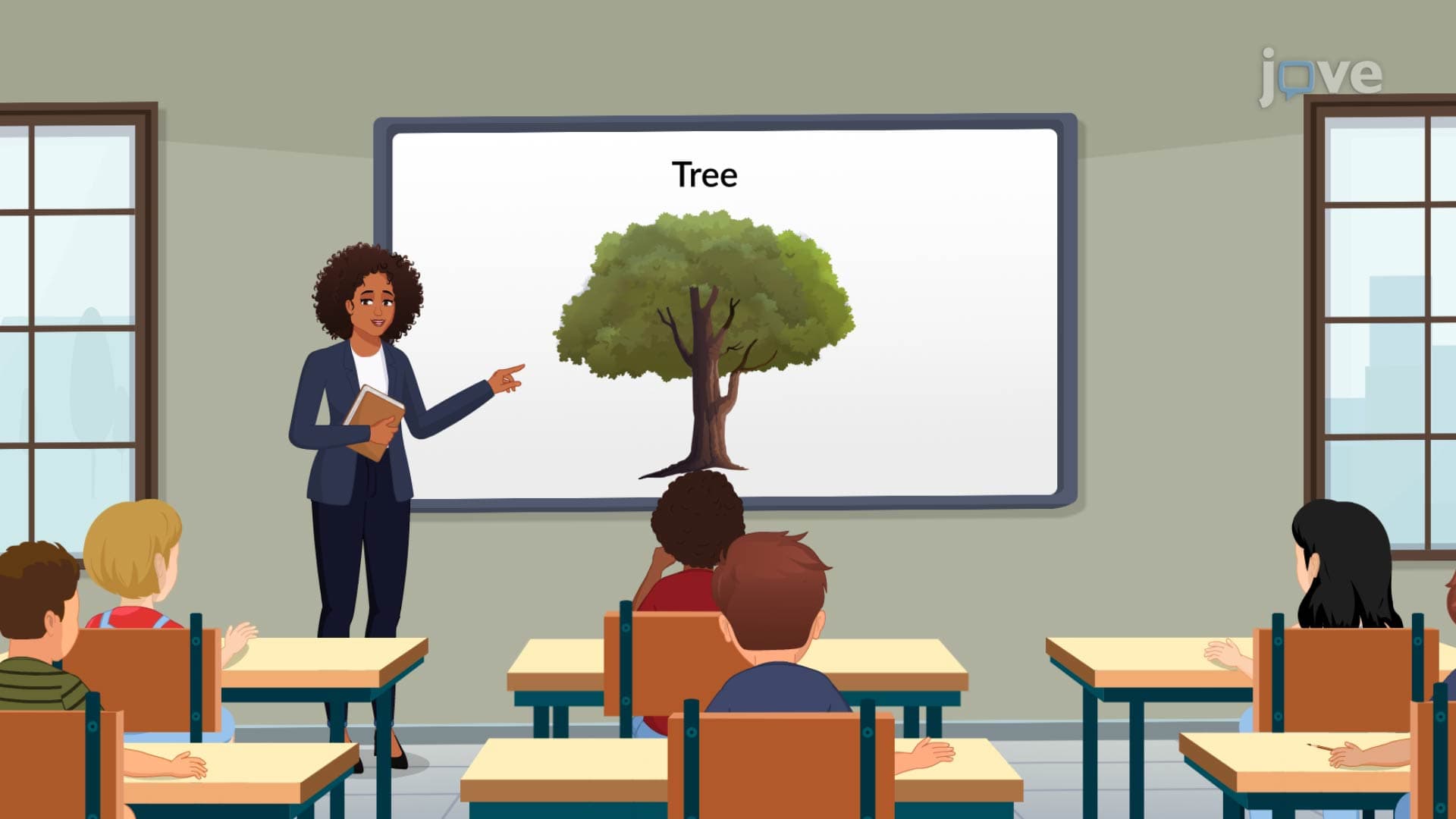
Schema theory provides a compelling long term memory overview by explaining how we organize information using pre-existing mental frameworks. These cognitive structures, developed through repeated experiences, help us efficiently process and store new information. For instance, your "college classroom" schema includes expectations about desks, whiteboards, and lecture formats. When you enter a new classroom at UCLA or Harvard, this schema helps you quickly understand the environment and know where to sit, even if you've never been there before.
During retrieval, schemas serve as cognitive shortcuts, filling in missing details based on typical patterns. This understanding long term memory mechanism explains why students often remember studying for the SAT or AP Psychology exam with similar details-late nights, coffee, textbooks-even when specific memories are incomplete. However, this process can also introduce memory distortions when schemas override actual details.
The connectionist approach offers a different long term memory concept by viewing storage as distributed across interconnected neural networks. Rather than storing memories in specific brain locations, this model suggests that what is long term memory in detail involves patterns of activation across multiple brain regions simultaneously.
Consider remembering your first day at a US university: visual cortex neurons activate for campus images, auditory regions process orientation speeches, emotional centers in the limbic system contribute feelings of excitement or anxiety, and motor cortex areas might recall walking across the quad. This distributed processing explains why certain triggers-like hearing your alma mater's fight song-can suddenly activate vivid, multi-sensory memories.
These storage mechanisms directly impact academic performance on standardized tests like the MCAT, where medical school applicants must rapidly access stored knowledge about biological processes. Understanding long term memory basics helps students develop effective study strategies, such as creating rich schemas through varied practice problems or building strong neural connections through spaced repetition-techniques proven successful across American educational institutions from community colleges to Ivy League universities.
Related Micro-courses