Loading video…

 16 Concepts
 3K views

Video Summary: The Quantity Theory of Money Iii Explained
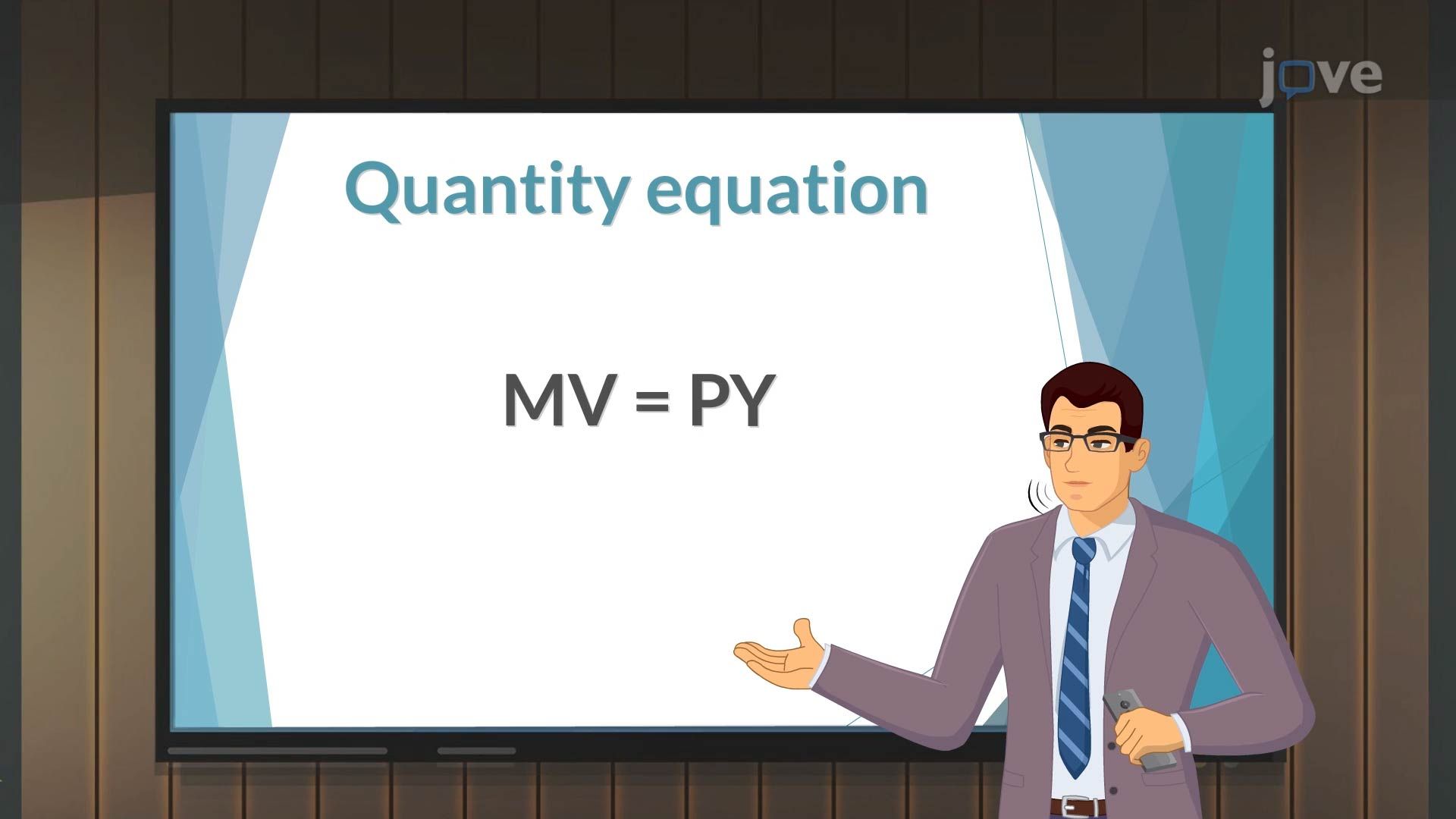
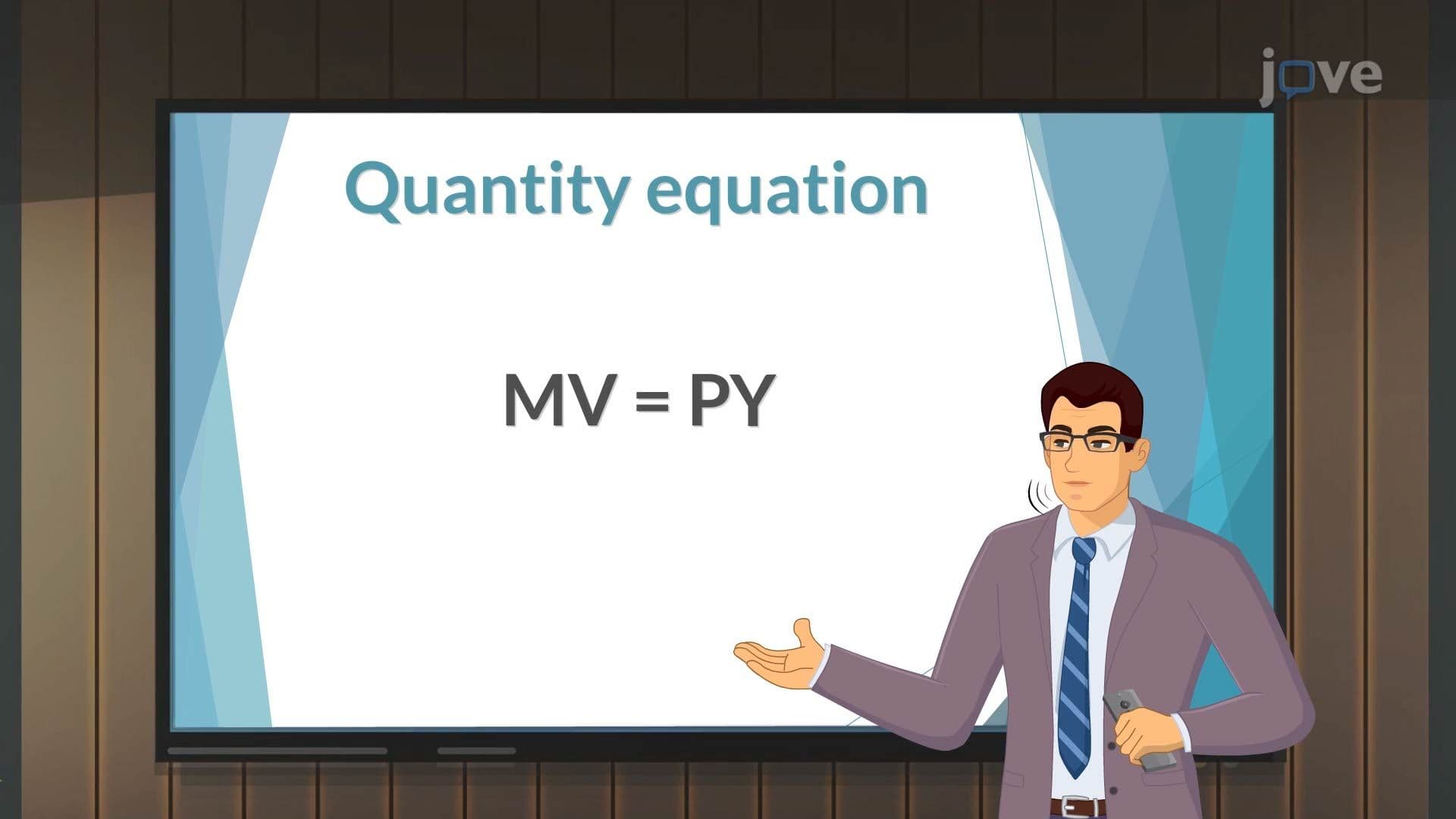
Did you know that when the Federal Reserve prints more money, it doesn't automatically mean Americans can buy more goods? The quantity theory of money III reveals this economic paradox through the updated equation MV = PY, where economists replace hard-to-track transactions with measurable GDP data. This modernized approach helps explain why a used iPhone sale at a pawn shop in Detroit counts as a transaction but not as current economic output. Watch the full video on JoVE Coach to master this concept with expert-led visuals and step-by-step explanations.
The quantity theory of money III represents a crucial evolution in monetary economics, addressing practical measurement challenges that economists face when studying money's role in the economy. Unlike earlier versions that relied on counting every transaction-an nearly impossible task in a modern economy-this updated approach focuses on measurable economic output.
The refined equation MV = PY contains four essential elements that work together to explain monetary relationships. M represents the total money supply controlled by the Federal Reserve through various monetary policy tools. V indicates the velocity of money, showing how frequently each dollar circulates through the economy annually. P captures the average price level across all goods and services, while Y represents real GDP-the inflation-adjusted value of all final goods and services produced domestically.
This equation proves particularly valuable for AP Economics students and college undergraduates studying macroeconomics, as it appears frequently on standardized tests and provides a foundation for understanding Federal Reserve policy decisions.
A critical insight within the quantity theory of money III involves recognizing that transactions and productive output differ significantly. When a student purchases a used textbook from another student at UCLA, this creates a transaction but generates no new economic output since the book wasn't newly produced. Conversely, when Apple manufactures a new iPhone in its California facilities, this represents both a transaction and measurable economic output.
This distinction helps explain why economists prefer tracking GDP over transaction volumes. GDP data, collected by the Bureau of Economic Analysis, provides reliable measurements of actual productive economic activity rather than mere money exchanges.
The concept of real money balances (M/P) demonstrates how much actual purchasing power exists within the economy. If the money supply equals $1 trillion and the average price level stands at $2 per unit, then real money balances equal 500 billion units of goods. This measurement helps economists and policymakers understand whether monetary policy changes genuinely affect citizens' ability to purchase goods and services.
For students preparing for economics exams, understanding this relationship proves essential for analyzing Federal Reserve decisions and their economic impacts.
Related Micro-courses