Loading video…


 16 Concepts
 3K views

Video Summary: Impacts on Income and Wealth Distribution Explained
Did you know inflation can silently transfer wealth between people without anyone writing a single check? Understanding the impacts on income and wealth distribution reveals how rising prices reshape financial power between borrowers and lenders. When the US inflation rate spiked to 9.1% in 2022, millions of fixed-rate mortgage holders gained real financial advantages over their lenders. Watch the full video on JoVE Coach to master this concept with expert-led visuals and step-by-step explanations.
Most people think of wealth transfers as obvious, a paycheck, an inheritance, a tax. But some of the most significant impacts on income and wealth distribution happen invisibly, driven by inflation eroding the real value of money over time. This concept is foundational in macroeconomics and appears across AP Economics, introductory college econ courses, and financial literacy curricula nationwide.
Inflation measures the rate at which the general price level rises, which means each dollar buys progressively less over time. When inflation is steady and anticipated, borrowers and lenders can adjust interest rates to compensate. The problem arises when inflation is unexpected or when loan agreements lock in fixed payments.
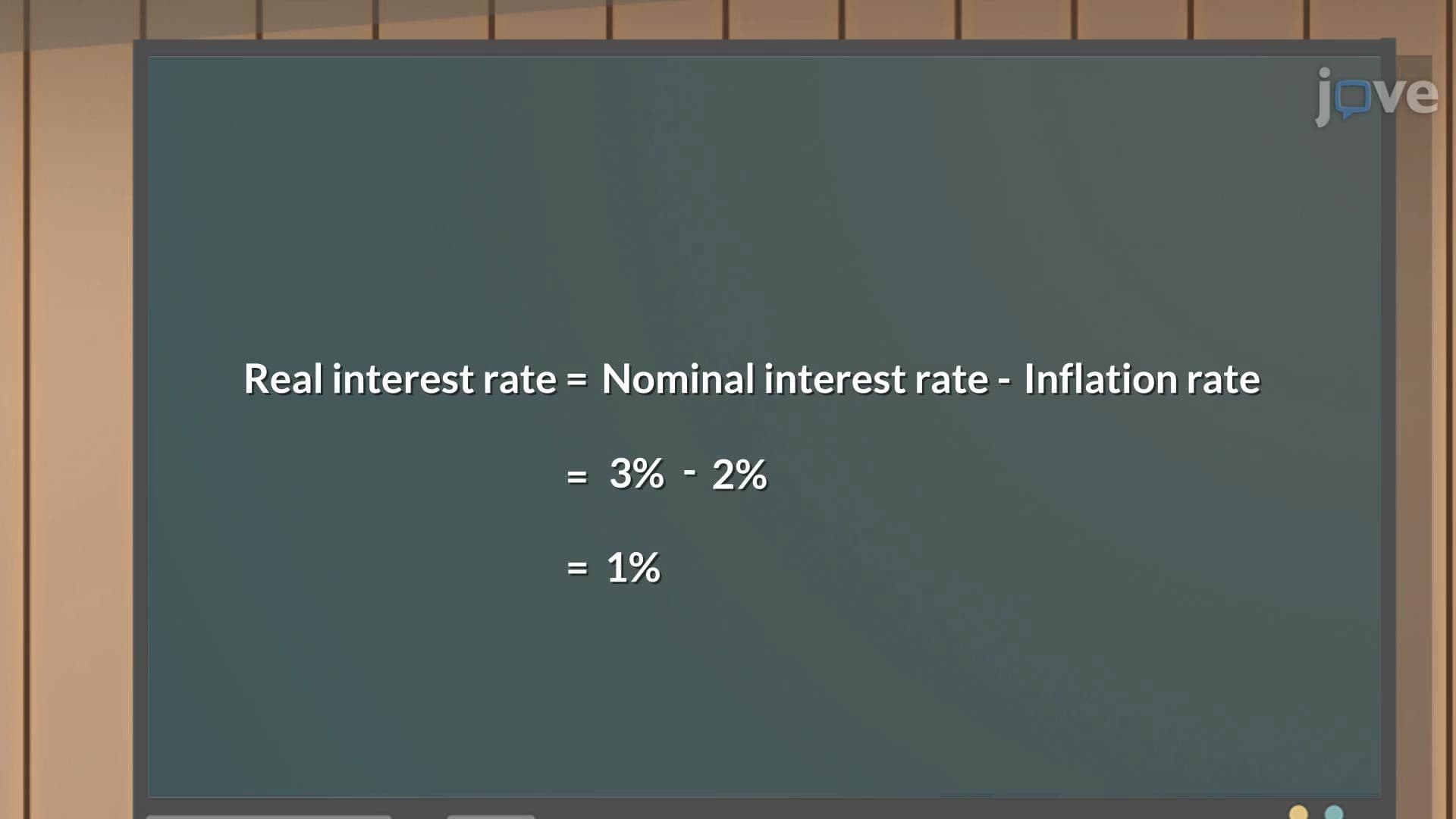
Consider a homeowner in Chicago who locks in a 30-year fixed mortgage at 3% interest. If inflation climbs to 7%, the real interest rate, calculated as the nominal rate minus inflation, actually turns negative. The borrower is effectively paying back money worth far less than what was originally borrowed. The lender, often a bank or pension fund, absorbs that loss in purchasing power without any formal transaction taking place.
The relationship between lenders and borrowers sits at the core of inflation's distributional effects. Lenders, including banks, bondholders, and retirees living on fixed-income investments, are the losers during inflationary periods. They receive the same nominal dollar amounts, but those dollars command less in the real economy.
Borrowers, by contrast, are the winners. Their debt obligations remain fixed in nominal terms while the real value of what they owe shrinks. This is why the US federal government, the world's largest borrower, can actually benefit during high-inflation periods, its outstanding debt becomes cheaper to repay in real terms.
This dynamic is especially important for understanding wealth inequality. Low-income households tend to carry more debt relative to their assets, so moderate inflation can, in some circumstances, slightly relieve their real debt burden. Wealthier households, who hold more financial assets and provide more lending capital, can see their real wealth eroded by sustained inflation.
One of the most tested concepts in AP Macroeconomics and college-level economics courses is the difference between nominal and real returns. The real return on a loan equals the nominal interest rate minus the inflation rate. If a lender charges 4% interest but inflation runs at 5%, the real return is negative 1%, meaning the lender is actually losing purchasing power despite receiving payments.
This distinction matters enormously in practice. The US Treasury issues Treasury Inflation-Protected Securities (TIPS), bonds whose principal automatically adjusts with the Consumer Price Index (CPI). This protects investors from exactly the kind of wealth erosion described above. Similarly, adjustable-rate mortgages (ARMs) allow lenders to raise interest rates when inflation increases, redistributing risk more equitably.
Understanding the impacts on income and wealth distribution also means knowing how economies respond with protective financial instruments. Floating-rate loans adjust their interest charges periodically based on benchmark rates like the Federal Funds Rate set by the US Federal Reserve. Inflation-indexed bonds, like TIPS, tie repayment values directly to inflation measures.
For students preparing for AP Macroeconomics, college midterms, or any economics exam, recognizing these tools, and explaining *why* they exist, demonstrates a sophisticated grasp of how markets respond to inflation risk. The bottom line: inflation is never economically neutral. It always creates winners and losers, and understanding who those parties are is essential to analyzing any macroeconomic policy debate.
Related Micro-courses