Loading video…


 16 Concepts
 3K views

Video Summary: What Is Three Strains of Inflation
Did you know that inflation behaves like a disease, progressing through distinct stages that can cripple entire economies? The three strains of inflation represent escalating levels of price increases that economists classify based on severity and impact. From mild single-digit rises to catastrophic hyperinflation like Zimbabwe experienced in the 2000s, each strain fundamentally alters how people interact with money and plan for the future. Watch the full video on JoVE Coach to master this concept with expert-led visuals and step-by-step explanations.
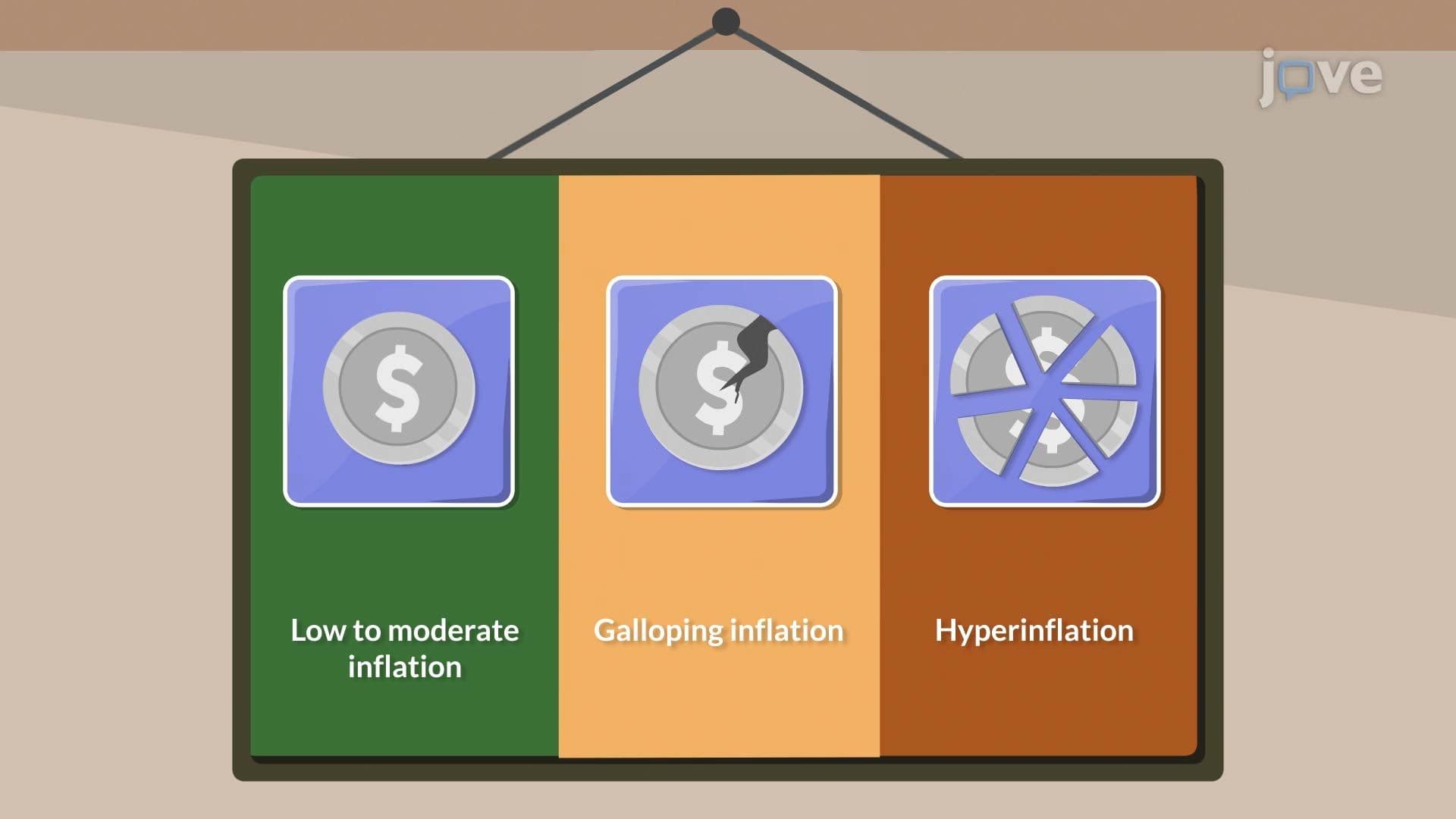
The three strains of inflation provide economists and policymakers with a systematic way to categorize and respond to different levels of price instability. This classification system helps predict economic behavior and guide monetary policy decisions across various inflation scenarios.
The first strain represents inflation rates typically between 1-4% annually, considered healthy for growing economies. The Federal Reserve targets approximately 2% inflation as optimal for the US economy. During this phase, consumers maintain confidence in the dollar's purchasing power, enabling long-term financial planning. Businesses can forecast costs reasonably, and wage negotiations remain predictable. Students preparing for AP Economics exams should note that this strain often accompanies periods of economic growth and employment expansion.
Galloping inflation, ranging from roughly 10-100% annually, marks a critical transition point where economic stability begins breaking down. Consumer behavior shifts dramatically as people lose faith in currency stability. During the late 1970s and early 1980s, the United States experienced inflation rates approaching 15%, prompting aggressive Federal Reserve action under Paul Volcker. This strain appears frequently on college economics exams, particularly regarding the relationship between monetary policy and price stability. Students should understand how galloping inflation triggers flight to tangible assets like real estate and commodities.
Hyperinflation represents complete monetary system failure, with prices increasing by hundreds or thousands of percent annually. While the US has never experienced true hyperinflation, understanding this concept is crucial for MCAT economics sections and advanced undergraduate coursework. This strain renders traditional economic models ineffective as bartering replaces monetary transactions. The key learning point for students is recognizing hyperinflation as a political and institutional failure, not merely an economic phenomenon.
These inflation concepts appear across multiple academic contexts. AP Macroeconomics students encounter these classifications when studying monetary policy effectiveness. Pre-med students preparing for the MCAT's social sciences section should understand how hyperinflation affects healthcare systems and public health outcomes. Business students analyze how companies adapt pricing strategies and supply chain management across different inflation environments.
Related Micro-courses