Loading…
Loading video…

36,613 views
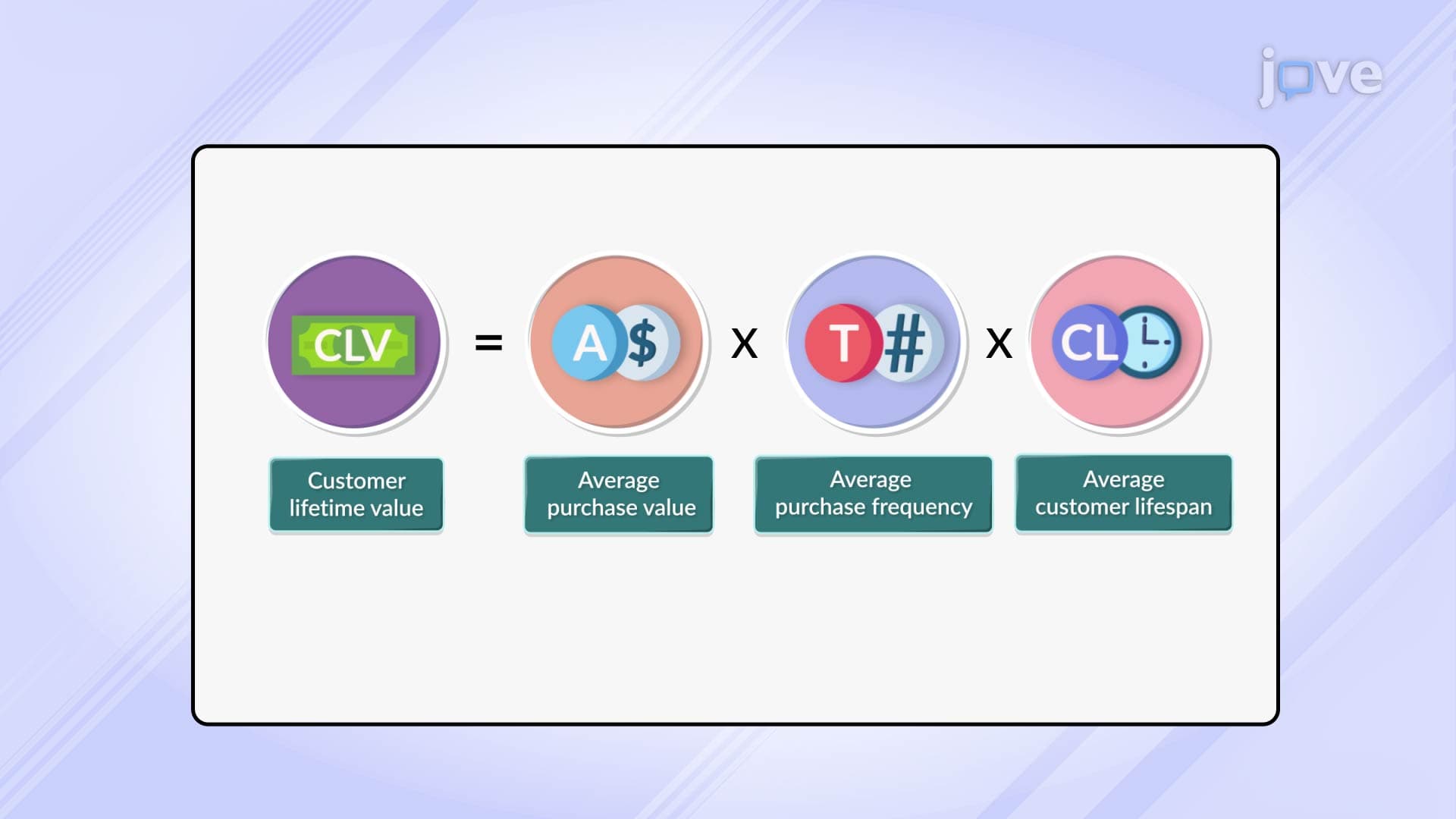
Customer lifetime value drives strategic decisions for companies like Netflix, which leverages CLV insights to justify content investments exceeding $15 billion annually. Understanding what customer lifetime value means enables executives to allocate marketing budgets effectively, prioritize high-value customer segments, and optimize acquisition strategies for sustainable profitability. This customer lifetime value definition explained reveals why Plan B subscribers generate 3x higher returns than Plan A customers, transforming how streaming services approach pricing and retention. Watch the full video on JoVE Coach to master this concept with expert-led visuals and step-by-step explanations.
Modern business leaders face intense pressure to demonstrate marketing ROI while acquiring customers in increasingly expensive digital channels. Amazon's Prime membership strategy exemplifies masterful customer lifetime value application—the company reportedly loses money on most Prime subscriptions in year one but generates substantial profits through increased purchase frequency and retention over multi-year relationships.
The fundamental customer lifetime value formula multiplies average purchase value by purchase frequency and customer lifespan. However, sophisticated organizations like American Express incorporate acquisition costs, retention expenses, and discount rates for accurate profitability analysis. The streaming service example demonstrates this complexity: while Plan A ($7/month, 1-year retention) generates $84 lifetime revenue against $100 acquisition costs, Plan B ($12/month, 3-year retention) produces $432 in revenue, creating a $232 net profit after acquisition expenses.
Financial services companies leverage CLV to optimize credit card portfolios, with JPMorgan Chase reportedly segmenting customers based on lifetime profitability rather than just credit scores. SaaS companies like Salesforce use CLV metrics to justify enterprise sales investments, recognizing that acquiring a Fortune 500 client might cost $50,000 but generate millions in lifetime value through multi-year contracts and expansion revenue.
Understanding customer lifetime value enables companies to outbid competitors for high-value customer segments while avoiding unprofitable acquisition channels. Tesla's direct-to-consumer model reflects CLV thinking—bypassing traditional dealerships to capture the full lifetime relationship value, from initial vehicle purchase through service, charging infrastructure, and potential future vehicle sales. This approach transforms customer acquisition from a cost center into a strategic investment with measurable long-term returns.
Frequently Asked Questions
Customer lifetime value represents the total profit a customer generates for your business throughout their entire relationship with your company. It helps executives determine how much to invest in acquiring and retaining customers while maintaining profitability. This metric guides pricing strategies, marketing budgets, and customer service investments.
Present CLV data to justify marketing spend by showing that acquiring customers with $500 lifetime value supports up to $200 acquisition costs while maintaining healthy margins. Use segment-specific CLV metrics to allocate budgets toward high-value customer channels. This approach transforms marketing from an expense into a measurable investment with predictable returns.
Focus on CLV when building sustainable competitive advantages, launching subscription services, or entering new markets where initial customer acquisition costs exceed first-year revenues. Companies like Spotify prioritize CLV to justify content licensing investments that reduce short-term profits but increase long-term customer retention and value.
Disney applies CLV thinking across their ecosystem—theme park visits, streaming subscriptions, merchandise, and cruise bookings create interconnected revenue streams. A family visiting Disney World once might generate $5,000 in immediate revenue but $25,000 in lifetime value through repeat visits, Disney+ subscriptions, and merchandise purchases, justifying premium pricing and customer experience investments.
Basic CLV calculations require only fundamental math skills and spreadsheet proficiency. Start with simple formulas using average purchase amounts, transaction frequency, and customer retention periods. Most business professionals can master essential CLV concepts without advanced financial modeling, though complex scenarios benefit from analytical support.
CLV expertise demonstrates strategic thinking and data-driven decision-making skills highly valued in marketing, product management, and general management roles. Professionals who can connect customer metrics to business profitability often advance to director-level positions where P&L responsibility requires balancing acquisition costs with long-term value creation.
Investigate cohort analysis to track CLV changes over time, predictive CLV modeling using machine learning, and customer segmentation strategies. Understanding churn prediction, cross-selling optimization, and lifetime value attribution across multiple touchpoints represents the next level of strategic customer analytics.
Related Micro-courses

Related Subjects