Loading subject page…
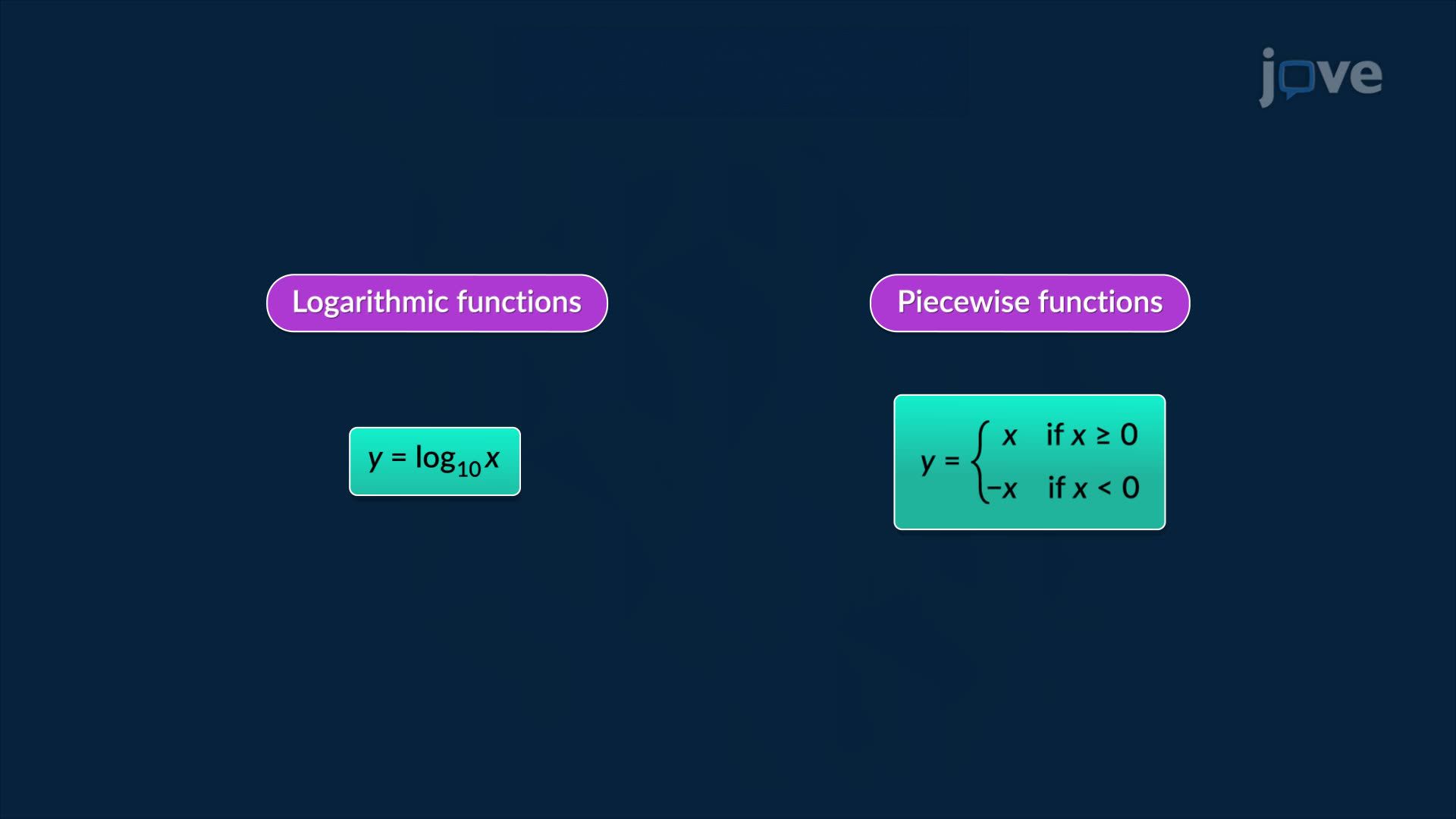
- Math Fundamentals
- Functions and Their Graphs
- Types of Functions III
Micro-course: Functions and Their Graphs
721 views
Learn key concepts and earn your certificate.

Types of Functions III

00:00
01:28
Video Summary: What are Types of Functions Iii
Did you know that every time you check your phone's battery percentage or calculate a tip at a restaurant, you're using advanced mathematical functions? Types of functions III introduces logarithmic and piecewise functions-two powerful tools that model everything from earthquake measurements on the Richter scale to cell phone billing plans across America. While exponential functions explode upward, logarithmic functions rise quickly then level off, making them perfect for representing massive scale differences. Watch the full video on JoVE Coach to master this concept with expert-led visuals and step-by-step explanations.
- Understand what are types of functions III by exploring logarithmic and piecewise functions and their unique characteristics
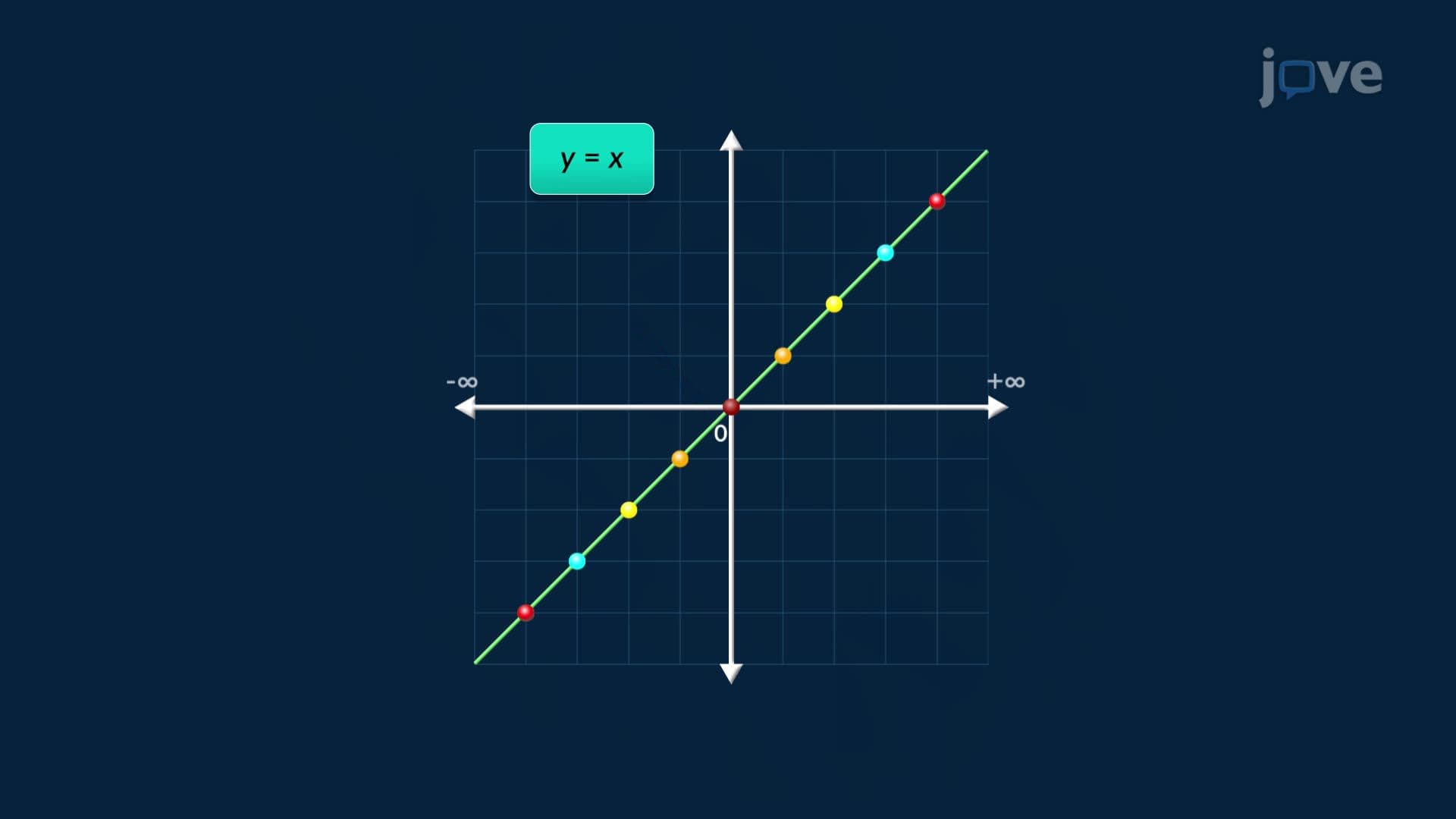
- Identify the inverse relationship between logarithmic and exponential functions and how they reflect across the line y = x
- Analyze how logarithmic functions compress large numerical ranges into manageable scales like pH measurements and decibel levels
- Compare the rapid initial growth of logarithmic functions with the slower growth that follows at higher input values
- Evaluate piecewise functions by recognizing how different rules apply to different sections of the domain
- Apply logarithmic scaling concepts to real-world scenarios including scientific measurements and financial calculations
- Recognize piecewise function patterns in everyday situations like tax brackets, shipping costs, and utility billing
- Explore the graphical behavior of both function types and their practical applications in STEM fields
Understanding Types of Functions III: Advanced Function Categories
Types of functions III represents a crucial stepping stone in advanced mathematics, introducing students to logarithmic and piecewise functions that govern countless real-world phenomena. These function types appear regularly on the SAT Math section, AP Calculus exams, and college algebra courses, making them essential for academic success.
Logarithmic Functions: The Great Compressors
Logarithmic functions serve as the mathematical inverse of exponential functions, creating a mirror image across the line y = x. While exponential functions like population growth or compound interest start slowly then explode upward, logarithmic functions exhibit the opposite behavior-rapid initial growth that gradually levels off.
This unique characteristic makes logarithmic functions invaluable for representing phenomena with enormous scale variations. The Richter scale measures earthquake intensity logarithmically, where each whole number increase represents a tenfold increase in seismic wave amplitude. Similarly, the decibel scale for sound intensity uses logarithmic compression-a rock concert at 110 decibels produces sound waves 100 times more intense than normal conversation at 60 decibels.
In chemistry courses across American high schools, students encounter logarithmic functions through the pH scale. Each pH unit represents a tenfold change in hydrogen ion concentration, meaning lemon juice (pH 2) is 100,000 times more acidic than pure water (pH 7). This logarithmic relationship allows scientists to work with manageable numbers instead of tiny decimal concentrations.
Piecewise Functions: Mathematical Rule-Changers
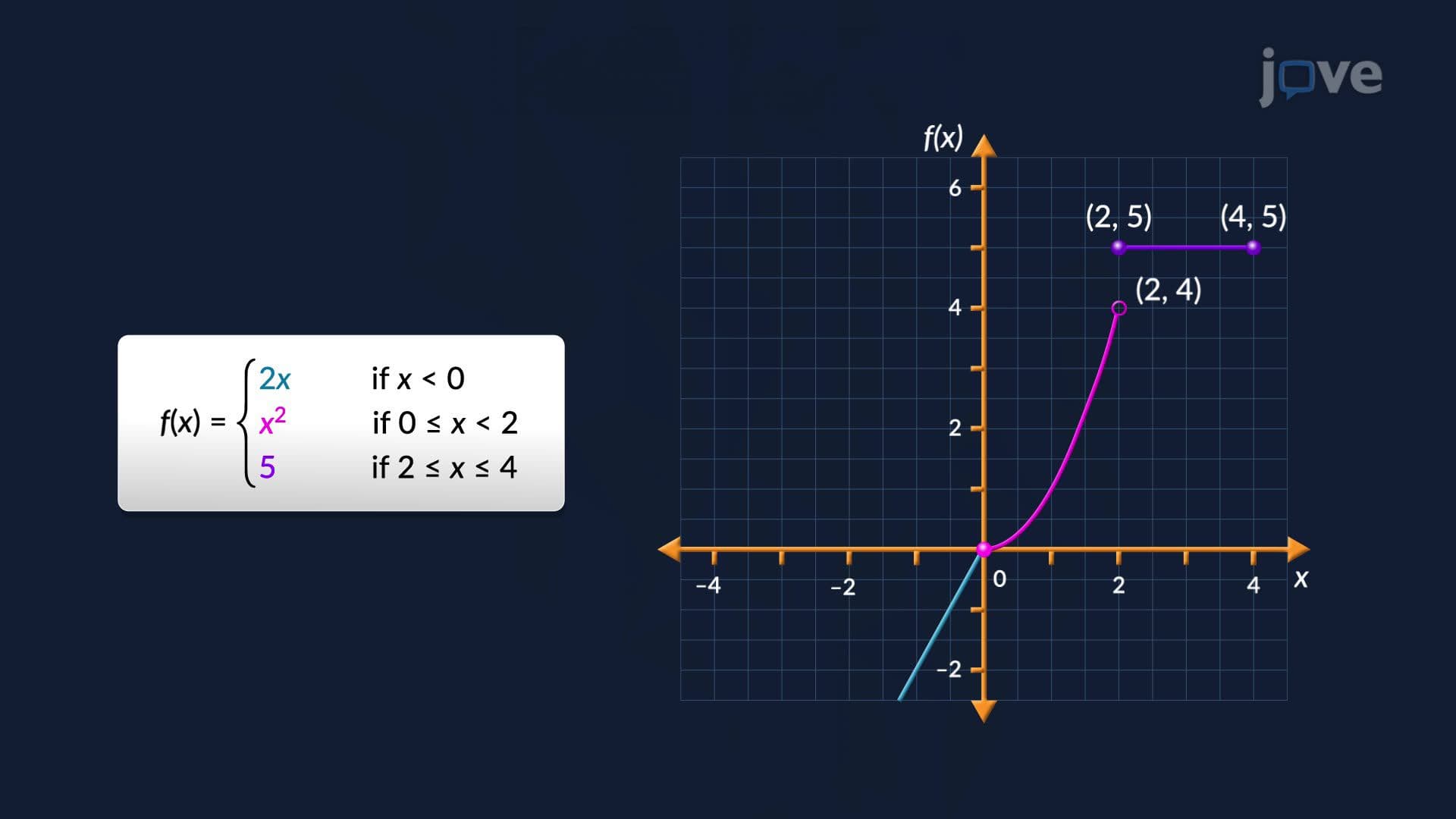
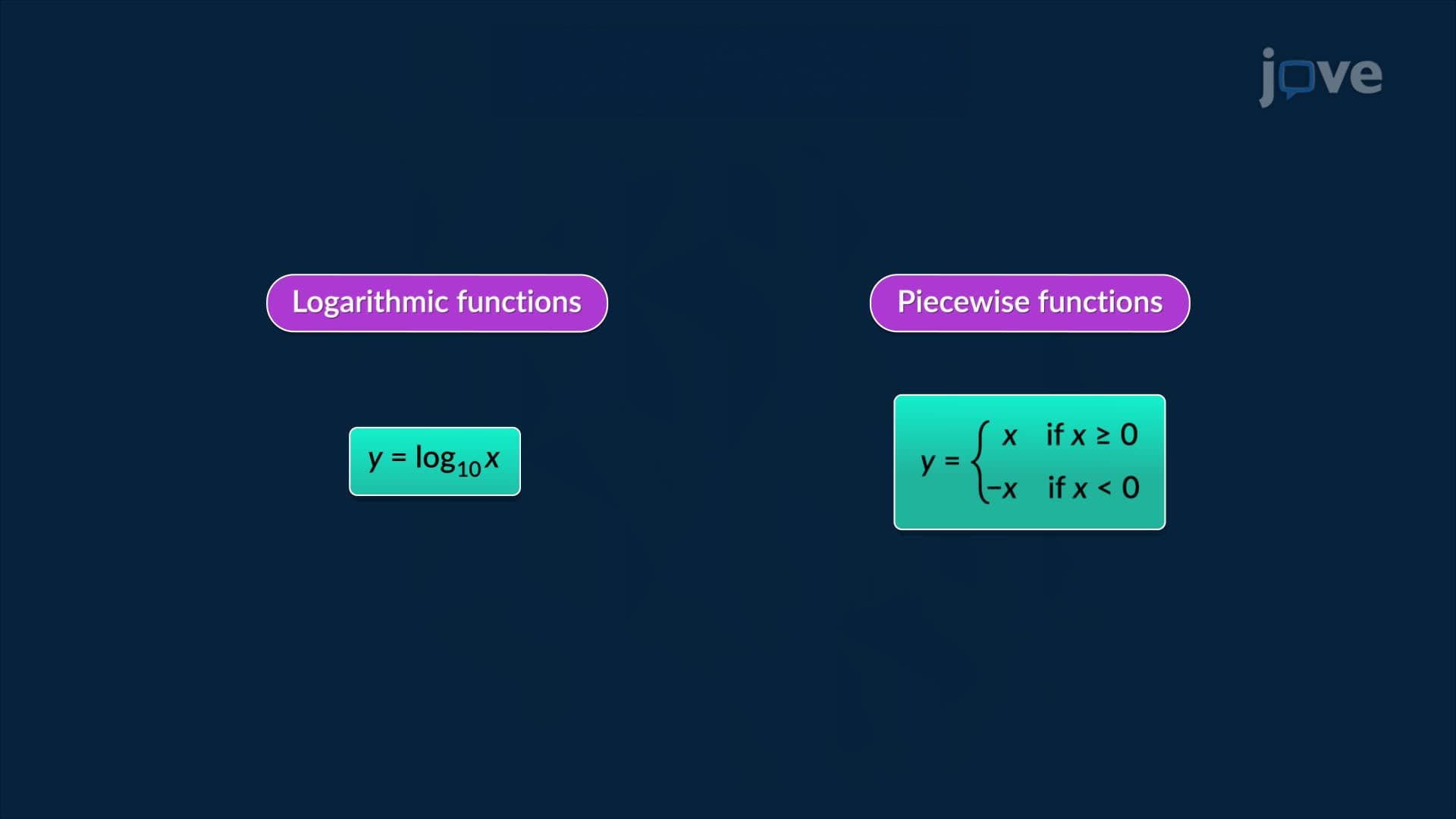
Piecewise functions operate under different mathematical rules depending on the input value, creating graphs that appear as connected segments with potential jumps or breaks. These functions model situations where behavior changes abruptly at specific thresholds.
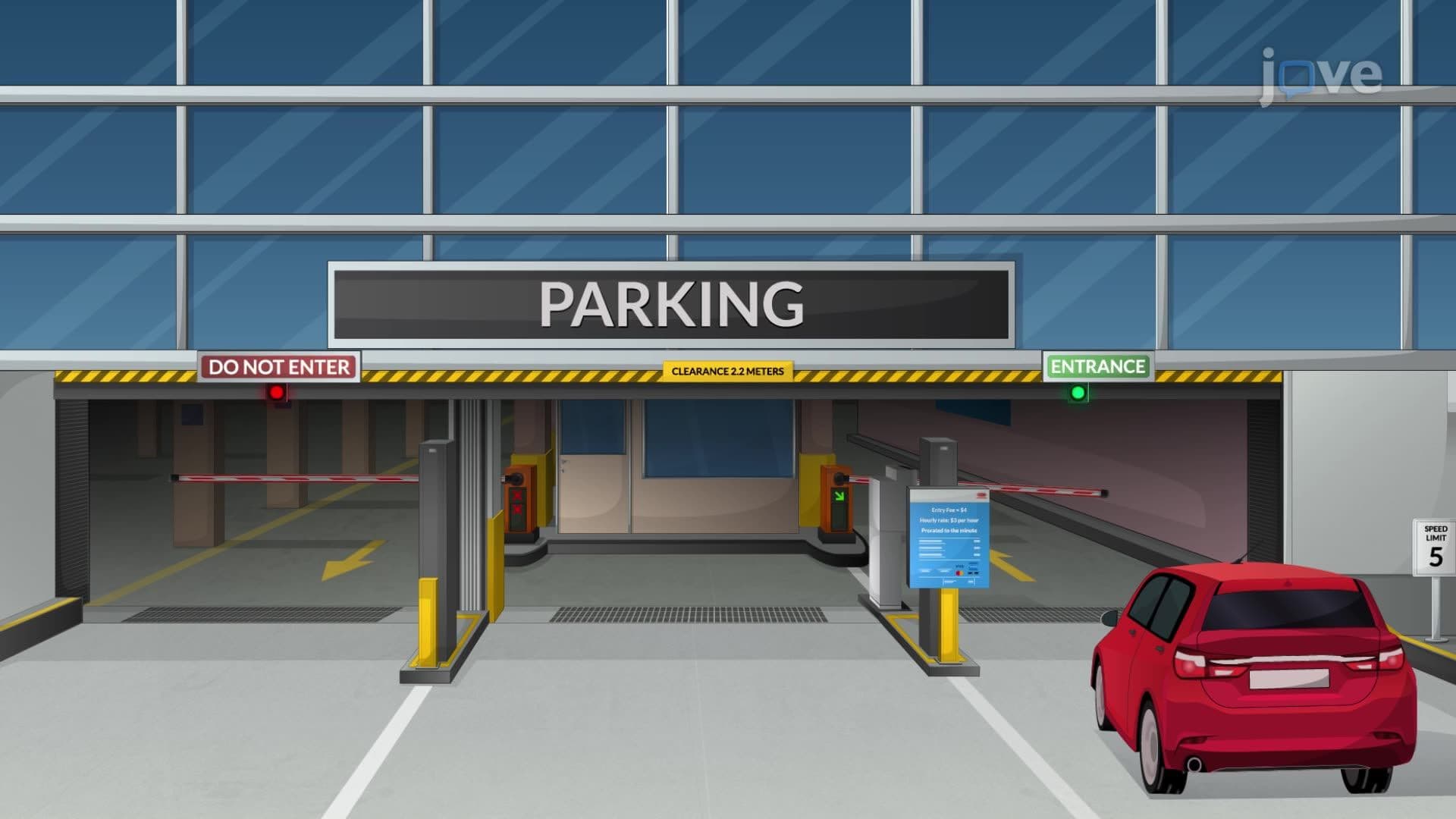
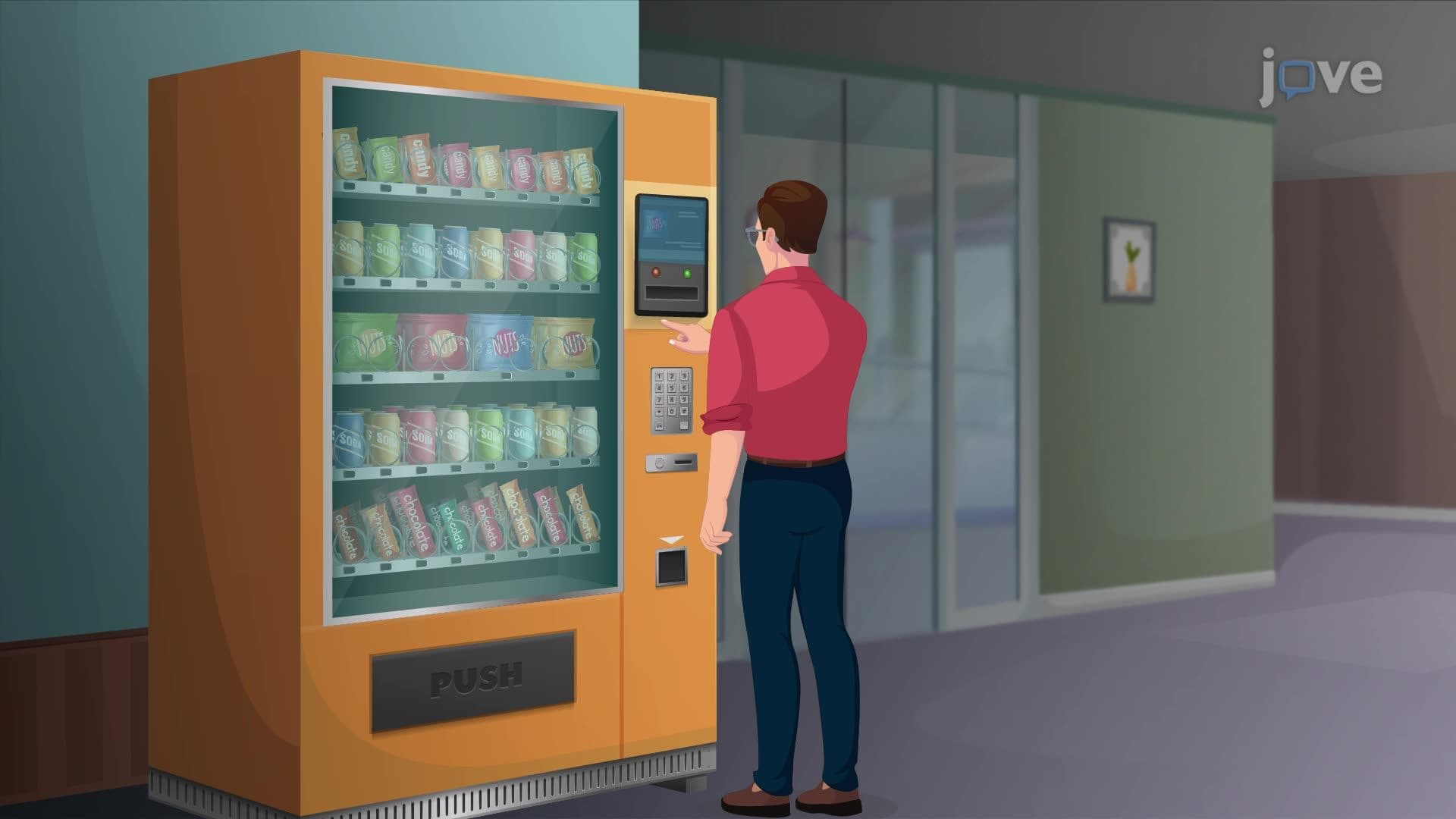
American tax brackets provide a perfect piecewise function example. The 2024 federal tax system uses different rates for different income ranges-10% for income up to $11,000, 12% for income from $11,001 to $44,725, and so forth. Each tax bracket represents a different piece of the overall function.
Cell phone plans demonstrate another piecewise application. Many carriers offer unlimited data up to a threshold, then throttle speeds or charge overage fees. Uber's surge pricing creates piecewise functions where ride costs jump at predetermined demand levels.
Exam Applications and Problem-Solving
AP Calculus students frequently encounter logarithmic differentiation problems, while SAT Math sections test logarithmic equation solving. College algebra courses emphasize graphing both function types and understanding their transformations. Piecewise functions appear in optimization problems where conditions change across different intervals, preparing students for advanced calculus concepts like limits and continuity.
Frequently Asked Questions
Types of functions III focuses on logarithmic and piecewise functions, which are more advanced than linear or quadratic functions. Logarithmic functions compress large numerical ranges and serve as inverses to exponential functions, while piecewise functions use different rules for different input sections. These functions model complex real-world scenarios that simpler functions cannot represent accurately.
AP Calculus frequently tests logarithmic differentiation, integration involving ln(x), and analyzing piecewise function continuity. Students must solve logarithmic equations, find derivatives of composite logarithmic functions, and determine where piecewise functions are differentiable. Free-response questions often combine these concepts with optimization or related rates problems.
The SAT Math section includes logarithmic equation solving, exponential-logarithmic relationships, and interpreting piecewise function graphs. Students encounter problems involving logarithmic scales in scientific contexts and must analyze piecewise functions representing real-world scenarios. Calculator and no-calculator sections both test these concepts through multiple-choice and grid-in questions.
College algebra expands logarithmic and piecewise function applications through transformation analysis, composite function creation, and advanced graphing techniques. Students explore logarithmic properties for equation solving, model real-world data using logarithmic regression, and construct piecewise functions for complex optimization problems. These skills prepare students for calculus and advanced mathematics courses.
Americans encounter logarithmic functions in earthquake reports (Richter scale), sound measurements (decibels), chemistry lab work (pH levels), and financial investments (compound interest calculations). Photography exposure settings, computer science algorithms, and medical diagnostic equipment all rely on logarithmic scaling to manage extreme value ranges effectively.
Understanding logarithmic and piecewise functions requires solid algebra skills and familiarity with exponential functions, but no calculus prerequisite. Students who can graph basic functions, solve equations, and understand function notation can successfully learn these concepts. Practice with exponential functions provides helpful foundation knowledge for logarithmic function mastery.
Focus on understanding the inverse relationship between exponential and logarithmic functions through graphing practice, then work extensive problems involving real-world applications. For piecewise functions, practice writing function notation for different scenarios and identifying domain restrictions. Create flashcards for logarithmic properties and practice converting between exponential and logarithmic forms daily.
After mastering logarithmic and piecewise functions, explore limits and continuity concepts that heavily utilize piecewise functions, then advance to differential calculus where logarithmic differentiation becomes essential. Trigonometric functions, inverse trigonometric functions, and multivariable calculus all build upon these foundational advanced function concepts.
Related Micro-courses
10 Concepts
8 Concepts
5 Concepts