Loading…
Loading video…

6,845 views
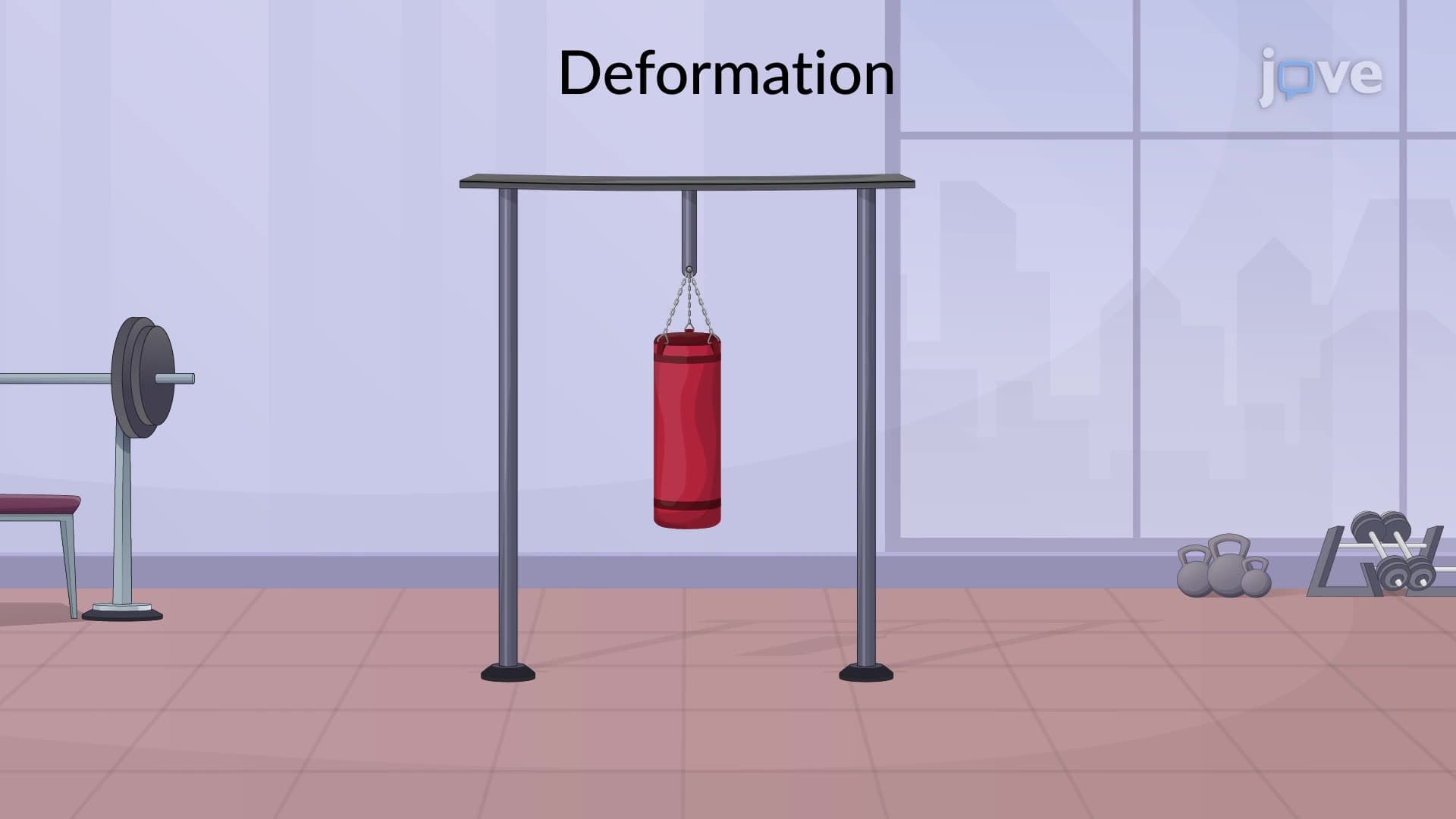
Ever wonder why a skyscraper's steel beams don't snap under massive loads? Deformations in a symmetric member reveal the hidden mechanics of how materials bend without breaking. When engineers design everything from the Golden Gate Bridge to NASA's rocket components, they rely on understanding how symmetric prismatic members respond to equal and opposite couples, creating predictable stress patterns and neutral surfaces where strain equals zero. Watch the full video on JoVE Coach to master this concept with expert-led visuals and step-by-step explanations.
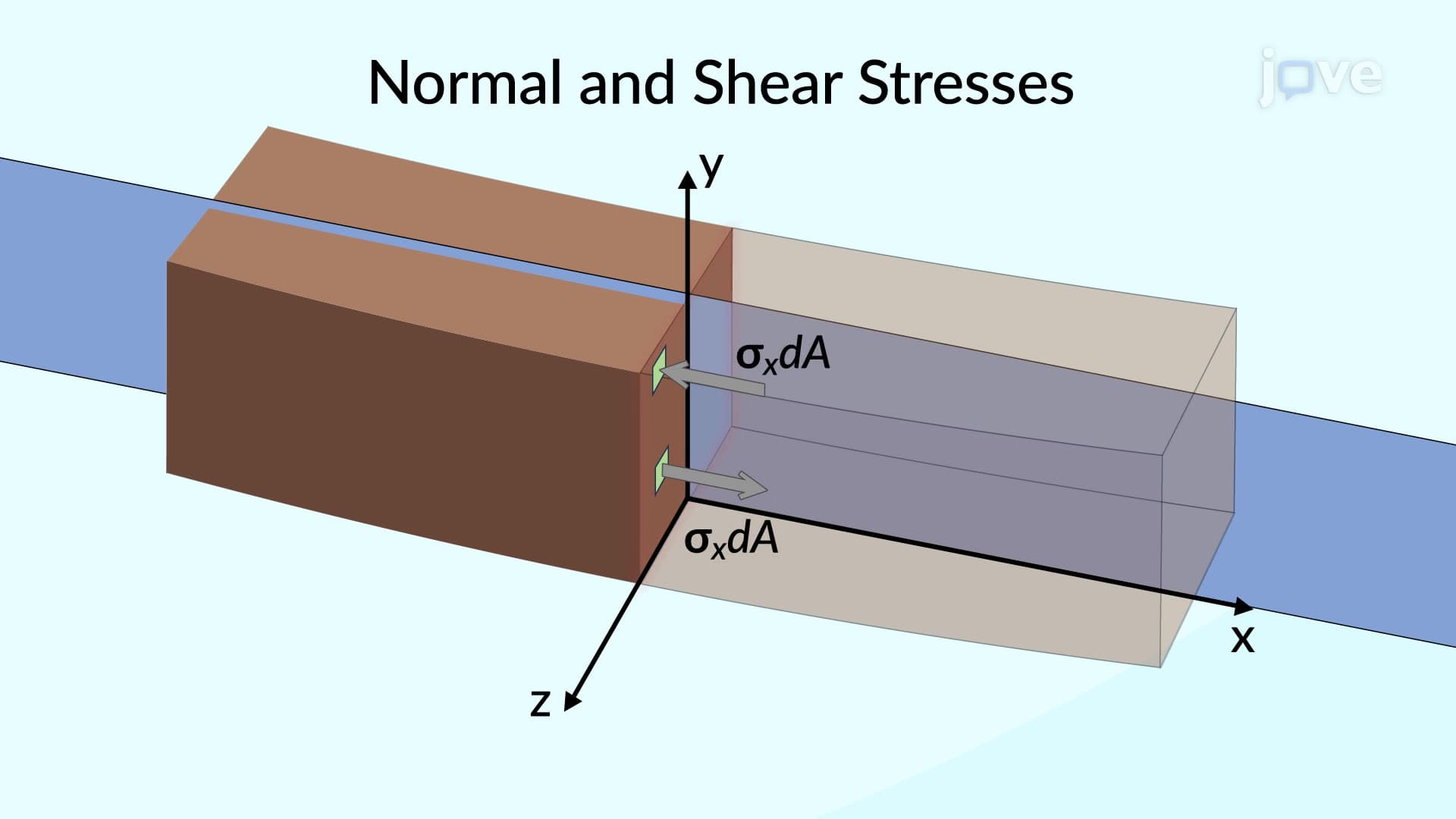
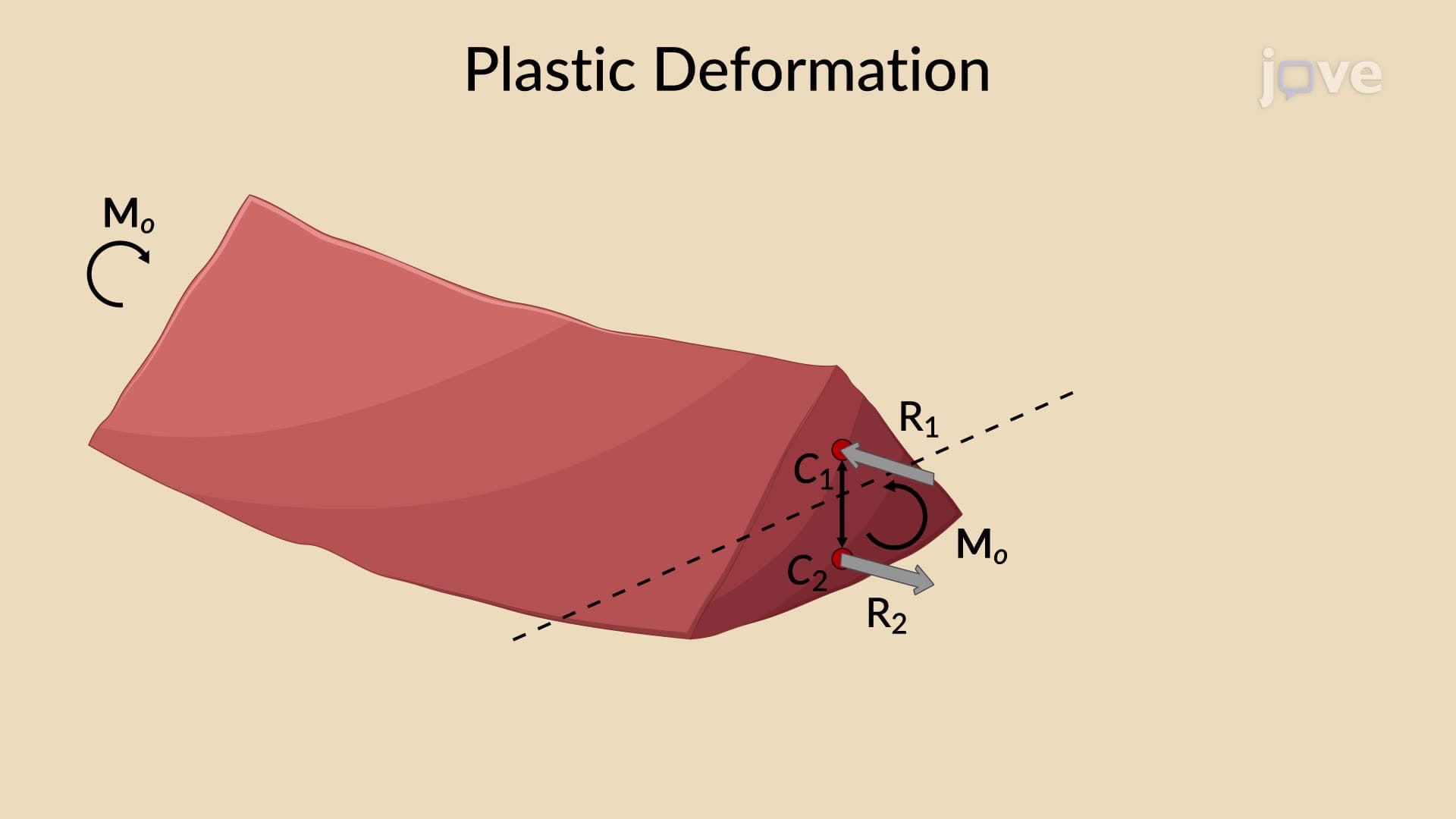
Deformations in a symmetric member represent one of the most crucial concepts in structural engineering and materials science. When a symmetric prismatic member—think of a uniform steel I-beam or aluminum rod—experiences equal and opposite couples (moments) at its ends, it undergoes a predictable bending pattern that engineers can calculate with precision.
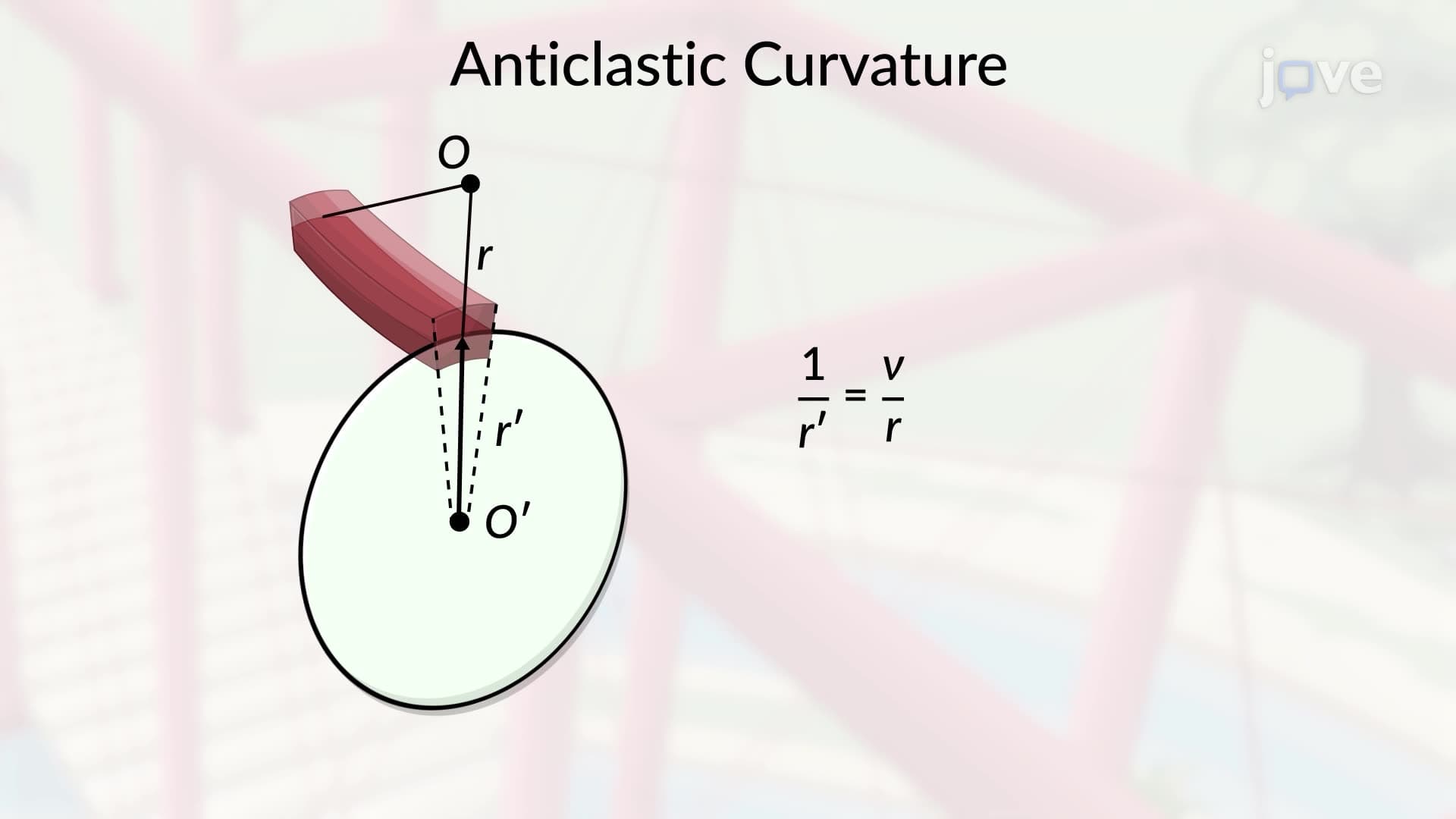
The key insight lies in understanding that the member bends uniformly, meaning every cross-section maintains its shape while rotating slightly relative to adjacent sections. This creates what engineers call "pure bending," where the originally straight member transforms into a circular arc with constant curvature.
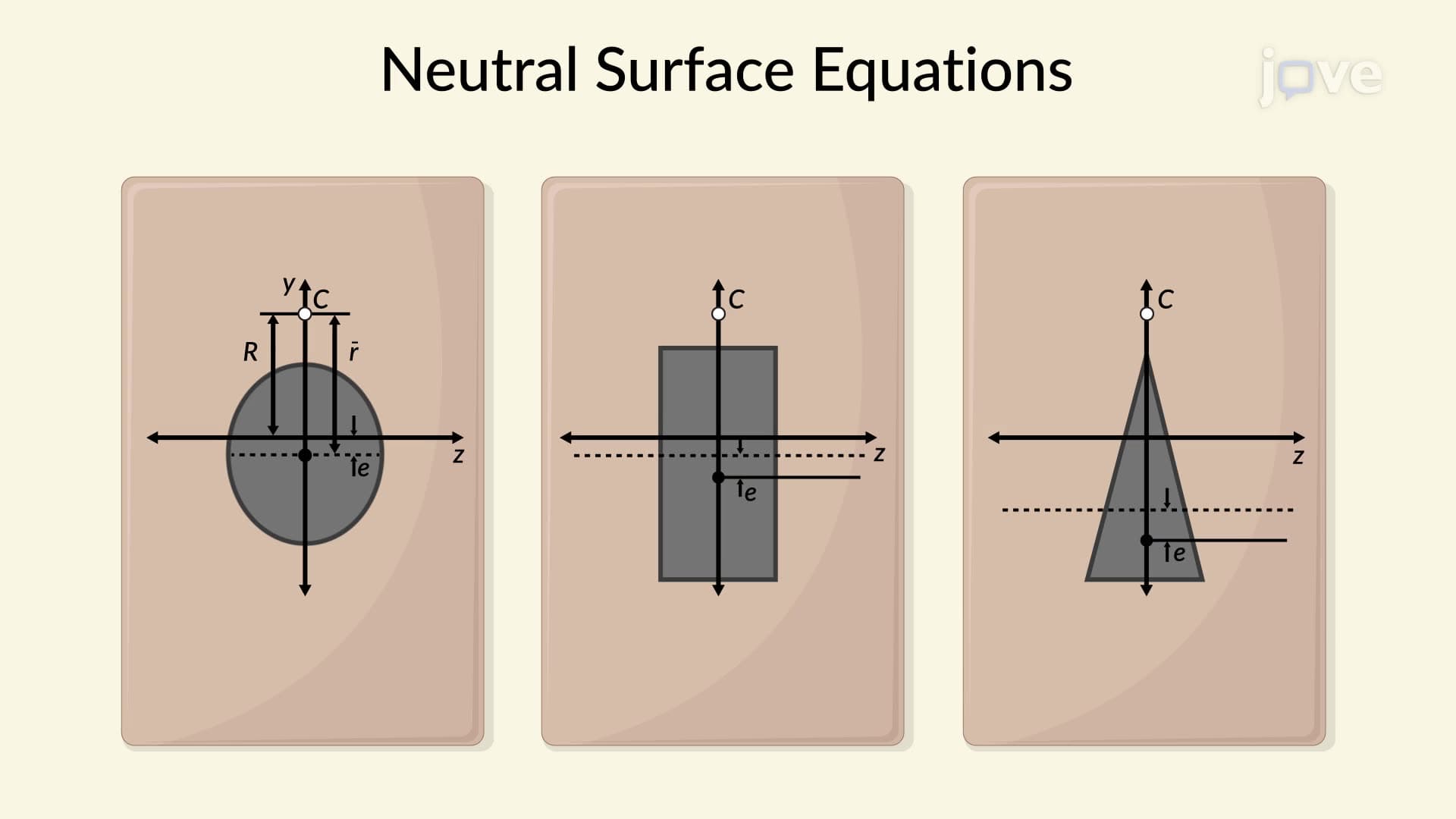
Perhaps the most fascinating aspect of symmetric member deformation is the existence of a neutral surface—an invisible plane running through the member's center where longitudinal stress and strain equal zero. Above this surface, fibers stretch (tension), while below it, fibers compress. This phenomenon explains why engineers can optimize beam designs by placing most material away from the neutral axis, creating efficient I-beam and T-beam shapes used in everything from the Empire State Building to Boeing aircraft wings.
The mathematical beauty of symmetric member deformation lies in its linear strain distribution. As distance from the neutral surface increases, strain increases proportionally. This relationship, expressed as ε = y/ρ (where ε is strain, y is distance from neutral surface, and ρ is radius of curvature), allows engineers to predict exactly how materials will behave under load.
This concept appears frequently on AP Physics C exams and college-level statics courses, where students must calculate maximum stresses in beams. Understanding this linear relationship helps solve problems involving everything from diving board deflection to bridge girder design.
Major US infrastructure projects rely heavily on these principles. When structural engineers designed the Millau Viaduct's cable-stayed segments or analyzed the Tacoma Narrows Bridge failure, they used symmetric member deformation theory to predict how steel and concrete elements would respond to wind loads, traffic loads, and thermal expansion. The concept also guides aerospace engineers at companies like Lockheed Martin and SpaceX when designing lightweight yet strong rocket fuselages and aircraft wings that must withstand extreme bending moments during flight.
Frequently Asked Questions
Deformations in a symmetric member describe how uniform structural elements bend when subjected to equal and opposite moments at their ends. The member maintains constant curvature throughout its length, creating predictable stress patterns that engineers use to design safe, efficient structures from bridges to aircraft components.
These concepts frequently appear as beam bending problems where you'll calculate maximum stress, neutral axis location, or deflection angles. Expect questions about I-beams, cantilever problems, and stress distribution calculations. Practice identifying neutral surfaces and applying the linear strain relationship ε = y/ρ for exam success.
You'll encounter this extensively in Statics, Strength of Materials, and Structural Analysis courses typically taken during sophomore or junior year in mechanical, civil, and aerospace engineering programs. It's also fundamental in Materials Science courses where stress-strain relationships are explored.
Every major US structure relies on these principles—from the Golden Gate Bridge's suspension cables to the Willis Tower's steel frame. NASA uses symmetric member analysis for rocket design, Boeing applies it to aircraft wings, and state DOTs use it for highway bridge construction and inspection protocols.
Not at all! The basic concepts use algebra and geometry you already know. While advanced applications involve calculus, understanding neutral surfaces, linear strain distribution, and stress patterns requires only fundamental math skills. Start with simple beam examples and build complexity gradually.
Practice drawing free-body diagrams, identifying neutral axes, and calculating stress distributions step-by-step. Focus on understanding the physical meaning behind equations rather than memorizing formulas. Work through problems involving different cross-sectional shapes like rectangles, circles, and I-beams to build intuition.
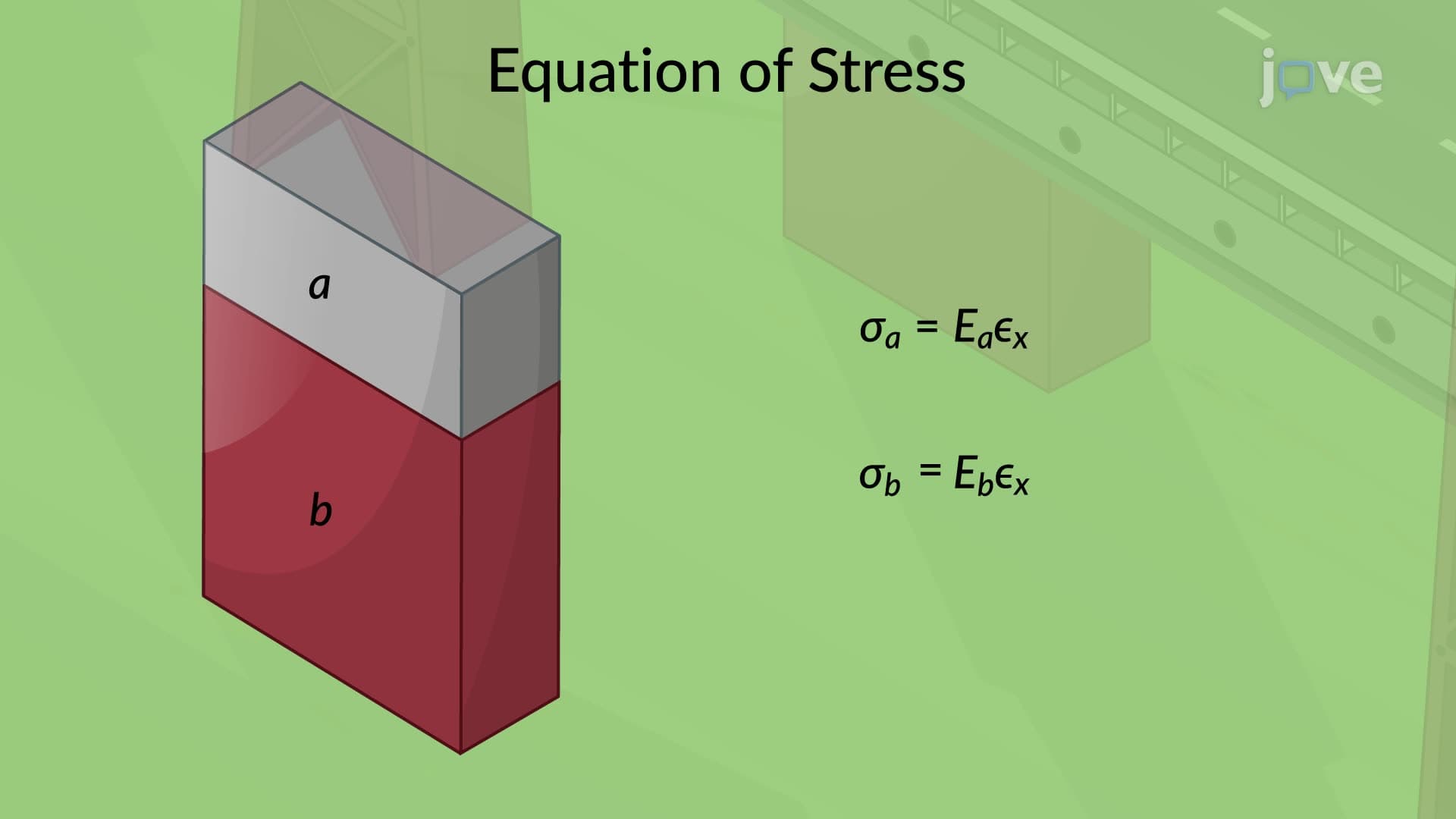
Master homogeneous symmetric members first before tackling composite materials. Understanding single-material behavior provides the foundation for analyzing steel-concrete composite beams used in modern construction. Once you grasp neutral surface concepts, composite analysis becomes much more manageable.
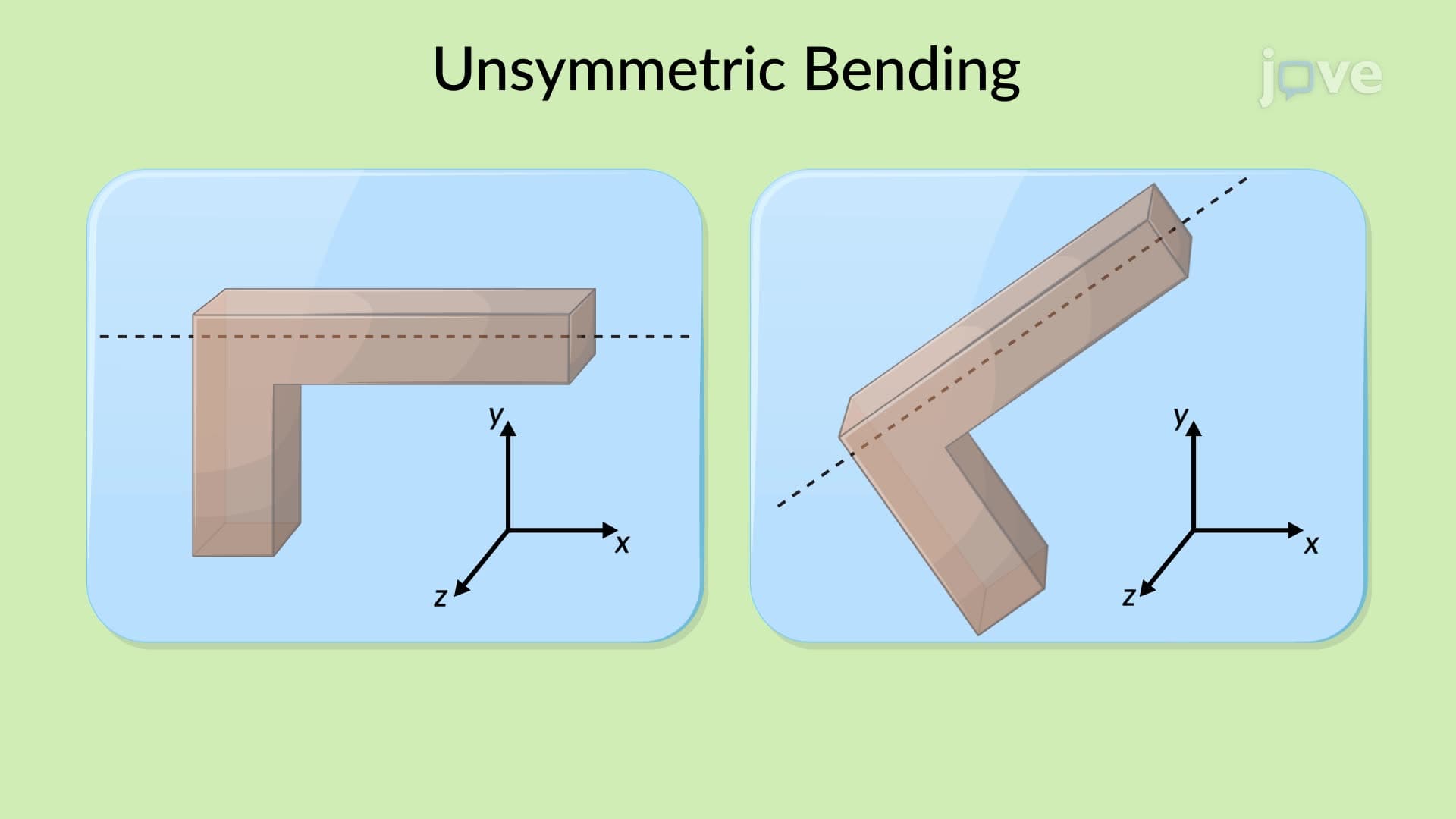
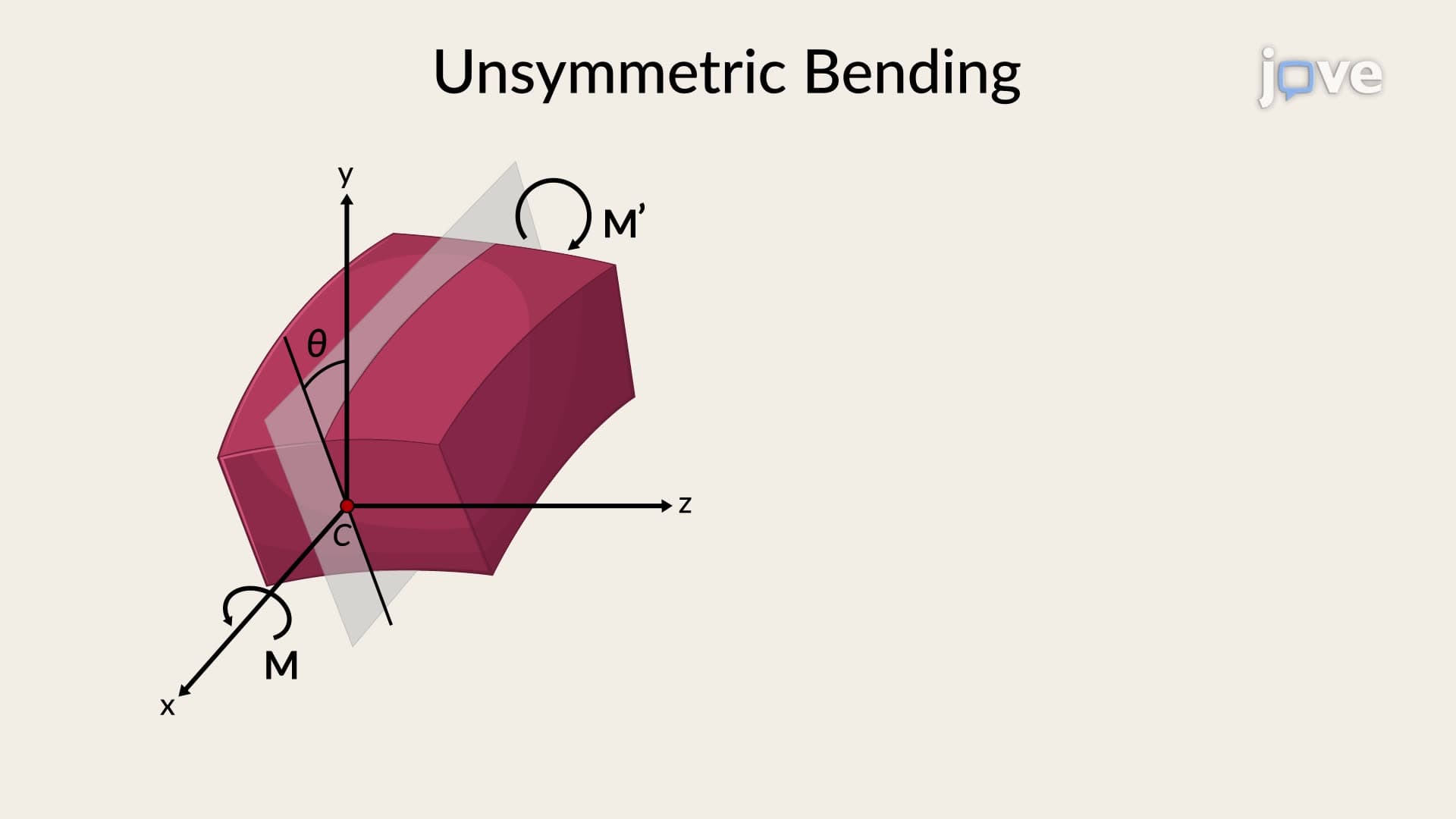
This foundation leads to studying unsymmetric bending, shear stress distribution, buckling analysis, and dynamic loading effects. These concepts are crucial for advanced structural engineering, aerospace design, and mechanical component analysis in graduate-level coursework and professional engineering practice.
Related Micro-courses
Related Subjects
 Civil Engineering 30 micro-courses›Electrical Engineering 33 micro-courses›