Loading…
Loading video…

6,845 views
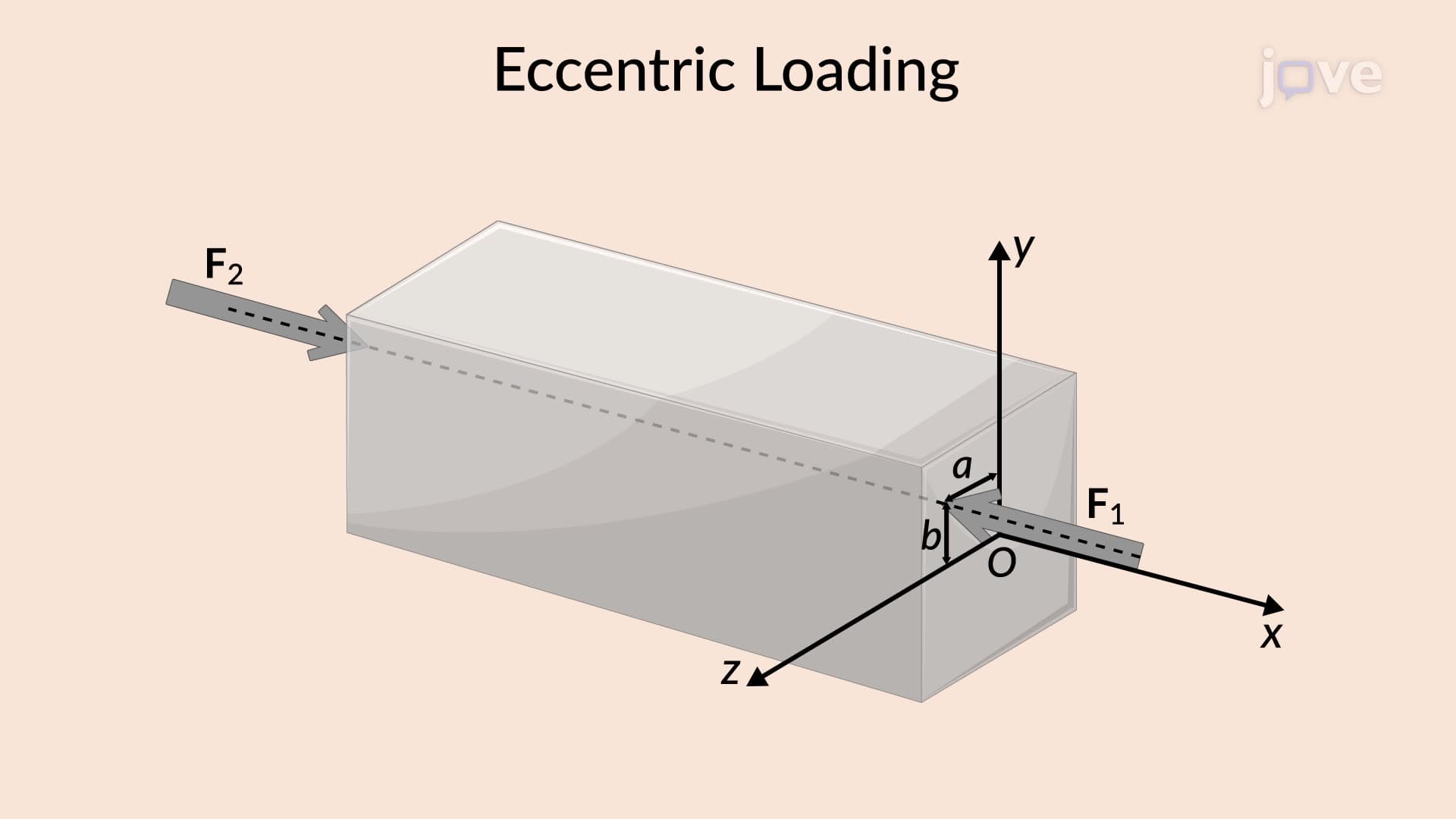
Ever wonder why skyscrapers like Chicago's Willis Tower don't topple over despite massive wind forces acting off-center? The general case of eccentric axial loading explains how structural members handle forces applied away from their central axis. This fundamental engineering principle combines axial loading with bending moments, creating complex stress distributions that engineers must carefully analyze when designing everything from bridge supports to building columns. Understanding how eccentric forces create both compression and tension zones within a single structural member is crucial for safe construction. Watch the full video on JoVE Coach to master this concept with expert-led visuals and step-by-step explanations.
The general case of eccentric axial loading represents one of the most important concepts in structural mechanics, bridging the gap between simple axial loading and complex combined loading scenarios. When forces act away from a member's centroidal axis—whether due to construction tolerances, design requirements, or external conditions—engineers must account for both direct stress and bending stress effects.
This loading condition commonly occurs in real-world structures. Consider the columns supporting highway overpasses, where wind loads create horizontal forces that don't align with the column's centerline. Similarly, building columns often experience eccentric loading when beams connect at different heights or when architectural features require off-center connections.
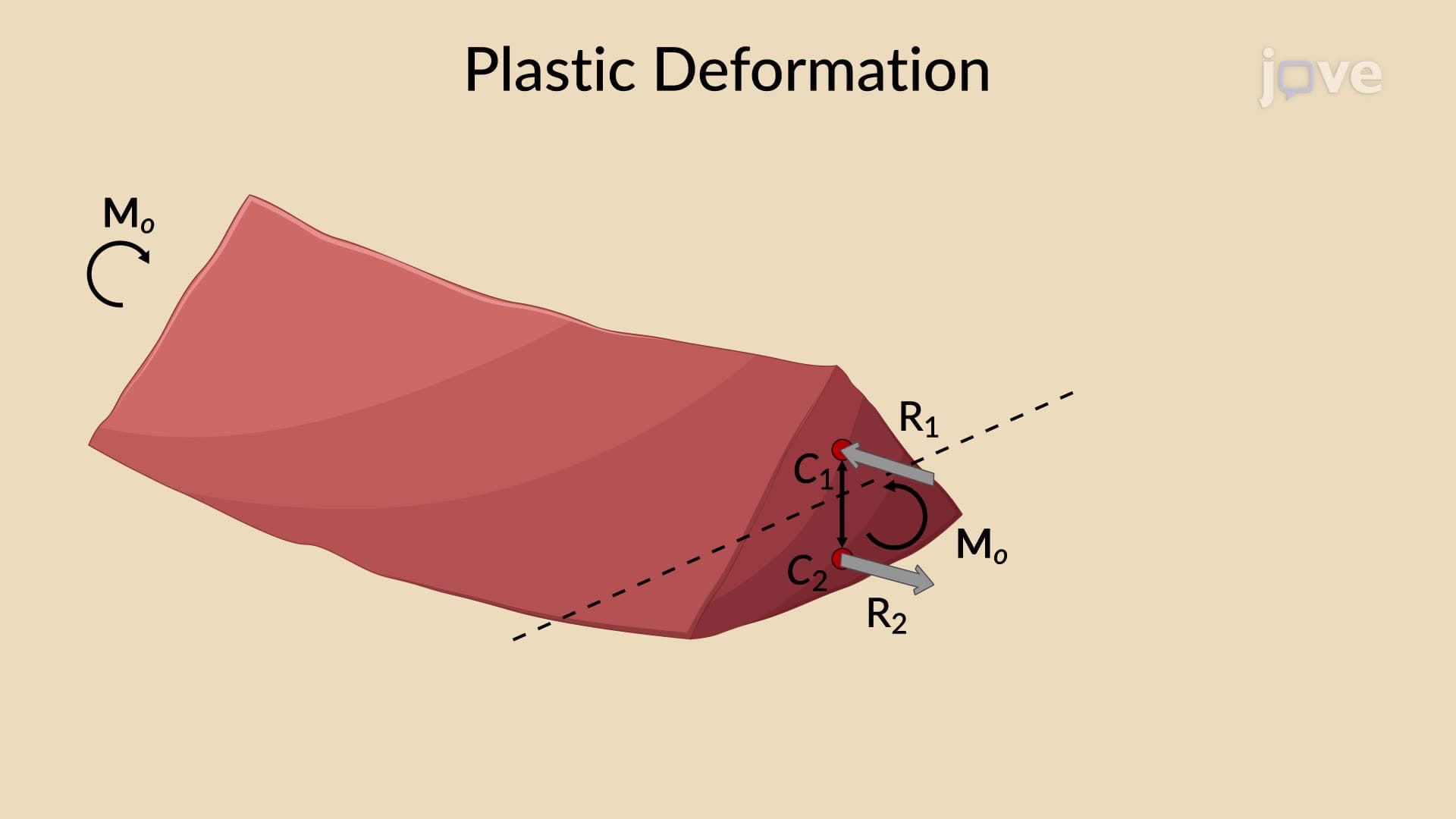
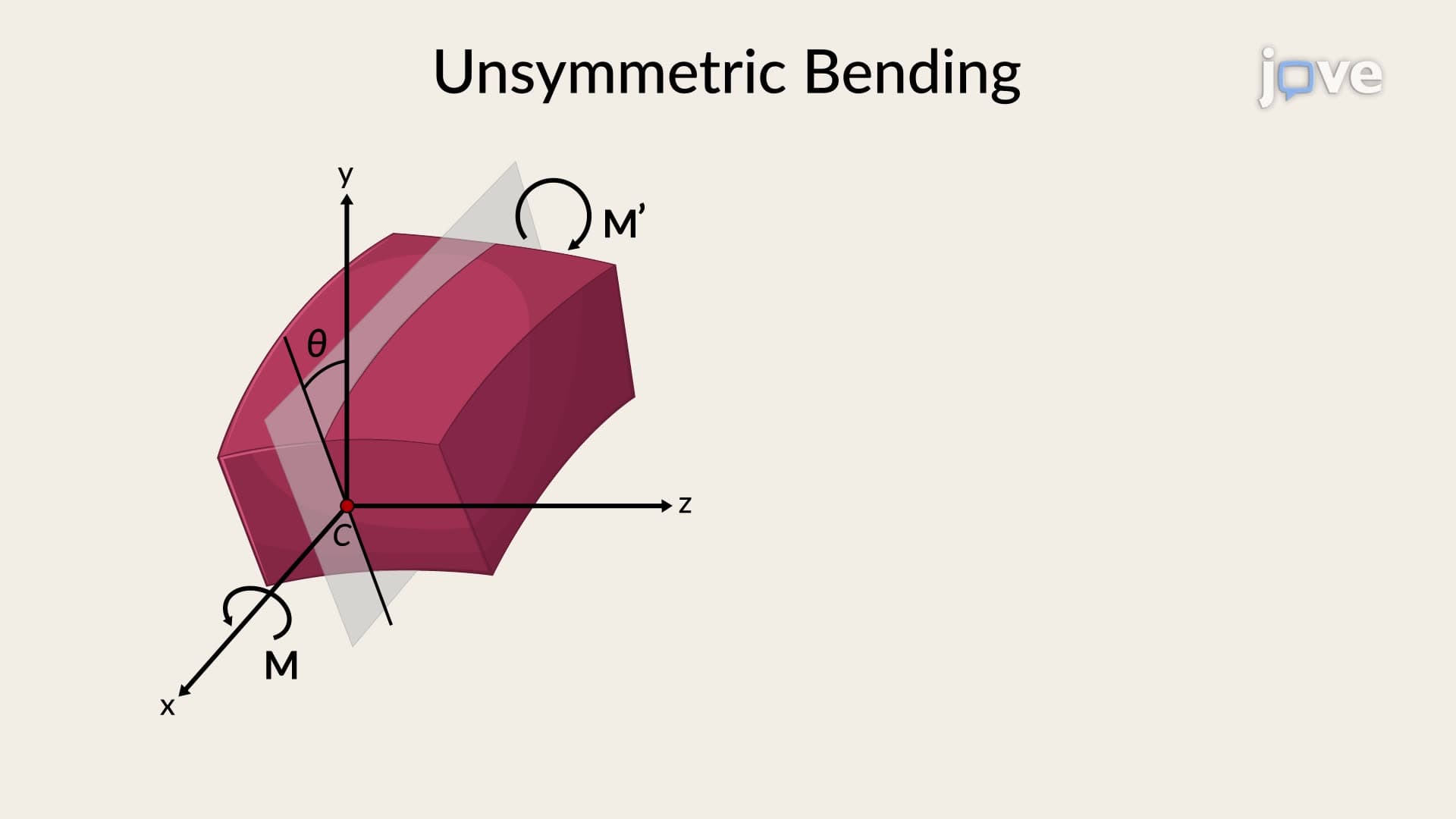
The key insight in analyzing eccentric loading lies in recognizing that any eccentric force can be replaced by an equivalent system: a centric force plus two couple moments. If an eccentric force P acts at distances a and b from the principal centroidal axes, the equivalent system consists of the same force P applied at the centroid, plus bending moments M(y) = P × a and M(z) = P × b about the respective axes.
The Saint-Venant principle validates this approach by stating that the specific manner of load application only affects local stress distributions near the point of application. At sections sufficiently far from the loading point—typically one member width away—the stress distribution depends only on the resultant force and moments, not their exact application method. This principle is crucial for engineering analysis and appears frequently in structural mechanics courses and professional engineering exams.
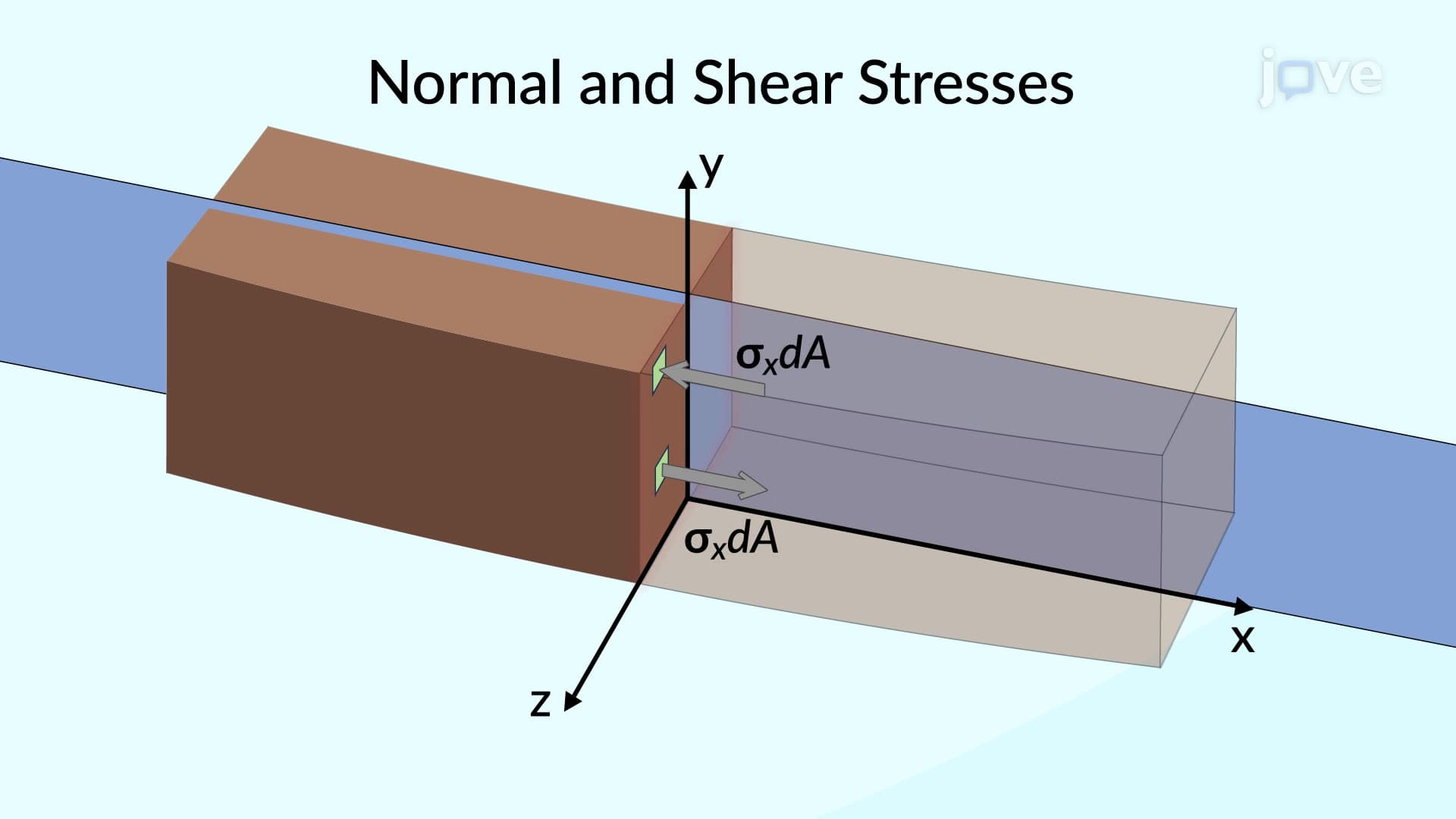
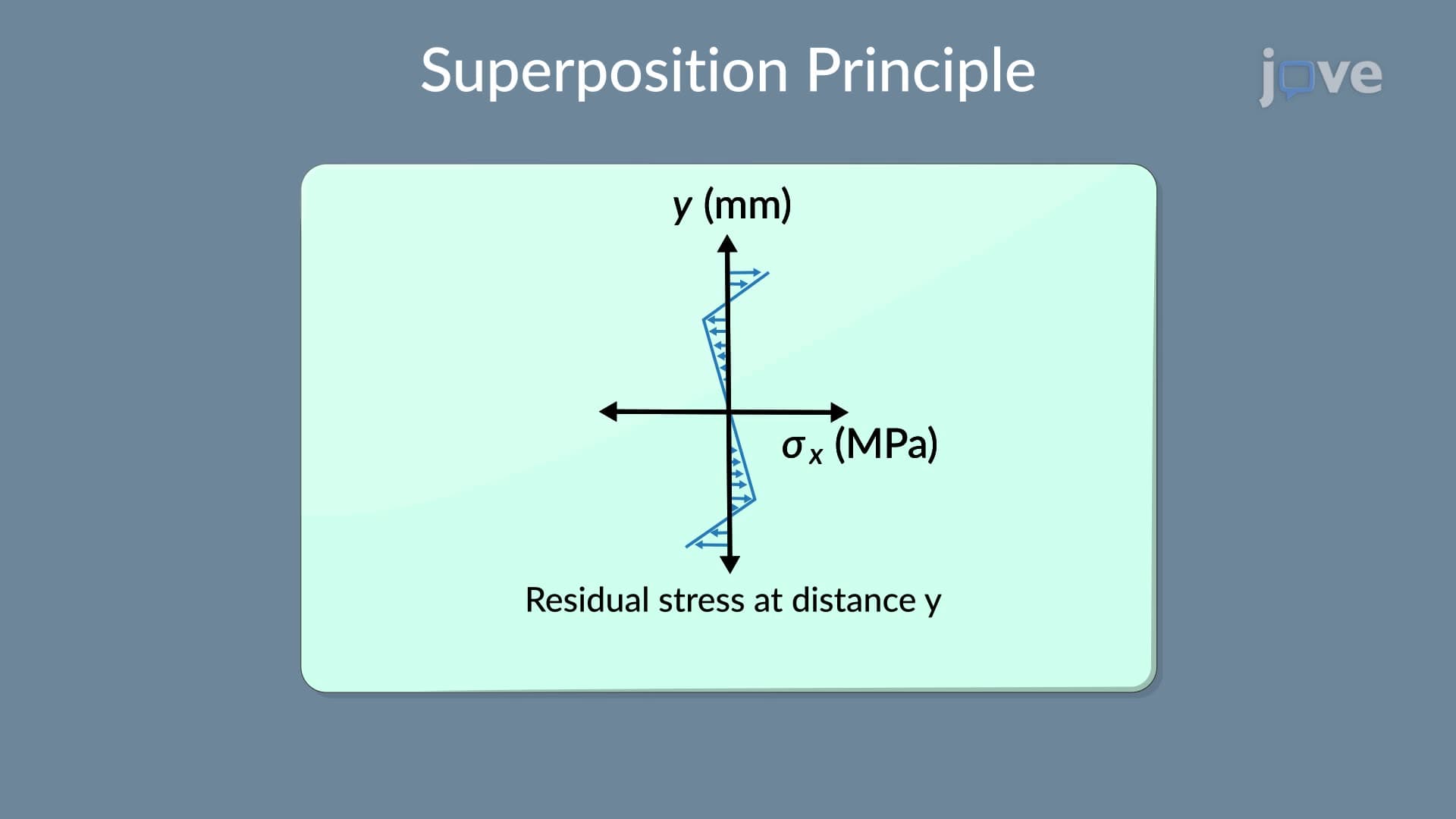
The superposition principle allows engineers to analyze eccentric loading by combining individual stress effects. The total normal stress at any point becomes: σ(total) = σ(axial) + σ(bending). The axial component equals P/A (where A is cross-sectional area), while bending components follow σ = M×c/I (where M is moment, c is distance from neutral axis, and I is moment of inertia).
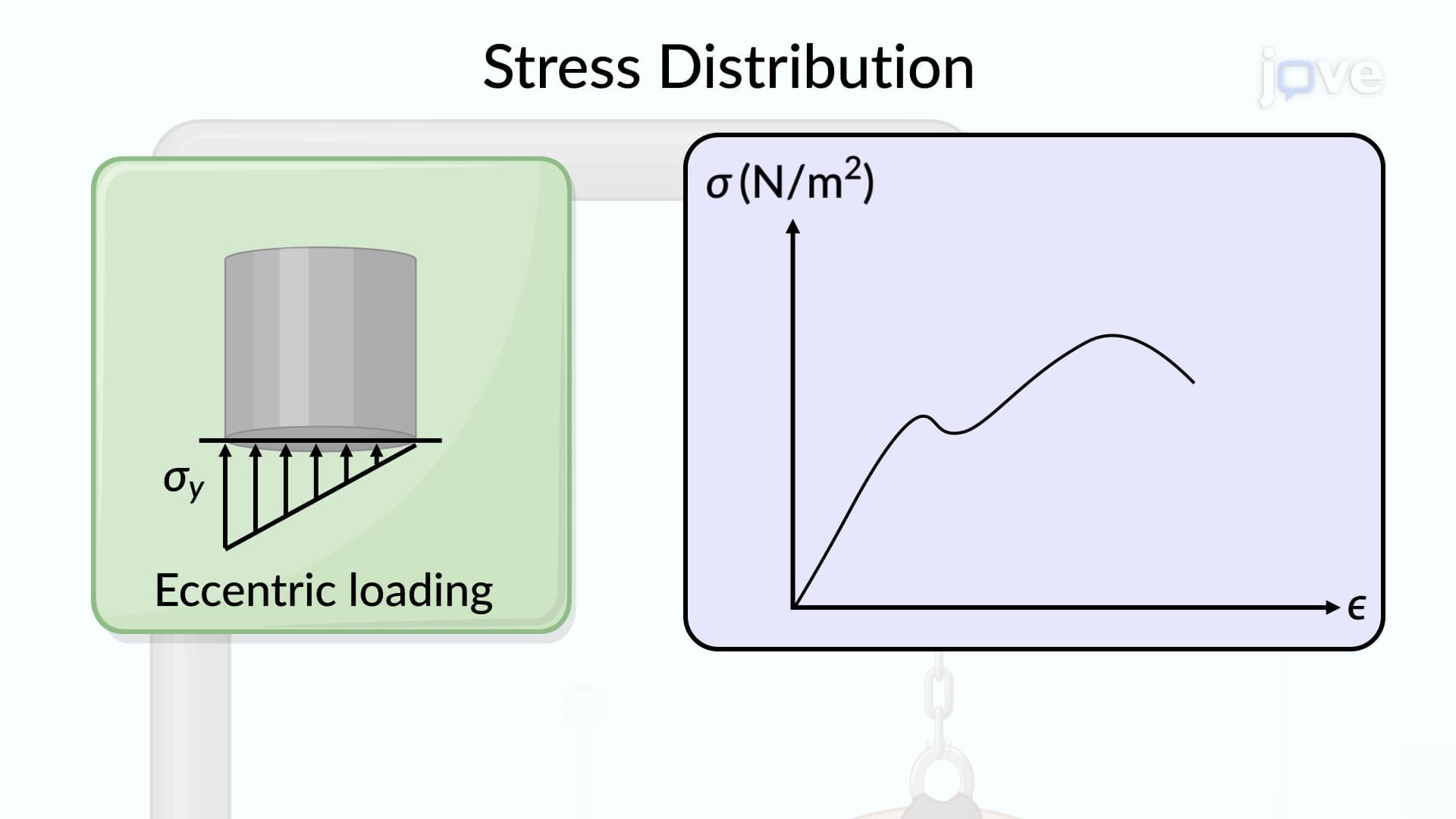
This linear combination creates fascinating stress patterns. Depending on the eccentricity magnitude and direction, the resulting stress distribution might be entirely compressive, entirely tensile, or change sign across the section. The neutral axis—where total stress equals zero—becomes a critical design consideration, especially in materials like concrete that handle compression well but have limited tensile strength.
Understanding eccentric loading proves essential for students pursuing engineering careers and those preparing for standardized tests. The concept appears on AP Physics exams, college-level statics and mechanics of materials courses, and professional engineering licensing examinations. Students should focus on identifying equivalent loading systems, applying superposition principles, and interpreting stress distribution diagrams—skills directly applicable to structural design problems in both academic and professional contexts.
Frequently Asked Questions
Eccentric axial loading occurs when forces are applied away from a member's centroidal axis, creating both axial stress and bending stress simultaneously. Unlike simple axial loading where stress is uniform across the cross-section (σ = P/A), eccentric loading creates varying stress distributions that combine direct and bending effects through superposition.
Exam problems typically require students to identify equivalent loading systems, calculate stress distributions using superposition, and locate neutral axes. Common question formats include analyzing beam-columns, determining maximum stresses in structural members, and comparing stress patterns between centric and eccentric loading cases. Practice problems often involve rectangular or circular cross-sections with specified eccentricities.
Focus on three key steps: first, convert eccentric forces to equivalent centric force plus couples; second, calculate individual stress components (axial and bending); third, apply superposition to find total stress distribution. Practice with various cross-sectional shapes and eccentricity combinations. Create stress distribution sketches to visualize results—this helps catch calculation errors and builds intuition.
Bridge columns supporting highway overpasses experience eccentric loading from wind and seismic forces, while building columns face eccentric loads when beams connect at different elevations. The Statue of Liberty's internal framework handles massive eccentric wind loads, and cell tower designs must account for antenna loads applied far from the tower's centerline. Even residential construction involves eccentric loading in roof trusses and foundation walls.
Basic algebra and geometry skills suffice for introductory eccentric loading analysis. Students need comfort with coordinate systems, linear equations, and area/centroid calculations—topics typically covered in high school math courses. While advanced applications involve calculus-based beam theory, fundamental concepts rely on straightforward arithmetic operations and superposition principles accessible to most high school students.
The MCAT's physics section tests mechanical reasoning skills that eccentric loading concepts reinforce. Understanding force equilibrium, moment calculations, and stress-strain relationships builds problem-solving abilities for biomechanics questions. While specific eccentric loading calculations don't appear on the MCAT, the analytical thinking required—breaking complex problems into simpler components—directly applies to test success.
Progress to combined loading scenarios involving axial, bending, and torsional effects simultaneously. Study column buckling under eccentric loads, which introduces stability concepts crucial for structural design. Explore plastic analysis methods for members exceeding elastic limits, and investigate dynamic loading effects in earthquake engineering—topics essential for advanced structural engineering coursework and professional practice.
Related Micro-courses
Related Subjects
 Civil Engineering 30 micro-courses›Electrical Engineering 33 micro-courses›