Loading subject page…

- Mechanical Engineering
- Bending
- Bending of Curved Members - Neutral Surface
Micro-course: Bending
6,846 views
Learn key concepts and earn your certificate.

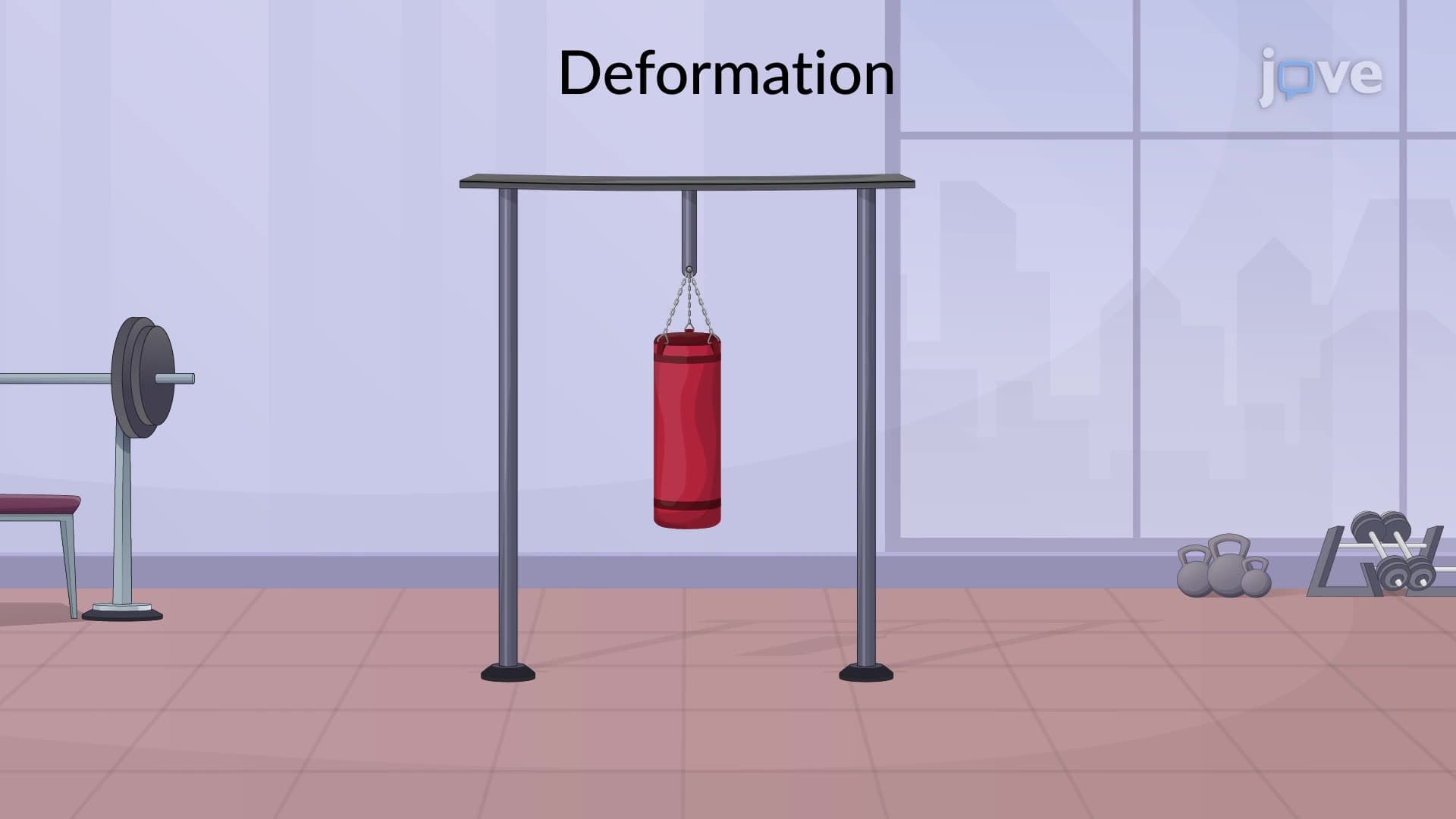
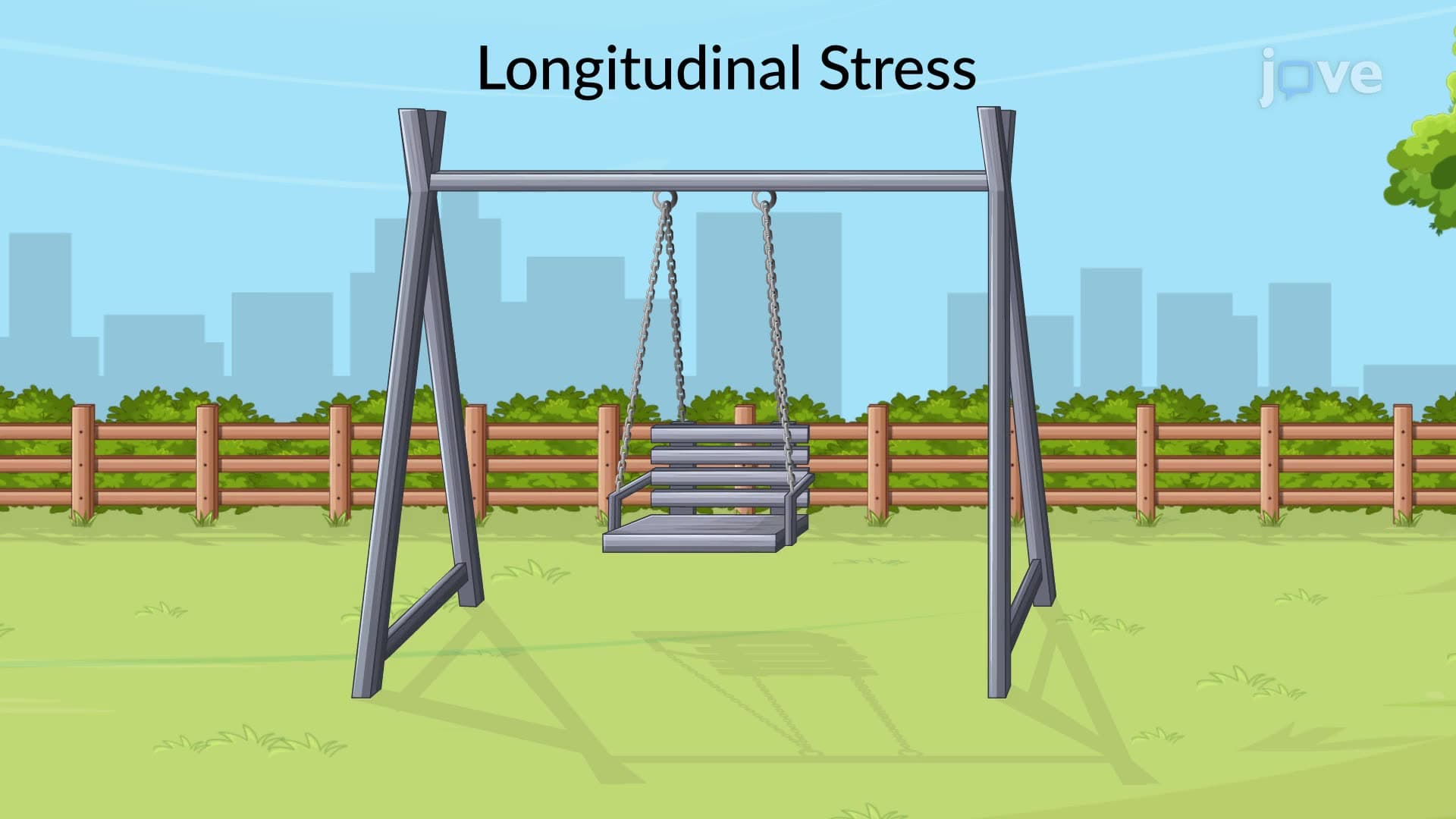
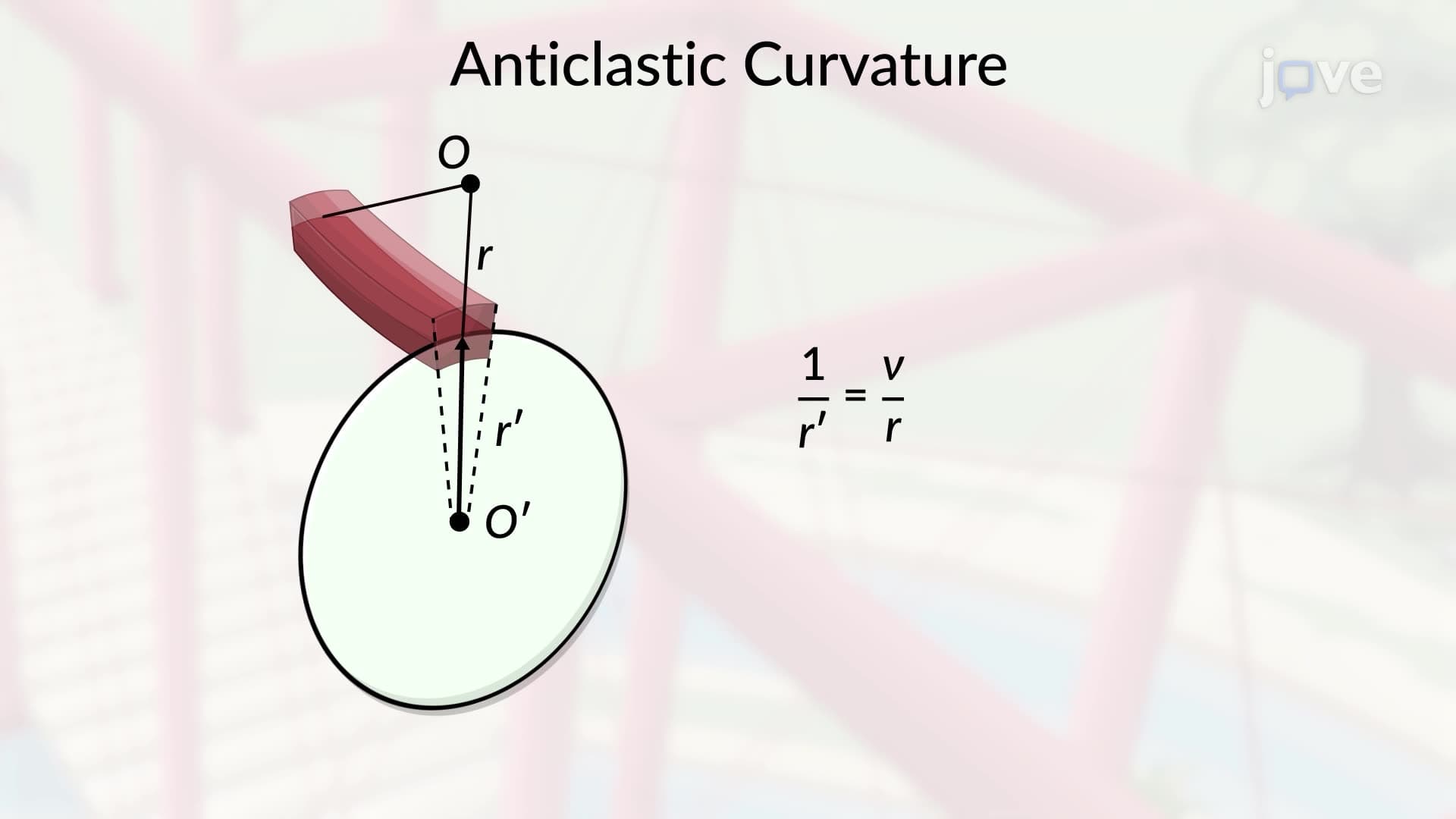
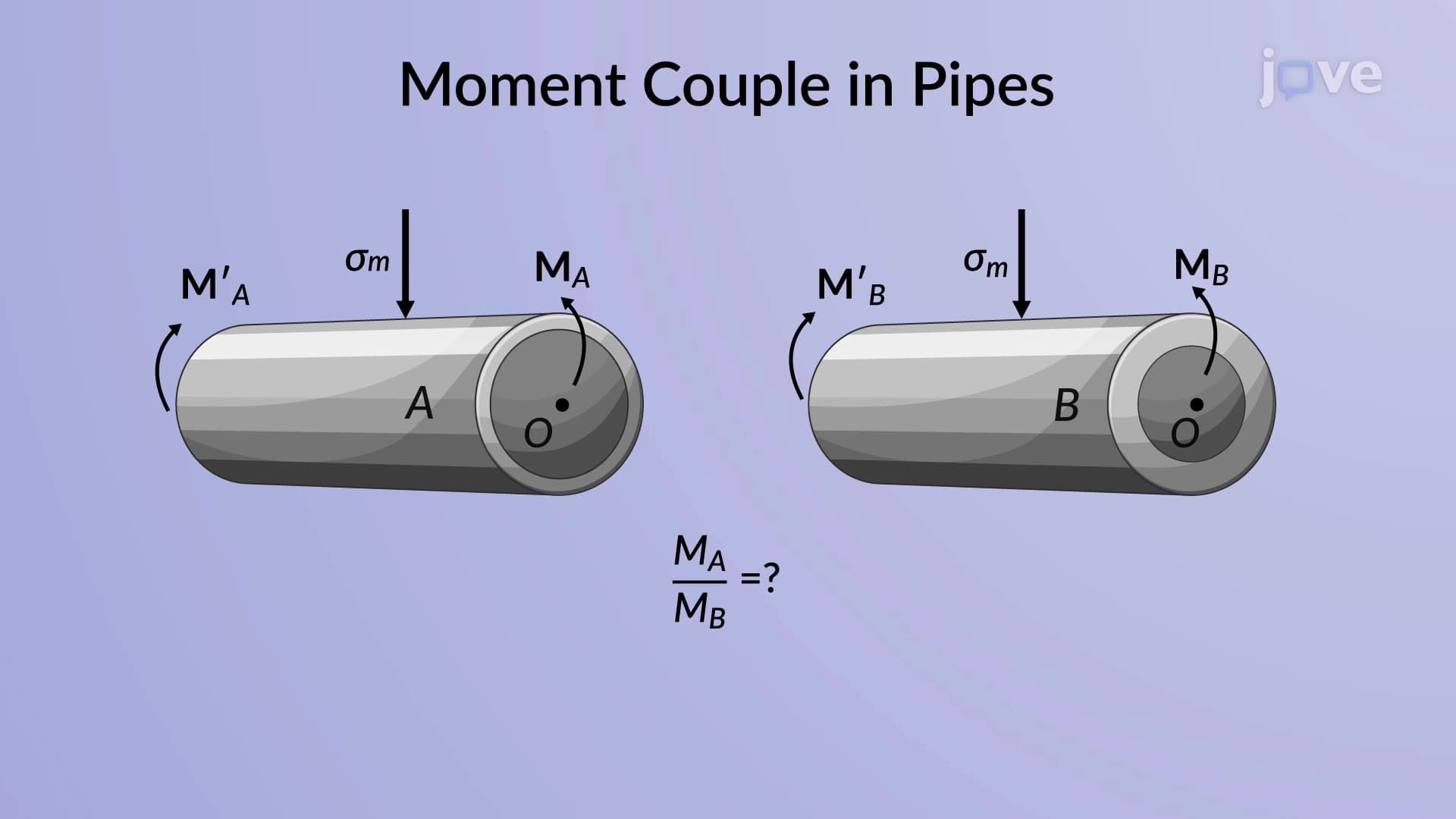
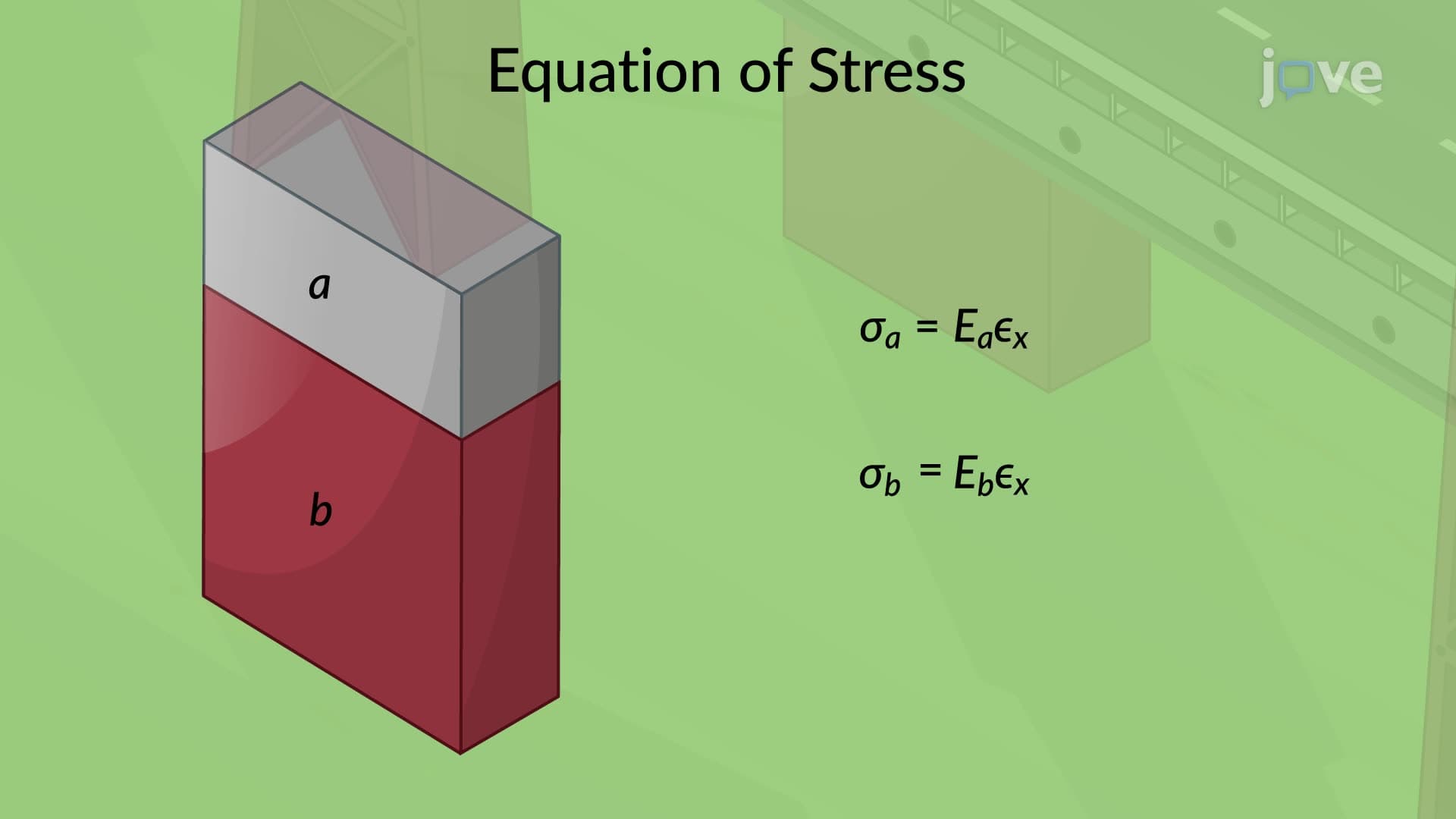
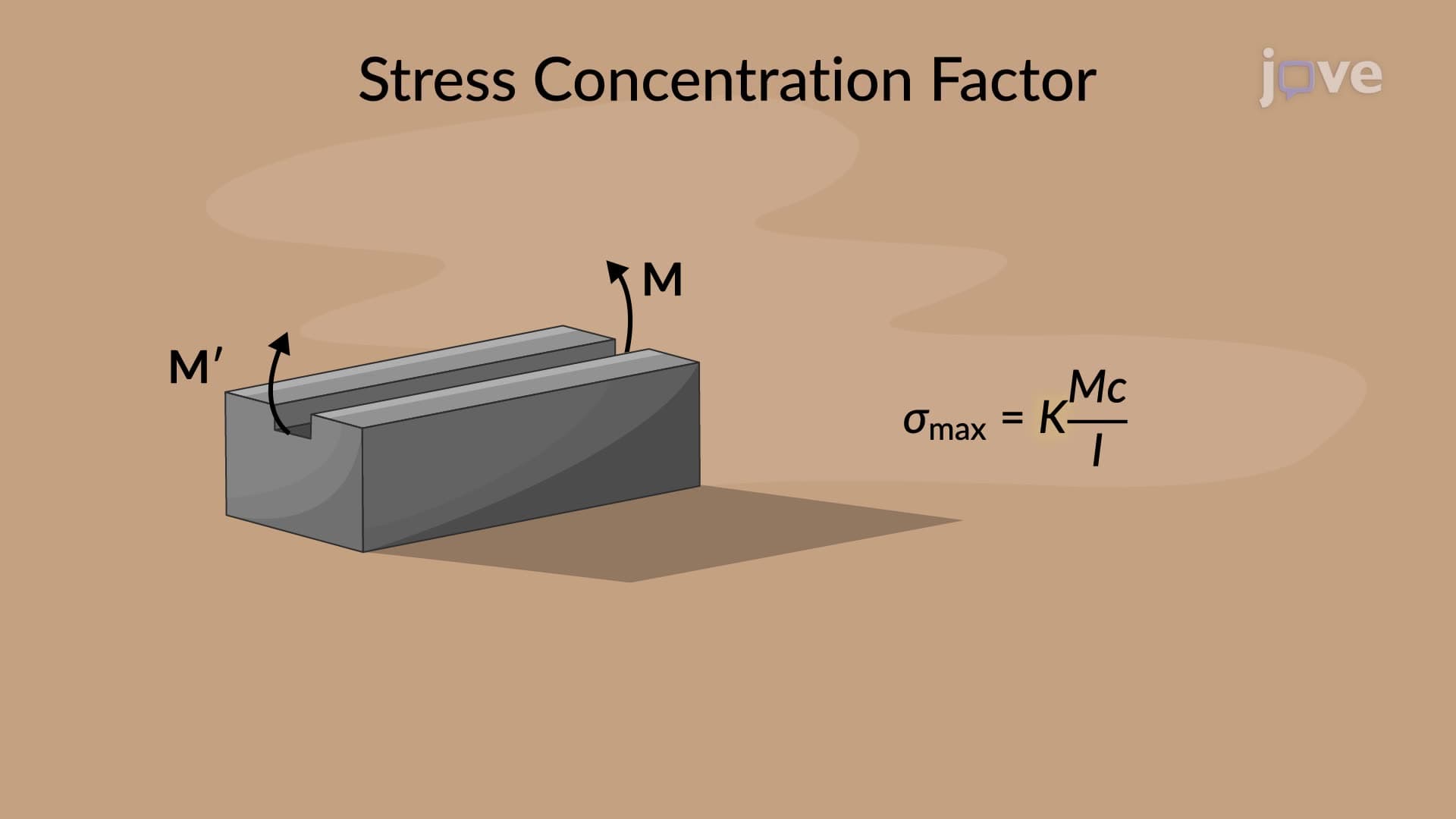
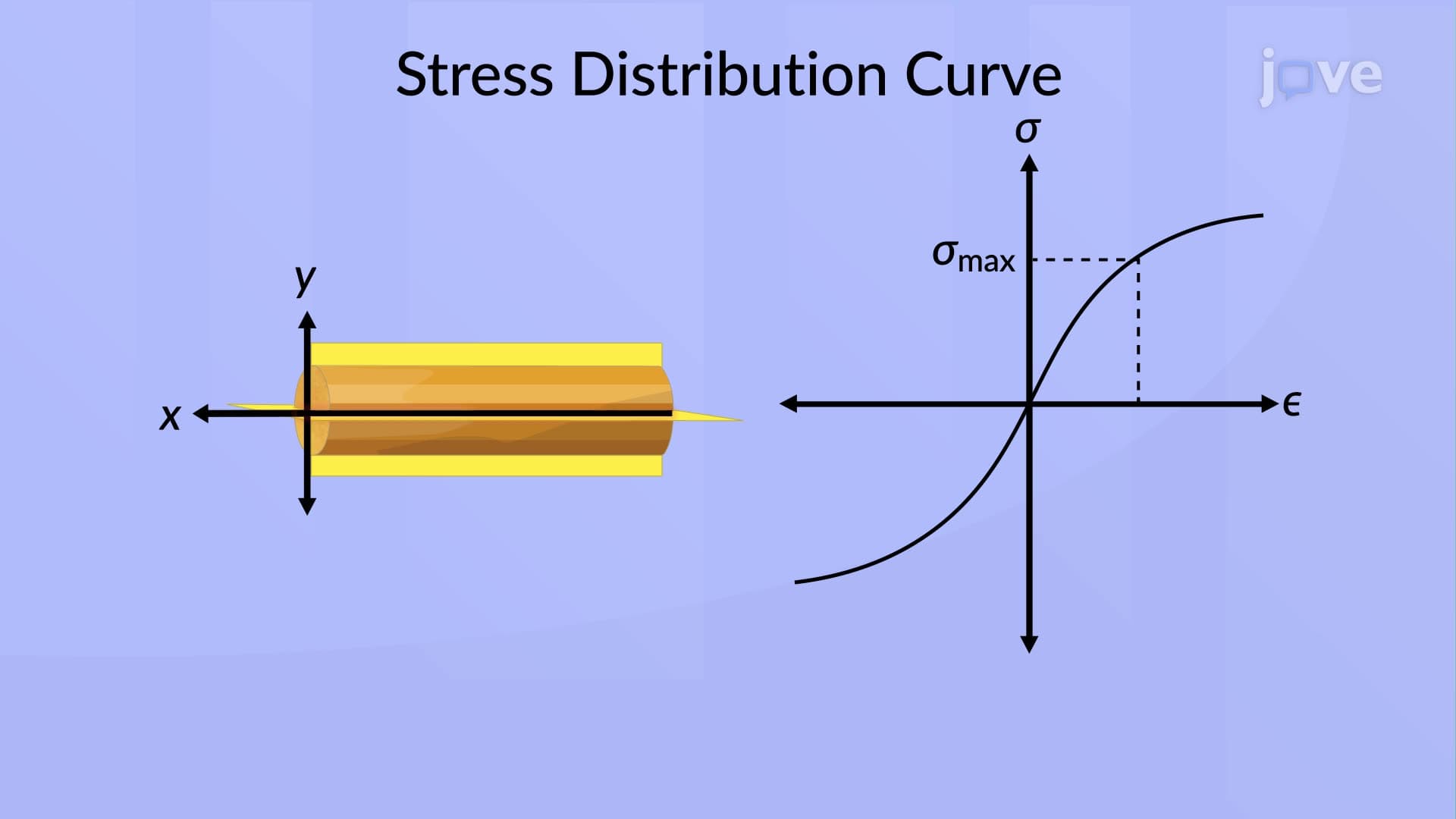
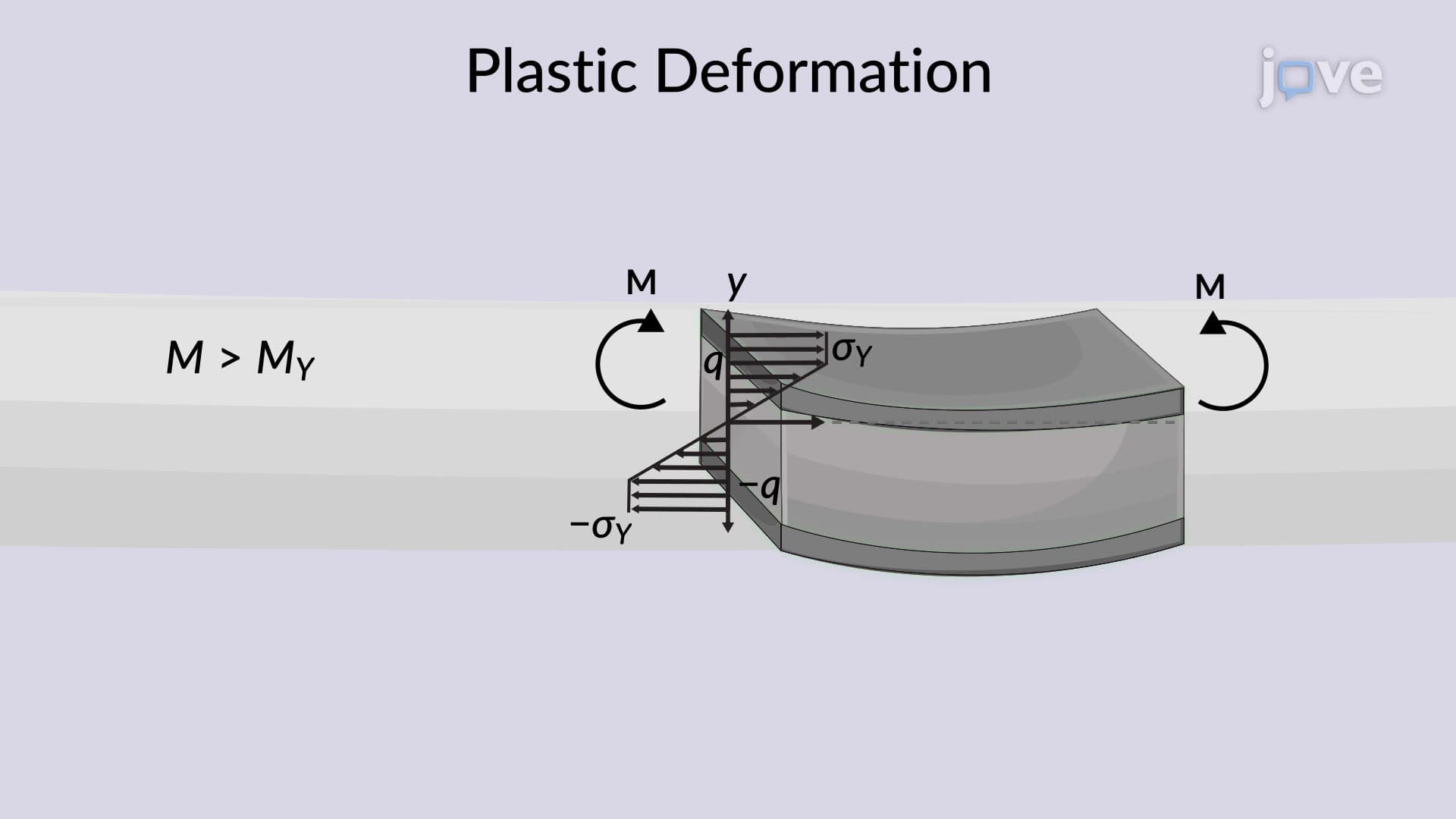
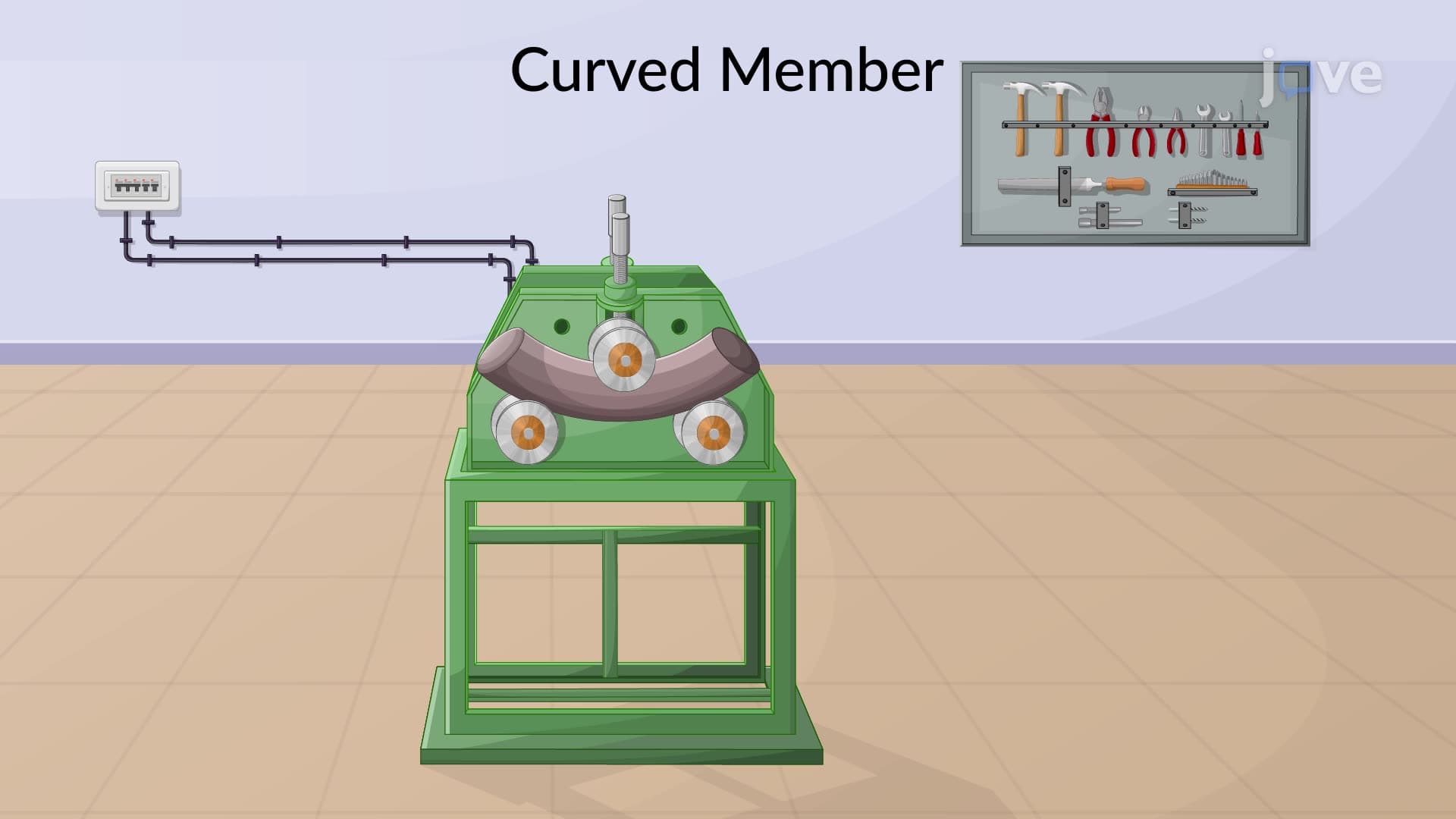
Bending of Curved Members - Neutral Surface

00:00
01:16
Video Summary: Bending of Curved Members Neutral Surface Explained
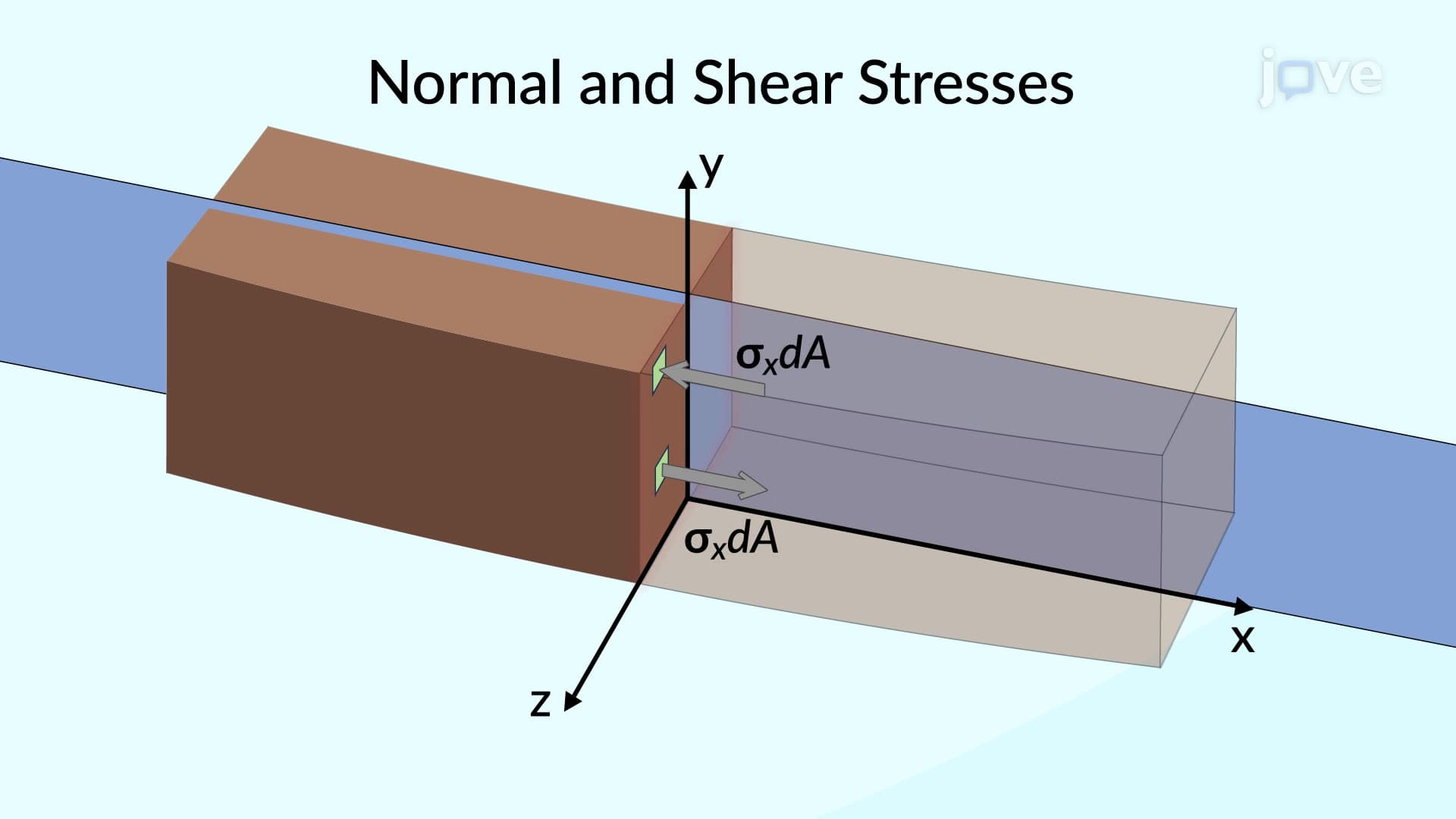
Ever wondered why suspension bridge cables curve under load differently than straight beams? The bending of curved members neutral surface reveals a fascinating engineering principle: unlike straight beams, curved members experience non-linear stress distribution that creates a hyperbolic pattern. Consider San Francisco's Golden Gate Bridge cables-engineers must account for how the neutral surface shifts away from the geometric center during loading. This concept fundamentally changes how we analyze everything from automotive suspension components to architectural arches. Watch the full video on JoVE Coach to master this concept with expert-led visuals and step-by-step explanations.
- Understand how the bending of curved members neutral surface differs fundamentally from straight beam behavior and why this distinction matters in structural analysis
- Identify the non-linear relationship between strain and distance from the neutral axis in curved members under bending loads
- Analyze stress distribution patterns that form hyperbolic curves rather than linear distributions seen in straight beams
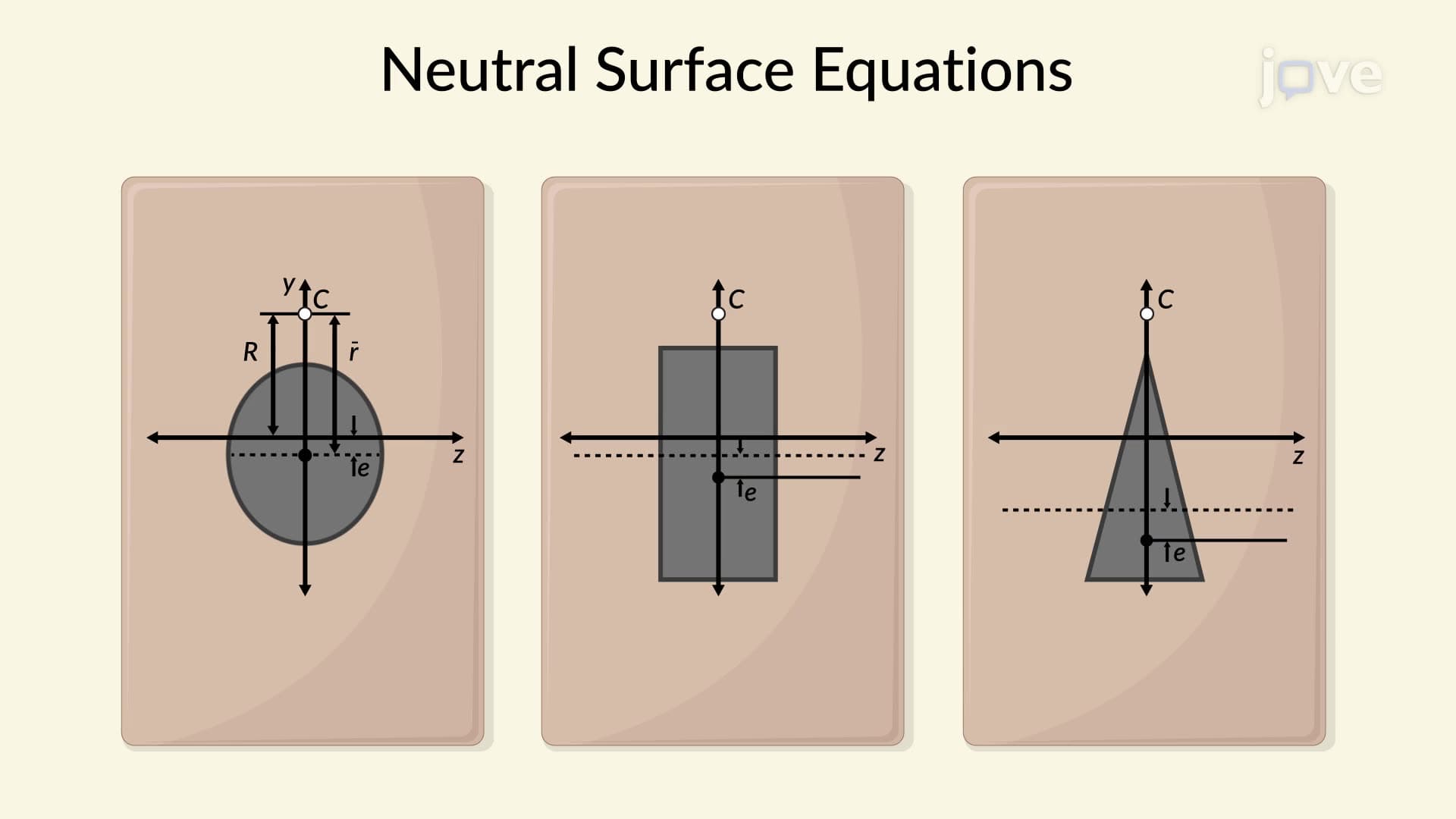
- Compare the location of the neutral surface versus the centroidal axis in curved structural elements
- Evaluate how Hooke's law applies to curved members and produces the characteristic stress-strain relationships
- Apply moment equilibrium equations to determine the exact position of the neutral surface relative to the center of curvature
- Recognize that the neutral surface always lies between the centroid and the center of curvature regardless of cross-sectional shape
- Explore practical implications for designing curved structural components in real-world engineering applications
Understanding Bending of Curved Members Neutral Surface Fundamentals
The bending of curved members neutral surface represents one of structural mechanics' most counterintuitive concepts. Unlike straight beams where the neutral axis coincides with the centroidal axis, curved members exhibit a phenomenon where these two critical references diverge significantly. This divergence occurs because the geometry itself introduces non-linear strain distributions that fundamentally alter how internal forces develop.
Non-Linear Stress and Strain Relationships
In curved members, the strain equation ε = y/(R + y) creates a hyperbolic distribution rather than the linear relationship found in straight beams. Here, y represents the distance from the neutral surface, and R is the radius of curvature. When we apply Hooke's law (σ = Eε), the resulting stress distribution also follows this hyperbolic pattern. This non-linearity becomes critically important when analyzing components like crane hooks, C-clamps, or the curved sections of roller coaster tracks at theme parks like Disneyland.
Neutral Surface Location and Engineering Implications
The neutral surface position is determined by the equation: R_n = A/∫(dA/(R + y)), where R_n is the distance from the center of curvature to the neutral surface, and A represents the cross-sectional area. This mathematical relationship proves that the neutral surface always lies between the centroidal axis and the center of curvature, creating significant design implications for curved structural elements.
Real-World Applications and Exam Relevance
Understanding this concept proves essential for AP Physics C: Mechanics students tackling advanced statics problems, as well as college engineering students preparing for Fundamentals of Engineering (FE) exam questions. Practical applications include analyzing stress concentrations in curved aircraft fuselage sections, designing automotive suspension leaf springs, and calculating load distributions in architectural arches like those found in the Gateway Arch in St. Louis. The concept frequently appears in college-level Mechanics of Materials courses and professional engineering licensing examinations.
Frequently Asked Questions
The bending of curved members neutral surface is the theoretical plane within a curved structural element where fibers experience zero stress during bending. Unlike straight beams where this surface coincides with the centroidal axis, curved members have their neutral surface located between the centroid and the center of curvature due to non-linear strain distributions.
AP Physics C students encounter curved member analysis in advanced statics and dynamics problems, particularly when dealing with non-uniform stress distributions. Exam questions typically focus on identifying neutral surface locations, calculating stress variations, and applying equilibrium principles to curved structural elements like hooks or brackets.
The primary challenge lies in recognizing that familiar straight-beam assumptions no longer apply, requiring students to use hyperbolic stress distributions instead of linear relationships. Many students initially struggle with the mathematical integration required to locate the neutral surface and often forget that the centroid and neutral axis don't coincide in curved members.
Engineers regularly analyze curved members in crane hook design, automotive leaf springs, aircraft fuselage frames, and architectural arches. For example, Boeing engineers must account for curved member behavior when designing aircraft wing attachment brackets, while civil engineers apply these principles when analyzing the Gateway Arch's structural response to wind loads.
While the complete mathematical derivation requires integral calculus, the fundamental concepts are accessible to students with basic algebra and trigonometry skills. Focus first on understanding why the neutral surface shifts, then gradually build toward the mathematical relationships as your calculus skills develop.
Start by mastering straight beam analysis, then practice identifying key differences in curved members through worked examples. Create comparison charts showing stress distribution patterns, and always sketch the neutral surface location relative to the centroid before attempting calculations.
This foundation leads directly to studying stress concentrations, fatigue analysis in curved components, and advanced topics like curved beam theory in graduate-level structural mechanics. It also provides essential background for finite element analysis of complex curved structures.
Related Micro-courses