Loading video…


 18 Concepts
 6.9K views

Video Summary: Bending of Members Made of Explained
Why do composite beams in skyscrapers like New York's One World Trade Center resist bending forces so effectively? The bending of members made of different materials involves understanding how two materials with distinct elastic properties work together under stress. When steel and concrete combine in a composite beam, engineers must calculate equivalent cross-sections to predict structural behavior accurately. Watch the full video on JoVE Coach to master this concept with expert-led visuals and step-by-step explanations.
The bending of members made of different materials represents a critical concept in structural engineering and mechanics of materials. When engineers design composite structures, they must account for how materials with different elastic properties respond to bending forces. This analysis becomes essential when dealing with reinforced concrete beams, steel-wood composite floors, or fiber-reinforced polymer structures commonly found in modern American infrastructure.
The key to understanding composite member behavior lies in recognizing how different materials respond to stress. Each material has its own elastic modulus (E), which measures stiffness. When a composite member bends, both materials experience the same curvature, but the stress distribution varies according to each material's properties. The modular ratio (n = E1/E2) becomes the fundamental parameter for analysis. For example, in a steel-reinforced concrete beam typical of American construction, steel's elastic modulus is approximately 10-15 times greater than concrete's, creating a significant modular ratio that affects design calculations.
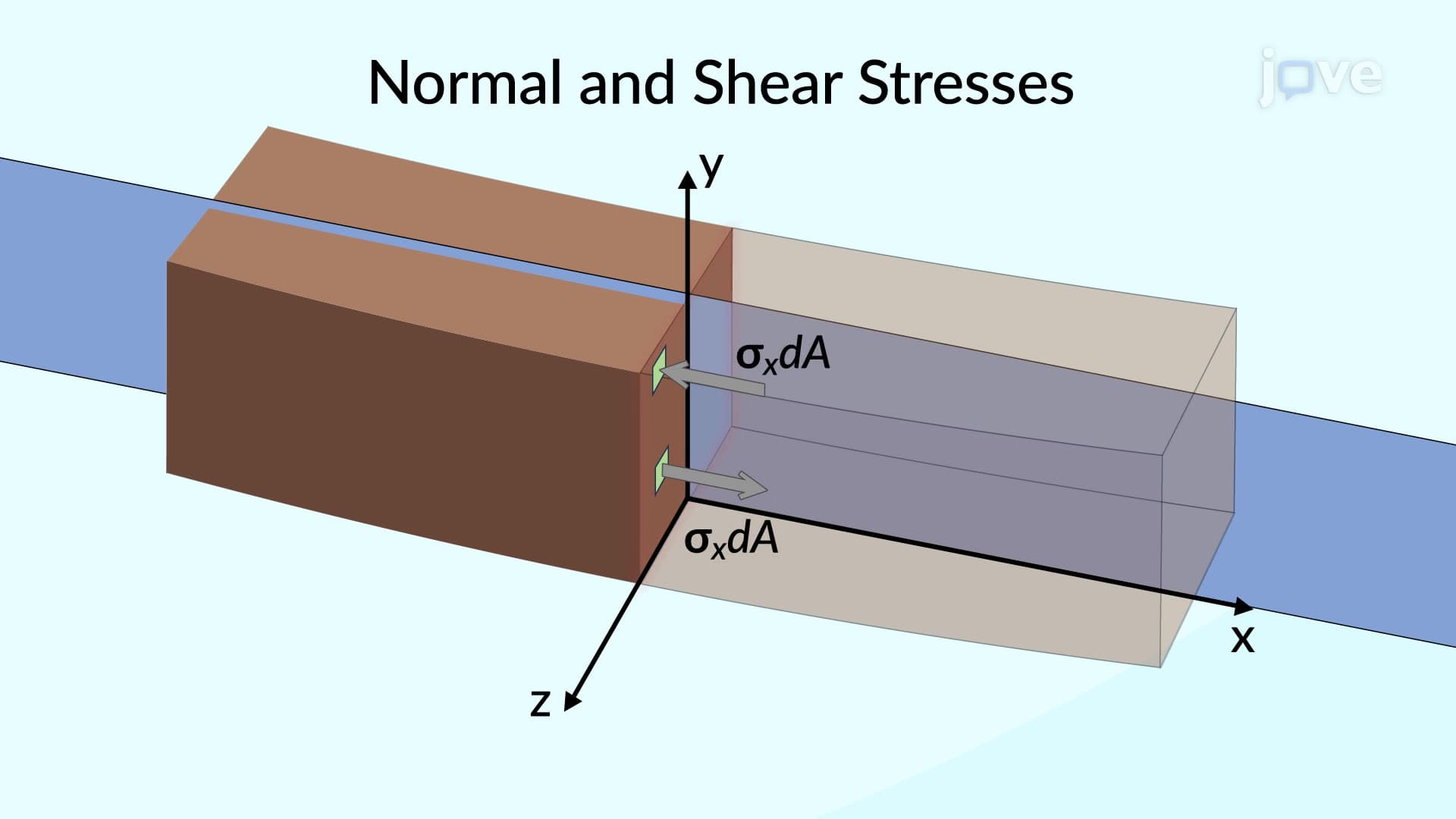
Engineers use the transformed section method to simplify composite member analysis. This technique converts the actual cross-section into an equivalent section made of one material. When the modular ratio exceeds 1, the stiffer material's area remains unchanged while the more flexible material's area increases by the modular ratio. Conversely, when the ratio is less than 1, the flexible material's equivalent area decreases. This transformation occurs parallel to the neutral axis, maintaining geometric relationships while enabling standard beam theory applications.
This concept frequently appears in AP Physics C: Mechanics exams, college-level statics and mechanics of materials courses, and professional engineering examinations. Students encounter problems involving composite beams in homework assignments and midterm exams at universities like MIT, Stanford, and UC Berkeley. Real-world applications include analyzing composite bridge decks on Interstate highways, evaluating laminated wood beams in residential construction, and designing hybrid steel-concrete structures in commercial buildings. Understanding these principles prepares students for advanced coursework in structural engineering and materials science.
Related Micro-courses