Loading video…


 18 Concepts
 6.9K views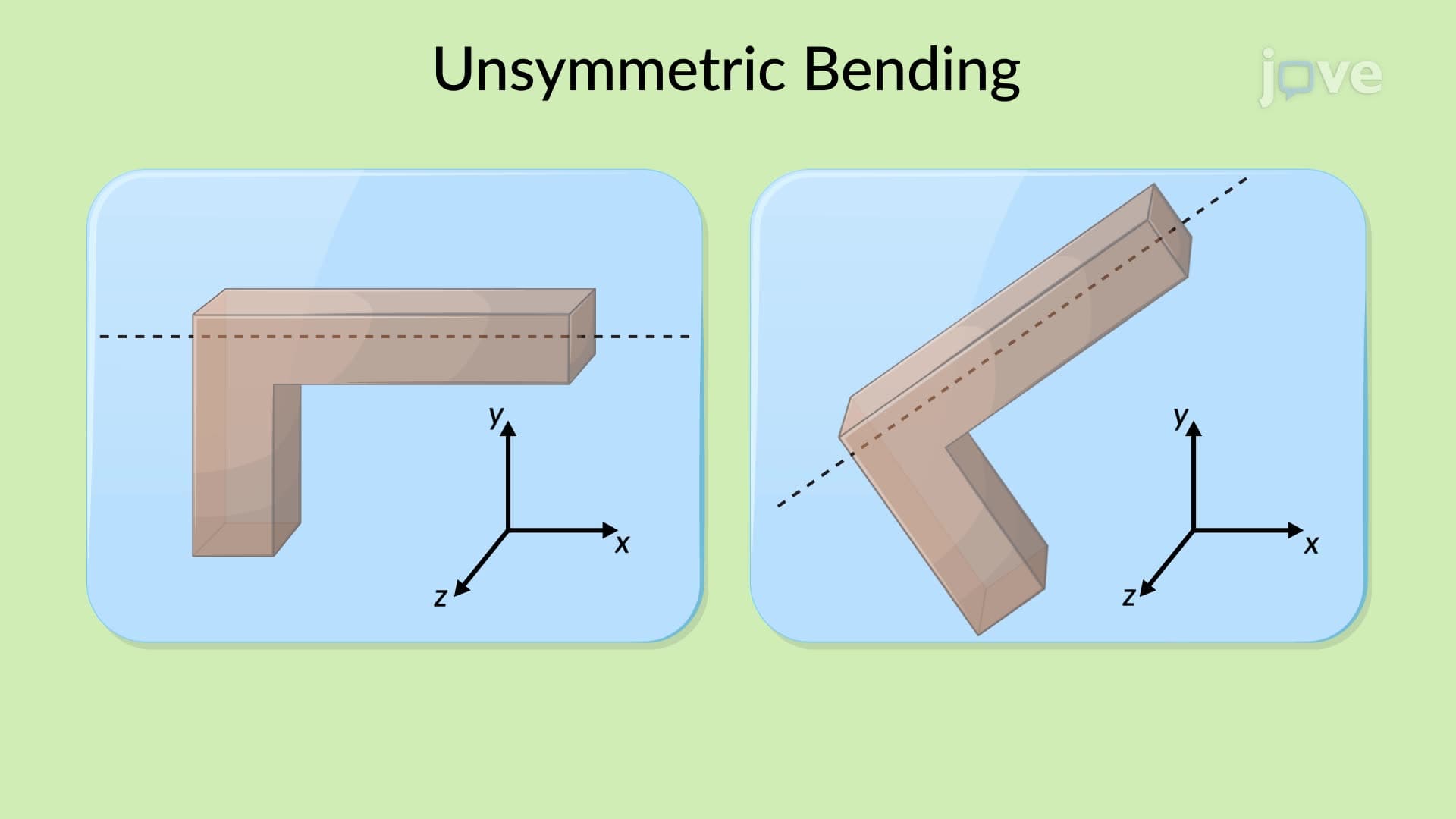

Video Summary: What Is Unsymmetric Bending
Ever wonder why some building beams crack unexpectedly during construction? Unsymmetric bending occurs when structural forces don't align with a member's natural symmetry planes, creating complex stress patterns that challenge traditional engineering assumptions. Consider the iconic curved support beams in San Francisco's Golden Gate Bridge-their unique geometry requires careful analysis of unsymmetric bending effects. This fundamental concept in structural mechanics helps engineers predict how materials will behave under real-world loading conditions. Watch the full video on JoVE Coach to master this concept with expert-led visuals and step-by-step explanations.
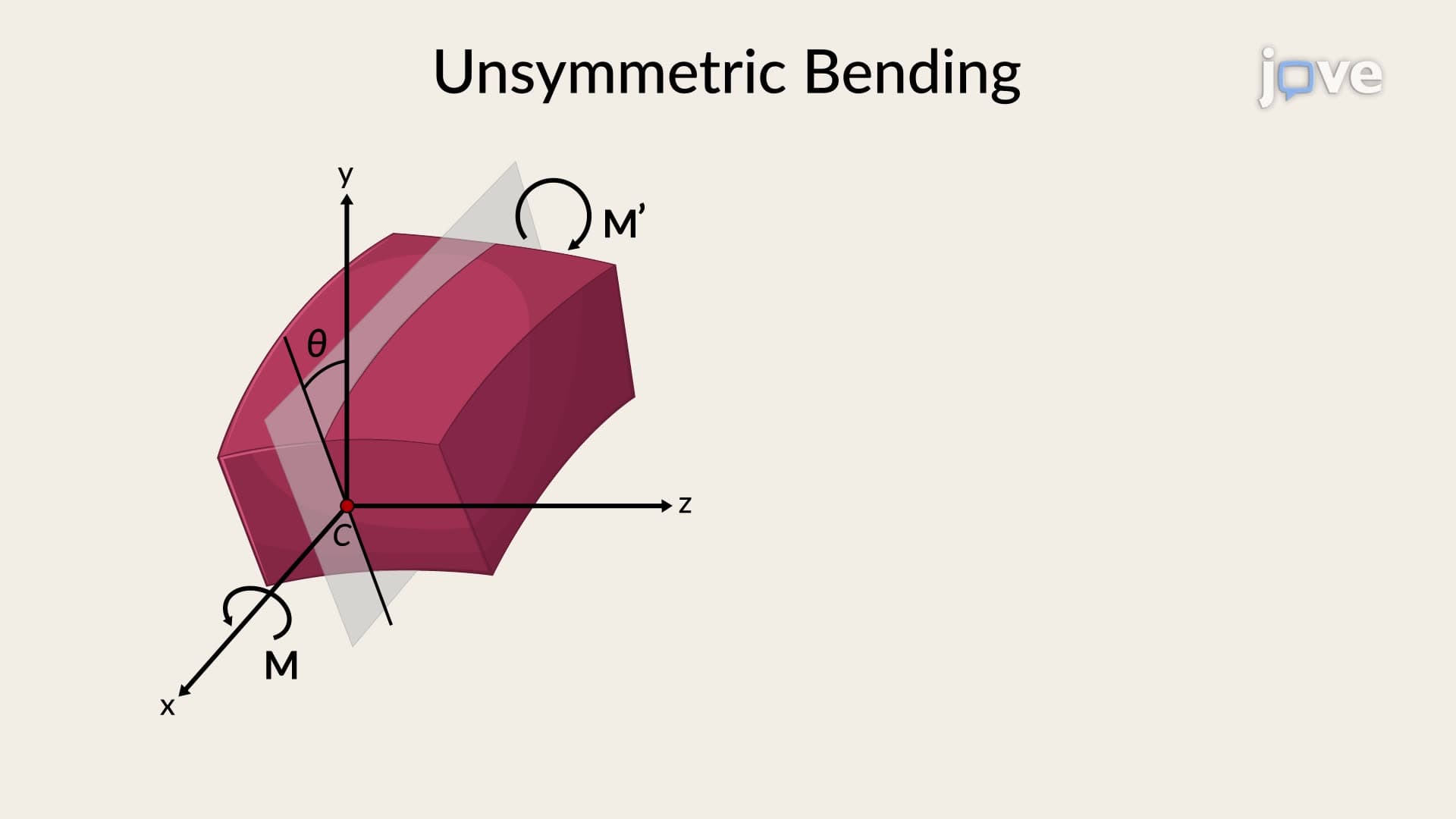
Unsymmetric bending represents one of the most critical yet challenging concepts in structural mechanics, occurring when applied forces create bending moments that don't align with a structural member's planes of symmetry. Unlike symmetric bending, where loads act through predictable axes, unsymmetric scenarios introduce complex stress patterns that require advanced analytical techniques.
This phenomenon becomes particularly important when analyzing real-world structures. Consider the asymmetric I-beams used in Seattle's Space Needle or the curved concrete supports in modern highway overpasses. These elements often experience loading conditions that don't align perfectly with their geometric centerlines, creating unsymmetric bending scenarios.
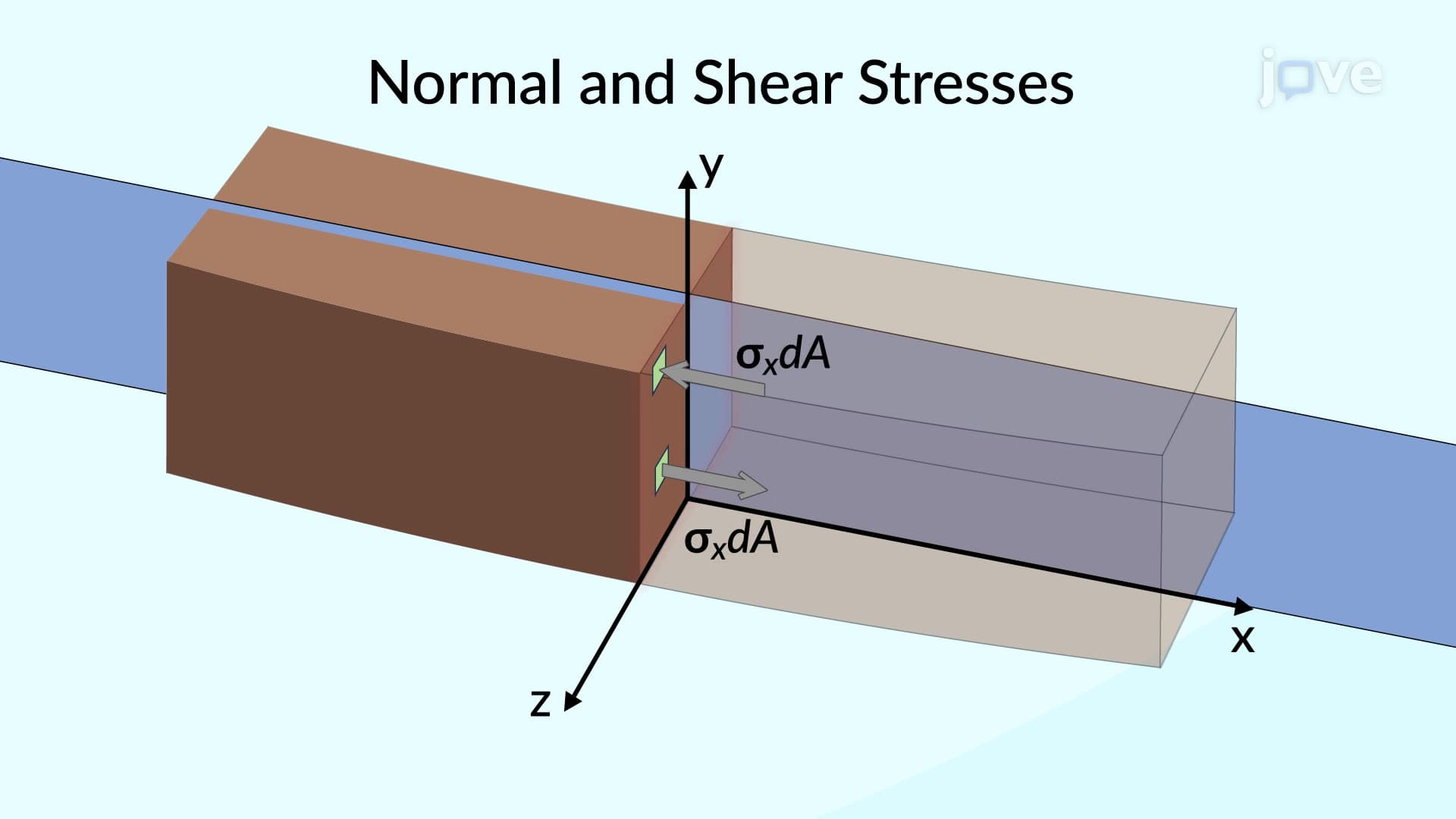
The neutral axis-the line where bending stress equals zero-plays a crucial role in understanding unsymmetric bending behavior. In symmetric loading, this axis coincides with the centroidal axis. However, unsymmetric conditions cause the neutral axis to rotate and shift position, creating non-intuitive stress distributions.
For the neutral axis to align with the couple axis (the line of applied moment), specific geometric conditions must exist. The couple axis must coincide with one of the member's centroidal axes, ensuring that the product of inertia terms become zero. This mathematical relationship explains why engineers carefully consider cross-sectional geometry when designing structural elements.
The product of inertia, represented as the integral of stress components across the cross-section, determines whether unsymmetric bending will occur. When centroidal axes are chosen as reference frames, this product becomes zero, simplifying calculations significantly. This principle guides structural engineers in optimizing beam orientations and cross-sectional shapes.
Students preparing for AP Physics C Mechanics or college-level statics courses frequently encounter unsymmetric bending problems. The NCEES Fundamentals of Engineering exam includes questions testing understanding of these principles, particularly in structural analysis sections. Mastering this concept requires visualizing three-dimensional force interactions and applying integral calculus to stress distributions-skills essential for future mechanical and civil engineering coursework.
Related Micro-courses