Loading video…


 18 Concepts
 6.9K views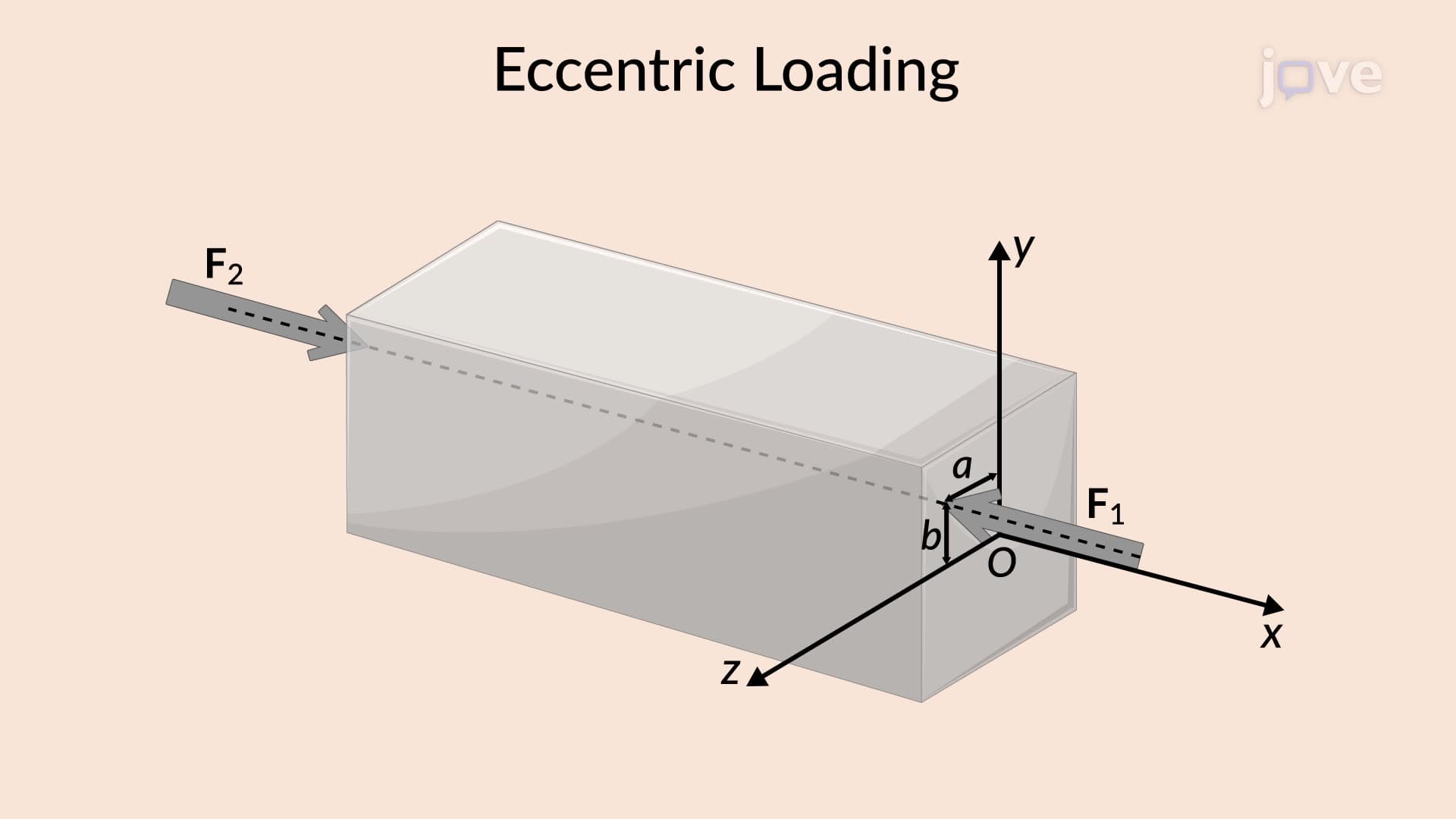

Video Summary: General Case of Eccentric Axial Loading Explained
Ever wonder why skyscrapers like Chicago's Willis Tower don't topple over despite massive wind forces acting off-center? The general case of eccentric axial loading explains how structural members handle forces applied away from their central axis. This fundamental engineering principle combines axial loading with bending moments, creating complex stress distributions that engineers must carefully analyze when designing everything from bridge supports to building columns. Understanding how eccentric forces create both compression and tension zones within a single structural member is crucial for safe construction. Watch the full video on JoVE Coach to master this concept with expert-led visuals and step-by-step explanations.
The general case of eccentric axial loading represents one of the most important concepts in structural mechanics, bridging the gap between simple axial loading and complex combined loading scenarios. When forces act away from a member's centroidal axis-whether due to construction tolerances, design requirements, or external conditions-engineers must account for both direct stress and bending stress effects.
This loading condition commonly occurs in real-world structures. Consider the columns supporting highway overpasses, where wind loads create horizontal forces that don't align with the column's centerline. Similarly, building columns often experience eccentric loading when beams connect at different heights or when architectural features require off-center connections.
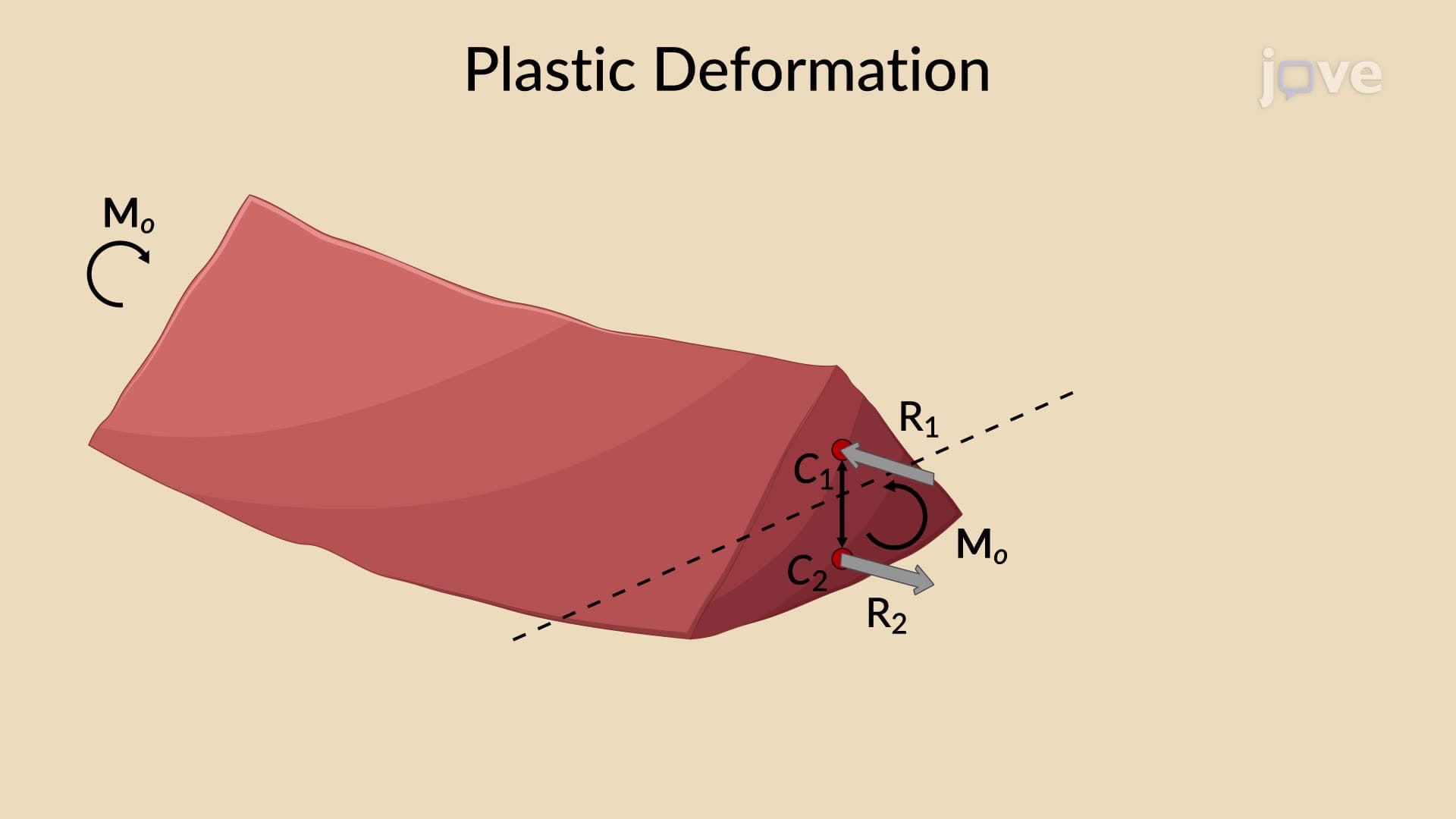
The key insight in analyzing eccentric loading lies in recognizing that any eccentric force can be replaced by an equivalent system: a centric force plus two couple moments. If an eccentric force P acts at distances a and b from the principal centroidal axes, the equivalent system consists of the same force P applied at the centroid, plus bending moments M(y) = P × a and M(z) = P × b about the respective axes.
The Saint-Venant principle validates this approach by stating that the specific manner of load application only affects local stress distributions near the point of application. At sections sufficiently far from the loading point-typically one member width away-the stress distribution depends only on the resultant force and moments, not their exact application method. This principle is crucial for engineering analysis and appears frequently in structural mechanics courses and professional engineering exams.
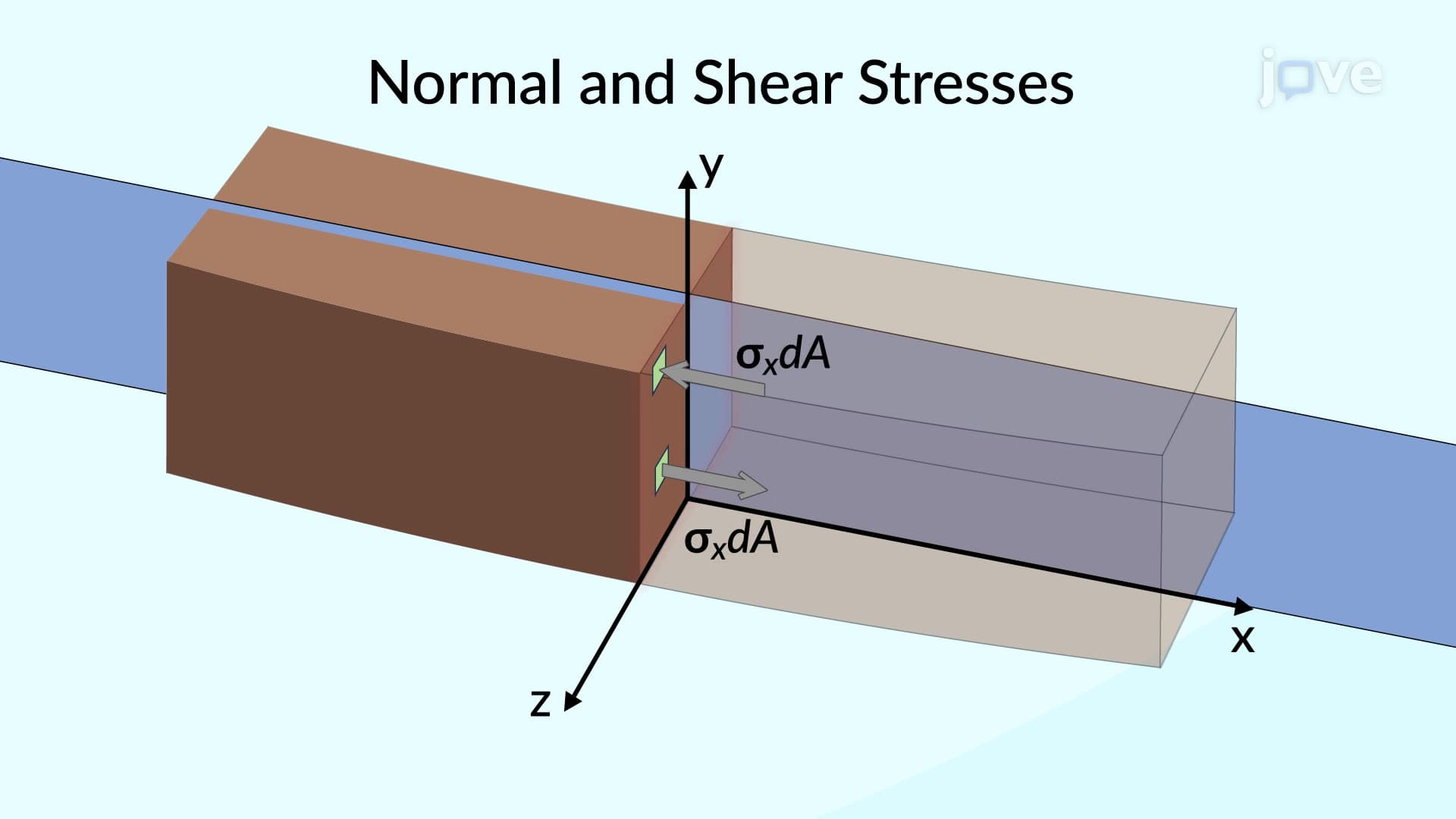
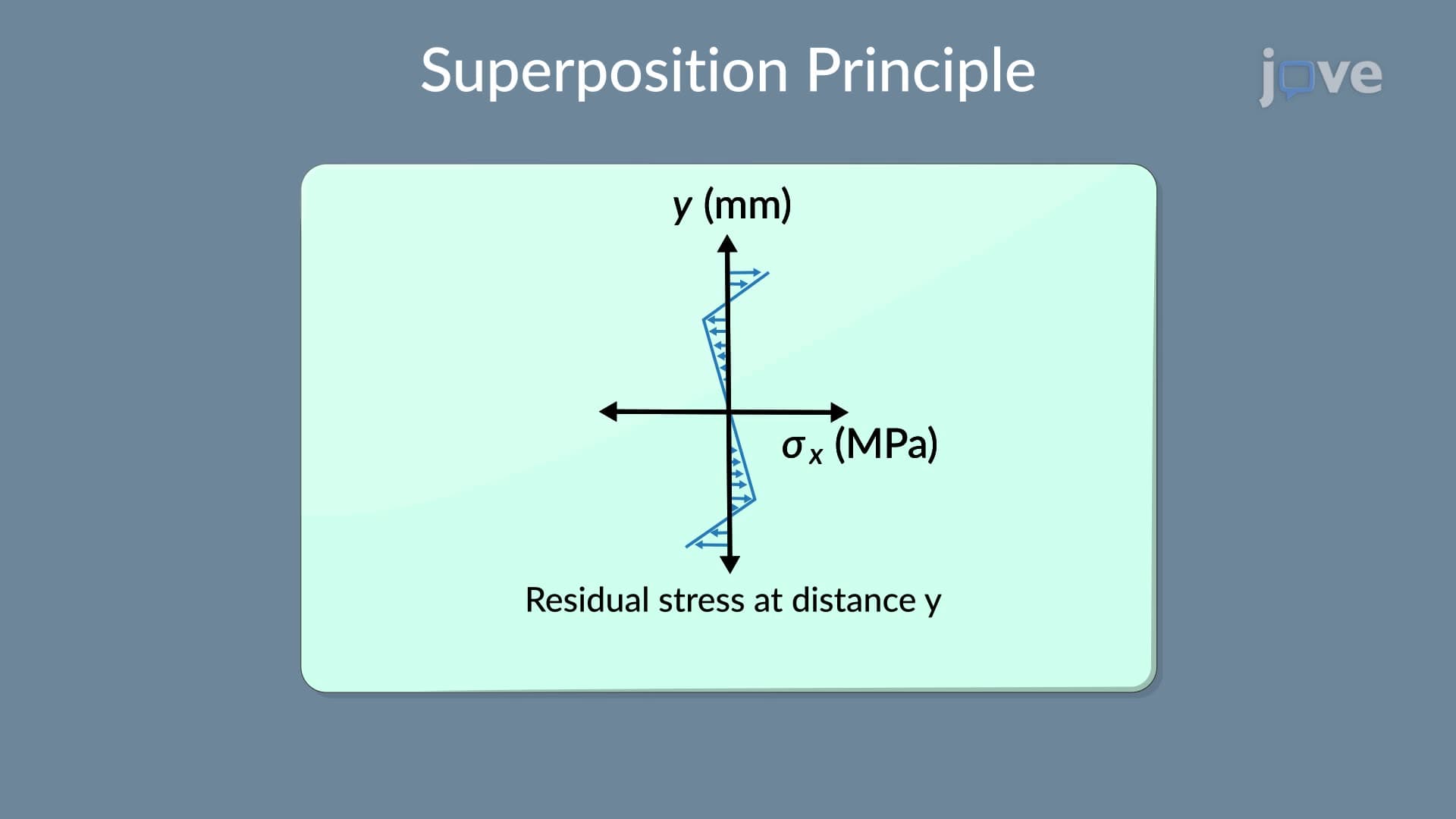
The superposition principle allows engineers to analyze eccentric loading by combining individual stress effects. The total normal stress at any point becomes: σ(total) = σ(axial) + σ(bending). The axial component equals P/A (where A is cross-sectional area), while bending components follow σ = M×c/I (where M is moment, c is distance from neutral axis, and I is moment of inertia).
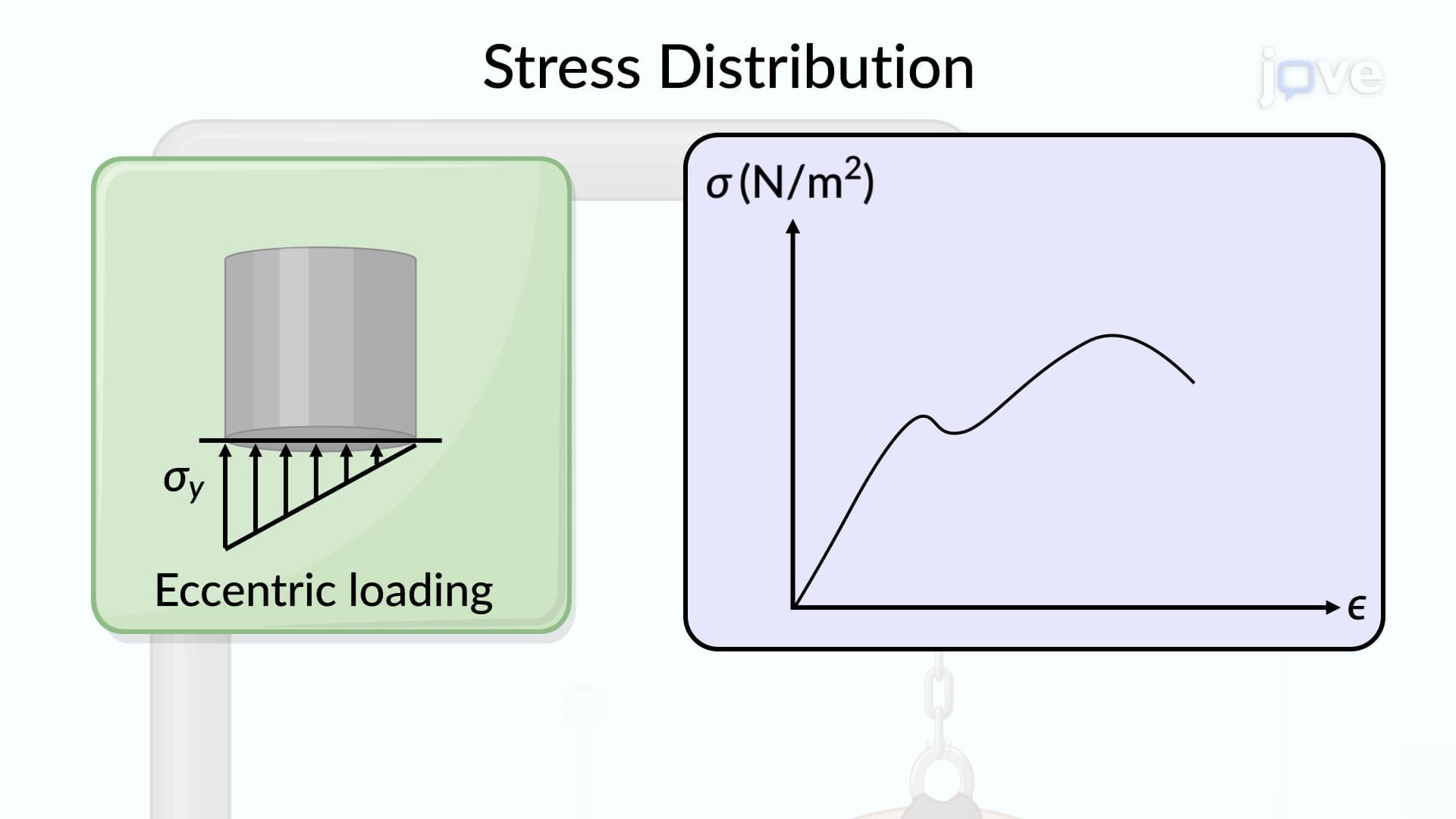
This linear combination creates fascinating stress patterns. Depending on the eccentricity magnitude and direction, the resulting stress distribution might be entirely compressive, entirely tensile, or change sign across the section. The neutral axis-where total stress equals zero-becomes a critical design consideration, especially in materials like concrete that handle compression well but have limited tensile strength.
Understanding eccentric loading proves essential for students pursuing engineering careers and those preparing for standardized tests. The concept appears on AP Physics exams, college-level statics and mechanics of materials courses, and professional engineering licensing examinations. Students should focus on identifying equivalent loading systems, applying superposition principles, and interpreting stress distribution diagrams-skills directly applicable to structural design problems in both academic and professional contexts.
Related Micro-courses