Loading video…


 18 Concepts
 6.9K views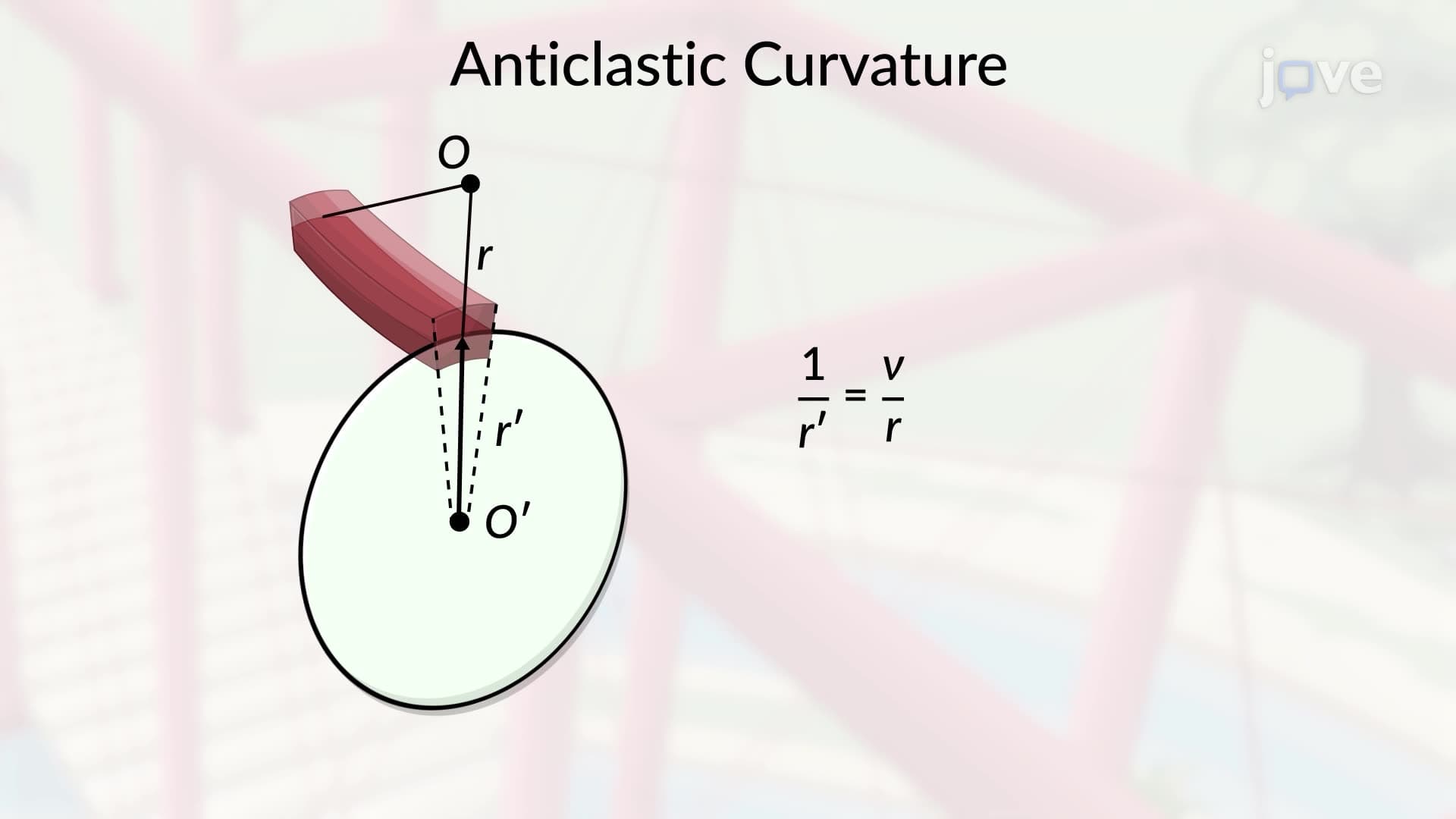

Video Summary: Deformations in a Transverse Cross Section Explained
Ever wondered why a rubber band gets thinner when you stretch it? Deformations in a transverse cross section reveal the fascinating physics behind this everyday observation. When engineers design suspension cables for San Francisco's Golden Gate Bridge, they must account for how materials deform not just along the applied force, but perpendicular to it as well. This anticlastic curvature phenomenon explains why materials develop complex three-dimensional shape changes under stress, creating curved surfaces that compensate for longitudinal deformation through Poisson's ratio effects. Watch the full video on JoVE Coach to master this concept with expert-led visuals and step-by-step explanations.
When materials experience uniaxial stress-force applied in one direction-the resulting deformation extends far beyond simple elongation or compression. Deformations in a transverse cross section represent the complex three-dimensional response that occurs perpendicular to the primary loading direction. This phenomenon is governed by Poisson's ratio, a fundamental material property that quantifies how much a material contracts laterally when stretched longitudinally.
Consider a steel beam in a skyscraper construction project in Manhattan. When the beam carries vertical loads from floors above, it doesn't just compress vertically-it simultaneously expands horizontally. This lateral expansion creates intricate deformation patterns within the beam's cross-section that structural engineers must carefully consider during design.
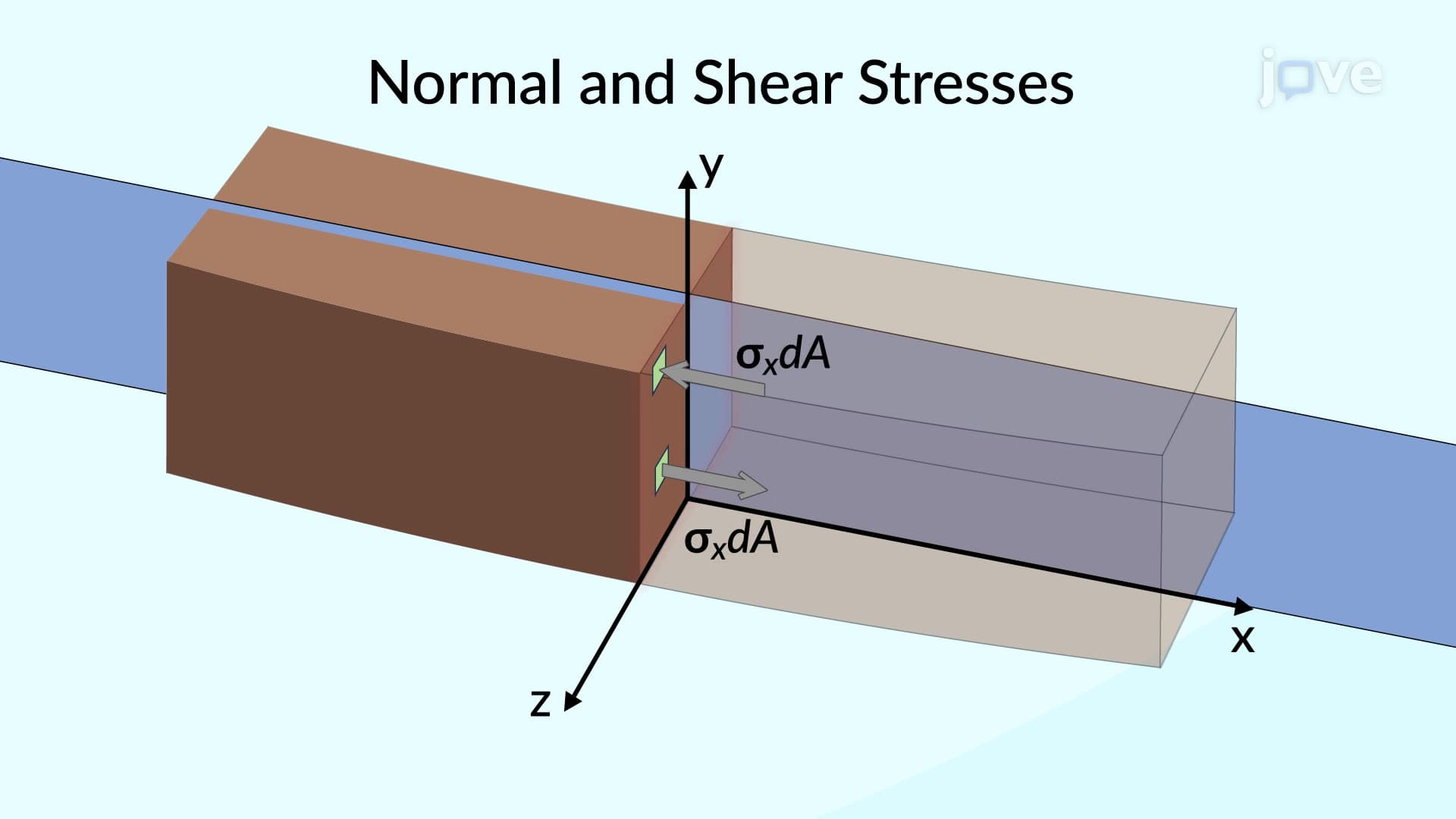
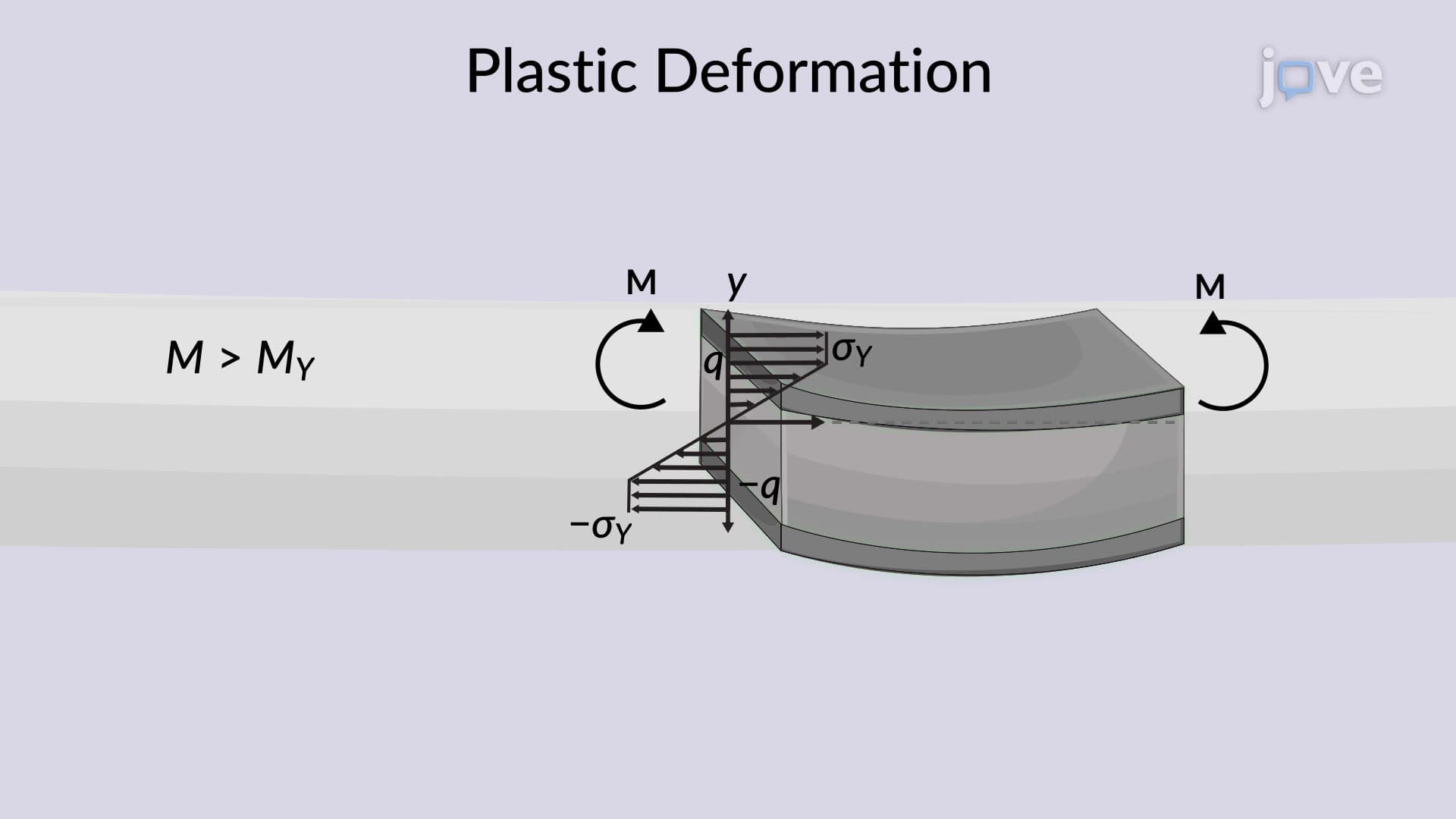
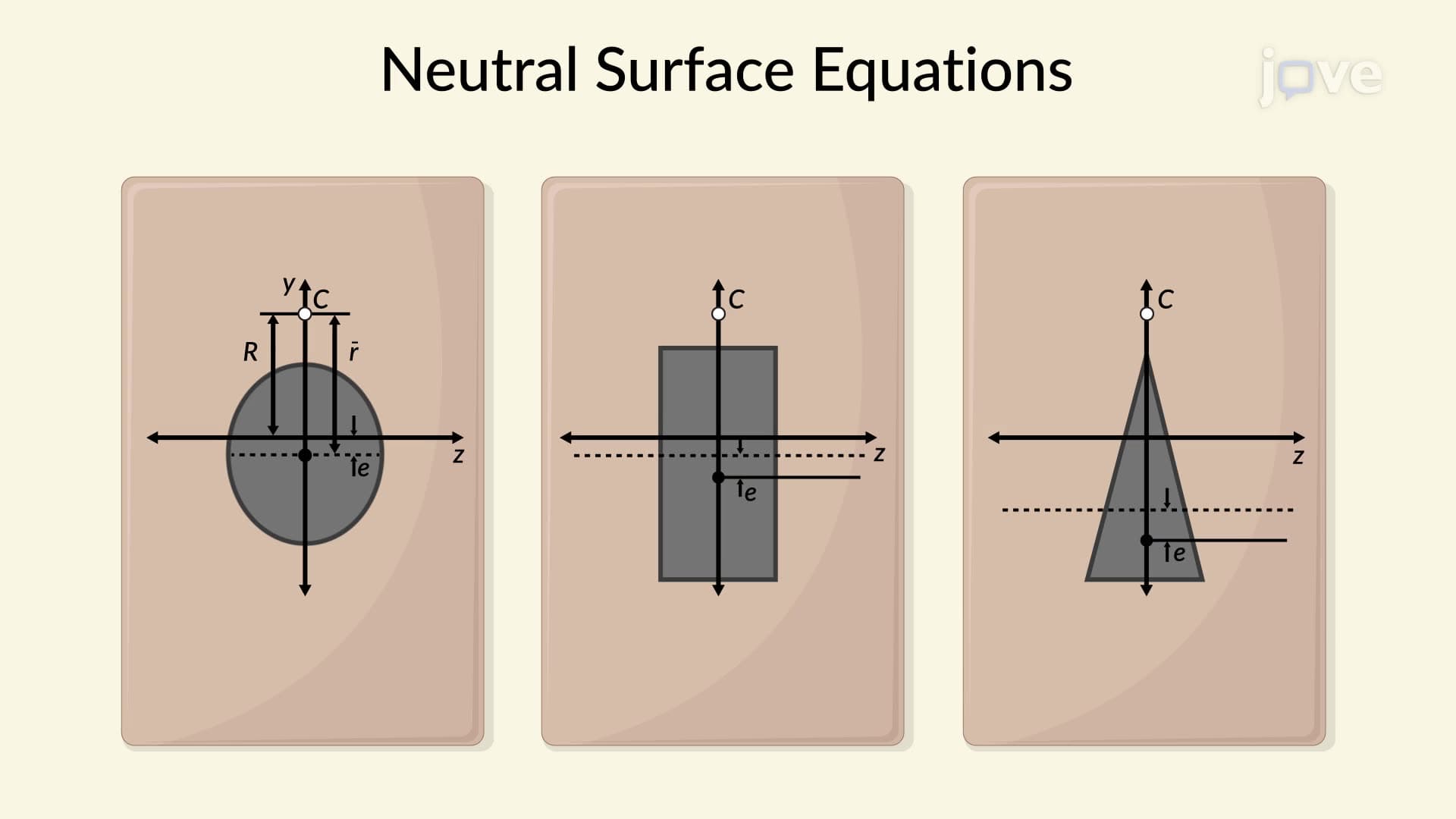
The neutral surface plays a critical role in understanding transverse deformations. Above and below this neutral plane, materials experience opposite deformation effects-expansion on one side, contraction on the other. In the vertical transverse direction, these opposing deformations effectively cancel each other out, maintaining overall geometric balance.
However, horizontal transverse deformations tell a different story. Rather than canceling out, these deformations cause originally straight horizontal lines within the cross-section to bend into circular arcs. This curvature development represents a fundamental aspect of material mechanics that appears in AP Physics C examinations and college-level mechanics of materials courses.
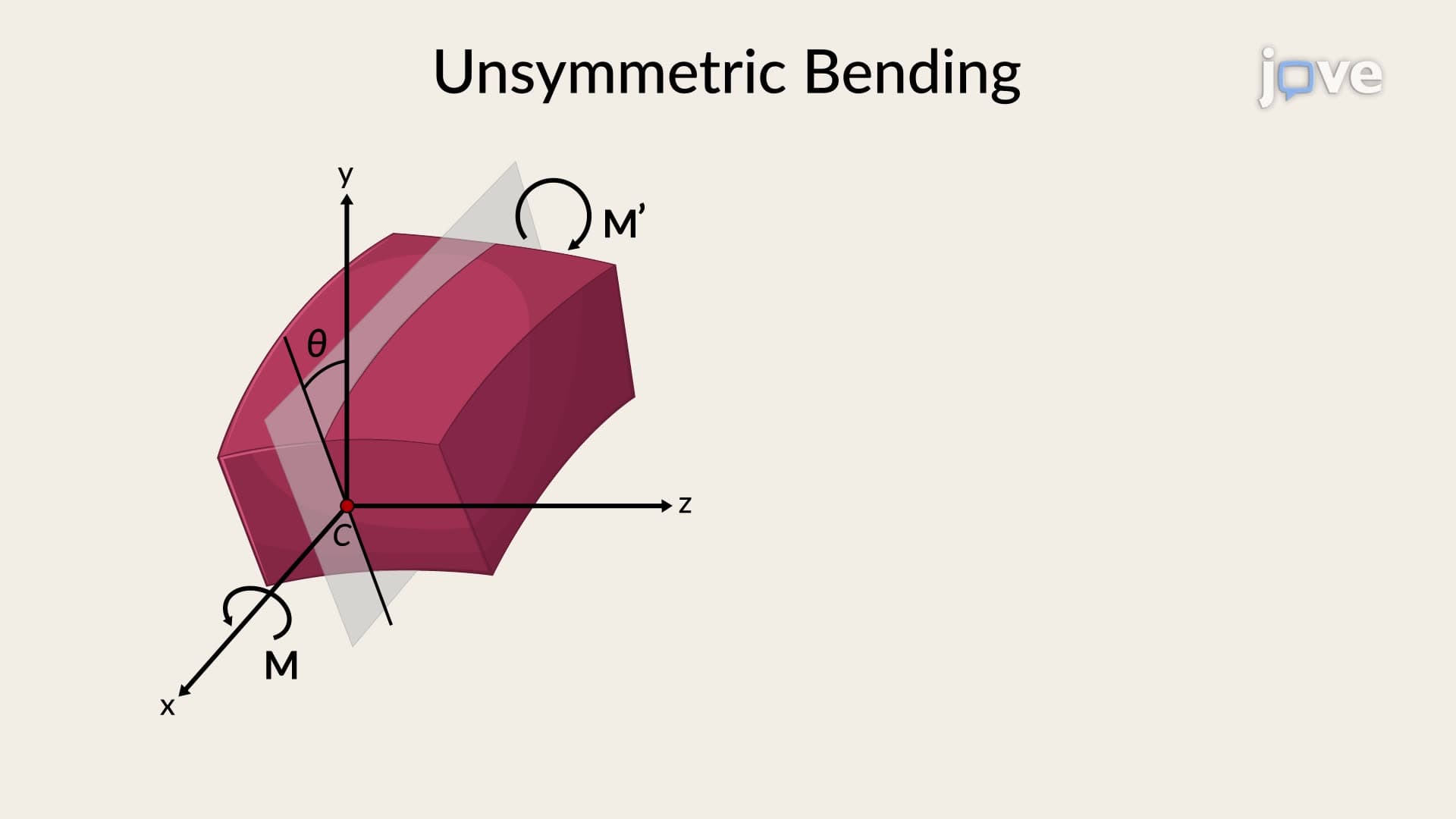
The radius of curvature for the neutral surface can be calculated as the ratio of the primary bending radius to the material's Poisson's ratio. This mathematical relationship produces what engineers call anticlastic curvature-a measure of how severely the transverse section curves under load.
Real-world applications abound in American infrastructure. The cables supporting the Verrazano-Narrows Bridge in New York demonstrate anticlastic curvature effects under tension loading. Similarly, aircraft wing structures manufactured by Boeing in Seattle must account for these transverse deformations to maintain structural integrity during flight loads.
Understanding these deformation patterns proves essential for students preparing for engineering licensure exams and college coursework. The MCAT includes related biomechanics questions about bone deformation, while AP Physics C mechanics problems frequently test students' grasp of three-dimensional stress-strain relationships.
Professional engineers use finite element analysis software to model these complex deformation patterns, but the fundamental understanding begins with grasping how Poisson's ratio governs transverse behavior in loaded materials.
Related Micro-courses