Loading subject page…


6,849 views

Video Summary: What Is Symmetric Member in Bending
Ever wondered why highway bridges can span hundreds of feet without collapsing under the weight of countless vehicles? The answer lies in understanding how a symmetric member in bending distributes internal forces when subjected to couples - equal and opposite force pairs. When engineers design structures like the Golden Gate Bridge in San Francisco, they must analyze how prismatic members respond to bending moments within their symmetric planes, where internal normal and shearing stresses create equilibrium conditions that counteract external couples. Watch the full video on JoVE Coach to master this concept with expert-led visuals and step-by-step explanations.
A symmetric member in bending represents one of the most critical concepts in structural mechanics and materials science. This occurs when a prismatic member - having uniform cross-sectional properties along its length - experiences two equal and opposite couples acting within the member's plane of symmetry. Think of a steel beam supporting a highway overpass or the main support beams in skyscrapers like One World Trade Center in New York.
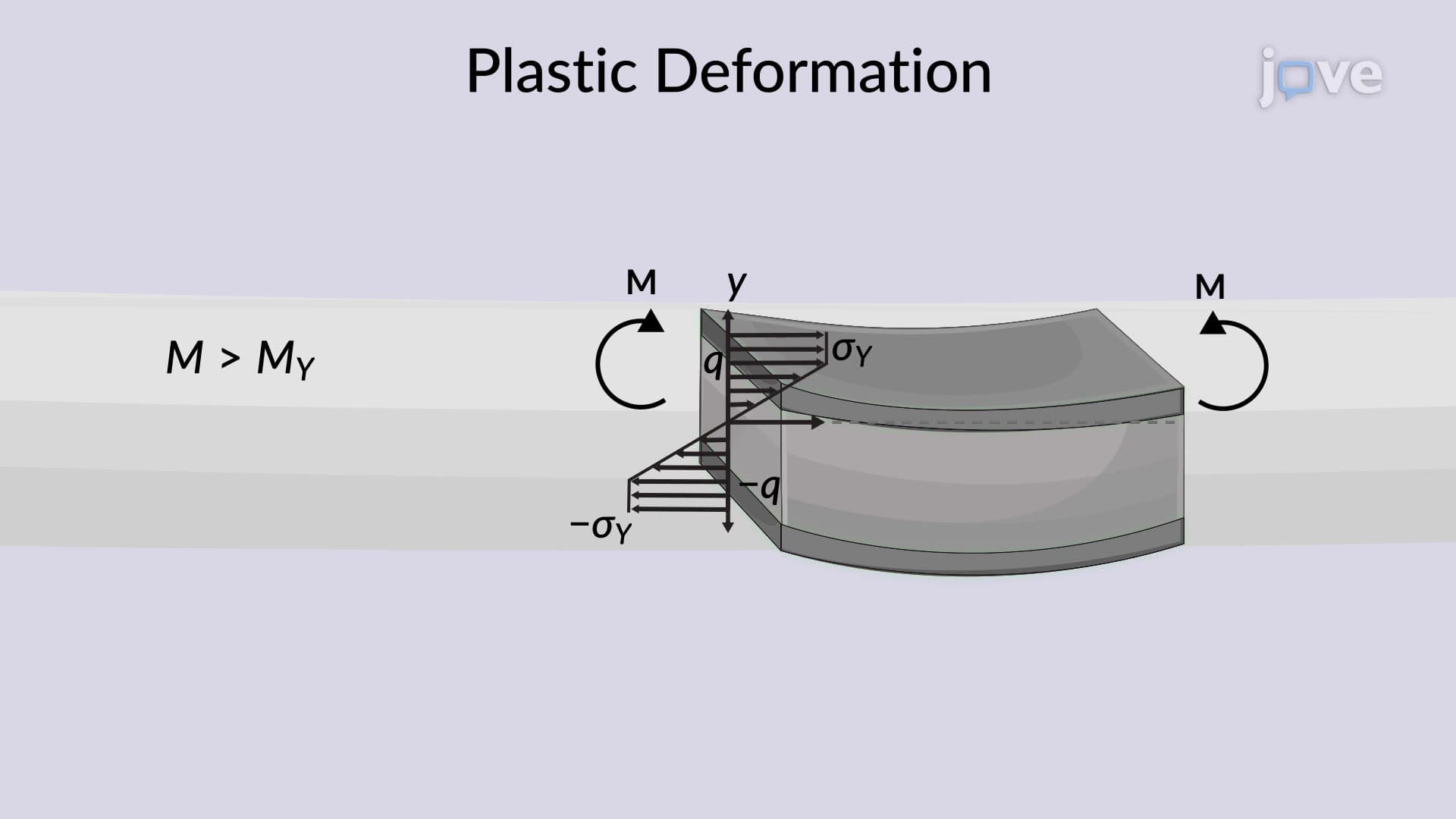
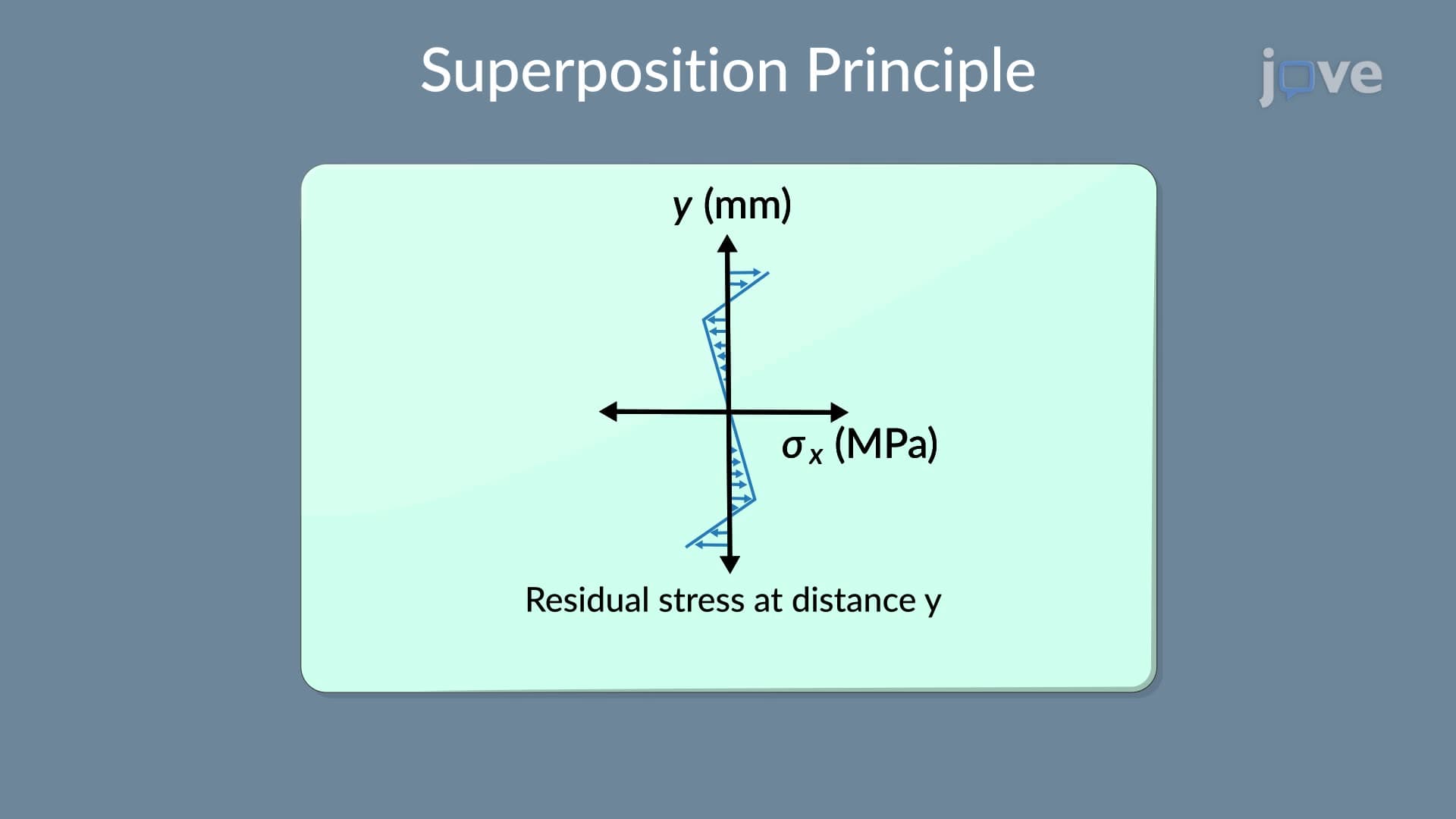
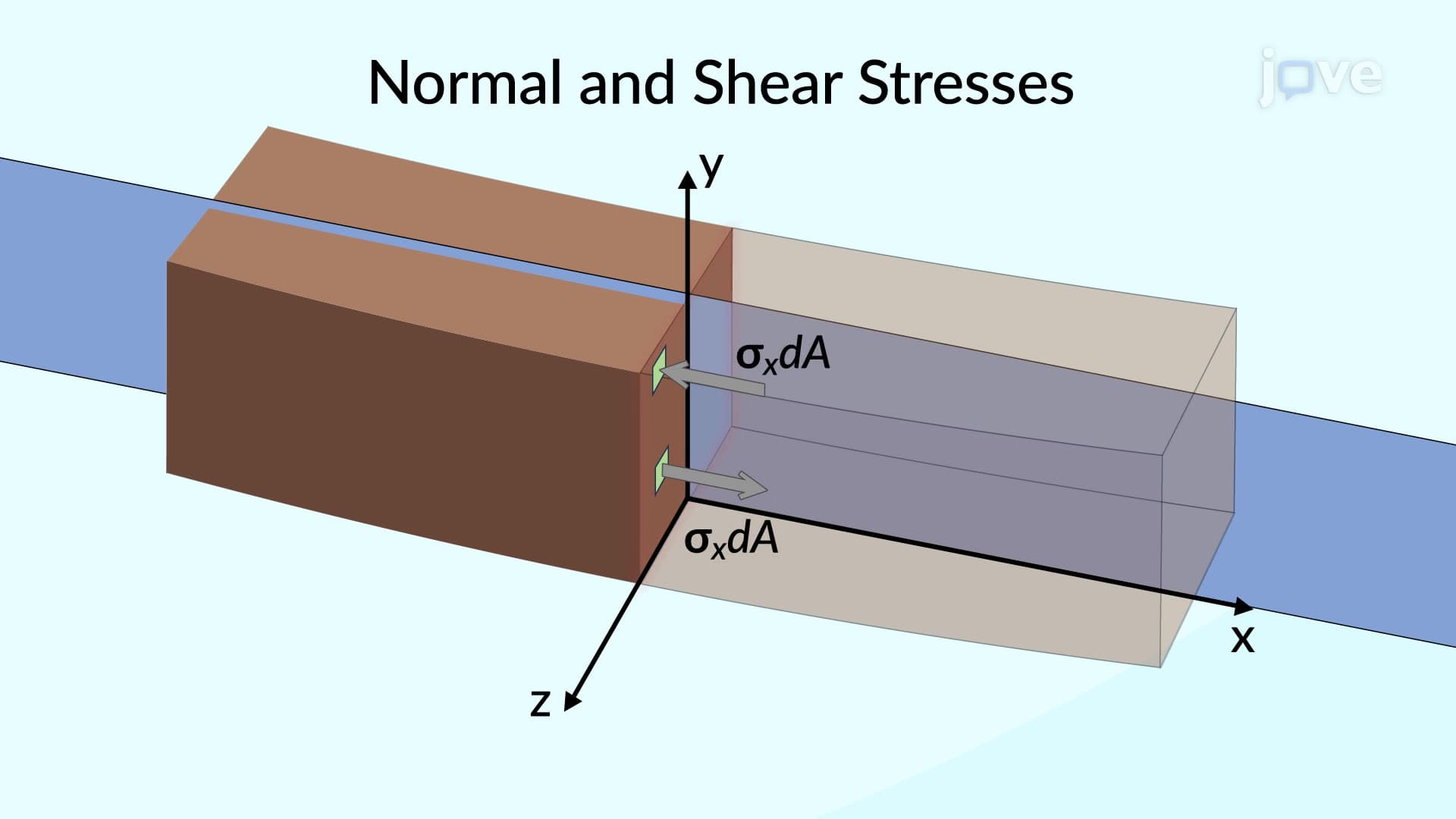
When we cut through any point along a symmetric member in bending, the internal forces must satisfy equilibrium requirements. These internal forces consist of normal stresses (pulling or pushing perpendicular to the cross-section) and shearing stress components (acting parallel to the cross-section). The fascinating aspect is that these internal forces must exactly balance the external couples applied to the member.
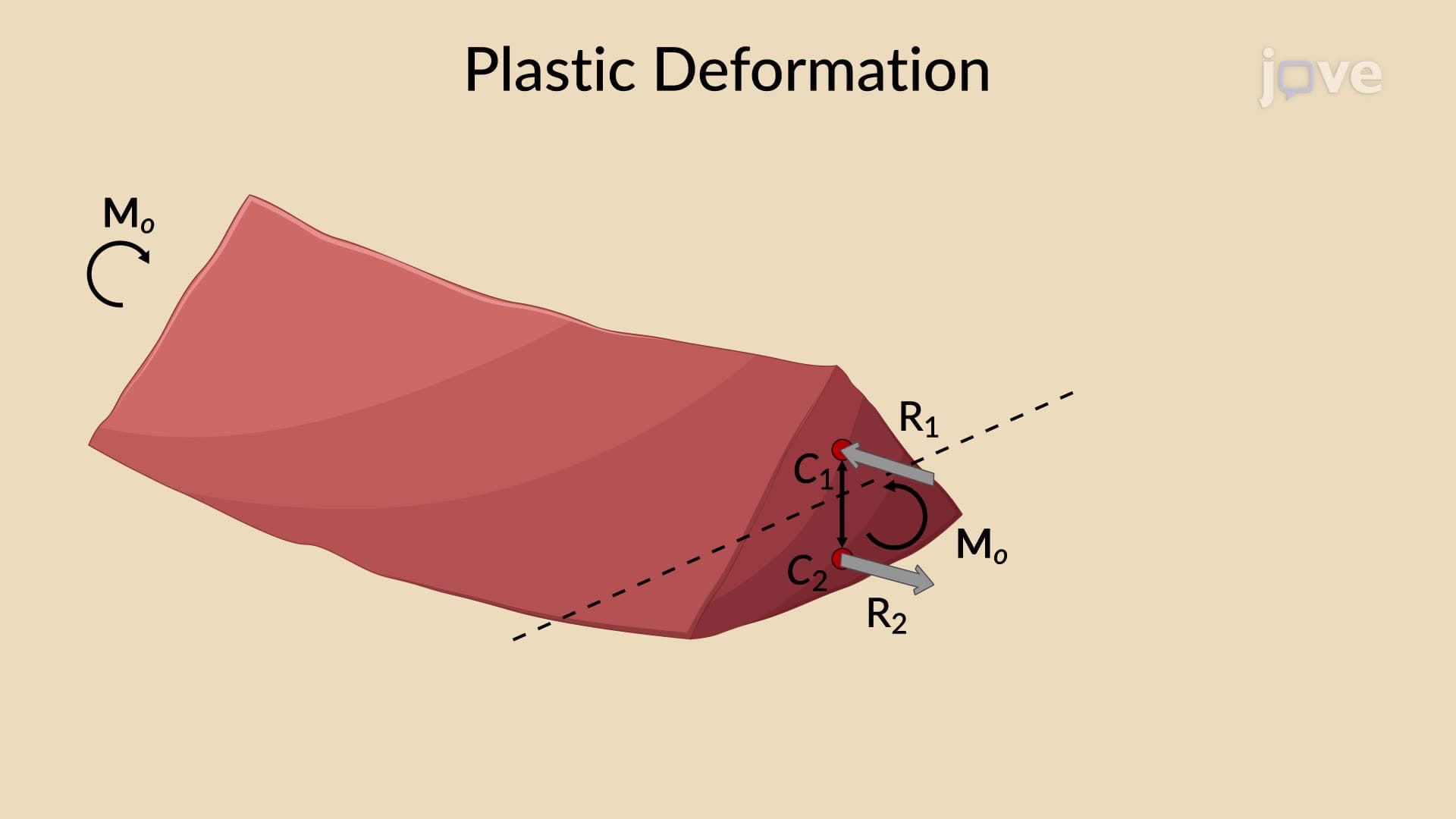
The equilibrium principle dictates that the internal force system must be statically equivalent to the applied couple. Since couples have unique properties - their force components sum to zero in any direction, and their moment remains constant about any axis perpendicular to the couple's plane - the internal stress distribution must reflect these characteristics.
Understanding couple behavior is crucial for students preparing for AP Physics, college-level statics courses, or engineering fundamentals exams. A couple's moment equals zero about any axis lying within its plane, but maintains constant value about perpendicular axes. This property explains why symmetric members can efficiently transfer bending loads without creating net translational forces.
The negative sign relationship between tensile stress and moment contributions about the z-axis represents a fundamental sign convention in structural analysis. When tensile stresses develop on one side of the neutral axis, they create negative moments, while compressive stresses on the opposite side generate positive moments. This balance ensures the internal moment equals the applied external couple.
Consider the symmetric member bending principles applied in designing the suspension cables of the Verrazano-Narrows Bridge connecting Staten Island and Brooklyn. Engineers must account for how wind loads and traffic create couples that bend the supporting members, ensuring internal stress distributions maintain structural integrity under various loading conditions.
Related Micro-courses