Loading…
Loading video…

16,974 views
Did you know that some structural beams in bridges like San Francisco's Bay Bridge carry absolutely no load despite being essential for stability? A zero force member is a truss element that experiences no internal stress under specific loading conditions, yet plays a crucial role in maintaining structural integrity. These members become active when loading patterns change, making them vital safety components in American infrastructure projects. Watch the full video on JoVE Coach to master this concept with expert-led visuals and step-by-step explanations.
A zero force member represents one of the most elegant concepts in structural engineering, where certain truss elements carry no internal force despite being integral to the structure's stability. This zero force member definition extends beyond simple mathematics—these members serve as critical backup elements that activate when loading conditions change, making them essential for structural redundancy in American building codes.
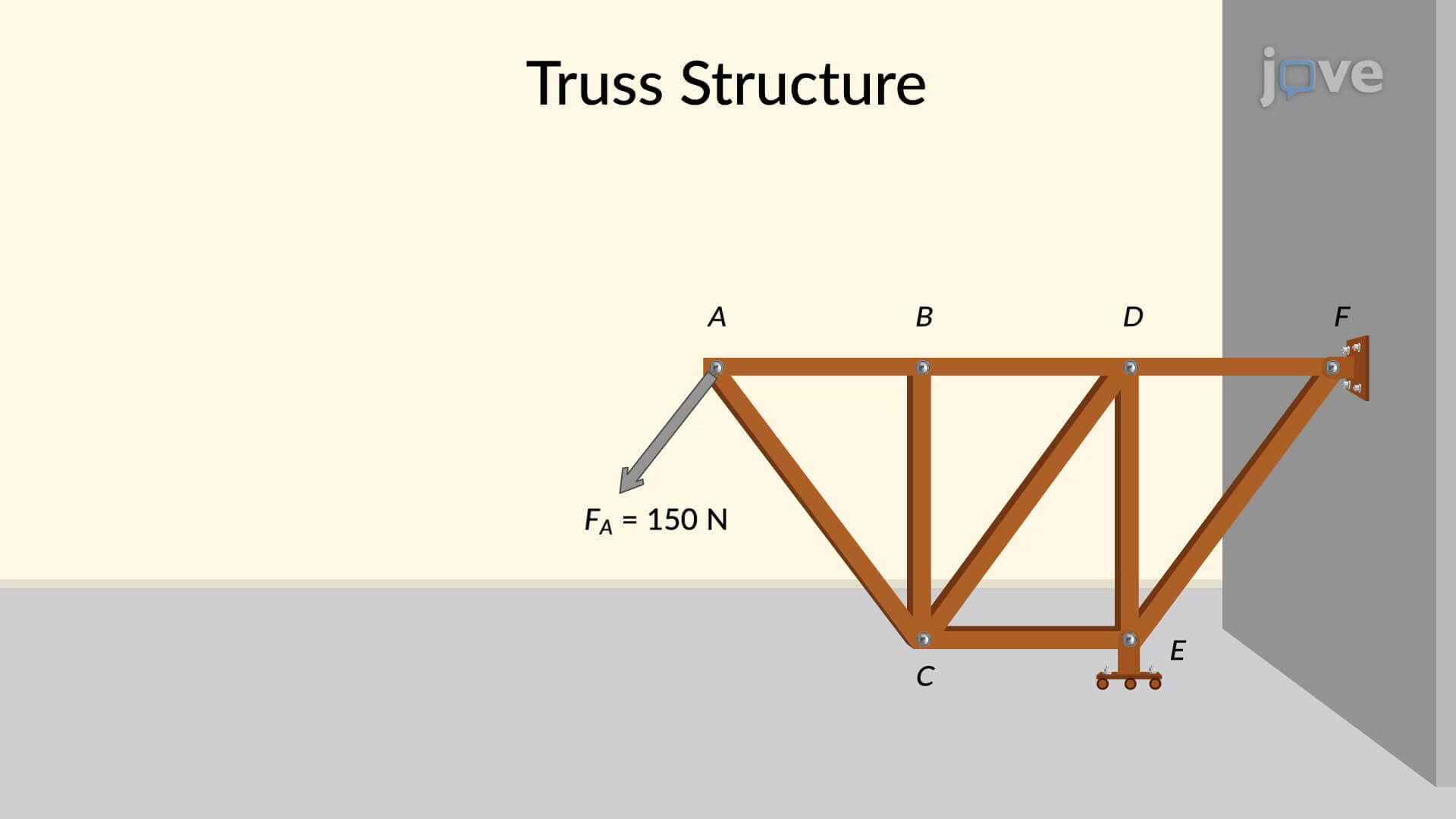
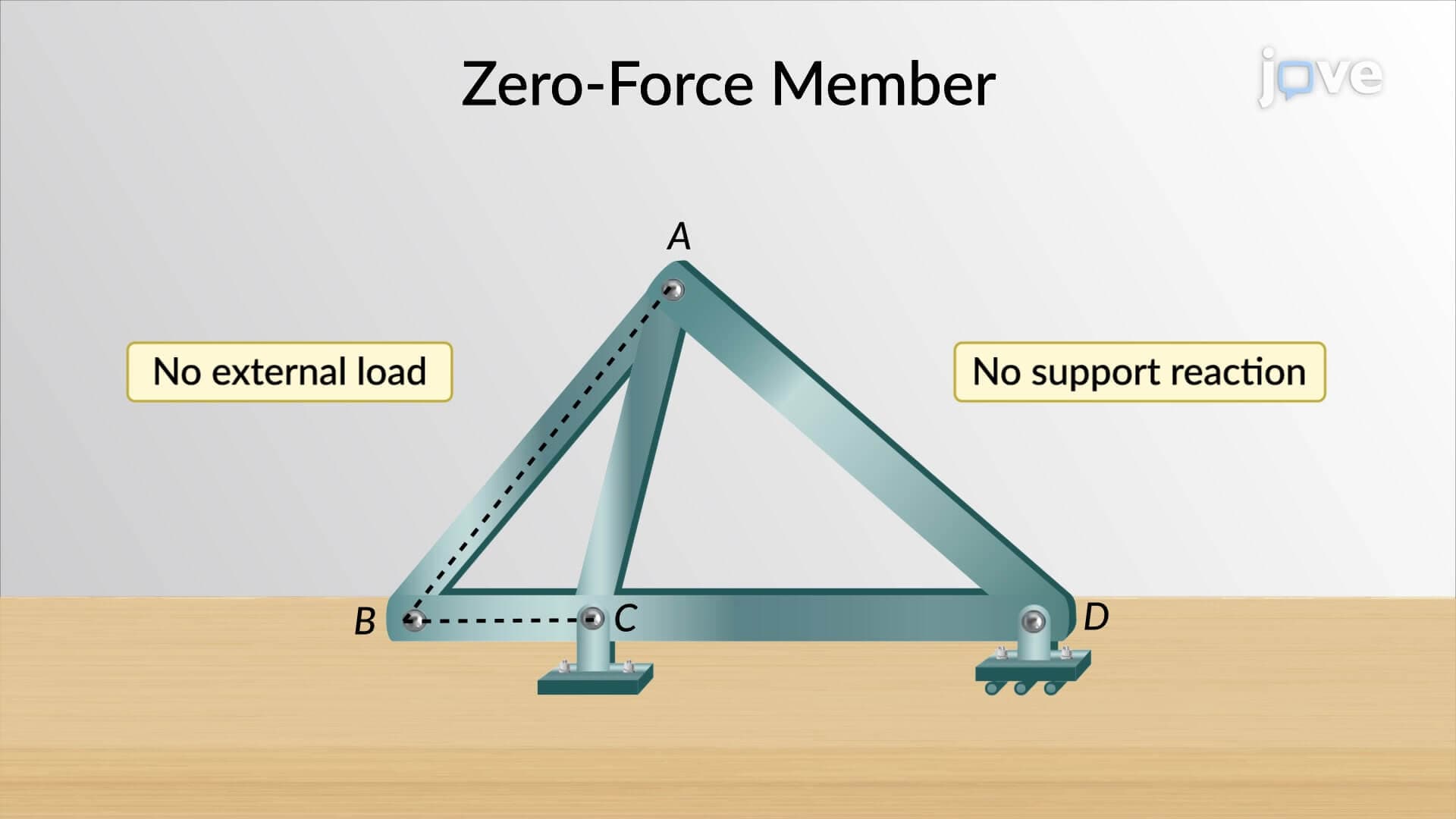
The zero force member concept relies on two fundamental geometric scenarios. First, when a joint contains only two non-collinear members with no external forces or reactions, both members must be zero-force members. This occurs because equilibrium equations require force components in perpendicular directions to sum to zero, forcing both member forces to equal zero.
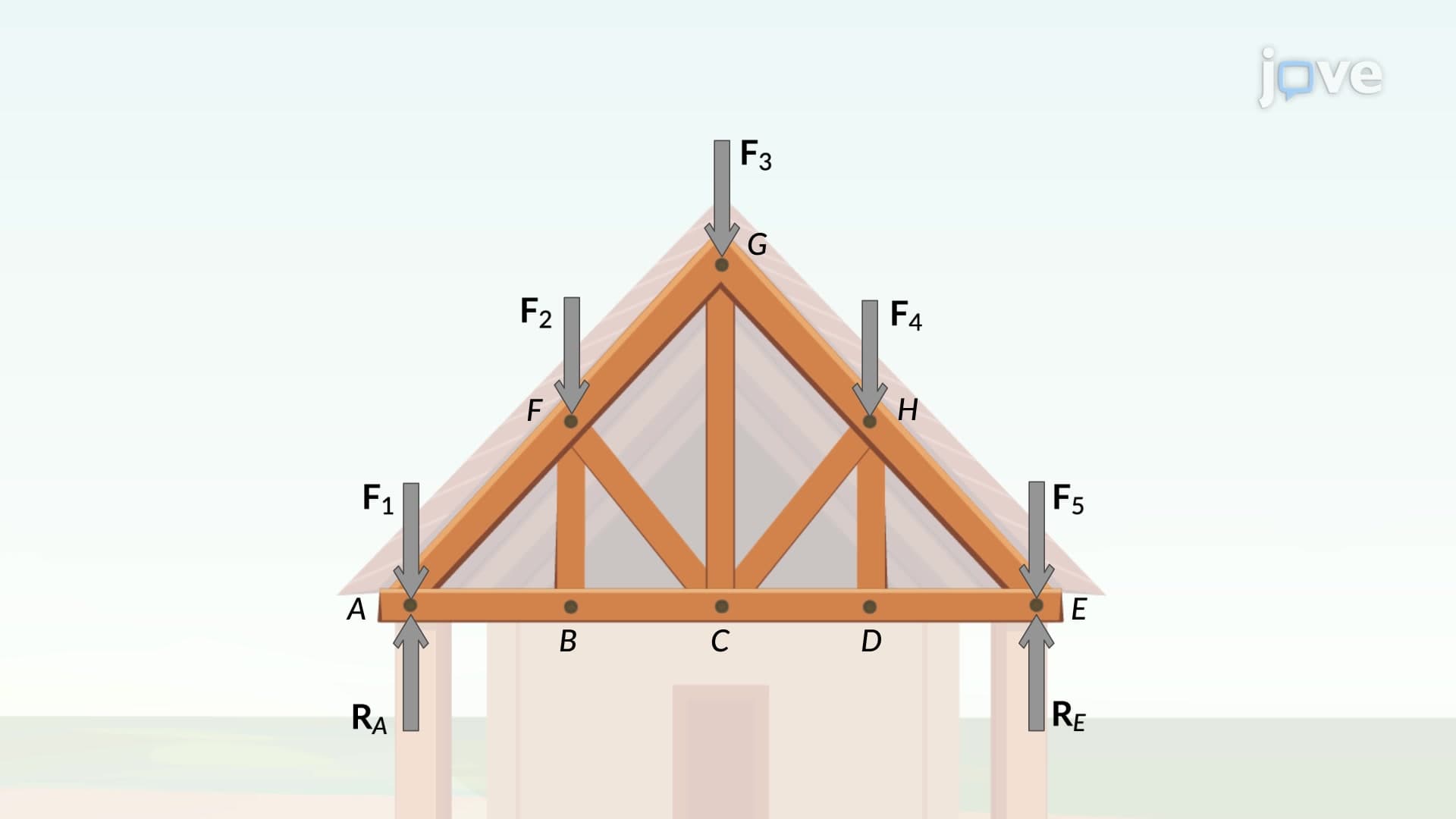
The second scenario involves joints with three members where two are collinear (aligned). Here, the third non-collinear member becomes a zero-force member, provided no external loads act at that joint. Engineers regularly encounter these configurations in roof trusses across American commercial buildings, where diagonal bracing members often serve as zero-force elements under normal loading.
Understanding zero force member basics requires mastering free-body diagram analysis. For a two-member joint, applying equilibrium equations ΣFx = 0 and ΣFy = 0 in perpendicular directions proves both forces must be zero. In three-member joints with two collinear elements, the equilibrium equation perpendicular to the collinear members demonstrates the third member's zero-force condition.
This mathematical approach appears frequently in AP Physics C mechanics exams and introductory statics courses at universities like MIT and Stanford. Students preparing for the Fundamentals of Engineering (FE) exam must demonstrate proficiency in identifying these members through systematic equilibrium analysis.
The zero force member overview reveals their critical role in structures like the Golden Gate Bridge's approach spans and stadium roof systems across the NFL. These members provide stability during construction, resist buckling of compression members, and offer load-carrying capacity during unusual loading events like seismic activity or extreme weather.
California's strict seismic building codes specifically require consideration of how zero-force members behave during earthquake loading, when they may suddenly become active load-carrying elements. This transforms the zero force member study guide from academic exercise to life-safety consideration in professional practice.
Frequently Asked Questions
A zero force member is a structural element in a truss that carries no internal force under normal loading conditions but remains essential for overall stability. These members act like insurance policies, becoming active when loading patterns change or during construction phases.
Zero force member problems are common on AP Physics C mechanics exams and college statics midterms because they test equilibrium analysis skills. Mastering the two geometric rules (two non-collinear members, or three members with two collinear) helps you quickly identify these elements without complex calculations.
The Fundamentals of Engineering exam typically includes 2-3 problems requiring identification of zero force members in complex trusses. These questions test your ability to systematically analyze joints and apply equilibrium principles under time pressure, often worth 8-10 points total.
Zero force members are common in sports stadiums, airport terminals, and bridge structures across the US. For example, many diagonal bracing elements in the roof trusses of venues like AT&T Stadium in Dallas serve as zero force members under normal loading but provide critical stability during high winds.
No advanced mathematics is required—just basic algebra and trigonometry taught in high school. The key is understanding equilibrium principles (forces sum to zero) and being systematic in your analysis approach, making this topic accessible to students in introductory physics or engineering courses.
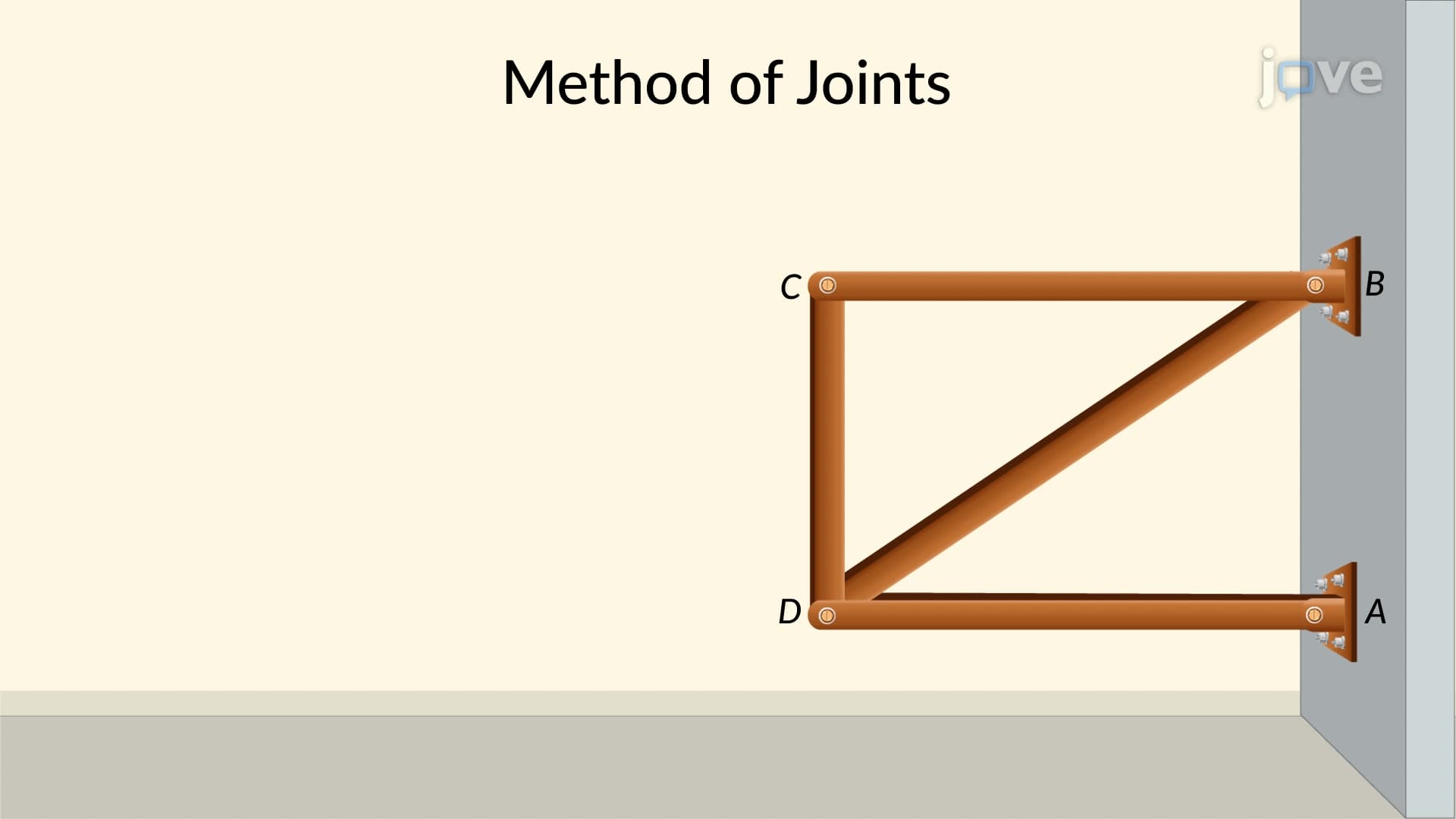
Progress to method of joints and method of sections for analyzing forces in non-zero members, followed by deflection analysis and indeterminate structures. This natural progression builds toward advanced structural analysis topics covered in junior-level engineering courses.
Practice identifying the two key geometric patterns daily, then work through progressively complex truss configurations. Focus on drawing clean free-body diagrams and applying equilibrium equations systematically—this methodical approach prevents errors during high-stakes exams like the MCAT physics section.
Related Micro-courses
Related Subjects
 Civil Engineering 30 micro-courses›Electrical Engineering 33 micro-courses›