Loading subject page…


5,181 views

Video Summary: What Is Torsion of Noncircular Members
Ever wonder why a square wrench handle feels different when you twist it compared to a round screwdriver shaft? The torsion of noncircular members behaves dramatically differently from circular shafts due to the absence of axisymmetry. Unlike circular cross-sections that remain perfectly flat during twisting, noncircular shapes like square or rectangular bars experience complex warping and stress concentrations, particularly at corners where maximum shearing stress occurs along the centerline of wider faces. This phenomenon is critical in designing everything from automotive drive shafts to bridge structural elements across US infrastructure projects. Watch the full video on JoVE Coach to master this concept with expert-led visuals and step-by-step explanations.
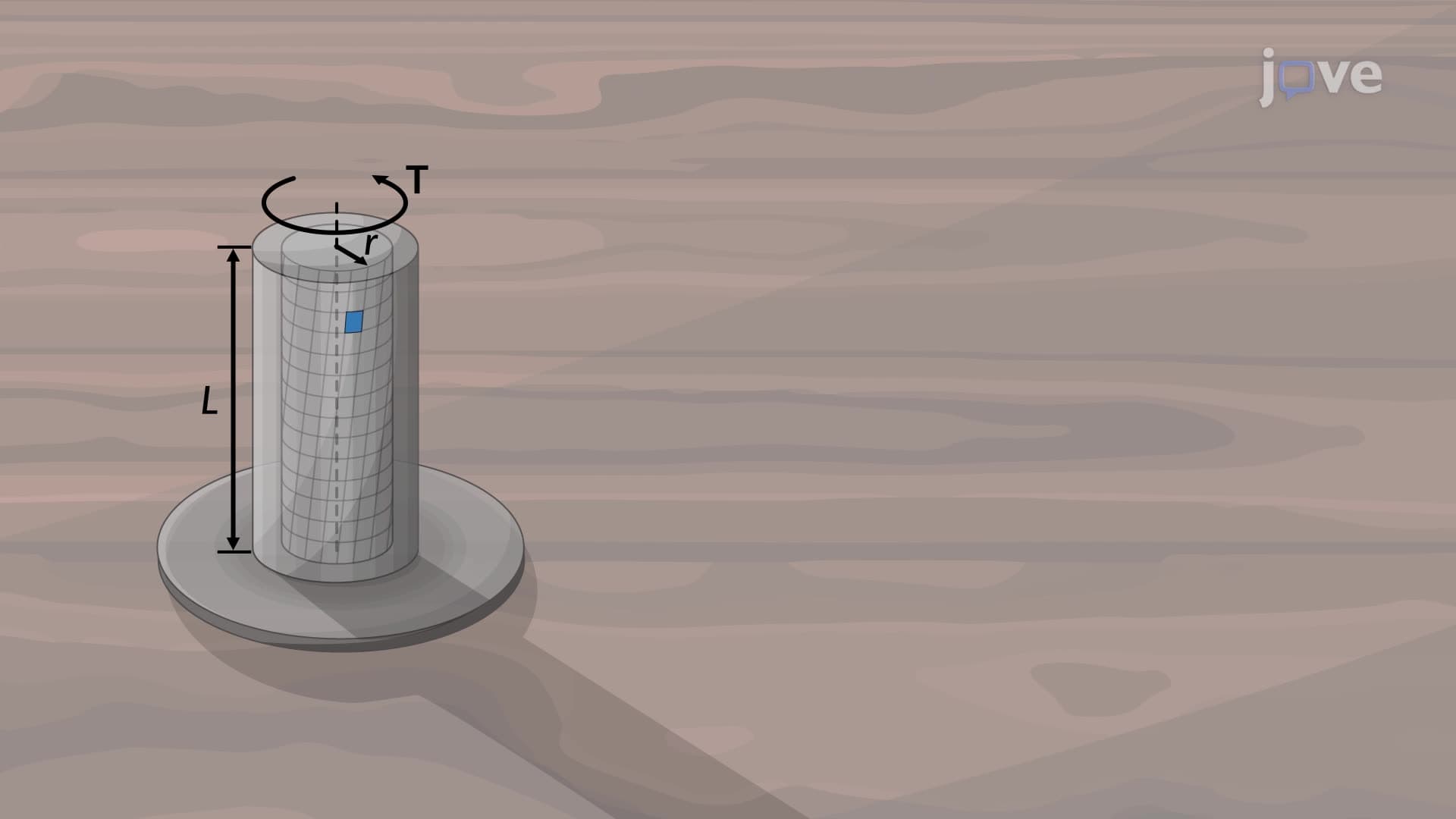
The torsion of noncircular members represents one of the most challenging topics in mechanics of materials, primarily because it abandons the elegant simplicity found in circular shaft analysis. While circular cross-sections maintain their shape due to perfect rotational symmetry, noncircular members-including squares, rectangles, ellipses, and irregular shapes-experience complex deformation patterns that require advanced mathematical treatment.
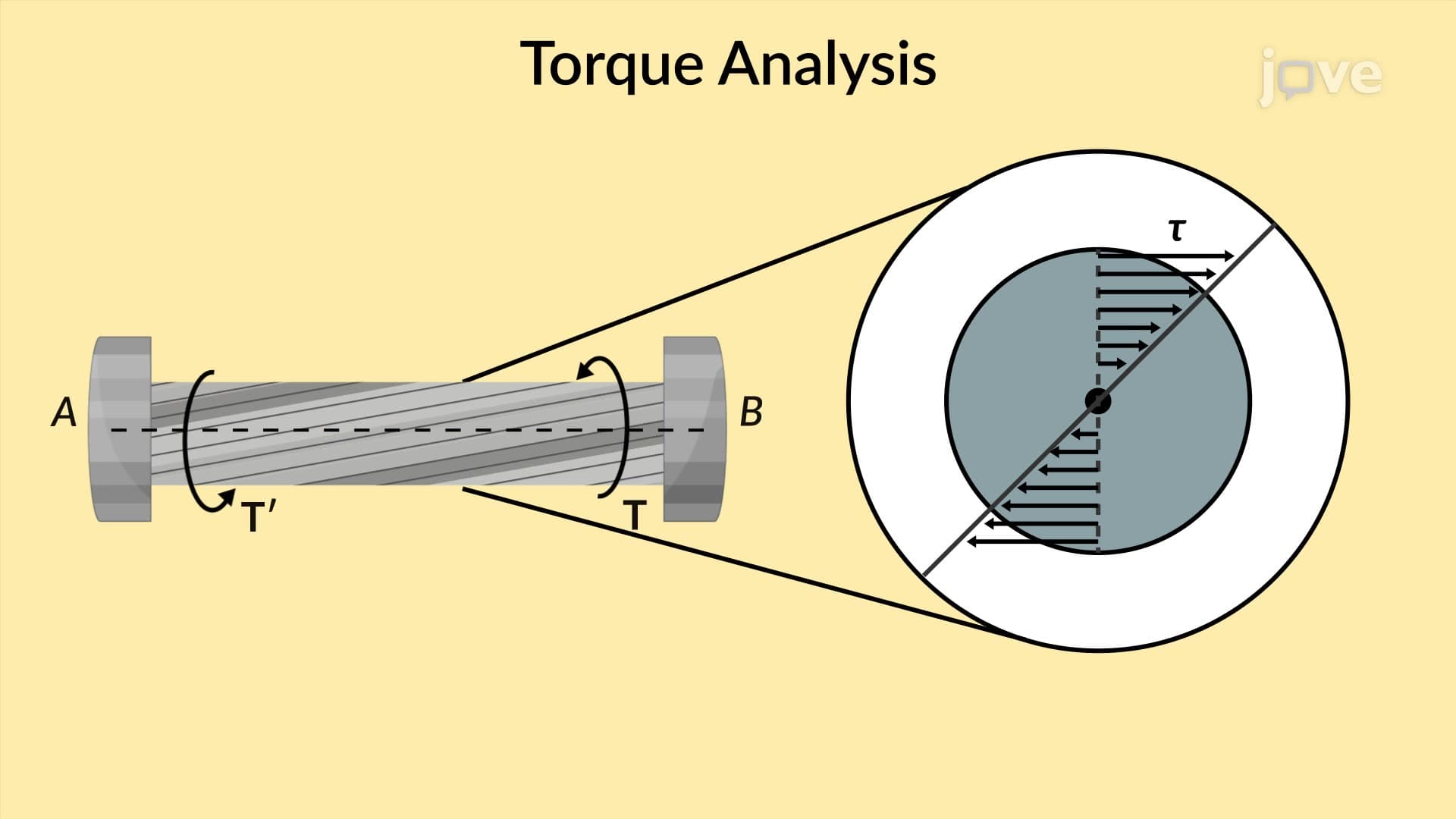
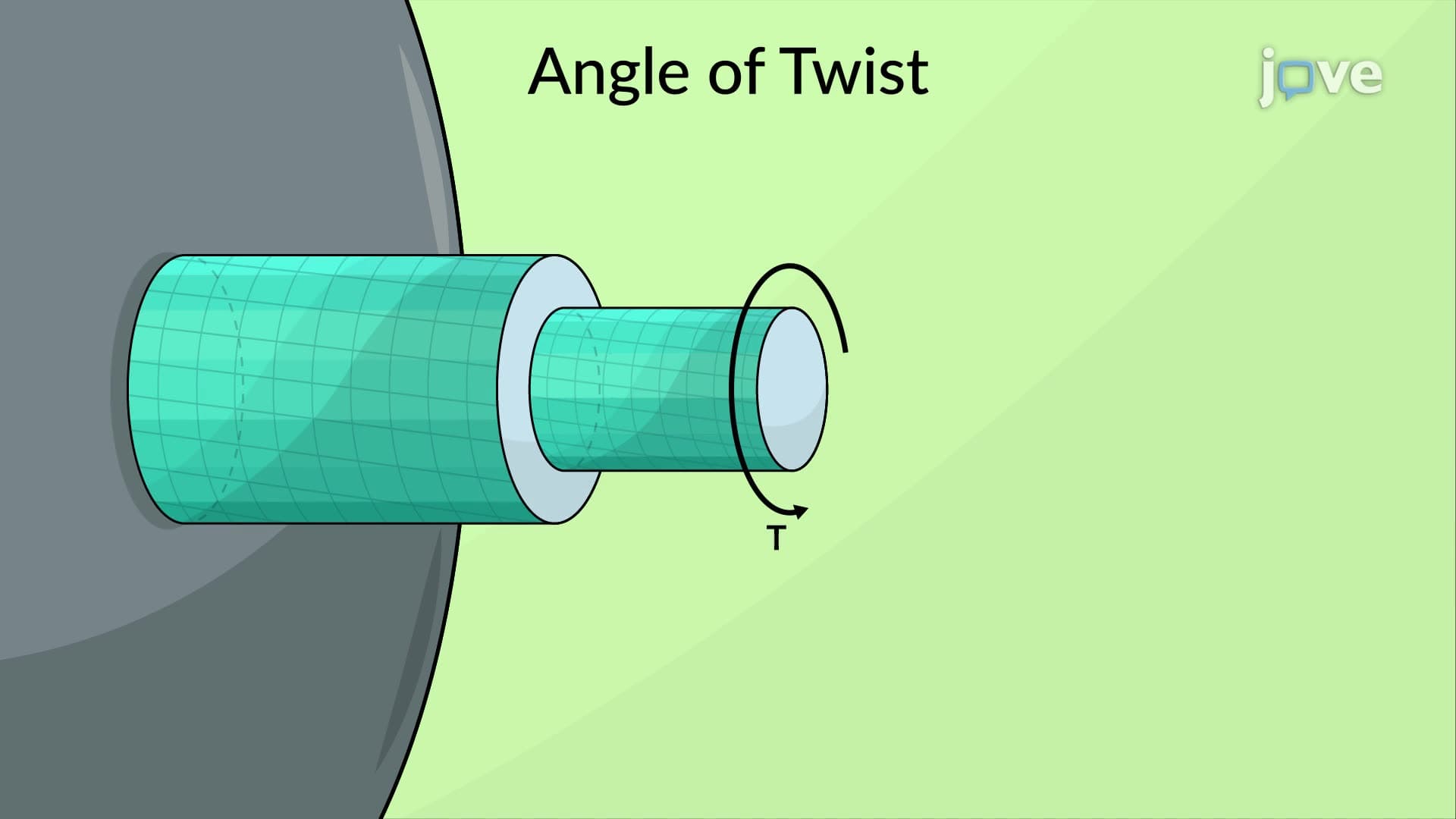
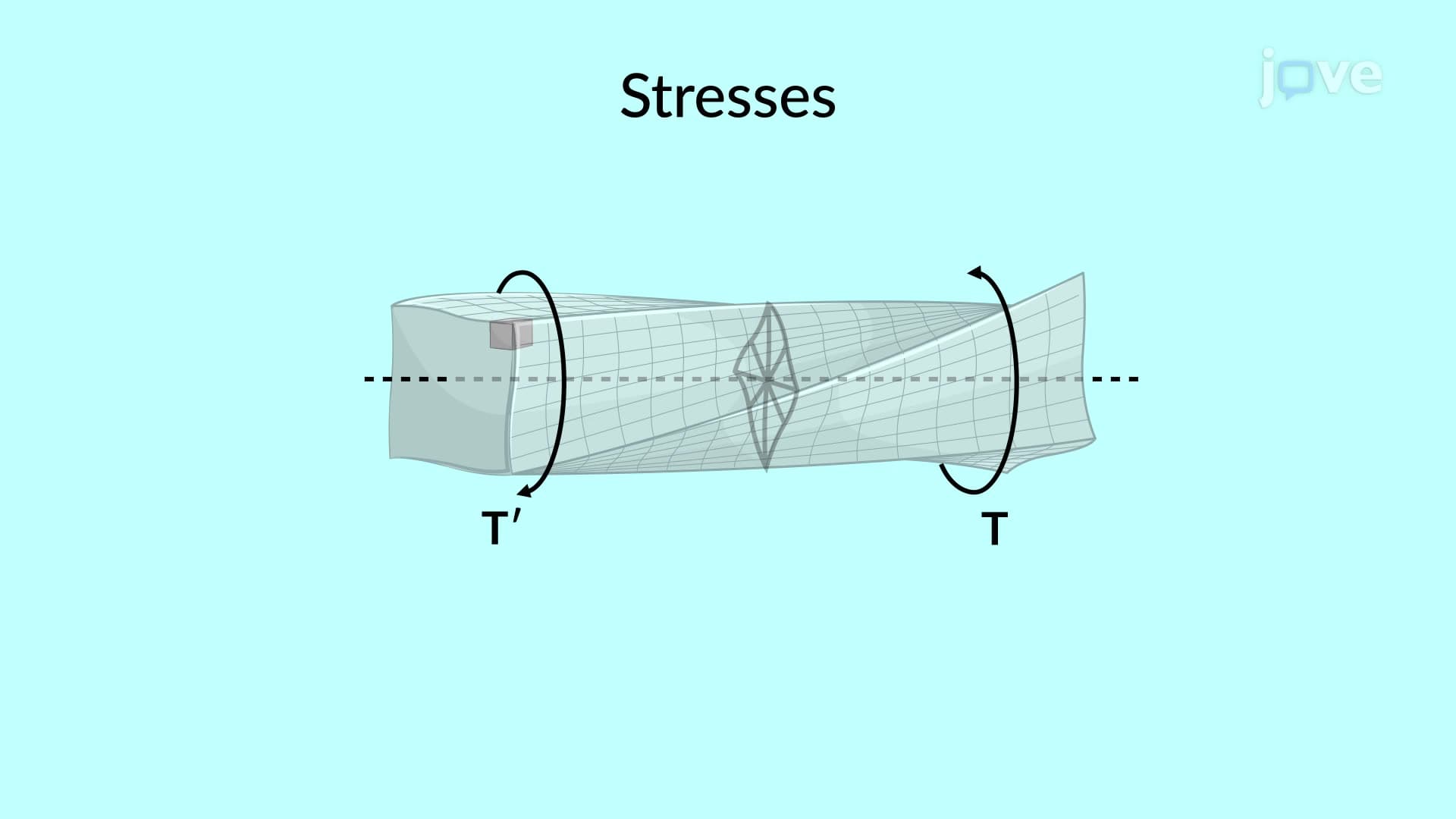
The fundamental difference lies in axisymmetry. Circular shafts possess identical properties in all radial directions, ensuring that plane cross-sections remain plane during twisting. However, a square bar lacks this symmetry, causing different regions to resist torsion unequally. This asymmetry leads to warping, where initially flat cross-sections become curved surfaces after twisting.
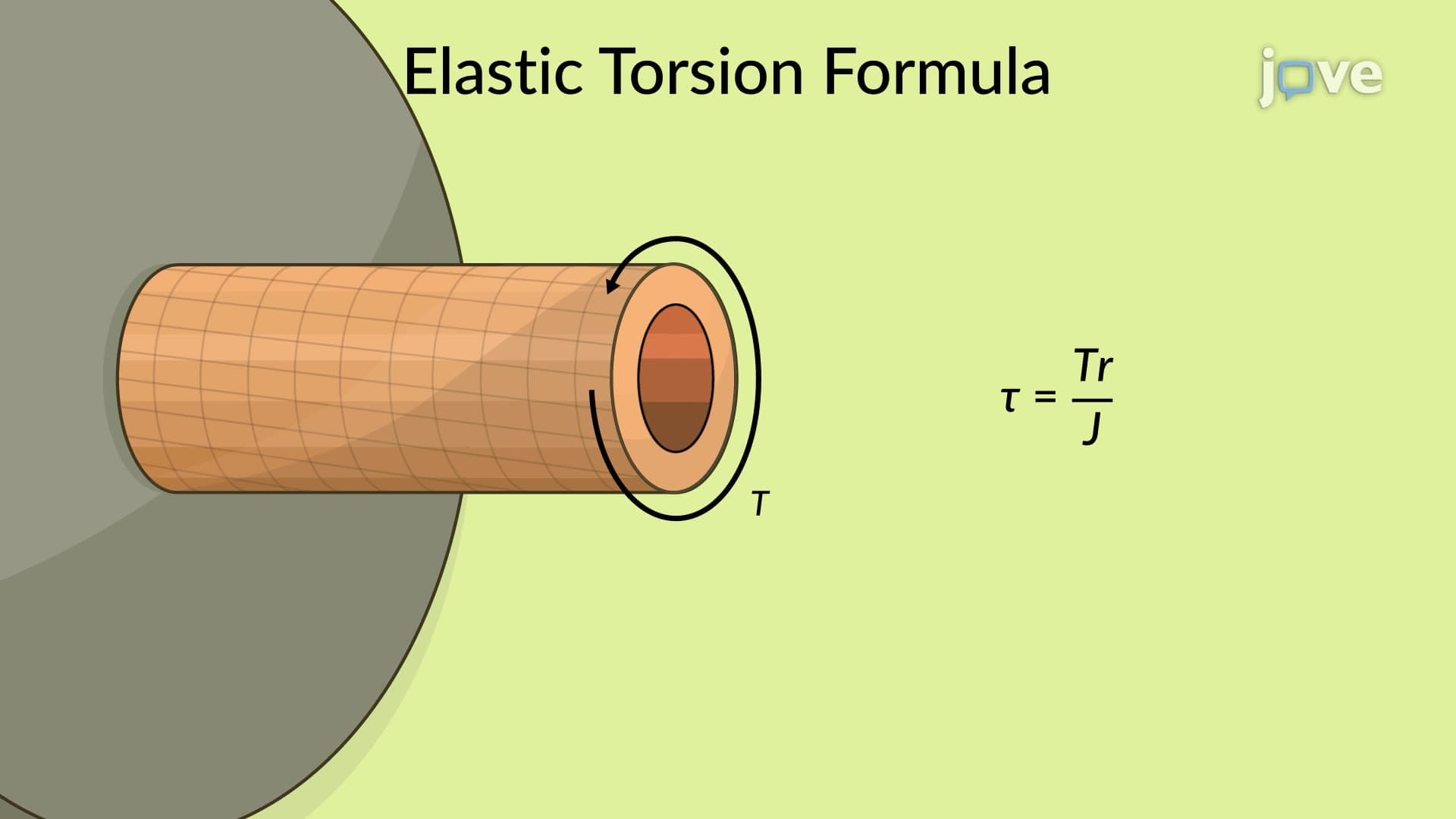
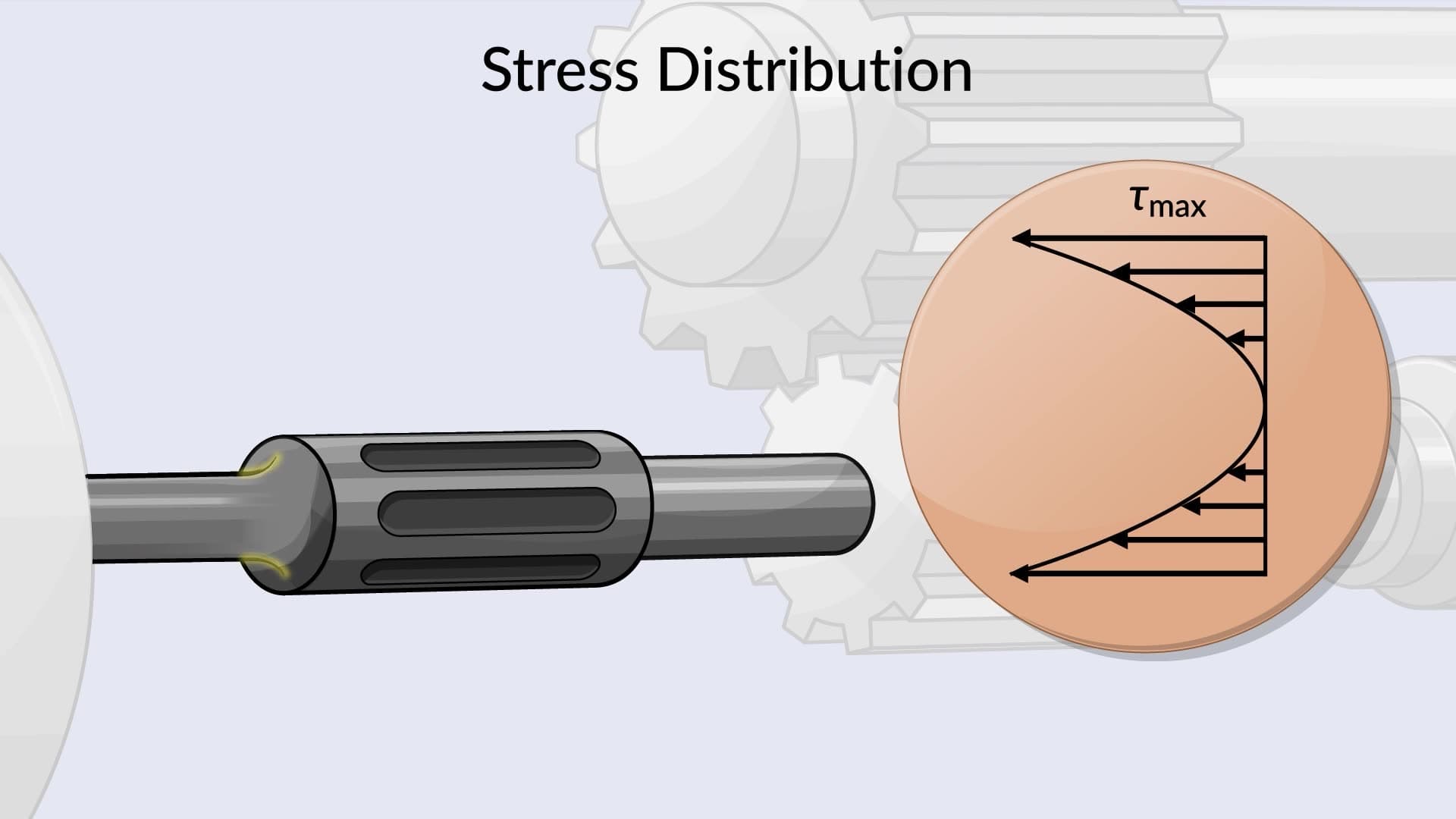
In noncircular members, shearing stress distribution defies the linear relationship τ = (T×r)/J used for circular shafts. Instead, stress patterns follow complex mathematical functions derived from theory of elasticity. For a square bar under torsion, maximum shearing stress doesn't occur at the corners-where you might intuitively expect-but along the midpoints of each side face.
This counterintuitive behavior results from boundary conditions. At any free surface (including corners), shearing stresses must equal zero because no external forces act perpendicular to these surfaces. Consequently, stress concentrates toward the interior, creating maximum values along centerlines of the wider faces in rectangular cross-sections.
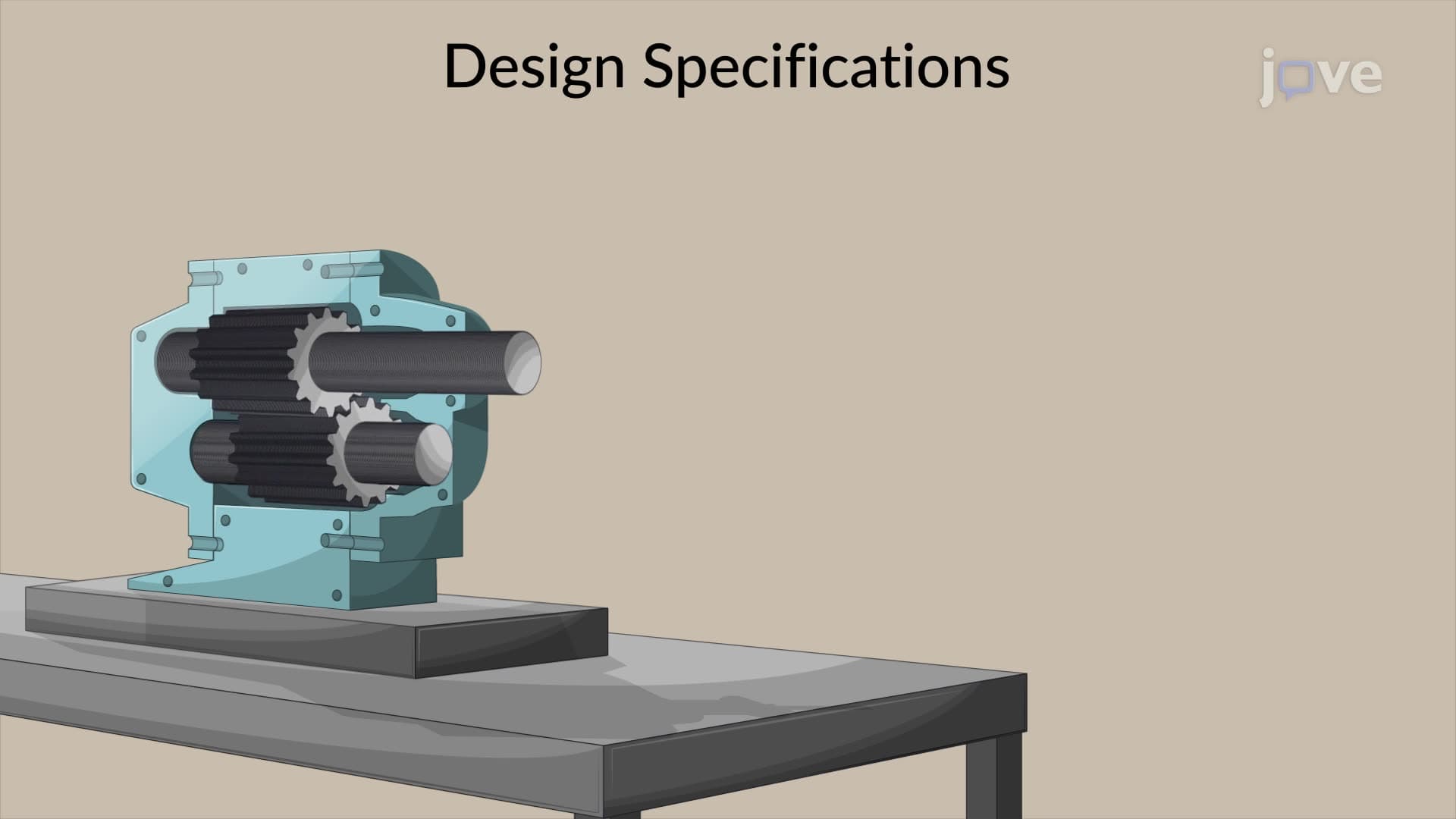
Understanding noncircular torsion proves essential for US engineering applications. Consider the design of automotive drive shafts, where weight reduction drives engineers toward hollow rectangular sections instead of solid circular ones. Similarly, bridge designers often employ box girders (rectangular hollow sections) that experience torsional loading from asymmetric traffic loads or wind forces.
The coefficients c1 and c2 mentioned in advanced torsion formulas depend entirely on geometric ratios. For rectangular sections with width 'a' and height 'b', these coefficients are tabulated based on the a/b ratio. As this ratio increases (wider, flatter rectangles), stress concentration becomes more pronounced, requiring careful consideration in structural design codes like AISC specifications used throughout the United States.
Students preparing for AP Physics C: Mechanics, college-level statics and strength of materials courses, or engineering fundamentals exams will encounter these concepts extensively. While the mathematical complexity may seem daunting, understanding the physical principles-warping, stress concentration, and boundary effects-provides the foundation for tackling both theoretical problems and practical design challenges in mechanical and civil engineering disciplines.
Related Micro-courses