Loading subject page…


5,343 views

Video Summary: Long Run Supply in Increasing and Decreasing Cost Industries
Ever wonder why corn prices keep climbing while computer chips get cheaper over time? The answer lies in long-run supply in increasing- and decreasing-cost industries, where input costs behave differently as production scales up. In corn farming, limited farmland drives up costs as more acres are cultivated, while computer chip manufacturing benefits from bulk purchasing and technological improvements that reduce per-unit costs. Watch the full video on JoVE Coach to master this concept with expert-led visuals and step-by-step explanations.
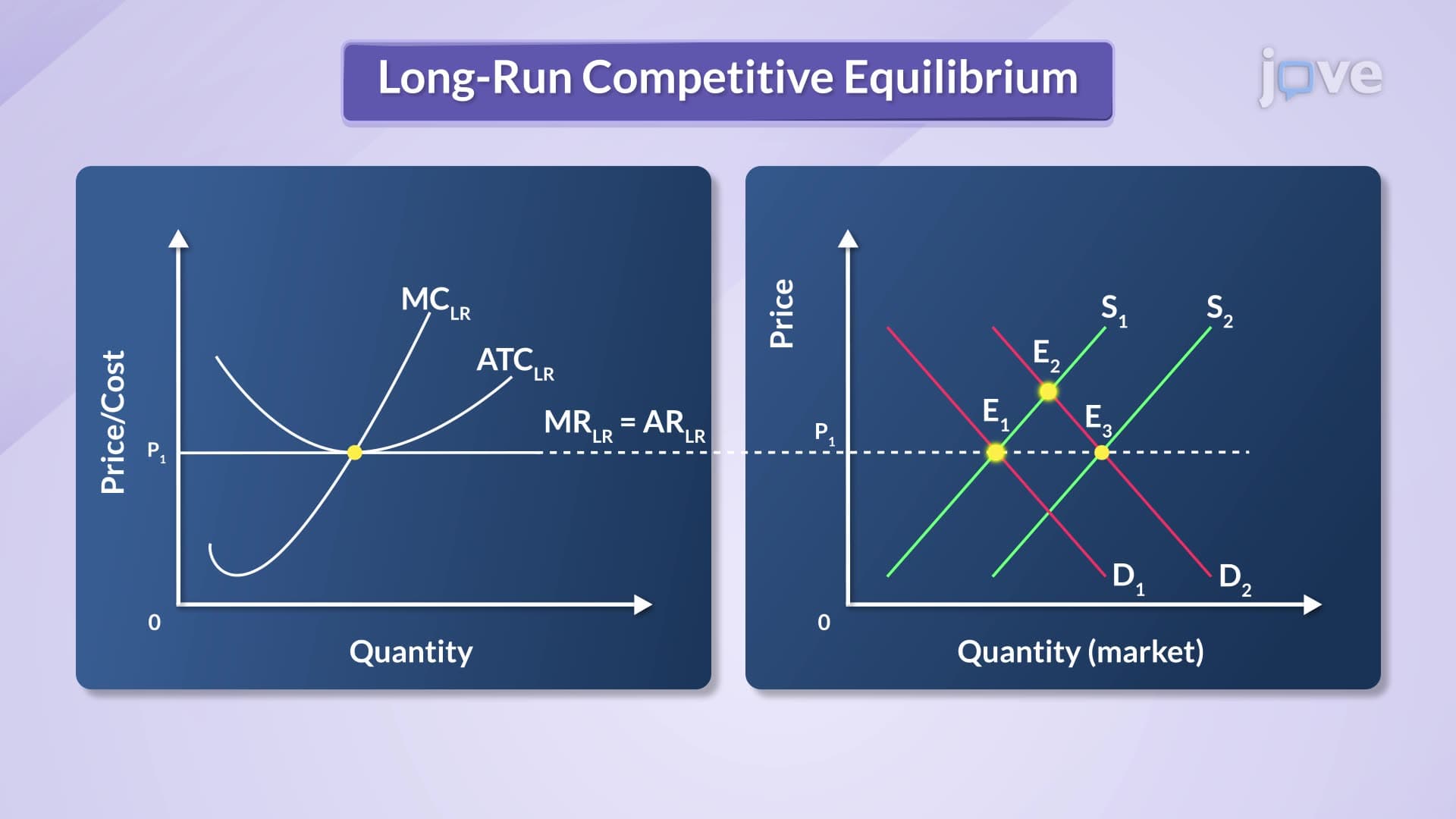
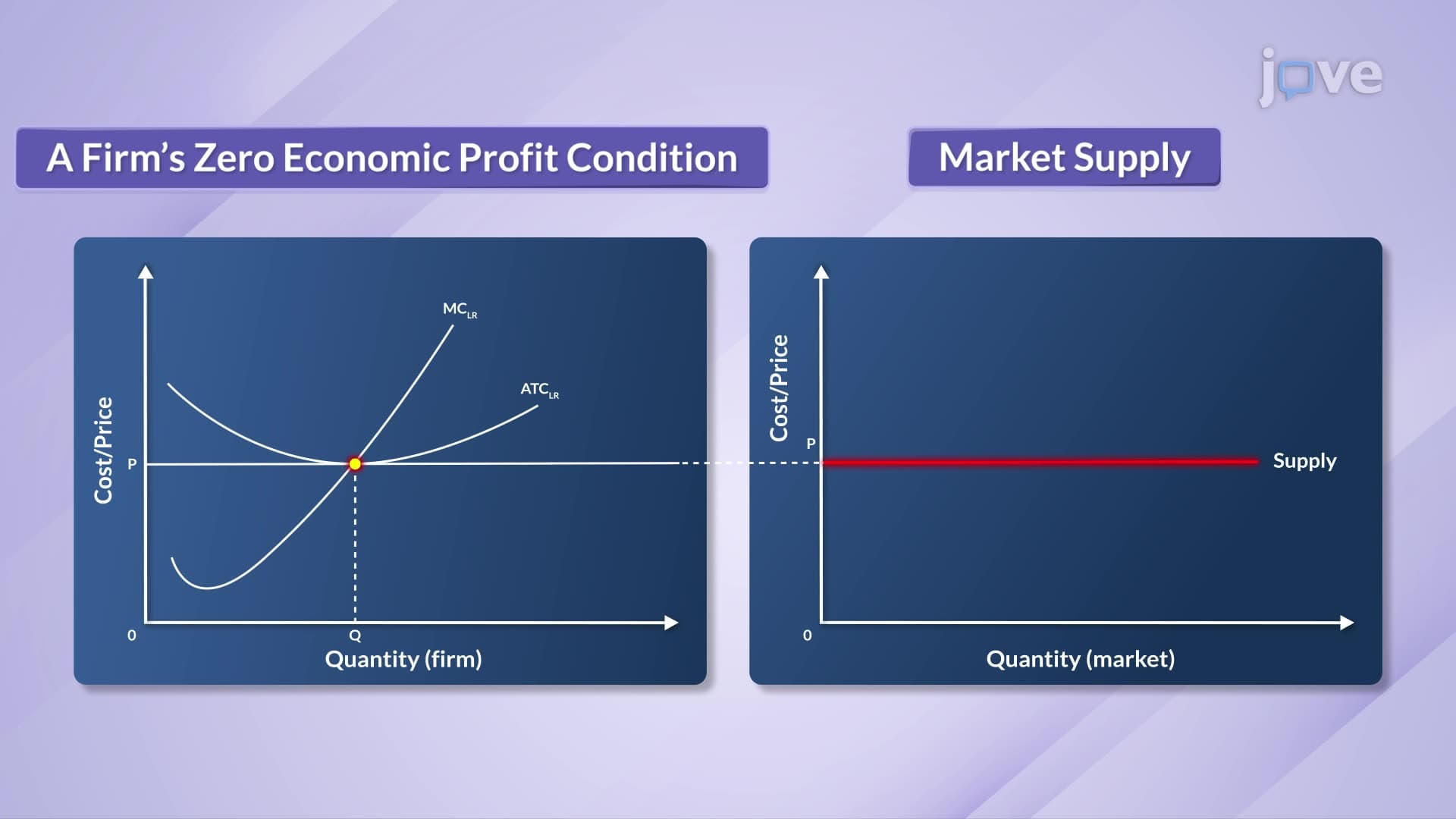
In perfectly competitive markets, long-run supply in increasing- and decreasing-cost industries reveals fascinating economic patterns that students encounter on AP Economics exams and college microeconomics courses. Unlike constant-cost industries where supply curves remain horizontal, these industries exhibit distinct upward or downward slopes based on how input costs respond to production changes.
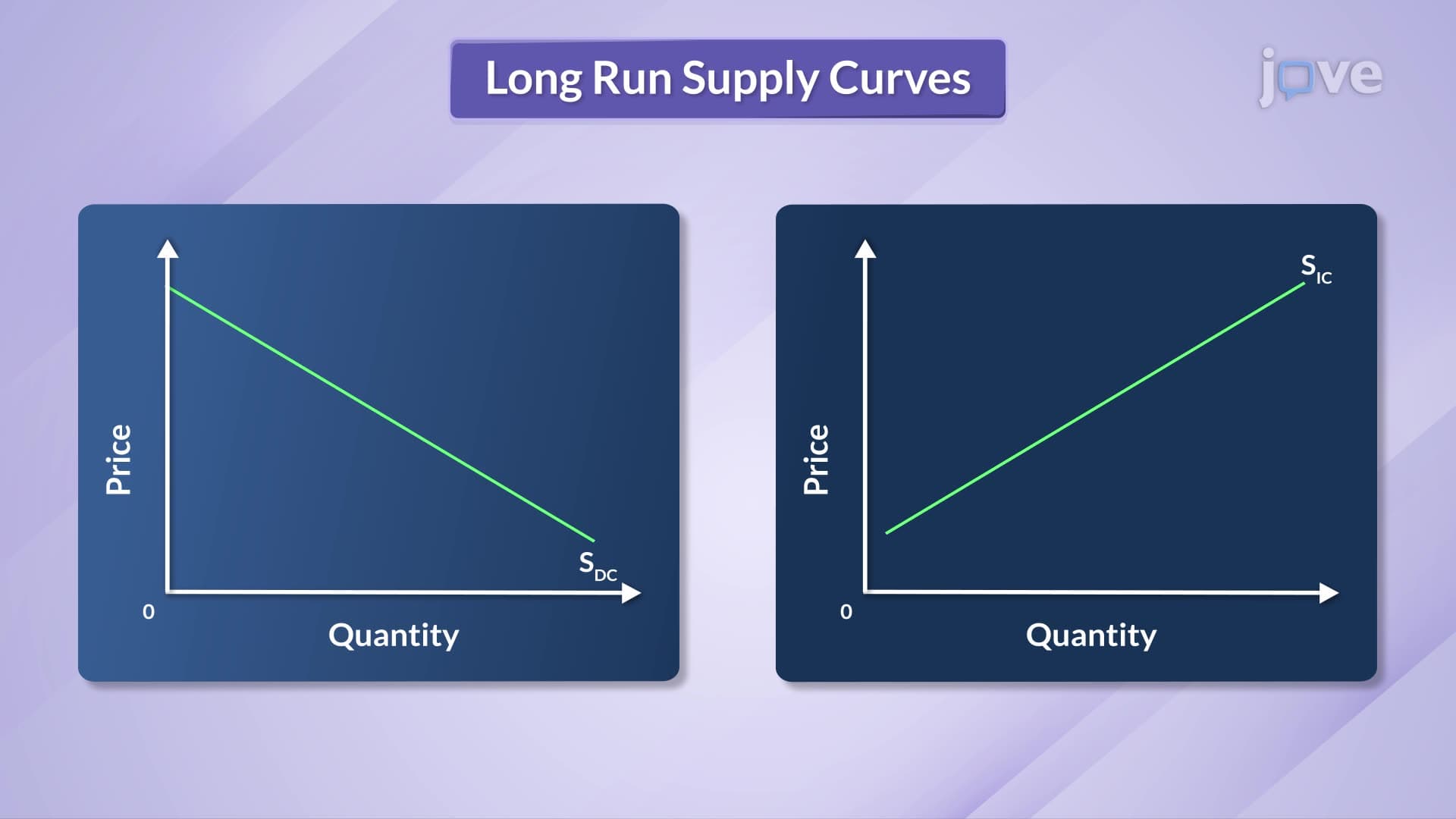
Increasing-cost industries face rising input prices as total industry output expands. Consider California's wine industry, where premium vineyard land becomes increasingly scarce and expensive as more wineries enter the market. As demand for Napa Valley grapes grows, land prices soar, labor costs increase due to competition for skilled vineyard workers, and specialized equipment becomes more expensive. This creates an upward-sloping long-run supply curve where each additional unit costs more to produce than the previous one.
The petroleum industry exemplifies this concept perfectly. As oil companies extract more crude oil, they must tap into increasingly difficult and expensive reserves-from offshore drilling to fracking operations. The easy-to-reach oil gets extracted first, leaving costlier deposits for later production. This resource depletion pattern appears frequently in AP Economics free-response questions testing students' understanding of supply curve slopes.
Decreasing-cost industries experience falling input costs as production scales up, creating downward-sloping long-run supply curves. The smartphone manufacturing industry demonstrates this beautifully. As companies like Apple and Samsung increase production volumes, they negotiate better deals with component suppliers, invest in more efficient manufacturing processes, and benefit from technological spillovers that reduce per-unit costs.
Electric vehicle battery production showcases another compelling example. Tesla's Gigafactory concept relies on massive scale to drive down battery costs through bulk purchasing of raw materials, automated production lines, and continuous technological improvements. As the entire industry expands, shared research and development costs spread across more units, creating external economies of scale that benefit all producers.
These concepts frequently appear on college microeconomics midterms and AP Economics exams. Students should recognize that increasing-cost industries often involve natural resources or land-intensive production, while decreasing-cost industries typically feature technology, manufacturing, or knowledge-based components. Understanding these patterns helps predict long-term price trends and market outcomes-essential skills for economics majors and business students analyzing industry dynamics.
Related Micro-courses