Loading video…


 12 Concepts
 5.3K views

Video Summary: What Is Zero Economic Profit
Why would a successful business owner earning $80,000 actually have zero profit? Zero economic profit occurs when a company's total revenue exactly equals all costs-including hidden opportunity costs most people ignore. Consider an entrepreneur leaving a $70,000 software job to start an IT consultancy: despite earning $80,000 in accounting profit, her zero economic profit reveals the true cost of her career choice. This counterintuitive concept distinguishes thriving businesses from those merely breaking even. Watch the full video on JoVE Coach to master this concept with expert-led visuals and step-by-step explanations.
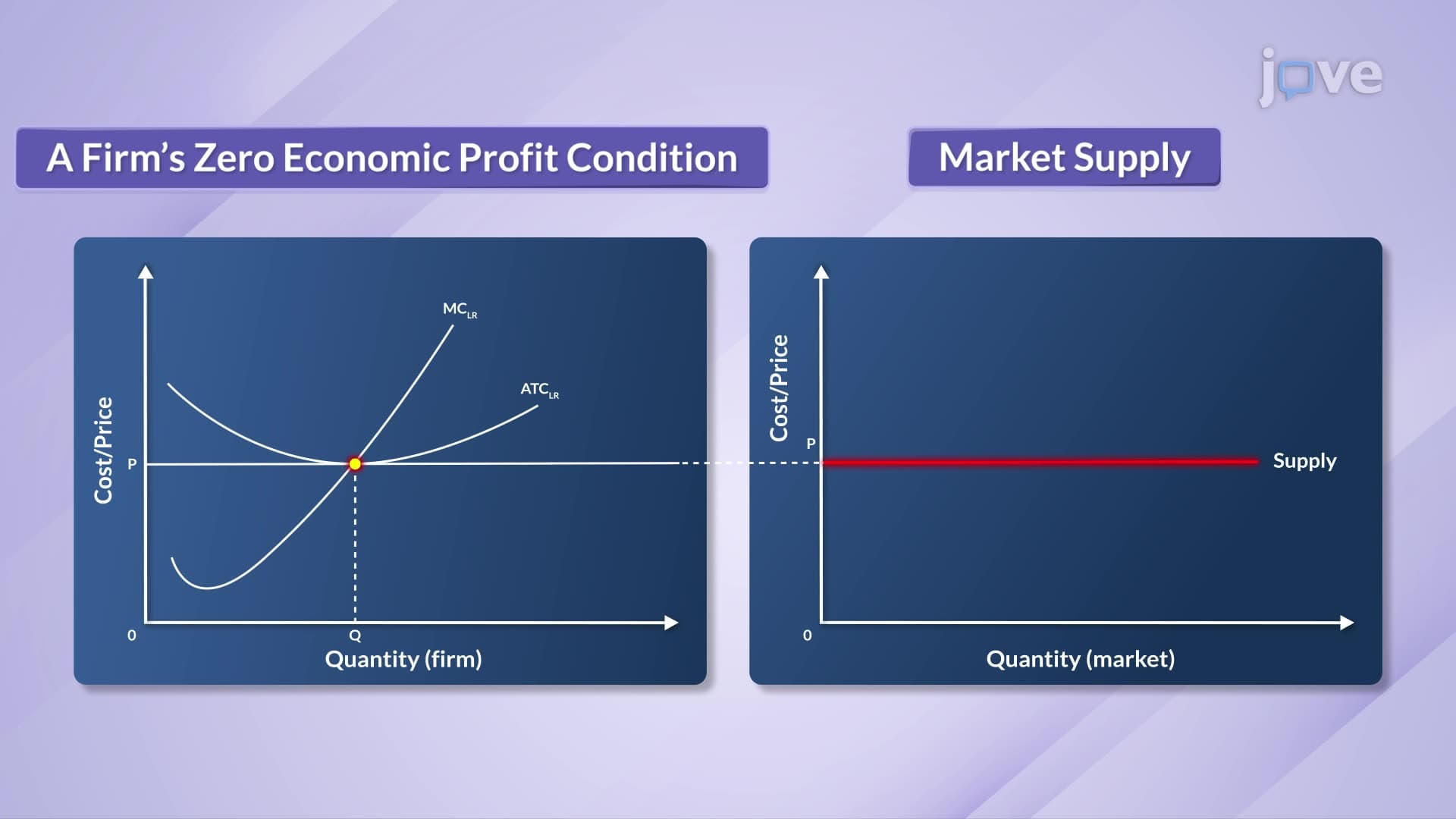
Zero economic profit represents a critical equilibrium point where businesses earn exactly enough to cover all costs-both visible and hidden. Unlike accounting profit, which only considers explicit monetary expenses, economic profit incorporates opportunity costs that reflect the value of foregone alternatives. When economic profit equals zero, firms earn what economists call "normal profit"-sufficient returns to keep resources in their current use rather than switching to alternative investments.
The gap between accounting and economic profit lies in opportunity cost recognition. Accounting profit simply subtracts explicit costs (wages, rent, materials, utilities) from total revenue. Economic profit goes deeper, subtracting implicit costs representing the highest-valued alternative use of resources. For instance, if Amazon's Jeff Bezos had remained a Wall Street vice president instead of founding Amazon, his implicit cost would include that substantial foregone salary plus potential investment returns from his startup capital.
Consider a Stanford MBA graduate earning $150,000 annually who starts a consulting firm. Her first-year revenue hits $200,000 with explicit costs of $40,000, yielding $160,000 in accounting profit. However, her economic profit calculation must include the $150,000 opportunity cost of her corporate salary plus foregone investment returns on her $50,000 startup investment (approximately $2,500 at 5% annual return). Her economic profit becomes $200,000 - $40,000 - $150,000 - $2,500 = $7,500-positive but much smaller than accounting profit suggests.
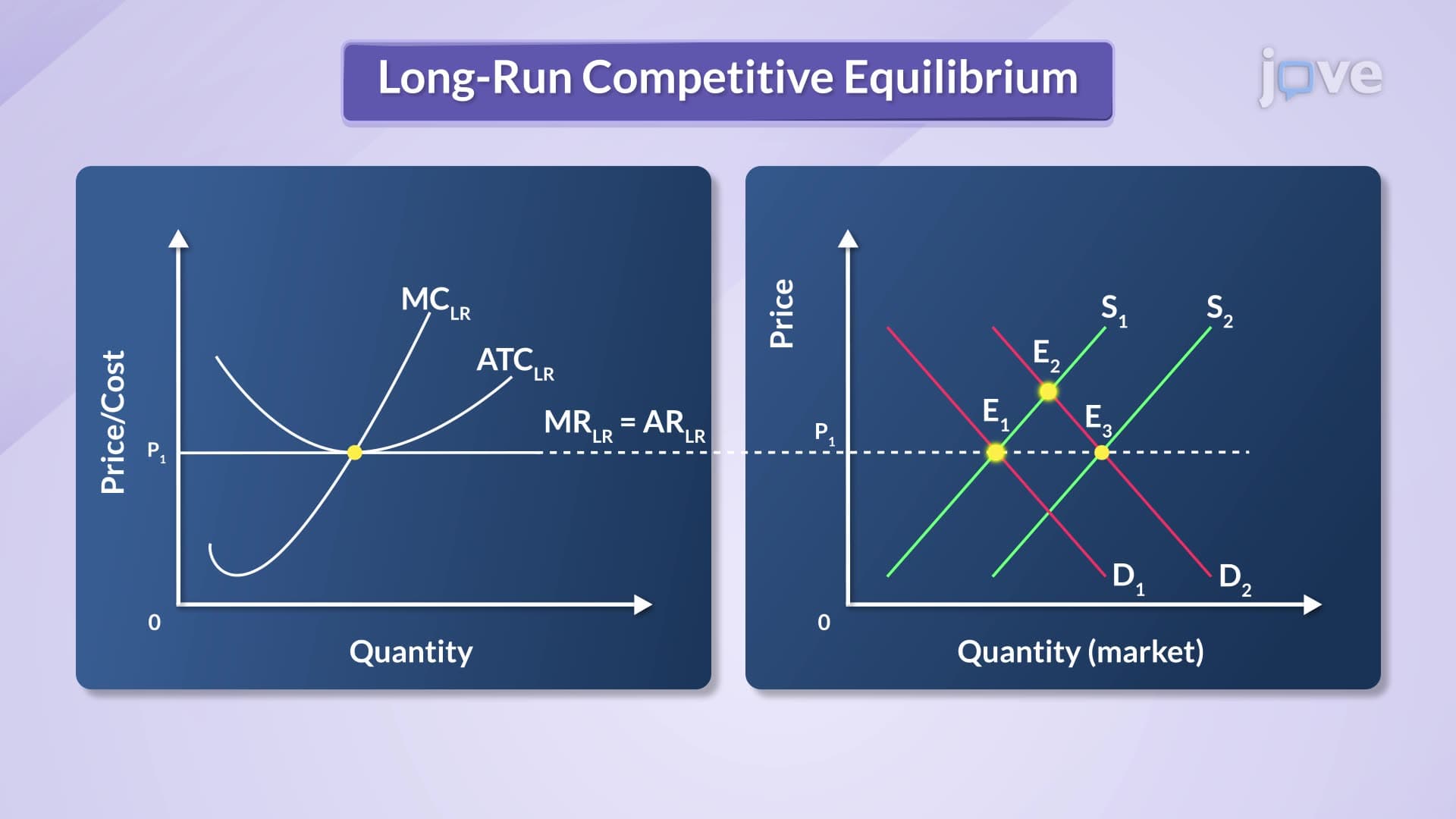
In perfectly competitive markets, firms naturally gravitate toward zero economic profit over time. When businesses earn positive economic profits, new competitors enter, increasing supply and driving prices down. Conversely, negative economic profits trigger exits, reducing supply and raising prices. This dynamic continues until remaining firms achieve zero economic profit-earning just enough to stay operational while providing normal returns to owners and investors.
Students preparing for AP Economics, college microeconomics courses, or business school admissions tests frequently encounter zero economic profit scenarios. Understanding this concept proves essential for analyzing market structures, business sustainability, and investment decisions across various economic contexts.
Related Micro-courses