Loading video…


 12 Concepts
 5.3K views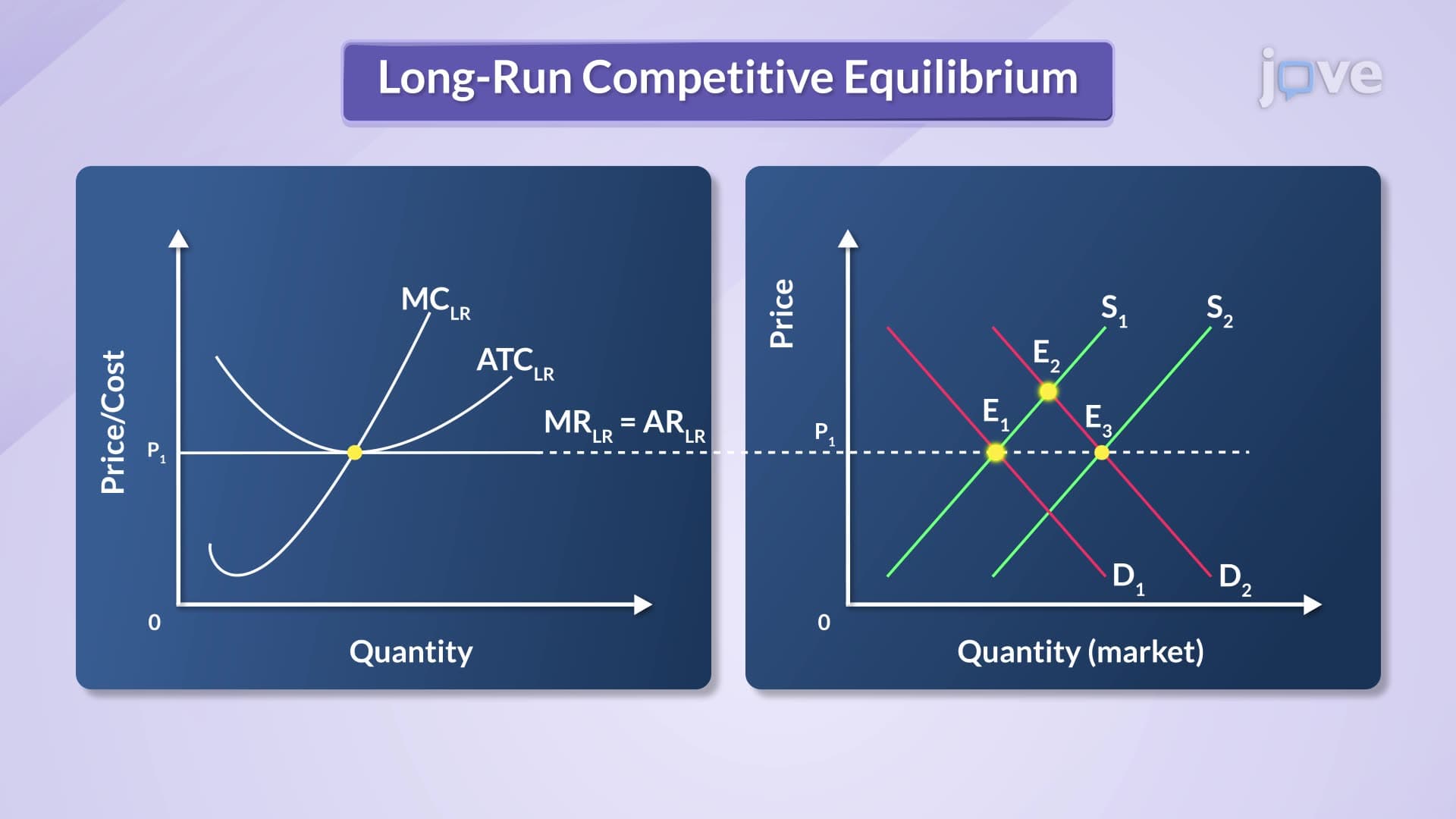

Video Summary: Long Run Competitive Equilibrium I Explained
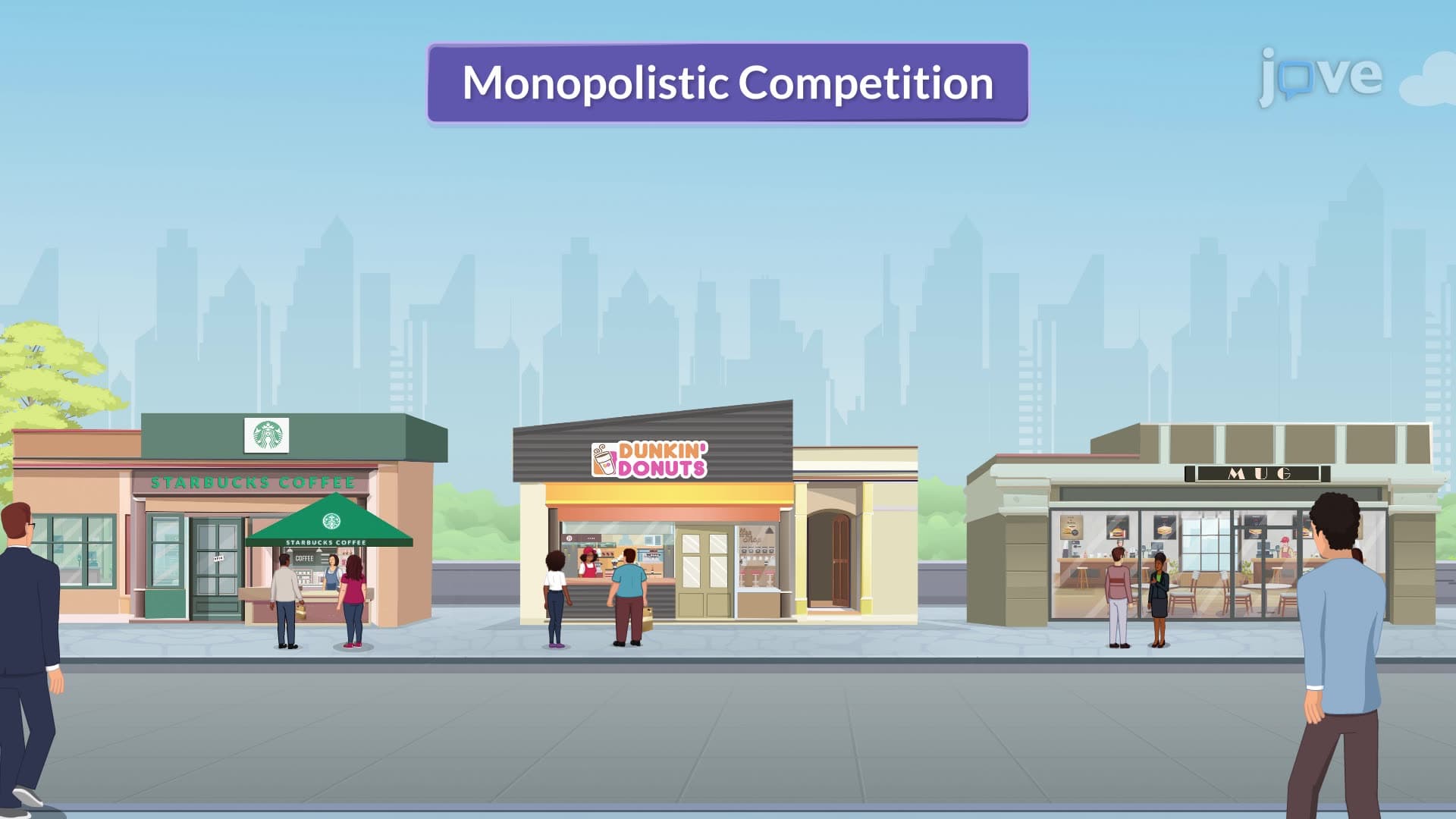
Why do gas stations on opposite corners often charge nearly identical prices despite fierce competition? Long run competitive equilibrium explains this phenomenon, where market forces naturally drive prices to a point where firms earn zero economic profit. Consider how Starbucks locations compete with local coffee shops across American cities, over time, market entry and exit create equilibrium where no business has sustained advantages. This Long Run Competitive Equilibrium I Explained concept demonstrates how perfect competition self-regulates through firm behavior and market dynamics. Watch the full video on JoVE Coach to master this concept with expert-led visuals and step-by-step explanations.
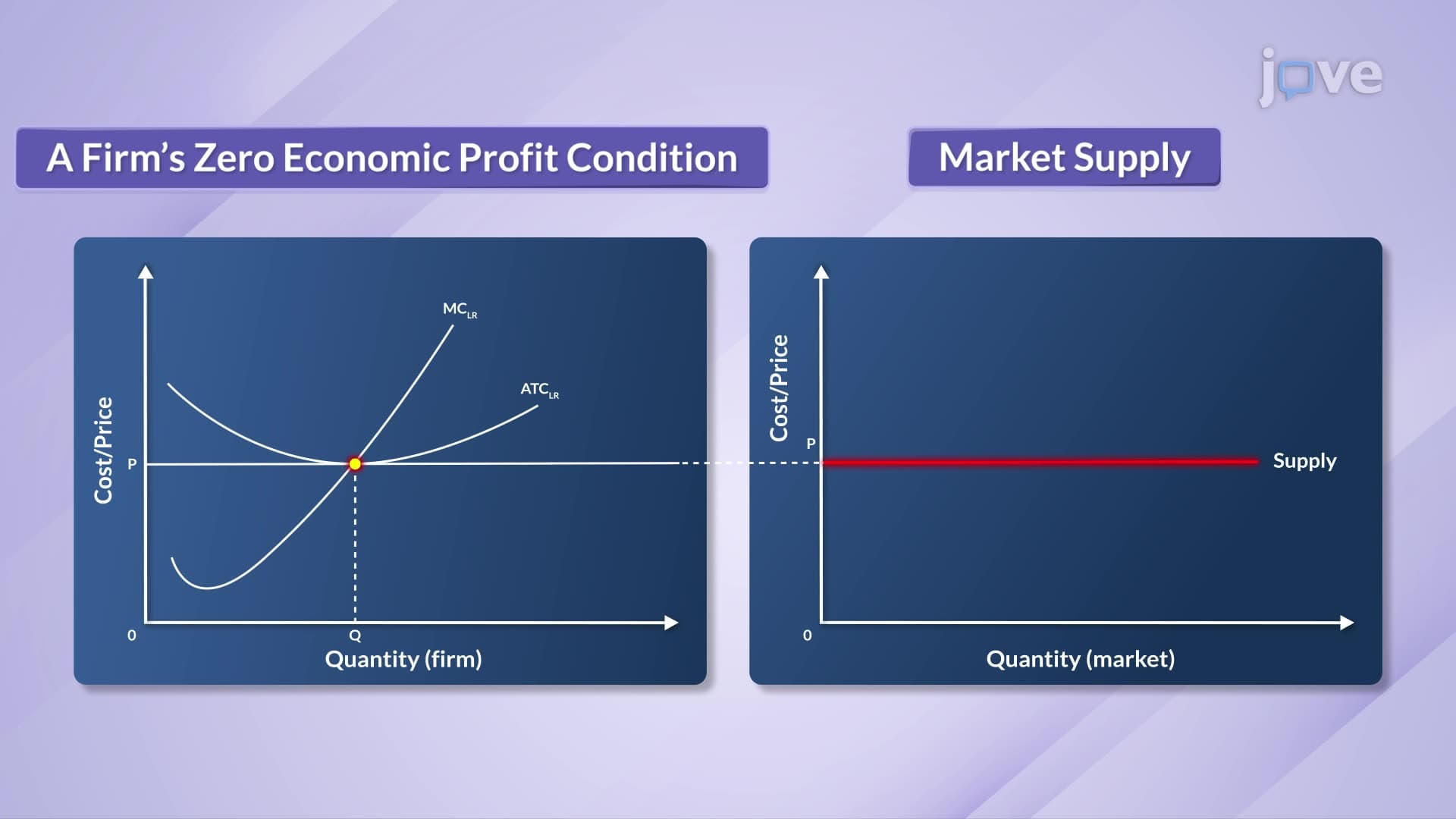
Long run competitive equilibrium represents the stable endpoint where perfectly competitive markets naturally settle. Unlike short-run scenarios where firms might earn profits or losses, this equilibrium state eliminates economic profits through market forces. The equilibrium occurs precisely when market price equals the minimum point of each firm's average total cost curve, creating a situation where businesses earn just enough to cover all opportunity costs.
This concept frequently appears on AP Microeconomics exams and college economics courses because it demonstrates how market mechanisms self-correct without government intervention. Students preparing for standardized tests should remember that long-run equilibrium requires both allocative efficiency (price equals marginal cost) and productive efficiency (production at minimum average total cost).
The path to long run competitive equilibrium involves dynamic adjustments through firm entry and exit. When existing firms earn above-normal profits, new competitors enter the market, increasing supply and reducing prices. Conversely, when firms experience losses, some exit the market, decreasing supply and raising prices. This process continues until economic profits disappear.
Consider the ride-sharing industry's evolution in major US cities. Initially, early entrants like Uber earned substantial profits, attracting competitors like Lyft, local alternatives, and even traditional taxi services adopting app-based models. Over time, increased competition drove down profit margins, demonstrating real-world equilibrium forces.
American agricultural markets exemplify long run competitive equilibrium principles. Wheat farmers across Kansas, Nebraska, and other Great Plains states operate in near-perfect competition. When wheat prices rise due to increased demand or supply disruptions, existing farmers may temporarily earn higher profits. However, these profits attract new farmers or encourage expansion of existing operations, eventually increasing supply and normalizing prices.
The restaurant industry in college towns provides another excellent example. When universities expand enrollment, increased demand for dining options initially benefits existing restaurants. However, success attracts new establishments, food trucks, and franchise operations, ultimately driving profit margins toward normal levels through competitive pressure.
For students tackling economics coursework, understanding long run competitive equilibrium requires mastering graphical analysis showing supply and demand shifts alongside firm-level cost curves. College microeconomics exams frequently test this concept through scenarios requiring students to trace market adjustments from initial disruption to final equilibrium. The concept also appears in business school case studies examining industry evolution and competitive strategy development.
Related Micro-courses