Loading subject page…
- New Manager Essentials
- How to Manage Team Performance and Feedback
- Setting Clear Performance Standards
Micro-course: How to Manage Team Performance and Feedback
2,905 views
Learn key concepts and earn your certificate.












Setting Clear Performance Standards

00:00
01:29
Video Summary: Setting Clear Performance Standards
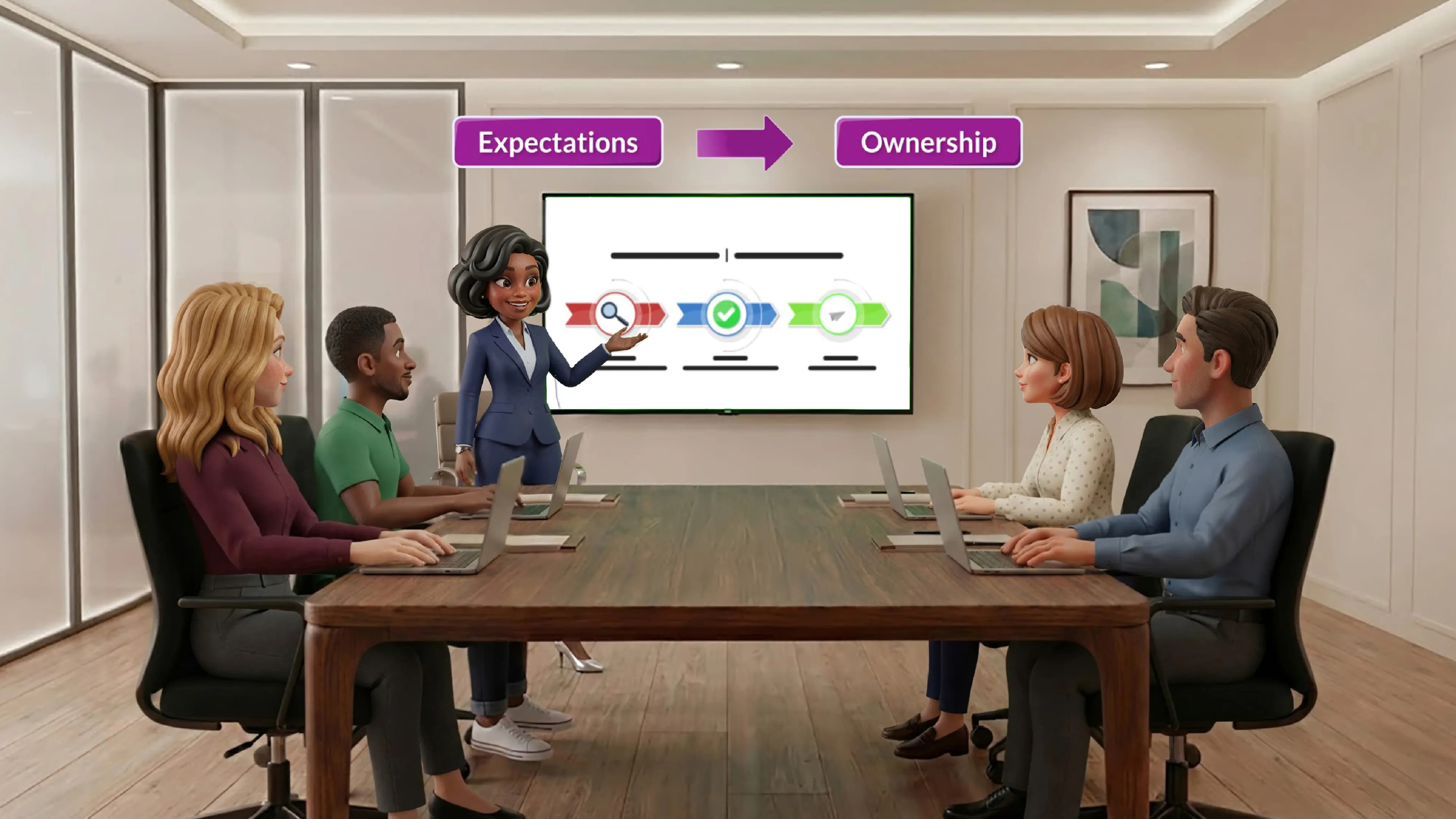
When campaign deliverables arrive late and off-target, the root cause often traces back to unclear expectations rather than team capability. Setting performance standards for teams becomes essential when quality inconsistencies threaten client relationships and team morale. This breakdown demonstrates why managers must establish specific performance criteria that connect daily work to measurable outcomes. Watch the full video on JoVE Coach to master this concept with expert-led visuals and step-by-step explanations.
- Set specific performance criteria that translate abstract quality expectations into concrete, measurable deliverables your team can execute consistently
- Define clear timelines with milestone checkpoints that prevent last-minute scrambling and allow for course correction throughout project cycles
- Connect team performance expectations directly to client impact and business outcomes so team members understand the "why" behind each standard
- Structure regular check-ins that provide ongoing feedback rather than waiting for final deliverables to address performance gaps
- Build a feedback culture where team members feel comfortable asking clarifying questions about quality standards before starting work
- Navigate the balance between providing detailed guidance and allowing creative problem-solving within established parameters
- Facilitate team alignment by using concrete examples from past work to illustrate both successful outcomes and common pitfalls to avoid
How Managers Set Clear Performance Standards Teams Can Meet
Every manager faces the frustrating scenario: deliverables that miss the mark, deadlines that slip, and team members who seem genuinely surprised by your feedback. The issue isn't capability-it's clarity. When performance standards remain vague or assumed, even high-performing teams struggle to meet expectations they never fully understood.
Why Most Performance Standards Fail in Practice
Traditional approaches to defining quality standards often fall short because they focus on what managers want to avoid rather than what success looks like. Saying "make it professional" or "ensure high quality" provides no actionable guidance. Effective performance criteria must be observable, measurable, and connected to business impact. The SMART framework (Specific, Measurable, Achievable, Relevant, Time-bound) provides structure, but managers must go deeper to address the "how" and "why" behind each standard.
A Three-Layer Framework for Performance Clarity
Layer 1: Observable Outcomes - Define what completed work looks like with specific criteria. Instead of requesting "compelling content," specify "headlines under 10 words that directly address the target audience's primary pain point." This removes interpretation gaps that lead to rework cycles.
Layer 2: Process Standards - Establish how work gets done, including review stages, collaboration touchpoints, and decision-making authority. The RACI matrix (Responsible, Accountable, Consulted, Informed) helps clarify roles within each performance standard.
Layer 3: Impact Connection - Link each standard to client satisfaction, revenue outcomes, or team efficiency. When team members understand that consistent font choices reduce client revision requests by 40%, adherence to style standards becomes meaningful rather than bureaucratic.
Implementing Standards Without Micromanaging
The key lies in providing examples and ongoing calibration rather than prescriptive rules for every scenario. Share previous work samples that exemplify your standards, highlighting both successful elements and common mistakes. Create brief reference guides that team members can consult independently. Schedule regular check-ins focused on standard alignment rather than task completion, allowing course correction before deliverables reach final review stages.
Successful implementation requires managers to model the feedback culture they want to create. When team members ask questions about expectations, treat these as valuable conversations rather than interruptions. The investment in clarity upfront prevents the frustration cycles that damage both productivity and team morale.
Frequently Asked Questions
Setting performance standards means defining specific, observable criteria for quality work that your team can consistently deliver. It involves creating clear benchmarks for deliverables, establishing review processes, and connecting work quality to business outcomes so team members understand both what success looks like and why it matters.
Frame standards as tools for team success rather than compliance requirements. Share examples of excellent work, explain the business reasoning behind each standard, and invite questions about implementation. Focus check-ins on supporting team members to meet standards rather than monitoring their every move.
Introduce standards when patterns of missed expectations emerge or when taking on new types of work that require different quality criteria. Use specific examples of recent work to illustrate gaps, involve team members in refining standards, and phase in implementation gradually rather than overhauling everything at once.
Even creative work has measurable elements like brand consistency, audience alignment, and technical specifications. Define the non-negotiable parameters while leaving creative expression within those boundaries. Use past successful campaigns as reference points and establish clear criteria for subjective elements like "compelling" or "engaging."
This scenario typically indicates unclear quality standards rather than performance issues. Schedule a calibration conversation using specific examples of current work versus desired outcomes. Define what "exceeds expectations" looks like with concrete criteria, and establish regular feedback loops to support improvement rather than waiting for formal reviews.
You don't need extensive management experience, but you do need clarity about quality outcomes and business impact. Start by documenting what excellent work looks like in your function, seek input from experienced colleagues, and be transparent with your team about learning together while maintaining clear expectations.
Clear standards reduce the time spent on rework and clarifying conversations, allowing you to focus on strategic priorities and team development. They also build trust with your team by eliminating guesswork and provide concrete talking points for performance discussions and career growth conversations.
Once your team consistently meets established standards, develop skills in performance coaching and providing developmental feedback. Learn to help team members exceed standards through skill building, and explore situational leadership approaches that adjust your management style based on individual team member capabilities and motivation levels.
Related Micro-courses


5 Concepts

8 Concepts