Loading…
Loading video…

130,500 views

Ever wonder why sliding a heavy desk across your bedroom floor feels harder than expected, even though physics says it should be straightforward? Understanding work done on a system reveals the hidden energy transfers that occur when forces act on objects in real scenarios. Consider Amazon warehouse workers moving packages—the applied force must overcome friction, transferring energy not just to the box's motion but also to heat generation between surfaces. Watch the full video on JoVE Coach to master this concept with expert-led visuals and step-by-step explanations.
Work done on a system represents one of the most practical applications of energy conservation principles in physics. Unlike idealized textbook problems, real-world scenarios involve energy transfers to multiple forms—not just kinetic energy changes. When FedEx drivers push delivery carts up ramps or construction workers move materials across job sites, the applied force does work that gets distributed between increasing the object's speed and overcoming resistance forces.
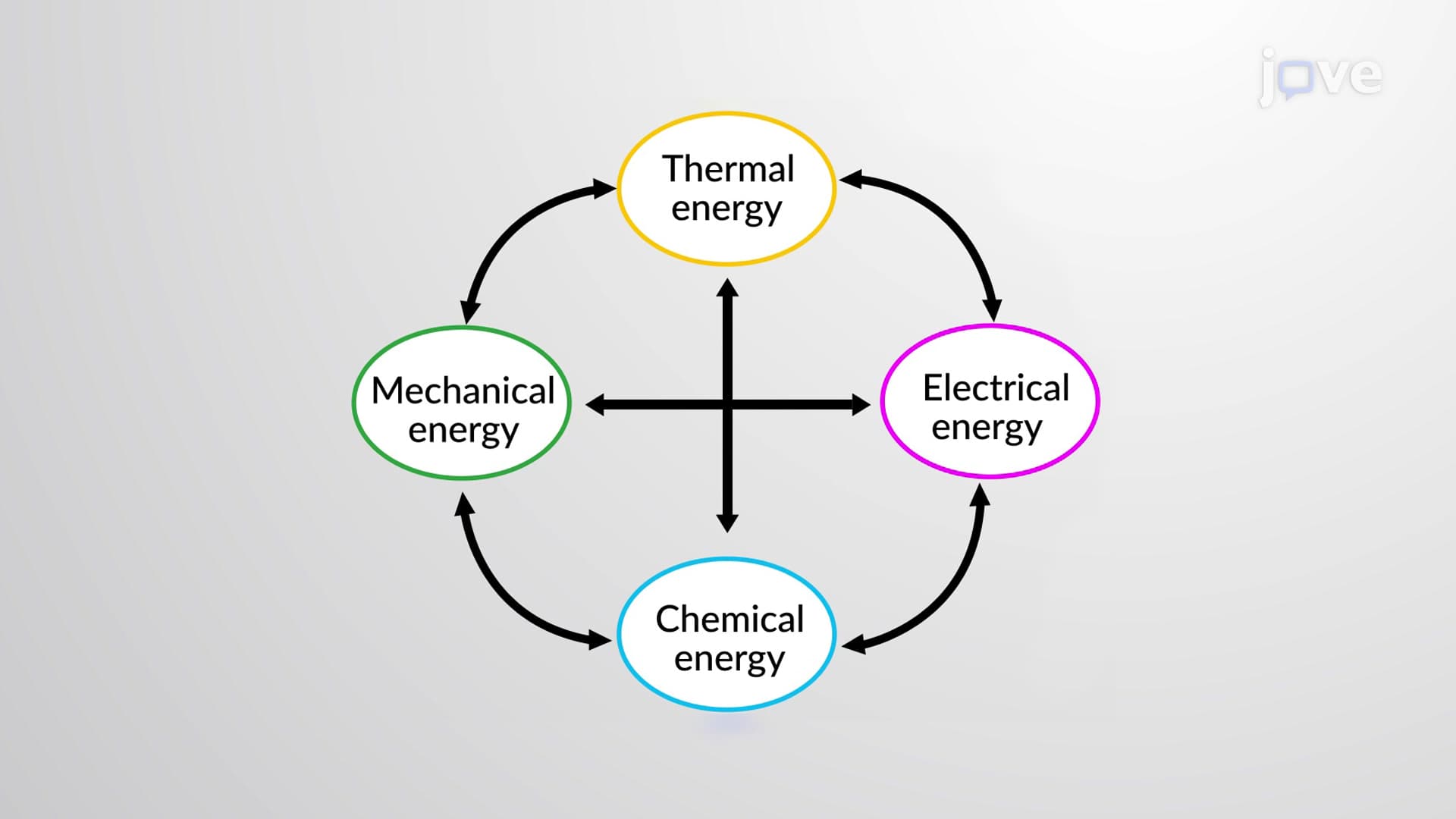
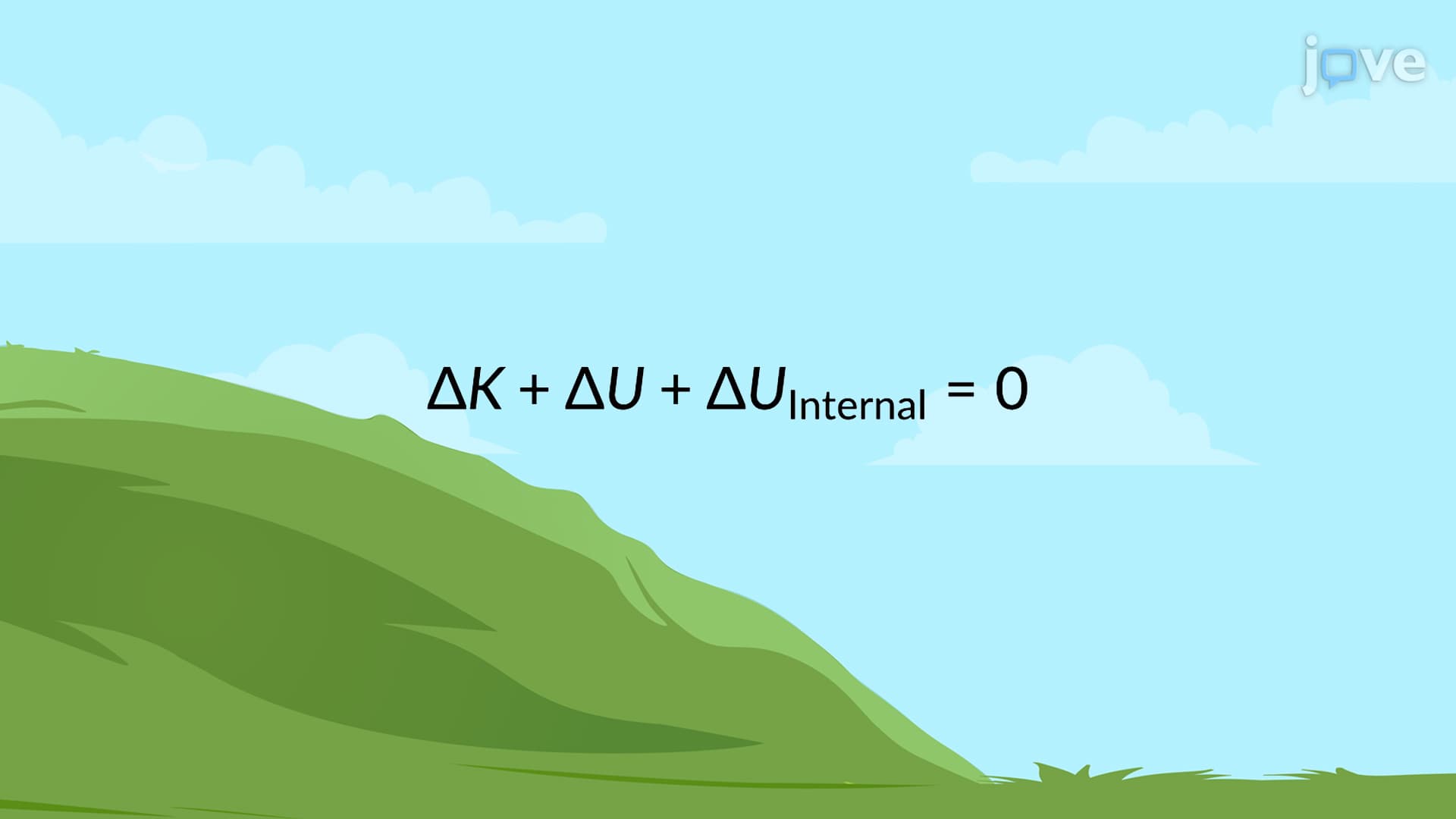
The fundamental principle governing work done on a system states that the total work equals the change in the system's total energy. In mathematical terms: W(total) = ΔKE + ΔPE + ΔE(thermal). This equation becomes crucial when analyzing scenarios like car braking systems, where kinetic energy converts to thermal energy through friction between brake pads and rotors.
Consider a practical example: when maintenance crews drag equipment across hospital floors, the applied force must exceed the frictional force to accelerate the object. The portion of work that exceeds what's needed for motion gets converted to thermal energy, explaining why surfaces warm up during sliding. This concept appears frequently on AP Physics exams and college midterms, where students must identify all energy transformations occurring in complex systems.
When multiple forces act on a system, the net force determines acceleration according to Newton's second law: F(net) = ma. The applied force minus the frictional force equals the net force, which creates the observed acceleration. This relationship becomes essential for solving problems involving conveyor belts in manufacturing plants or luggage carousels at airports like Atlanta's Hartsfield-Jackson, where engineers must calculate optimal motor forces to overcome both friction and achieve desired speeds.
Understanding work done on a system proves invaluable for engineering students preparing for courses in mechanical design and thermodynamics. Manufacturing processes, from automotive assembly lines in Detroit to aerospace component testing in California, rely on precise calculations of energy transfer efficiency. Students studying for the SAT Physics Subject Test or preparing for engineering program prerequisites will encounter these principles in contexts ranging from simple machines to complex mechanical systems.
The work-energy theorem provides the foundation for analyzing everything from elevator operations in New York skyscrapers to ski lift mechanisms in Colorado mountains, where engineers must account for gravitational potential energy changes alongside frictional losses.
Frequently Asked Questions
Work done on a system accounts for all energy transfers when forces act on an object, including energy converted to heat through friction. Unlike simple work calculations (W = F × d), this concept recognizes that applied forces often do more work than just changing kinetic energy. The "extra" work goes into overcoming resistance forces and typically converts to thermal energy, making it essential for real-world problem solving.
AP Physics 1 and C exams frequently test this concept through multi-step problems involving friction, inclined planes, or spring systems. Students must identify all forces, calculate net work done, and account for energy transformations including heat generation. Common question formats include analyzing sliding blocks, pendulums with air resistance, or vehicles braking on different surfaces.
Focus on drawing comprehensive force diagrams and energy flow charts for each problem. Practice identifying conservative versus non-conservative forces, then systematically apply the work-energy theorem. Many successful students create reference sheets linking common scenarios (friction, springs, gravity) to their energy transformation patterns, which proves invaluable during timed exams.
Consider hybrid car regenerative braking systems used by Toyota and Honda, where kinetic energy converts back to electrical energy rather than just heat. Other examples include escalators in shopping malls, where motors must overcome friction while lifting people, and industrial conveyor belts in Amazon warehouses that move packages against various resistive forces.
Not necessarily—the core concepts rely on energy conservation logic rather than complex calculus. Students comfortable with basic algebra and trigonometry can master this topic by focusing on identifying energy transformations and applying the work-energy theorem systematically. The key is recognizing patterns in how different forces contribute to energy changes.
MCAT questions emphasize conceptual understanding over complex calculations. Focus on identifying whether forces are conservative or non-conservative, understanding how energy transfers between kinetic, potential, and thermal forms, and recognizing biological applications like muscle work efficiency. Practice passage-based questions that combine physics principles with physiological contexts.
Natural progressions include rotational kinetic energy and angular momentum, thermodynamics basics, and simple harmonic motion. These topics build on work-energy foundations while introducing concepts essential for advanced physics courses and engineering programs. Students should also explore power calculations and mechanical efficiency in preparation for more specialized applications.
Medical device design relies heavily on work-energy analysis, from prosthetic limb efficiency to heart pump mechanisms. Understanding energy transfer helps explain muscle fatigue, joint lubrication systems, and cardiovascular work calculations. These applications appear in both MCAT passages and bioengineering coursework at institutions like Johns Hopkins and MIT.
Related Micro-courses


Related Subjects
 Math Fundamentals 11 micro-courses›
 Statistics 17 micro-courses›