Loading…
Loading video…

4,292 views
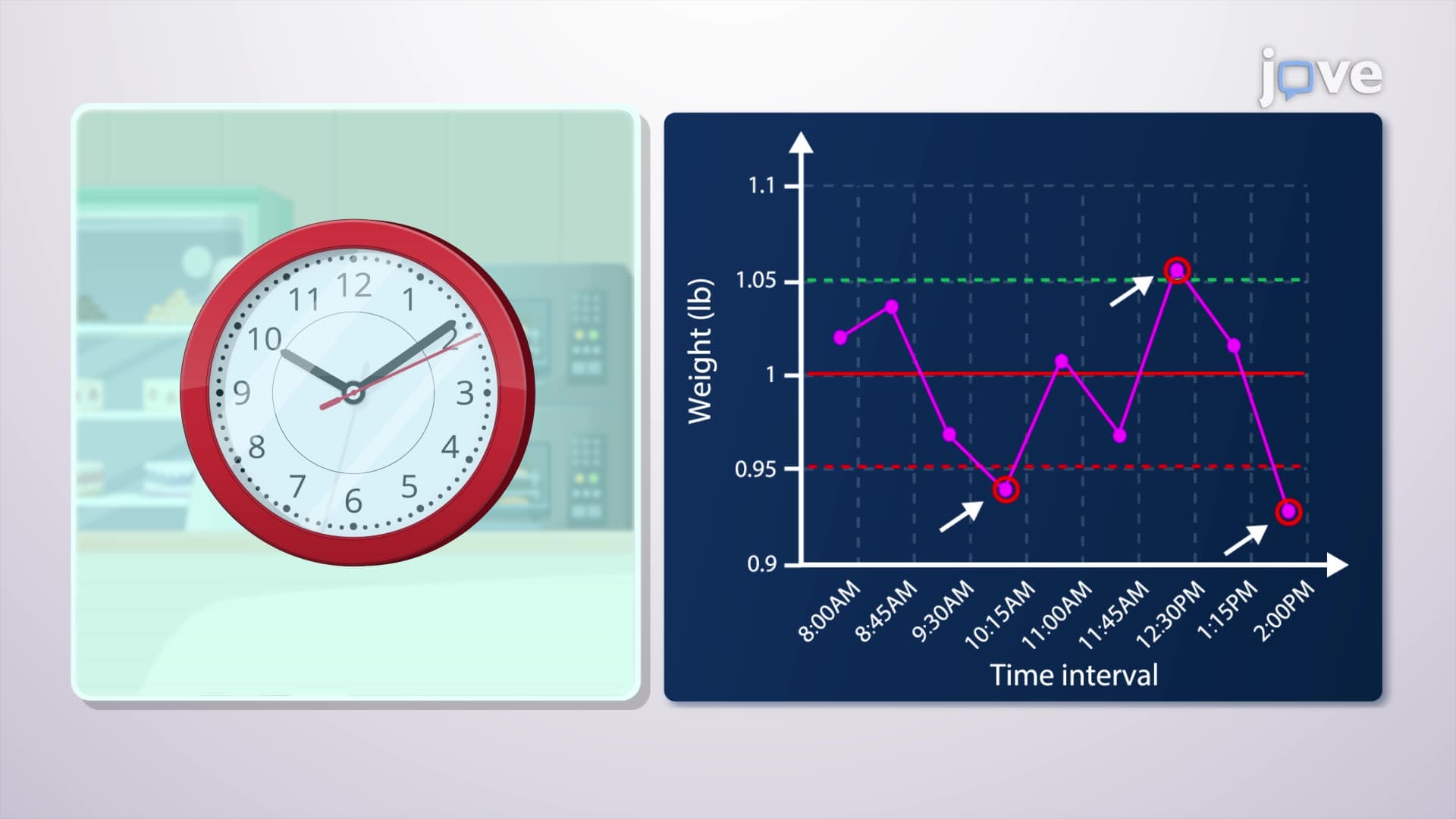
Ever wonder how McDonald's keeps their french fries consistently golden and crispy across 13,500+ US locations? The R chart is a powerful statistical quality control tool that monitors variability within process subgroups, detecting when production deviates from acceptable ranges. Unlike simple trend charts, the R chart specifically tracks the spread or range of measurements—like how much individual fry cooking times vary from batch to batch—helping manufacturers identify process inconsistencies before they affect product quality. Watch the full video on JoVE Coach to master this concept with expert-led visuals and step-by-step explanations.
The R chart represents a cornerstone of statistical process control (SPC), specifically designed to monitor process variability rather than central tendency. While X-bar charts track average values, the R chart focuses exclusively on the range—the difference between the highest and lowest values within each subgroup. This dual approach provides manufacturers with comprehensive insight into both process centering and consistency.
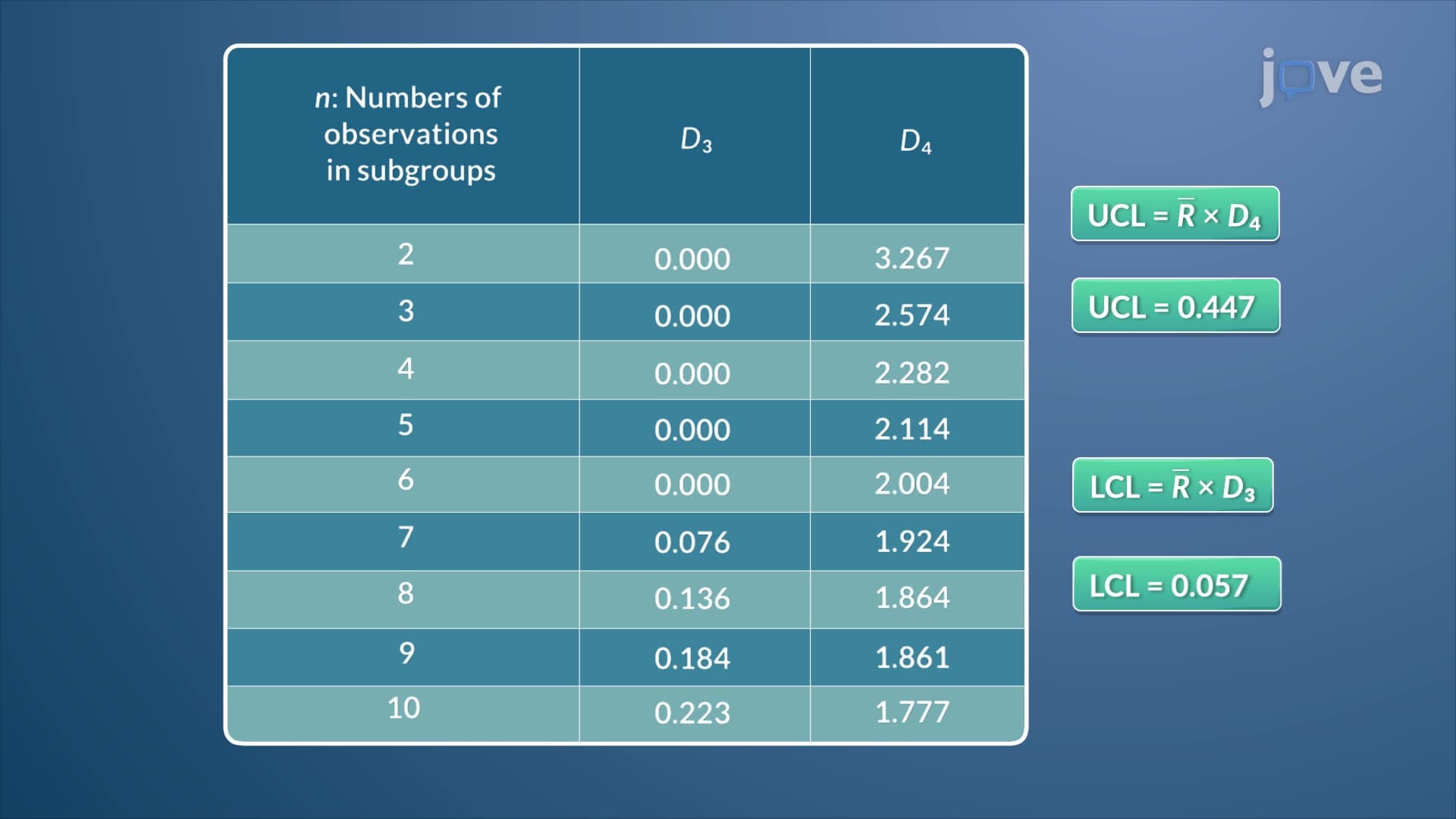
The mathematical foundation involves calculating ranges for consecutive subgroups of data points (typically 2-10 observations). The centerline represents R-bar, the average of all subgroup ranges, while control limits are set at approximately three standard deviations from this centerline using specific factors based on subgroup size.
Major US corporations rely heavily on R charts for quality assurance. Ford Motor Company uses R charts to monitor engine component tolerances, ensuring each cylinder bore diameter falls within acceptable variation limits. In pharmaceutical manufacturing, companies like Pfizer employ R charts to track tablet weight consistency, where excessive variation could indicate equipment malfunction or raw material inconsistencies.
Healthcare applications are equally critical. Hospital laboratories use R charts to monitor blood test precision, where high variability in duplicate analyses might signal instrument calibration issues. The FDA requires pharmaceutical manufacturers to demonstrate process control through tools like R charts as part of Good Manufacturing Practices (GMP) compliance.
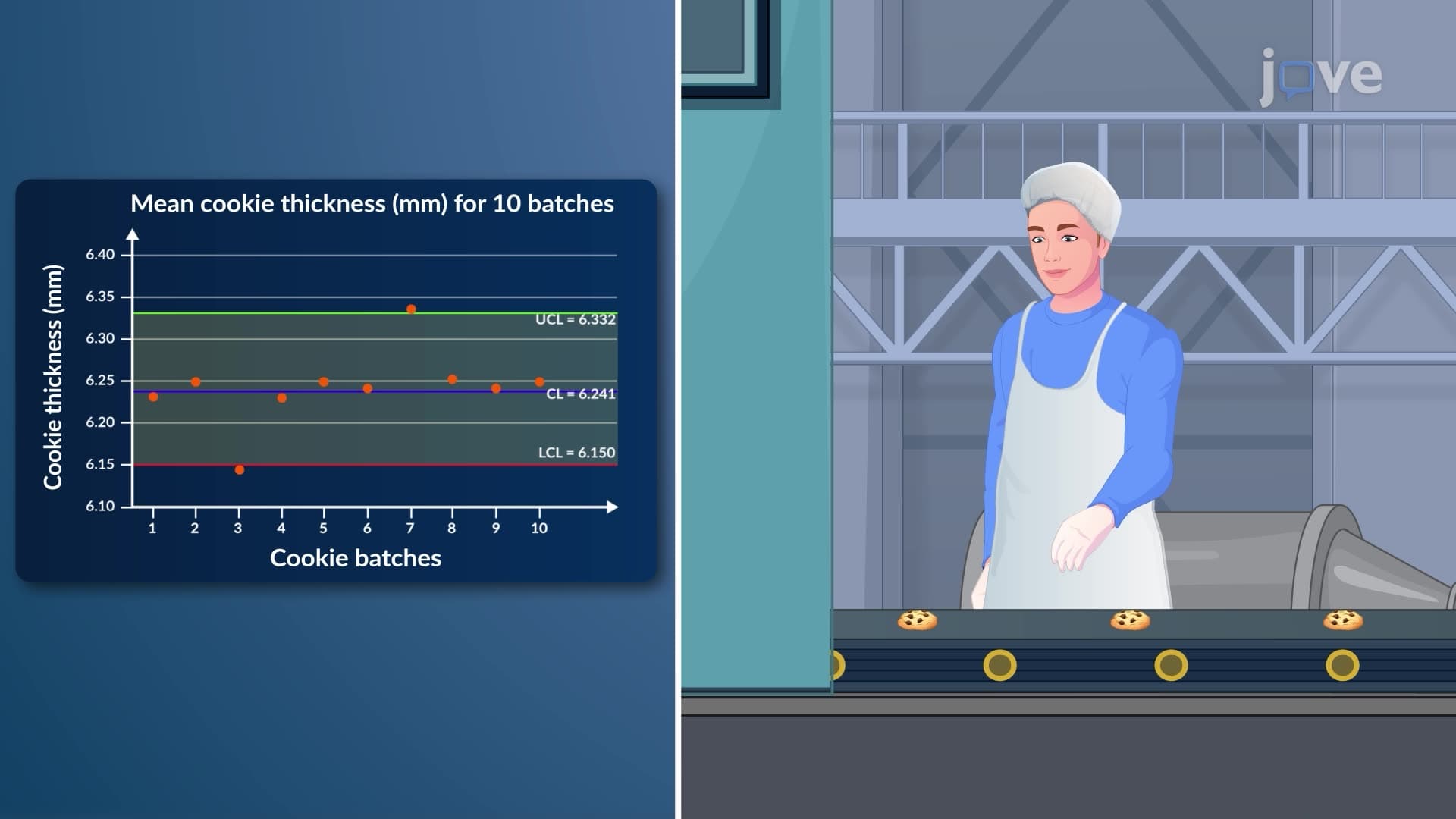
Successful R chart analysis requires understanding various out-of-control signals. Single points exceeding control limits indicate immediate attention needs, while patterns like seven consecutive points on one side of the centerline suggest systematic process shifts. Increasing trends might indicate tool wear in manufacturing, while decreasing variability could paradoxically signal measurement system problems.
For students preparing for AP Statistics or introductory college statistics courses, R chart interpretation frequently appears in quality control problem sets. Understanding when to investigate process variations versus accepting natural fluctuations represents a critical skill in both academic and professional contexts.
Contemporary quality management systems integrate R charts with other SPC tools for comprehensive process monitoring. Six Sigma methodologies, widely adopted by US companies like General Electric and Motorola, rely on R charts during the Measure and Control phases of DMAIC projects. This integration appears frequently in business statistics coursework and industrial engineering curricula at universities nationwide.
Frequently Asked Questions
The R chart is a statistical control chart that monitors the variability or range within subgroups of process data, helping detect when production consistency deviates from acceptable standards. It displays subgroup ranges over time with a centerline representing average range and upper/lower control limits indicating acceptable variation boundaries. When plotted points fall outside these limits, it signals potential process problems requiring investigation.
The R chart definition centers on measuring "spread" or variability within small groups of measurements from a process. Think of it as monitoring how much individual measurements differ from each other within each sample group, rather than tracking averages. It's like checking whether basketball players' shooting accuracy varies consistently game-to-game, not just their average score.
AP Statistics frequently includes R chart problems in the inference and experimental design sections, testing students' ability to interpret control limits and identify out-of-control processes. Students must demonstrate understanding of when process variation exceeds acceptable ranges and suggest appropriate corrective actions. Practice problems often involve manufacturing scenarios requiring both calculation and interpretation skills.
Business statistics, industrial engineering, operations management, and quality management courses extensively cover R charts at most US universities. Students in Six Sigma certification programs and manufacturing engineering degrees encounter R charts in both theoretical and practical applications. Many programs require students to complete projects using real industry data.
Pharmaceutical manufacturers use R charts to monitor tablet weight consistency, ensuring each batch meets FDA requirements for dosage uniformity. When tablet weights show excessive variation, it might indicate problems with powder flow, compression settings, or raw material quality. This monitoring helps maintain product efficacy and regulatory compliance.
The R chart concept is accessible to high school students with basic algebra skills, focusing more on pattern recognition than complex calculations. While the underlying statistics involve standard deviations, practical application emphasizes interpreting graphs and identifying unusual patterns. Most students find the visual nature of control charts intuitive once they understand the basic principles.
Focus on practicing interpretation rather than memorizing formulas, since most exams provide necessary constants and equations. Work through multiple examples identifying different out-of-control patterns, and understand the business implications of various signals. Create flashcards showing different chart patterns and their meanings to develop quick recognition skills.
Progress to X-bar charts to understand how R charts work alongside average control charts, then explore process capability studies and advanced SPC techniques. Students interested in quality management should investigate Six Sigma methodologies, while those focused on statistics might study acceptance sampling and design of experiments.
Related Micro-courses


Related Subjects
 Physics 33 micro-courses›
 Math Fundamentals 11 micro-courses›