Loading…
Loading video…

4,292 views
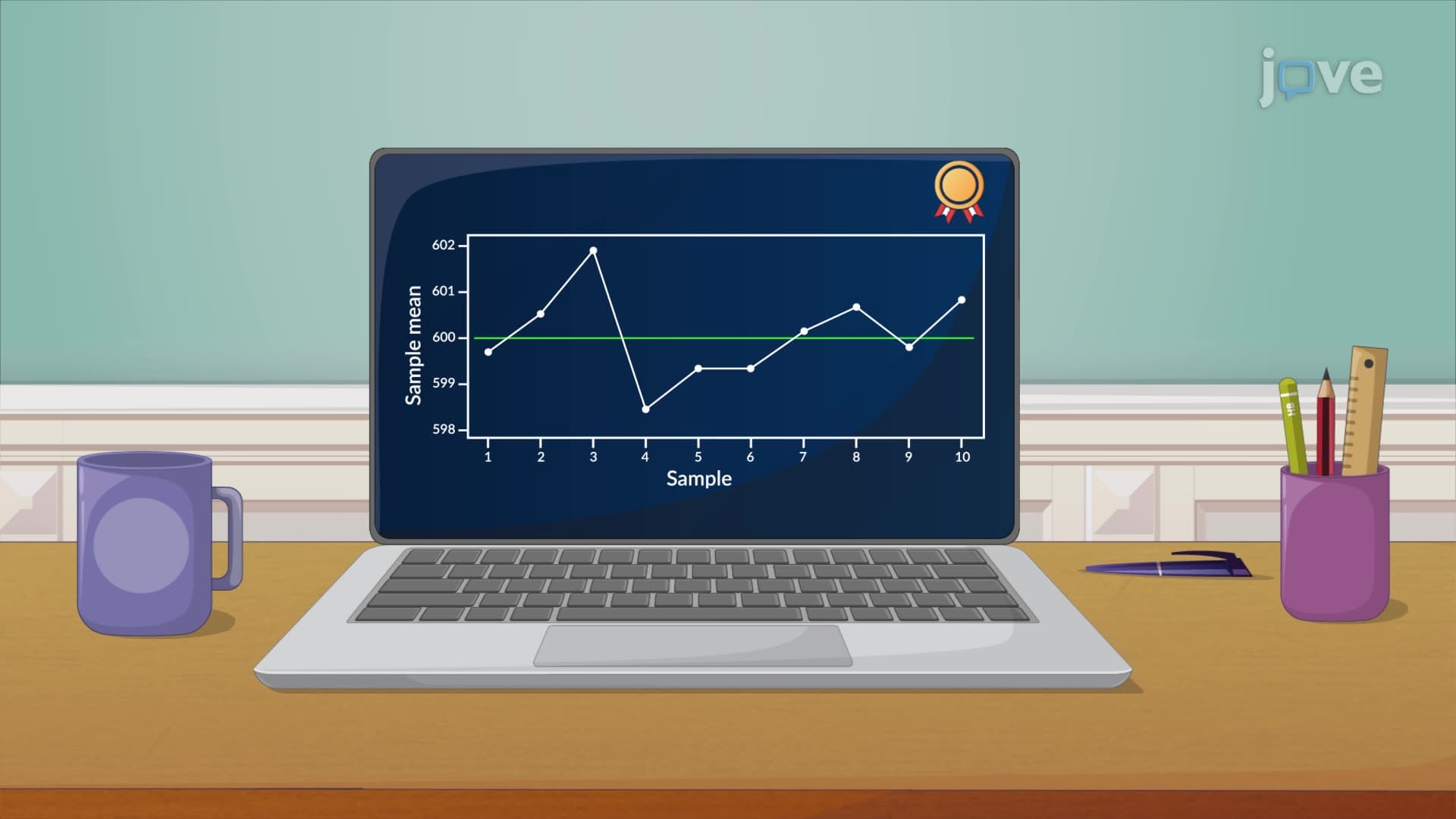
Ever wonder how pharmaceutical companies ensure every pill contains exactly the right amount of medication? The x chart serves as a powerful statistical tool that monitors process consistency by tracking sample means over time. Unlike other control charts that focus on individual measurements, the x chart definition centers on detecting shifts in process averages—making it essential for quality control in industries like manufacturing and healthcare. For example, Boeing uses x charts to monitor the average dimensions of aircraft components across production batches. Watch the full video on JoVE Coach to master this concept with expert-led visuals and step-by-step explanations.
The x chart represents one of the most fundamental tools in statistical process control (SPC), specifically designed to monitor the stability of process means over time. This control chart plays a crucial role in quality management systems across American industries, from automotive manufacturing in Detroit to semiconductor production in Silicon Valley.
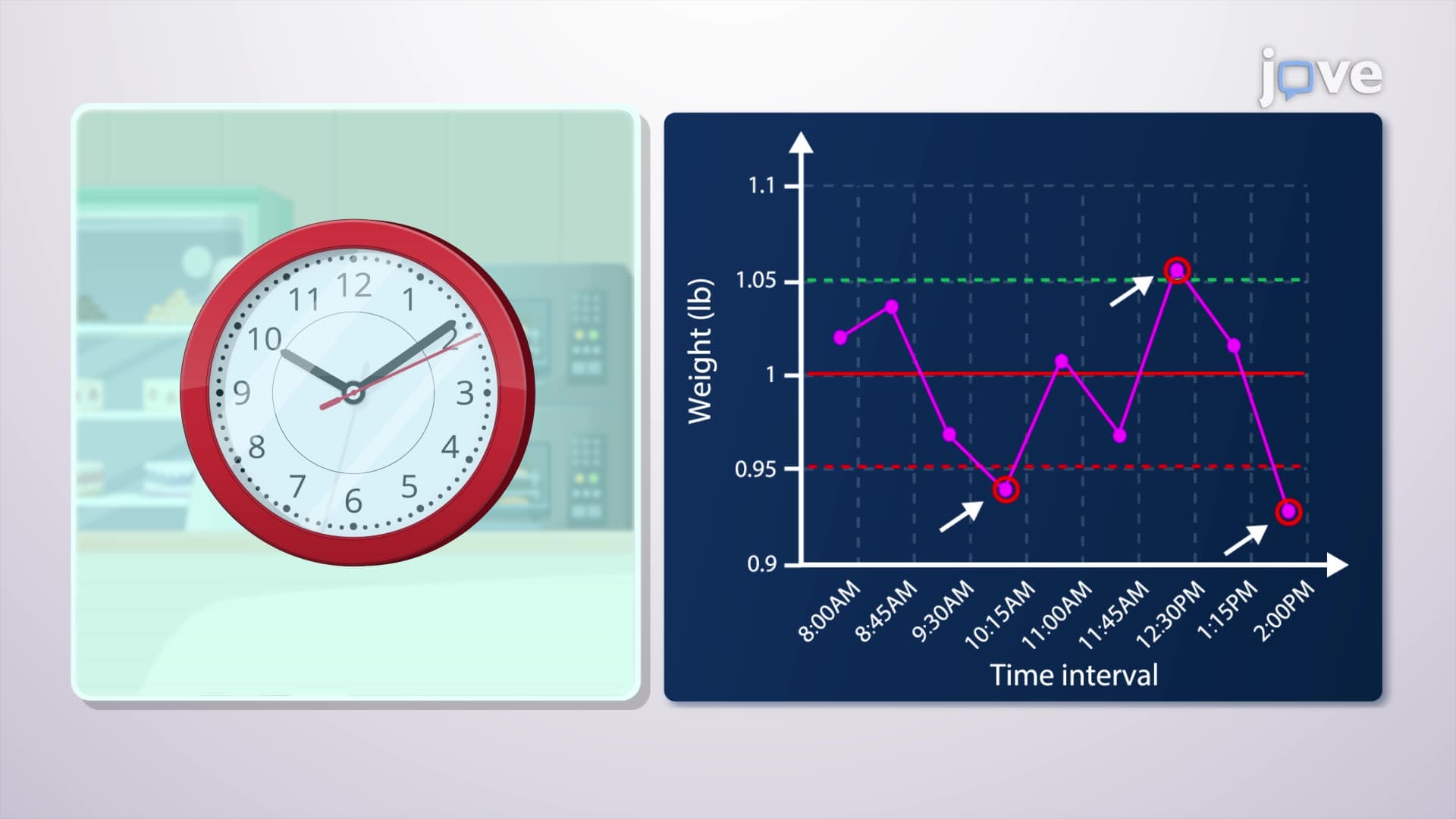
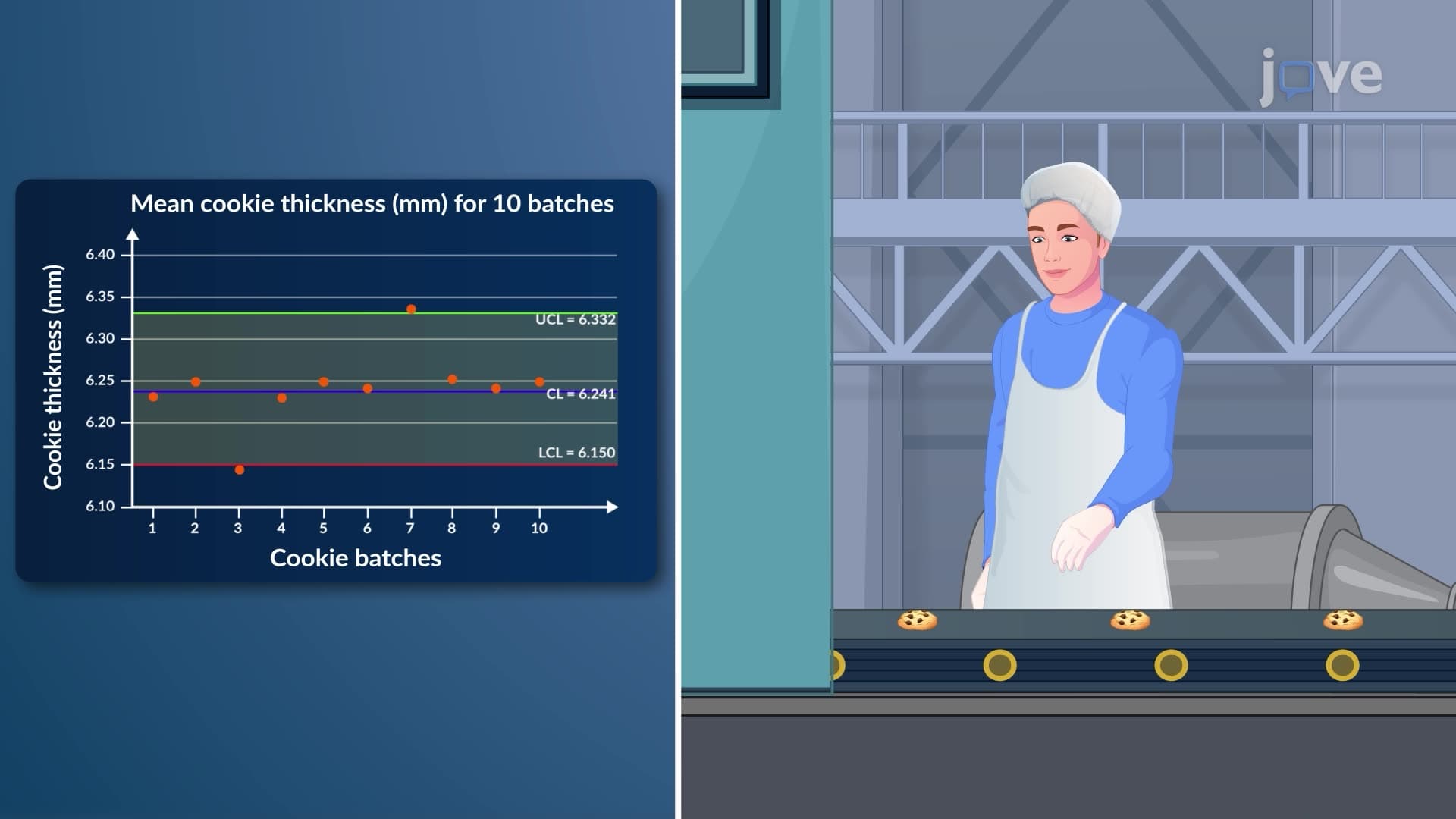
The x chart overview reveals three essential elements that define its structure. The centerline represents the grand average of all sample means, calculated by taking multiple samples from the process and averaging their individual means. The upper control limit (UCL) and lower control limit (LCL) are positioned at specific distances from the centerline, typically three standard errors away, creating boundaries for expected process variation.
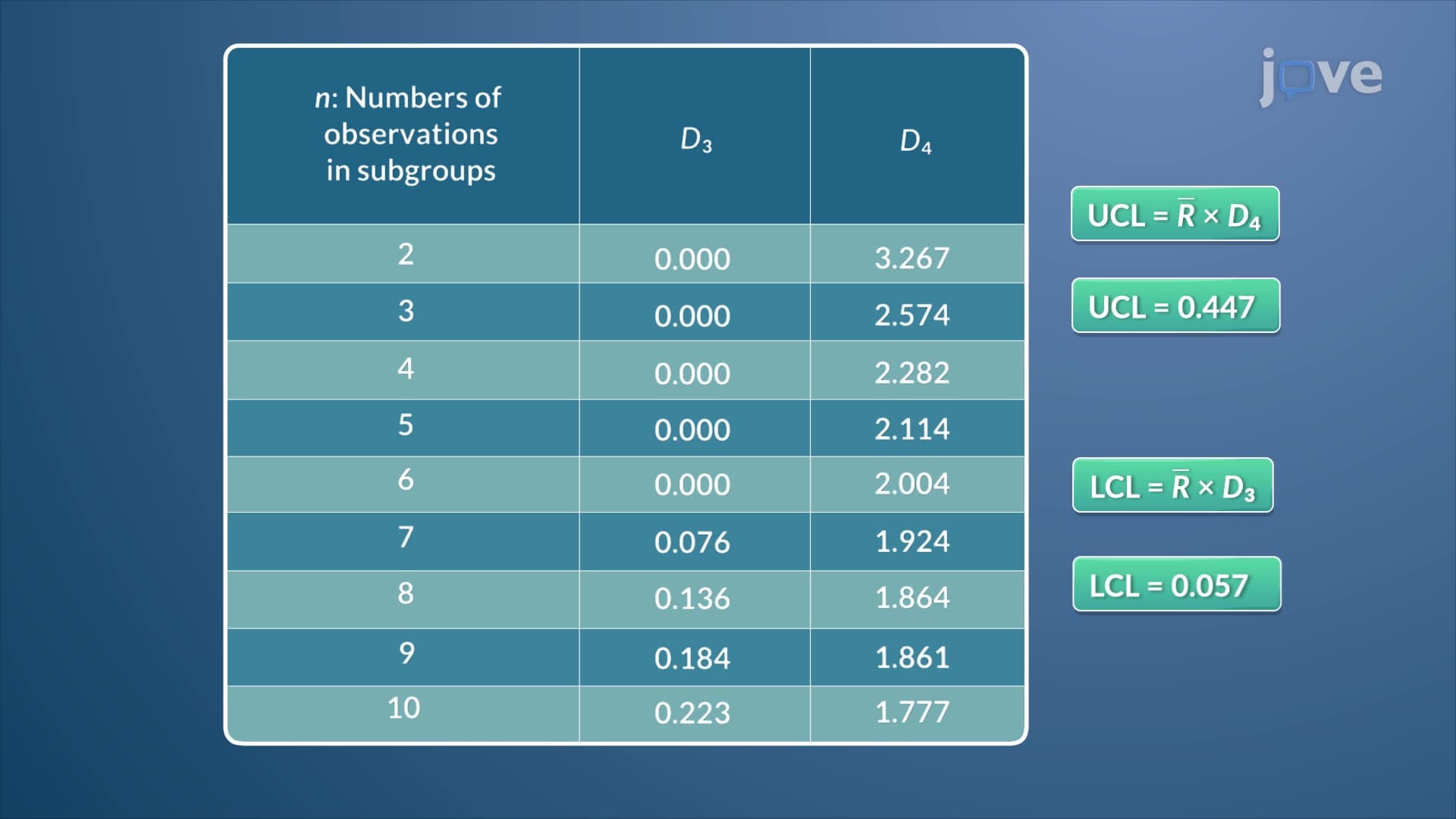
These control limits distinguish between common cause variation (natural process fluctuation) and special cause variation (unusual circumstances requiring intervention). The calculation involves the sample size, process standard deviation, and standardized factors from statistical tables—concepts frequently tested in AP Statistics and college-level quality control courses.
The x chart basics extend far beyond theoretical understanding. General Motors employs x charts to monitor the average torque specifications of engine bolts across production shifts. Similarly, Pfizer uses these charts to track the mean concentration of active ingredients in pharmaceutical batches, ensuring consistent therapeutic efficacy.
The x chart concept proves particularly valuable in service industries too. McDonald's franchises monitor average order fulfillment times using x charts, while hospitals track average patient wait times in emergency departments. These real-world applications demonstrate how statistical process control translates into operational excellence.
Understanding the x chart in detail becomes essential for students pursuing STEM careers or business management. The concept appears regularly in AP Statistics curriculum, college-level operations management courses, and quality control certifications. Students preparing for the Certified Quality Engineer (CQE) exam or Six Sigma certification will encounter x chart applications extensively.
The x chart study guide approach should emphasize pattern recognition—identifying trends, shifts, cycles, and outliers that indicate process problems. This analytical skill transfers directly to data interpretation questions on standardized tests and practical problem-solving in professional settings.
Frequently Asked Questions
The x chart is a statistical control chart that monitors process stability by plotting sample means over time against predetermined control limits. It helps identify when a process experiences unusual variation that requires investigation. The chart uses a centerline (process average) and upper/lower control limits to distinguish between normal and abnormal process behavior.
AP Statistics frequently includes x chart questions in the inference and data analysis sections, particularly focusing on control limit interpretation and special cause identification. Students must demonstrate understanding of when points outside control limits indicate process problems. Practice with real manufacturing scenarios helps prepare for these application-based questions.
College operations management and quality control courses distinguish x charts (monitoring sample means) from R charts (monitoring sample ranges) and individual charts (monitoring single measurements). Exam questions often require selecting the appropriate chart type based on data characteristics and quality objectives, making this distinction critical for test success.
Pharmaceutical manufacturers use x charts to monitor average drug potency, tablet weights, and dissolution rates across production batches. When sample means fall outside control limits, companies halt production to investigate potential equipment malfunctions or raw material variations, ensuring patient safety and regulatory compliance.
X chart concepts require only basic statistics knowledge including mean calculation, standard deviation understanding, and table lookup skills. Most calculations use standardized factors from quality control tables, making the mathematics accessible to high school students with Algebra II background.
Focus on pattern recognition by practicing with real control chart examples, memorizing the key components (centerline, UCL, LCL), and understanding when to take corrective action. Create summary cards linking chart patterns to specific process problems, and practice interpreting charts from different industries.
After mastering basic x charts, explore CUSUM charts, EWMA charts, and multivariate control charts in advanced quality control courses. These techniques appear in graduate-level operations research programs and professional Six Sigma Black Belt certification materials.
Related Micro-courses


Related Subjects
 Physics 33 micro-courses›
 Math Fundamentals 11 micro-courses›