Loading subject page…


243,003 views

Video Summary: What are Mutations
Did you know that every time your cells divide, approximately 3 billion DNA letters are copied-and mistakes can happen? Mutations are changes in DNA sequences that can range from harmless variations to serious conditions like sickle cell anemia, which affects over 100,000 Americans. Understanding what are mutations reveals how genetic changes drive both disease and evolution through point mutations, frameshifts, and chromosomal rearrangements. Watch the full video on JoVE Coach to master this concept with expert-led visuals and step-by-step explanations.
Mutations represent permanent alterations in an organism's DNA sequence, serving as the raw material for both genetic disorders and evolutionary adaptation. These changes occur when the normal DNA sequence is modified through various molecular mechanisms, affecting everything from single nucleotides to entire chromosomes. For students preparing for AP Biology or college genetics courses, understanding mutations provides crucial insight into how genetic information can be altered and inherited.
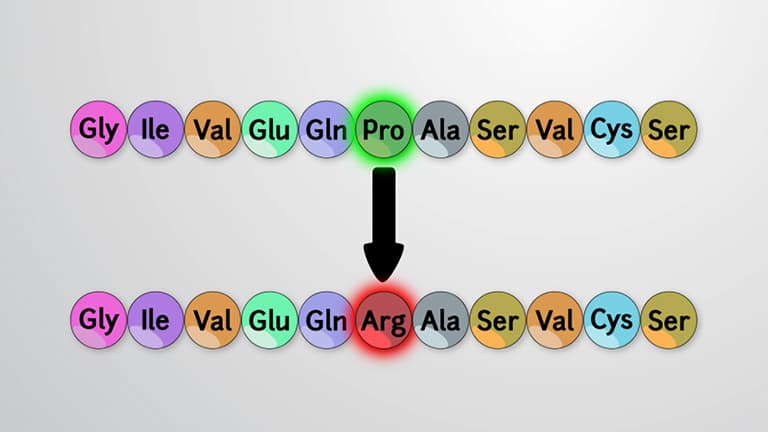
Point mutations involve changes to individual nucleotides and include three main categories. Substitution mutations replace one nucleotide with another, potentially creating missense mutations (changing amino acids) or nonsense mutations (creating stop codons). The classic example is sickle cell anemia, where a single adenine-to-thymine substitution in the beta-globin gene causes devastating health effects in approximately 1 in 365 African American births in the United States.
Insertion and deletion mutations (indels) add or remove nucleotides, often causing frameshift mutations that alter the entire downstream protein sequence. These changes frequently have more severe consequences than substitutions because they disrupt the three-letter genetic code reading frame.
Chromosomal mutations involve larger-scale changes including duplications, deletions, inversions, and translocations. These structural variations can affect multiple genes simultaneously and are often observed in cancer cells, where chromosomal instability drives tumor progression.
Mutations arise through multiple pathways, including spontaneous DNA replication errors occurring at rates of approximately 10^-10 per nucleotide per cell division. Environmental mutagens like UV radiation (causing skin cancer in over 5 million Americans annually) and chemical carcinogens significantly increase mutation rates. Understanding these mechanisms helps explain why certain populations face higher cancer risks and informs public health strategies.
The consequences of mutations span a spectrum from neutral polymorphisms that contribute to human genetic diversity to pathogenic variants causing inherited diseases. Beneficial mutations, though rare, provide the foundation for natural selection and species adaptation. This concept frequently appears on MCAT questions testing students' understanding of molecular genetics and evolution.
Related Micro-courses