Loading video…


 10 Concepts
 243K views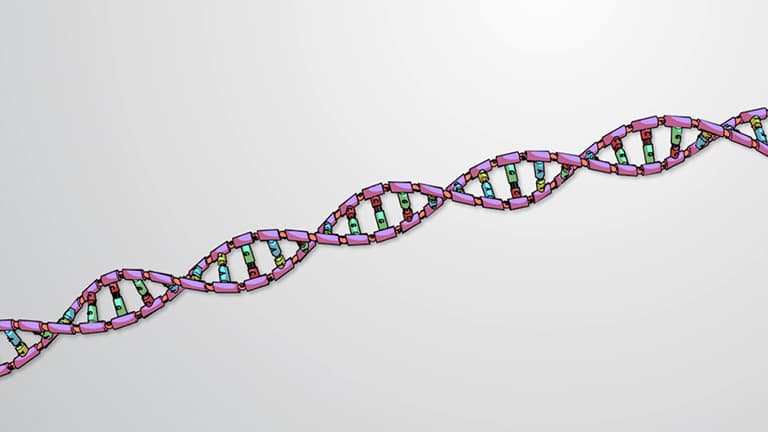

Video Summary: What Is the DNA Helix
Did you know that if you stretched out all the DNA in a single human cell, it would reach about 6 feet in length? The DNA helix is the twisted ladder-like structure that stores our genetic blueprint, discovered through groundbreaking X-ray crystallography work at institutions like Columbia University. Understanding what the DNA helix is reveals how this remarkable molecule fits billions of base pairs into a microscopic cell nucleus while remaining accessible for replication and gene expression. Watch the full video on JoVE Coach to master this concept with expert-led visuals and step-by-step explanations.
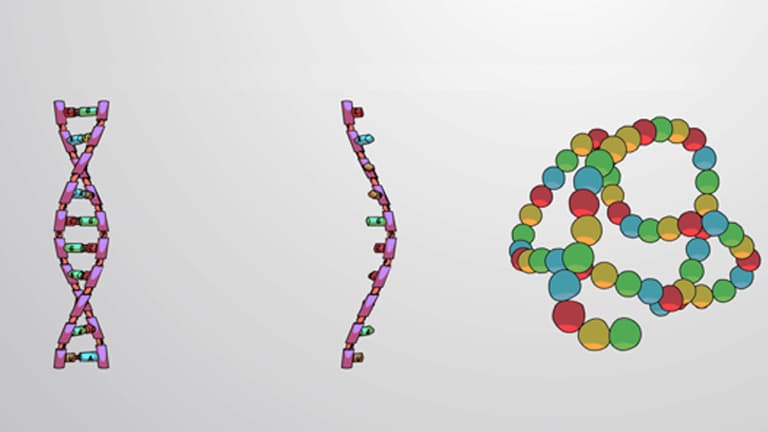
The DNA helix represents one of biology's most elegant molecular designs. This double-stranded structure consists of two antiparallel polynucleotide chains twisted around a common axis, forming the characteristic right-handed spiral. Each strand contains a sugar-phosphate backbone with nitrogenous bases extending inward, creating the "rungs" of this molecular ladder. The antiparallel orientation means one strand runs 5' to 3' while its complement runs 3' to 5', a crucial feature that enables semi-conservative DNA replication.
Each nucleotide building block contains three essential components: a deoxyribose sugar, a phosphate group, and one of four nitrogenous bases. The purines (adenine and guanine) are larger, double-ring structures, while the pyrimidines (thymine and cytosine) are smaller, single-ring molecules. Chargaff's rules dictate that adenine always pairs with thymine via two hydrogen bonds, while cytosine pairs with guanine through three hydrogen bonds. This complementary base pairing ensures genetic fidelity during replication and provides the molecular basis for heredity.
The DNA helix completes one full turn approximately every 10.4 base pairs, creating distinct major and minor grooves along its surface. These grooves serve as binding sites for proteins involved in gene regulation, DNA repair, and replication. The major groove, wider and deeper, provides more surface area for protein recognition sequences, while the minor groove offers additional regulatory binding opportunities. This three-dimensional architecture is crucial for cellular processes and appears frequently on AP Biology exams and college biochemistry courses.
Understanding DNA helix structure has revolutionized medicine and forensic science across the United States. Techniques like polymerase chain reaction (PCR) exploit the helix's ability to denature and reanneal, enabling DNA amplification used in COVID-19 testing and criminal investigations. Pharmaceutical companies like Pfizer and Moderna utilize this knowledge to design mRNA vaccines and gene therapies. Medical schools emphasize DNA structure on the MCAT, particularly its relationship to genetic diseases and therapeutic interventions.
Related Micro-courses