Loading video…


 10 Concepts
 243K views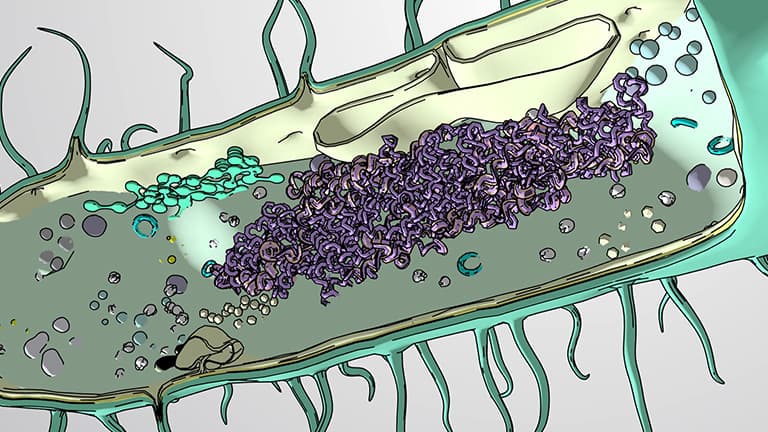

Video Summary: What are Prokaryotic Cells
Did you know that prokaryotic cells biology explained reveals organisms that have survived for over 3.5 billion years without a single nucleus? These remarkable single-celled organisms, including the *E. coli* bacteria used to produce human insulin in US pharmaceutical labs, represent life's most successful design. What are prokaryotic cells becomes clear when examining their streamlined structure-no nucleus, no membrane-bound organelles, yet capable of thriving everywhere from Yellowstone's hot springs to your digestive tract. Watch the full video on JoVE Coach to master this concept with expert-led visuals and step-by-step explanations.
What are prokaryotic cells represents one of biology's fundamental questions that reveals life's earliest and most successful cellular design. Unlike eukaryotic cells, prokaryotes lack a membrane-bound nucleus, instead containing their genetic material in a nucleoid region where DNA freely floats in the cytoplasm. This prokaryote no nucleus arrangement actually provides several advantages, including faster protein synthesis and more efficient resource utilization.
Bacteria prokaryote cell biology centers on several key structures that enable survival across diverse environments. The bacterial cell wall structure provides shape and protection, with peptidoglycan forming the primary structural component. Gram-positive bacteria possess thick peptidoglycan layers that retain crystal violet stain, while Gram-negative bacteria have thinner walls surrounded by an outer membrane. This distinction proves crucial in medical diagnosis and antibiotic selection-for instance, penicillin targets peptidoglycan synthesis, making it more effective against Gram-positive infections.
Prokaryotic ribosomes DNA relationship differs significantly from eukaryotes. Prokaryotic ribosomes (70S) are smaller than eukaryotic ribosomes (80S), enabling antibiotics like streptomycin to selectively target bacterial protein synthesis without harming human cells. The nucleoid region contains a single, circular chromosome plus additional plasmids-small DNA molecules that often carry antibiotic resistance genes.
Flagella pili prokaryote structures enable motility and cellular interaction. Flagella function like molecular motors, rotating to propel bacteria through liquid environments. *E. coli* uses this mechanism to navigate toward nutrients and away from toxins. Pili serve as attachment structures, allowing bacteria to adhere to surfaces or transfer genetic material through conjugation.
Prokaryotic cell features extend to remarkable metabolic diversity. While humans require oxygen and organic compounds, prokaryotes can derive energy from hydrogen sulfide, ammonia, or even sunlight through various photosynthetic pathways. This versatility explains their presence in extreme environments like deep-sea hydrothermal vents and acid mine drainage.
Understanding prokaryotic biology proves essential for AP Biology, pre-med courses, and MCAT preparation. Students encounter prokaryotes in contexts ranging from antibiotic resistance mechanisms to biotechnology applications. US pharmaceutical companies routinely use genetically modified *E. coli* to produce human insulin, growth hormone, and other therapeutic proteins-a process impossible without understanding prokaryotic genetics and metabolism.
Related Micro-courses