Loading video…


 12 Concepts
 46.1K views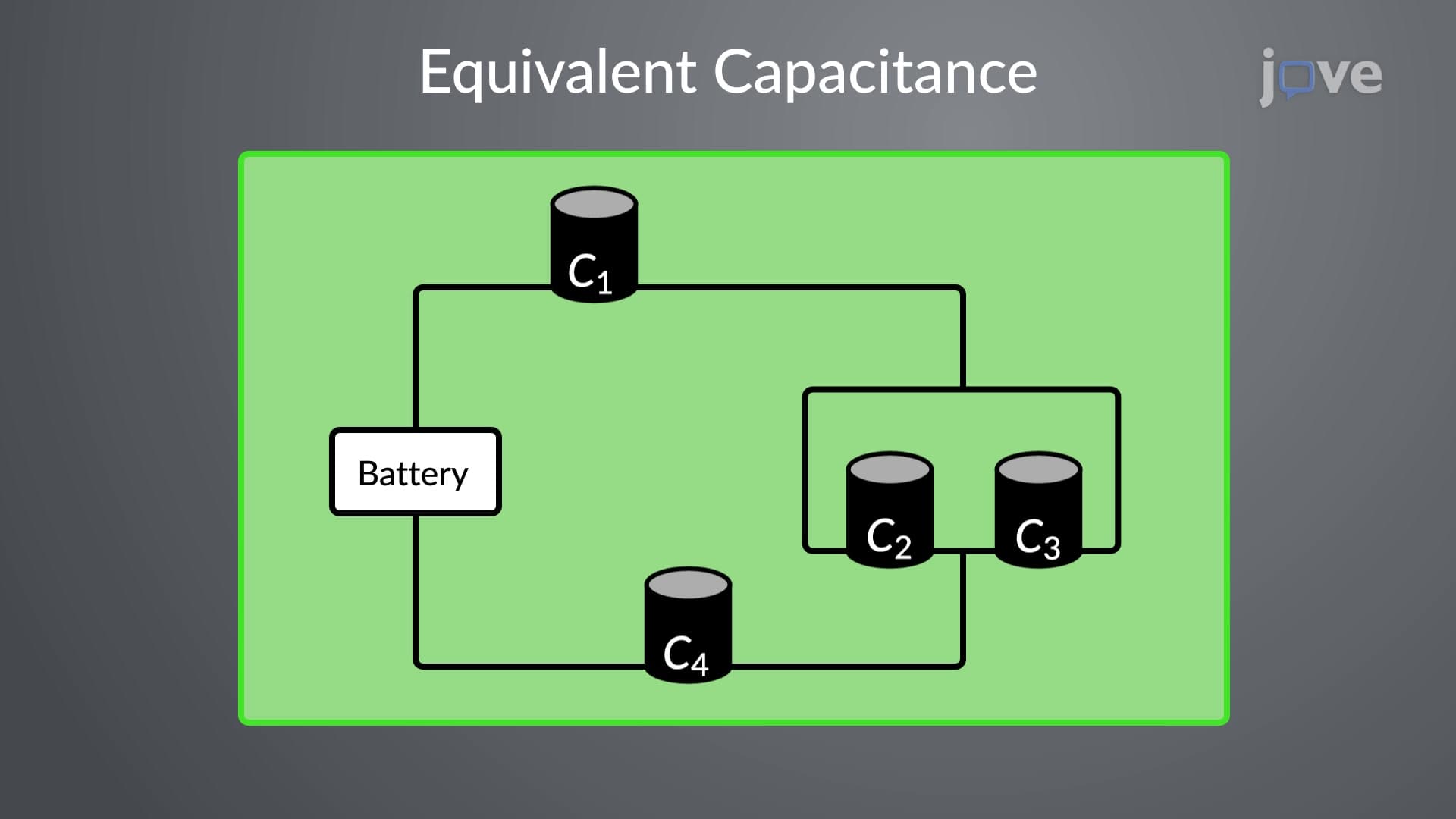

Video Summary: What Is Equivalent Capacitance
Did you know that the capacitors in your smartphone work together in complex networks to store and release energy? Understanding inductors and their interaction with capacitor circuits is crucial for analyzing these electronic networks. When capacitors are arranged in series and parallel combinations, calculating equivalent capacitance becomes essential for determining charge distribution across each component. Engineers at companies like Apple and Tesla use these principles daily when designing battery management systems and power electronics. Watch the full video on JoVE Coach to master this concept with expert-led visuals and step-by-step explanations.
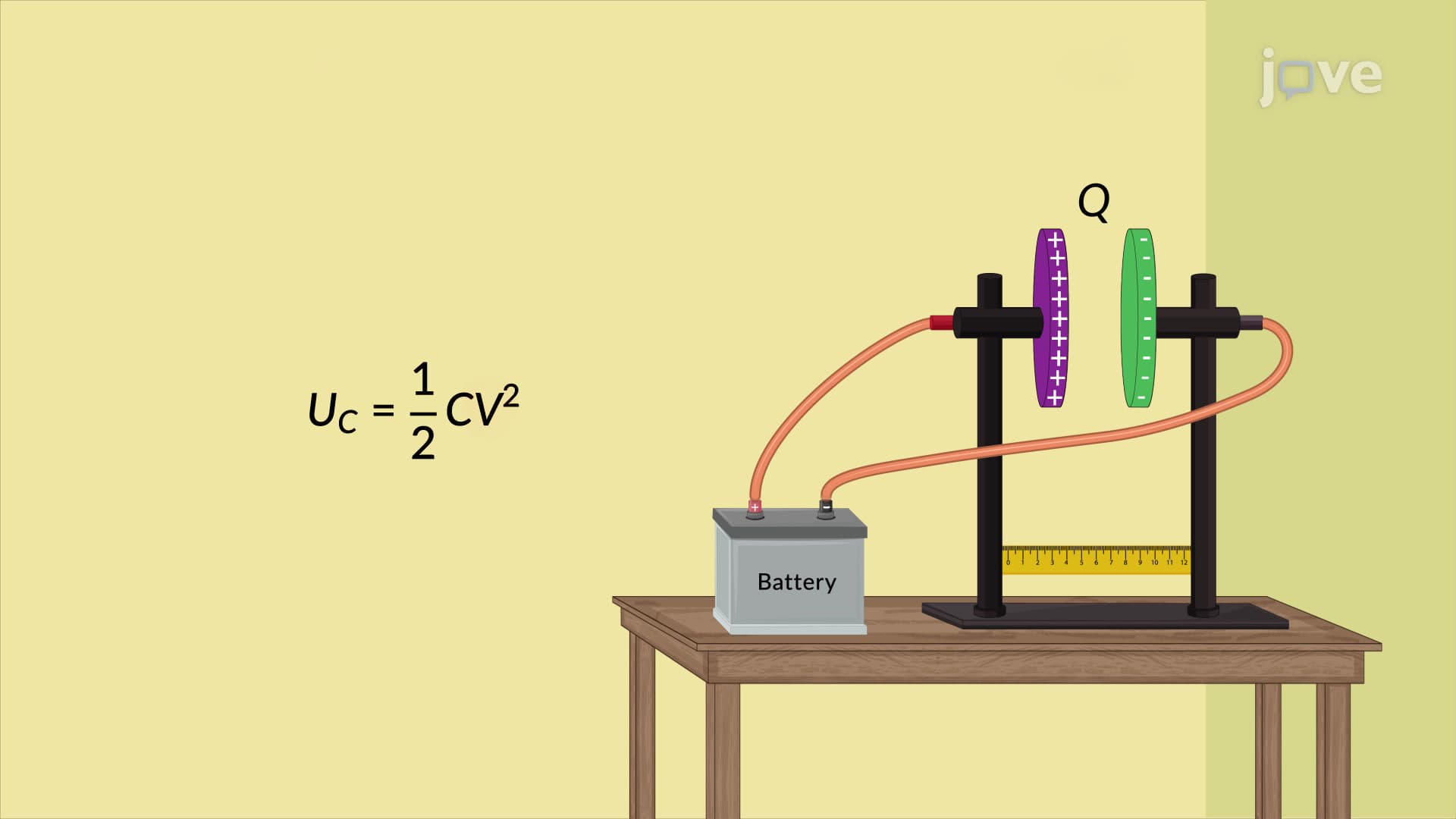
Equivalent capacitance represents the single capacitor value that could replace an entire network of capacitors while maintaining the same electrical behavior. This fundamental concept bridges basic inductors theory with practical circuit design, forming the foundation for understanding energy storage in electronic systems.
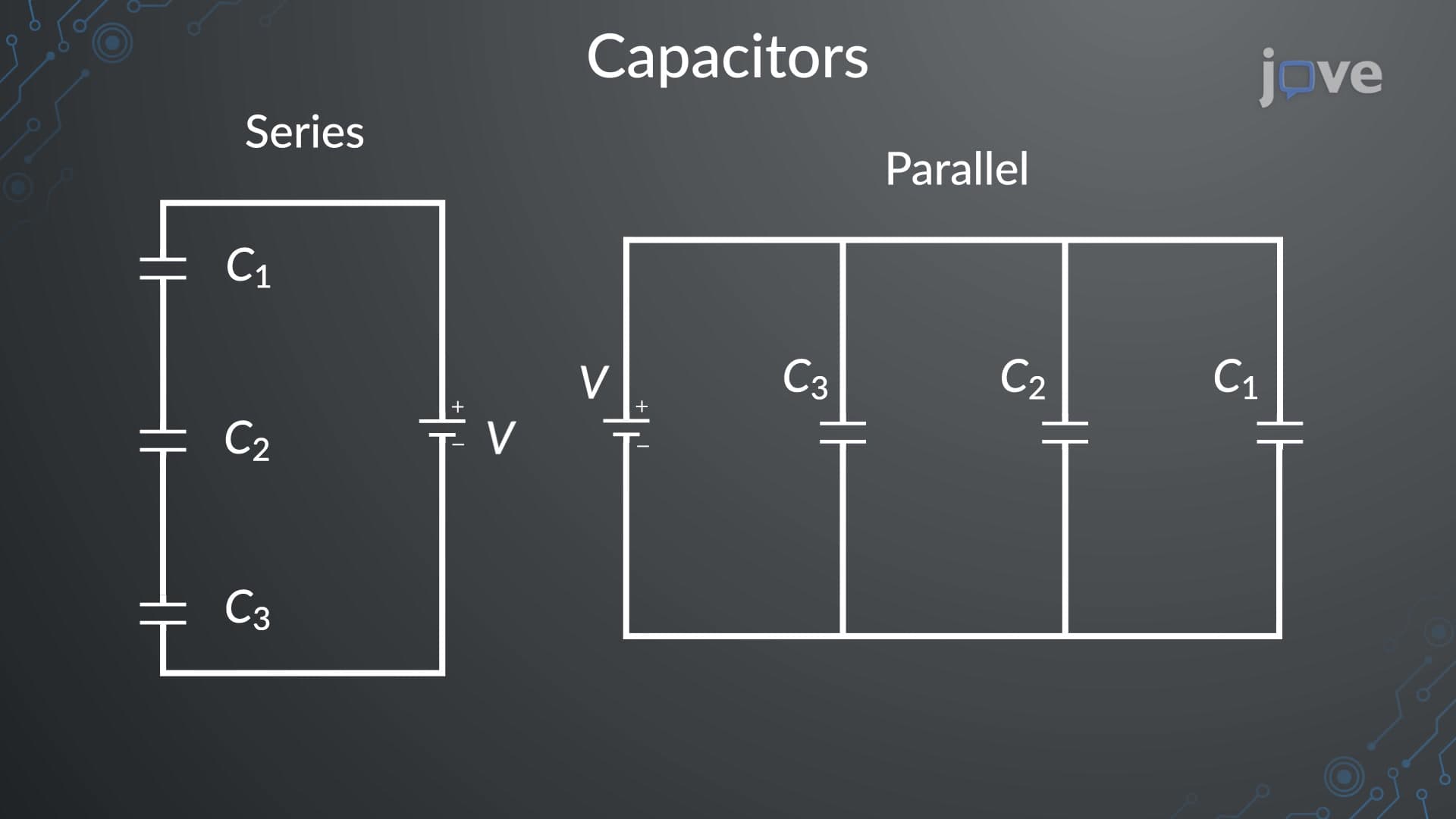
In series capacitor arrangements, the same charge flows through each component, but voltage divides proportionally based on individual capacitance values. The equivalent capacitance follows the reciprocal formula: 1/C(eq) = 1/C1 + 1/C2 + 1/C3. This relationship differs significantly from inductors, where series combinations simply add together. Students preparing for AP Physics or college circuits courses must master this distinction, as it frequently appears on exams like the MCAT physics section.
Consider a practical example: smartphone camera flash circuits use series capacitors to achieve precise voltage control. When three 10μF capacitors connect in series across a 12V battery, the equivalent capacitance becomes 3.33μF, and each capacitor stores 40μC of charge while experiencing 4V drop.
Parallel capacitor configurations behave more intuitively-capacitances add directly (C(eq) = C1 + C2 + C3), similar to resistors in series. Each capacitor experiences the same voltage while storing different charge amounts based on individual capacitance values. This principle underlies power supply filtering in computer motherboards, where multiple capacitors work together to smooth voltage fluctuations.
Complex circuits combining series and parallel elements require systematic reduction methods. Start by identifying purely parallel or series sections, calculate their equivalent values, then progressively simplify the network. This step-by-step approach proves essential for success on standardized exams and engineering coursework.
Tesla's Model S battery management system exemplifies real-world application, using sophisticated capacitor networks alongside inductors to regulate charging current and protect individual battery cells. Understanding these principles prepares students for advanced topics in electrical engineering and renewable energy systems.
Related Micro-courses