Loading video…


 10 Concepts
 65.9K views

Video Summary: What Is Multiple Regression
Did you know that Netflix uses over 1,300 variables to predict what movie you'll watch next? Multiple regression is the statistical powerhouse behind such complex predictions, analyzing relationships between one outcome variable and multiple predictor variables simultaneously. For instance, a college admissions office might use multiple regression to predict student GPA based on SAT scores, high school GPA, and hours of study time. This advanced statistical method extends far beyond simple two-variable correlations, making it essential for data-driven decisions across industries from healthcare to finance. Watch the full video on JoVE Coach to master this concept with expert-led visuals and step-by-step explanations.
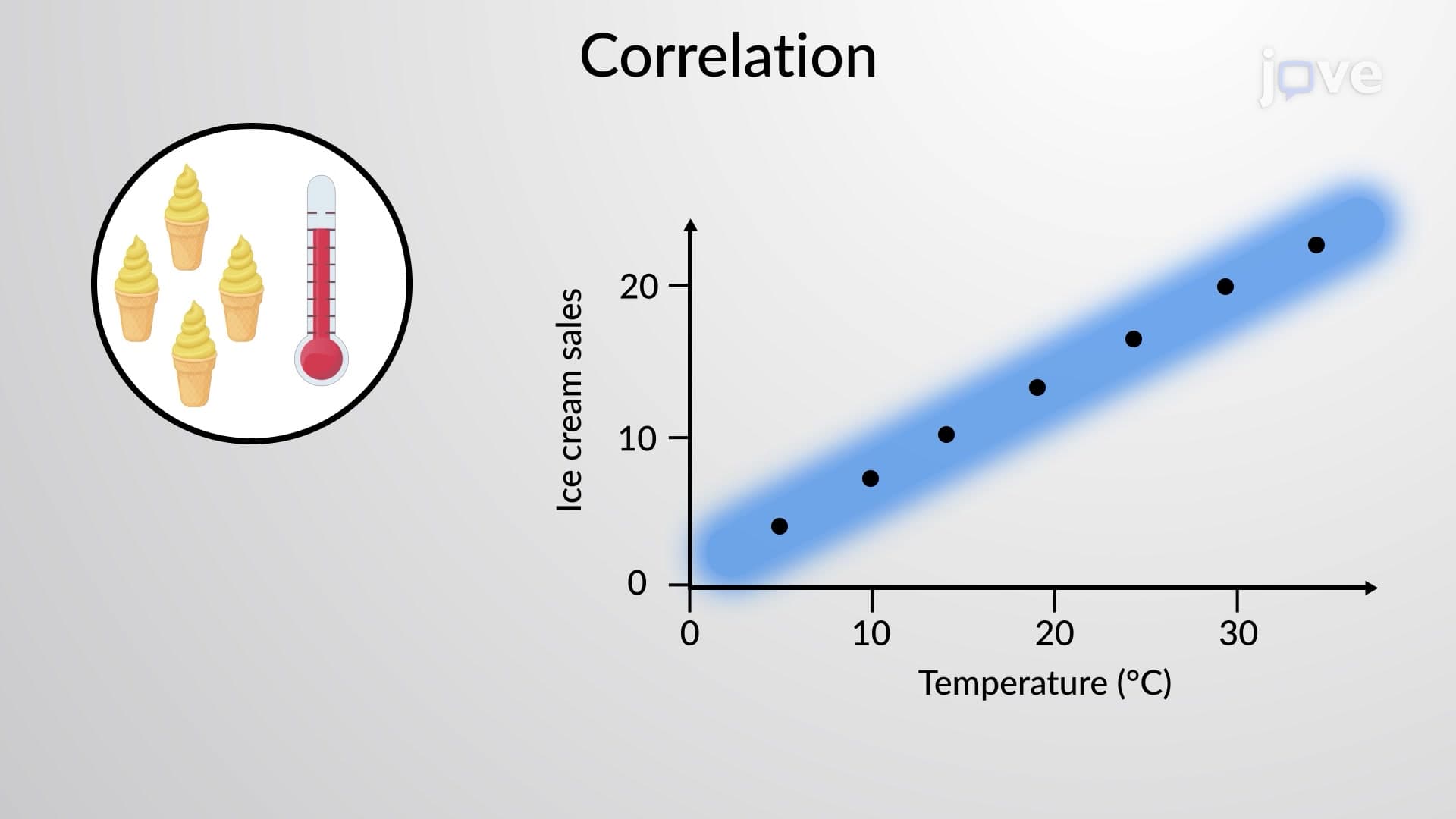
Multiple regression represents a fundamental leap from analyzing simple two-variable relationships to exploring complex, multi-factor scenarios that mirror real-world decision-making. While simple linear regression examines how one independent variable affects a dependent variable, multiple regression simultaneously evaluates how several predictor variables collectively influence an outcome.
Consider how the College Board might predict SAT performance. Rather than relying solely on GPA, they could use multiple regression to incorporate study hours, socioeconomic factors, and previous standardized test scores. This comprehensive approach provides far more accurate predictions than any single variable could achieve alone.
The multiple regression equation follows the format: Y = b₀ + b₁X₁ + b₂X₂ + ... + bₙXₙ + error, where Y represents the dependent variable, X variables are predictors, and b coefficients quantify each predictor's unique contribution. Unlike manual calculation methods that become unwieldy with multiple variables, modern statistical software like SPSS, R, or even Excel handles these complex computations effortlessly.
Healthcare researchers frequently employ multiple regression to study treatment effectiveness. For example, researchers at Johns Hopkins might analyze how patient age, BMI, medication dosage, and exercise frequency collectively predict recovery time after cardiac surgery. This multi-variable approach reveals insights impossible to detect through simple correlations.
The coefficient of determination (R²) indicates what percentage of variation in the dependent variable your model explains. An R² of 0.85 means your predictor variables account for 85% of the observed variation. However, R² artificially inflates as you add more variables, even irrelevant ones.
Adjusted R² provides a more honest assessment by penalizing models with excessive predictors relative to sample size. This becomes crucial in AP Statistics projects and college research, where students might be tempted to include every available variable. Educational Testing Service uses similar principles when validating standardized tests, ensuring their predictive models remain robust and meaningful.
Multiple regression appears throughout undergraduate curricula, from psychology research methods to business analytics. Economics students at universities like UCLA use it to analyze how inflation, unemployment, and interest rates simultaneously affect consumer spending. Biology majors might examine how temperature, rainfall, and soil pH collectively influence plant growth rates.
The technique proves invaluable for MCAT preparation, where students encounter research interpretation questions requiring multiple regression literacy. Medical schools increasingly emphasize statistical reasoning, making this concept essential for future healthcare professionals who must evaluate clinical research and evidence-based treatment protocols.
Related Micro-courses