Loading subject page…


974,818 views

Video Summary: What Is Pcr
Did you know that a single DNA fragment can be multiplied into over one billion copies in just a few hours? PCR (Polymerase Chain Reaction) is the revolutionary molecular technique that makes this exponential amplification possible, transforming everything from crime scene investigations by the FBI to COVID-19 testing in US hospitals. This fundamental process uses heat cycles, specialized enzymes, and precise temperature control to replicate specific DNA sequences with incredible efficiency. Watch the full video on JoVE Coach to master this concept with expert-led visuals and step-by-step explanations.
PCR represents one of the most transformative techniques in modern molecular biology, enabling scientists to amplify specific DNA sequences from minute starting amounts. Developed by Kary Mullis in the 1980s, this method revolutionized fields ranging from genetic research to clinical diagnostics across US medical centers and research institutions.
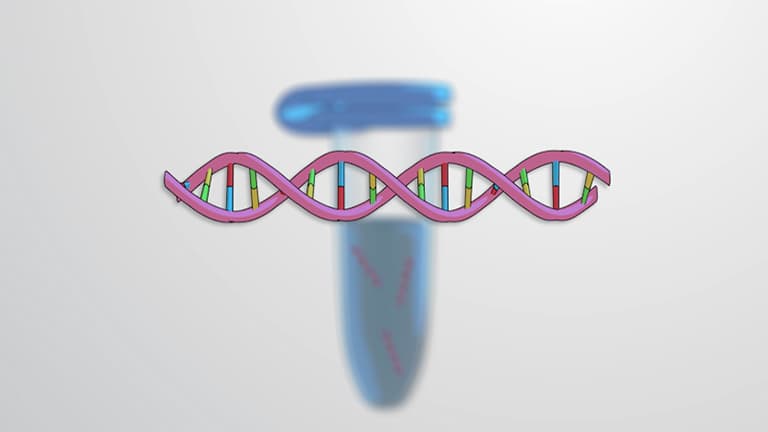
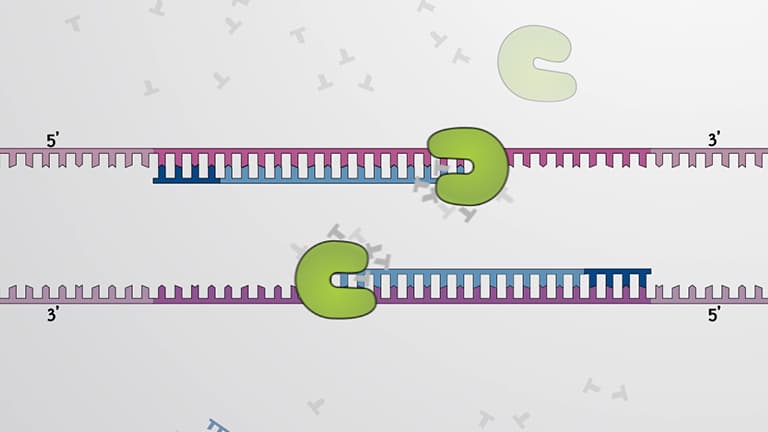
The PCR reaction requires four critical components working in harmony. DNA polymerase, typically the heat-stable Taq polymerase isolated from thermophilic bacteria, serves as the enzyme responsible for synthesizing new DNA strands. Primers-short, single-stranded DNA sequences of approximately 15-25 nucleotides-provide the starting point for DNA synthesis by binding to complementary sequences flanking the target region. The building blocks for new DNA come from deoxynucleoside triphosphates (dNTPs), which include dATP, dTTP, dGTP, and dCTP. Finally, the template DNA contains the specific sequence to be amplified.
PCR operates through repeated thermal cycles, each containing three distinct phases. Denaturation occurs at approximately 94-98°C, where high temperature breaks the hydrogen bonds between DNA base pairs, separating the double helix into single strands. During the annealing phase (50-65°C), primers bind to their complementary sequences on the template strands through Watson-Crick base pairing. The extension phase (72°C) provides optimal conditions for Taq polymerase activity, allowing the enzyme to synthesize new DNA strands by adding dNTPs in the 5' to 3' direction.
The power of PCR lies in its exponential amplification pattern. Each cycle theoretically doubles the number of target DNA molecules, following the formula 2^n, where n represents the cycle number. After 20 cycles, one DNA molecule becomes approximately one million copies. By cycle 30, this grows to over one billion copies, providing sufficient material for downstream applications like gel electrophoresis, sequencing, or cloning.
This exponential growth makes PCR invaluable for AP Biology students studying molecular genetics and college undergraduates in biochemistry courses. The technique frequently appears on MCAT questions testing understanding of molecular biology principles and mathematical relationships in biological systems.
Related Micro-courses