Loading video…


 18 Concepts
 6.3K views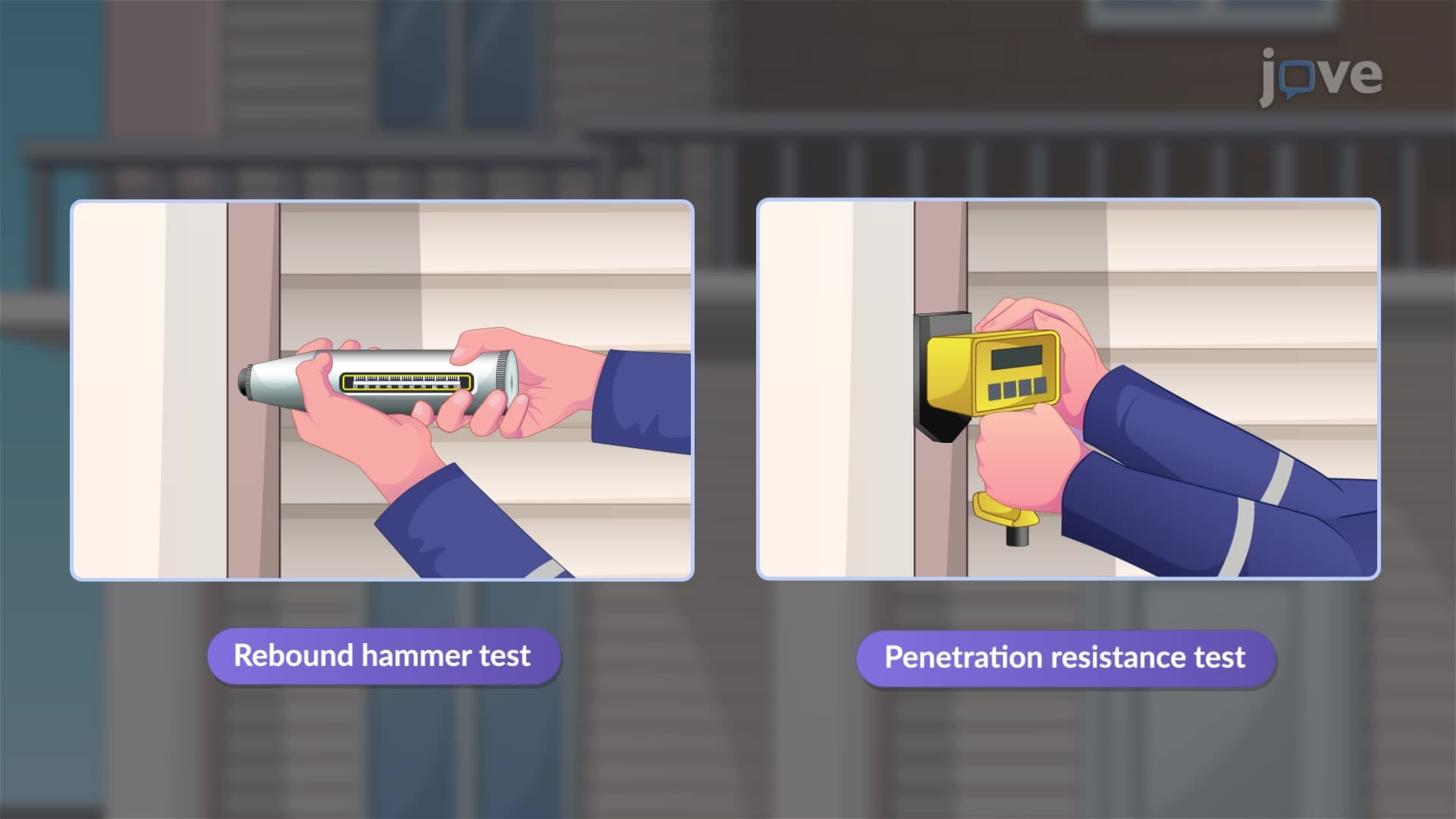

Video Summary: Non Destructive Tests for Concrete Strength Explained
Did you know that engineers can test concrete strength without damaging structures like the Golden Gate Bridge? Non destructive tests for concrete strength allow professionals to assess structural integrity while keeping buildings and bridges fully operational. These innovative methods, including rebound hammer and penetration resistance testing, help ensure public safety in critical infrastructure across the United States. Watch the full video on JoVE Coach to master this concept with expert-led visuals and step-by-step explanations.
Non-destructive testing (NDT) for concrete represents a revolutionary approach to structural assessment that preserves the integrity of existing buildings, bridges, and infrastructure. Unlike traditional destructive methods that require core sampling or breaking concrete specimens, these techniques provide valuable strength data while keeping structures fully operational. This approach is particularly crucial for assessing aging infrastructure across the United States, where millions of concrete structures require ongoing evaluation.
The rebound hammer test operates on the principle that harder concrete surfaces will cause a spring-loaded mass to rebound with greater force. When the device's plunger contacts the concrete surface, it compresses an internal spring and retracts a calibrated mass. Upon release, this mass strikes the plunger and rebounds, with the rebound distance measured on a graduated scale from 10 to 100. Higher rebound numbers typically indicate stronger concrete, though factors like surface condition, carbonation, and moisture content can influence results.
Professional engineers commonly use this method when evaluating structures like parking garages, highway overpasses, and commercial buildings. For students preparing for AP Physics or engineering coursework, understanding the energy transfer principles involved helps connect classroom mechanics concepts to real-world applications. The test's simplicity makes it ideal for rapid field assessments, though results require correlation with laboratory-tested concrete samples for accurate strength determination.
The penetration resistance test employs a powder-actuated gun that fires hardened steel probes into concrete through a triangular template. This standardized template ensures consistent probe spacing and provides three measurement points for statistical reliability. The depth of probe penetration inversely correlates with concrete strength-shallow penetration indicates high-strength concrete, while deeper penetration suggests lower strength material.
This method proves particularly valuable for assessing concrete structures where surface conditions might affect rebound hammer accuracy. Bridge decks exposed to weathering, industrial floors with surface treatments, and precast concrete elements often require penetration testing for reliable strength assessment. College students studying materials engineering encounter this concept in structural analysis courses, where understanding the relationship between penetration resistance and compressive strength becomes essential for professional practice.
Both testing methods play crucial roles in maintaining America's infrastructure safety. State departments of transportation routinely employ these techniques when evaluating bridge conditions, while building inspectors use them to assess structural adequacy during renovations or safety inspections. The non-destructive nature of these tests allows continuous monitoring of critical structures without compromising their load-bearing capacity or requiring expensive repairs.
Related Micro-courses