Loading video…


 8 Concepts
 10K views

Video Summary: Applying Bernoulli S Equation to Flow Normal to a Streamline
Ever wonder why NASCAR drivers experience different pressures when racing through banked turns? Bernoulli's equation problem solving becomes crucial when analyzing how pressure varies across curved streamlines due to centrifugal forces. In curved fluid flows, pressure is higher on the inner side of the curve and decreases outward, a principle critical for designing everything from the Hoover Dam's spillways to hurricane-resistant buildings in Florida. Understanding applying Bernoulli's equation to flow normal to a streamline helps engineers prevent structural failures in curved channels and pipe systems. Watch the full video on JoVE Coach to master this concept with expert-led visuals and step-by-step explanations.
When fluid flows along curved paths, bernoulli's equation problem solving takes on a new dimension that goes beyond the standard energy conservation approach. The bernoulli's equation problem solving concept for flow normal to streamlines addresses how centrifugal forces create pressure variations across the width of curved flow paths. This specialized application helps explain why water pressed against the outer wall of a curved pipe experiences different pressures than water near the inner wall.
The bernoulli's equation problem basics reveal that when fluid particles travel along curved streamlines, they experience centrifugal acceleration directed outward from the center of curvature. This acceleration requires a net inward force, which manifests as a pressure gradient across the streamline. The pressure difference can be expressed as: dp/dn = ρV²/R, where dp/dn is the pressure gradient normal to the streamline, ρ is fluid density, V is velocity, and R is the radius of curvature.
For AP Physics students and college engineering majors, this relationship demonstrates why sharp curves (small R) create more dramatic pressure differences than gentle curves. This principle appears frequently on MCAT physics sections and engineering fluid mechanics exams, where students must calculate pressure distributions in curved systems.
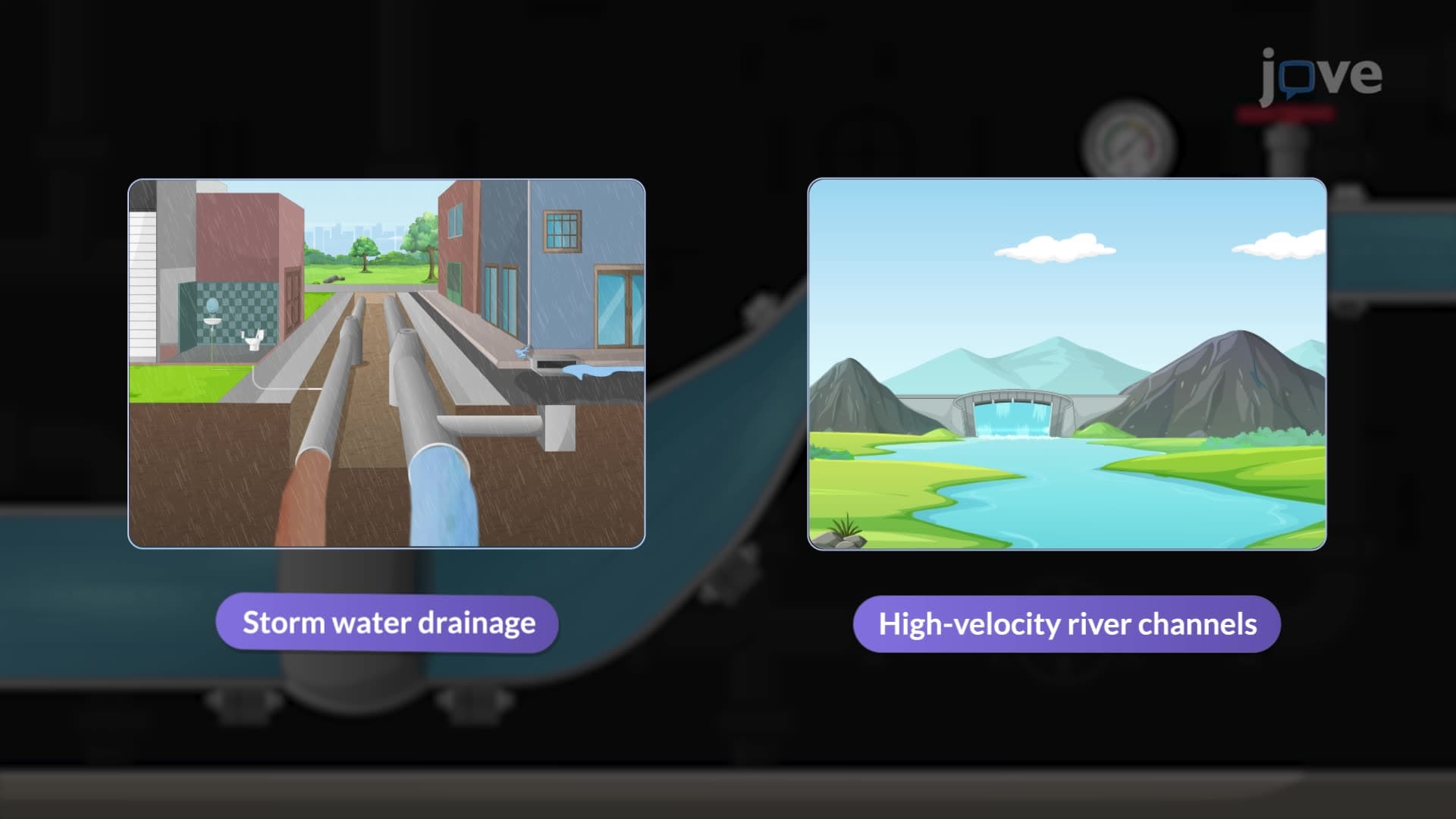
Bernoulli's equation problem solving examples abound in American infrastructure projects. The Glen Canyon Dam in Arizona utilizes curved spillway designs where engineers must account for pressure variations across the curved water flow to prevent cavitation damage. Similarly, the design of curved highway overpasses considers how wind flow around these structures creates pressure differences that affect structural stability.
In the aerospace industry, companies like Boeing apply these principles when designing aircraft wings and engine intakes, where curved airflow patterns create complex pressure distributions. The bernoulli's equation problem solving step by step approach helps engineers optimize these designs for maximum efficiency and safety.
A comprehensive bernoulli's equation problem solving study guide approach for curved flows involves several key steps. First, identify the streamline geometry and determine the radius of curvature at critical points. Next, apply the normal momentum equation to establish pressure gradients. Finally, integrate these gradients to find absolute pressure differences across the flow field.
Students preparing for engineering coursework at institutions like MIT or Stanford will encounter these problems in fluid mechanics courses, where understanding the bernoulli's equation problem solving overview for curved flows becomes essential for advanced topics like turbomachinery design and aerodynamics.
Related Micro-courses