Loading video…


 8 Concepts
 10K views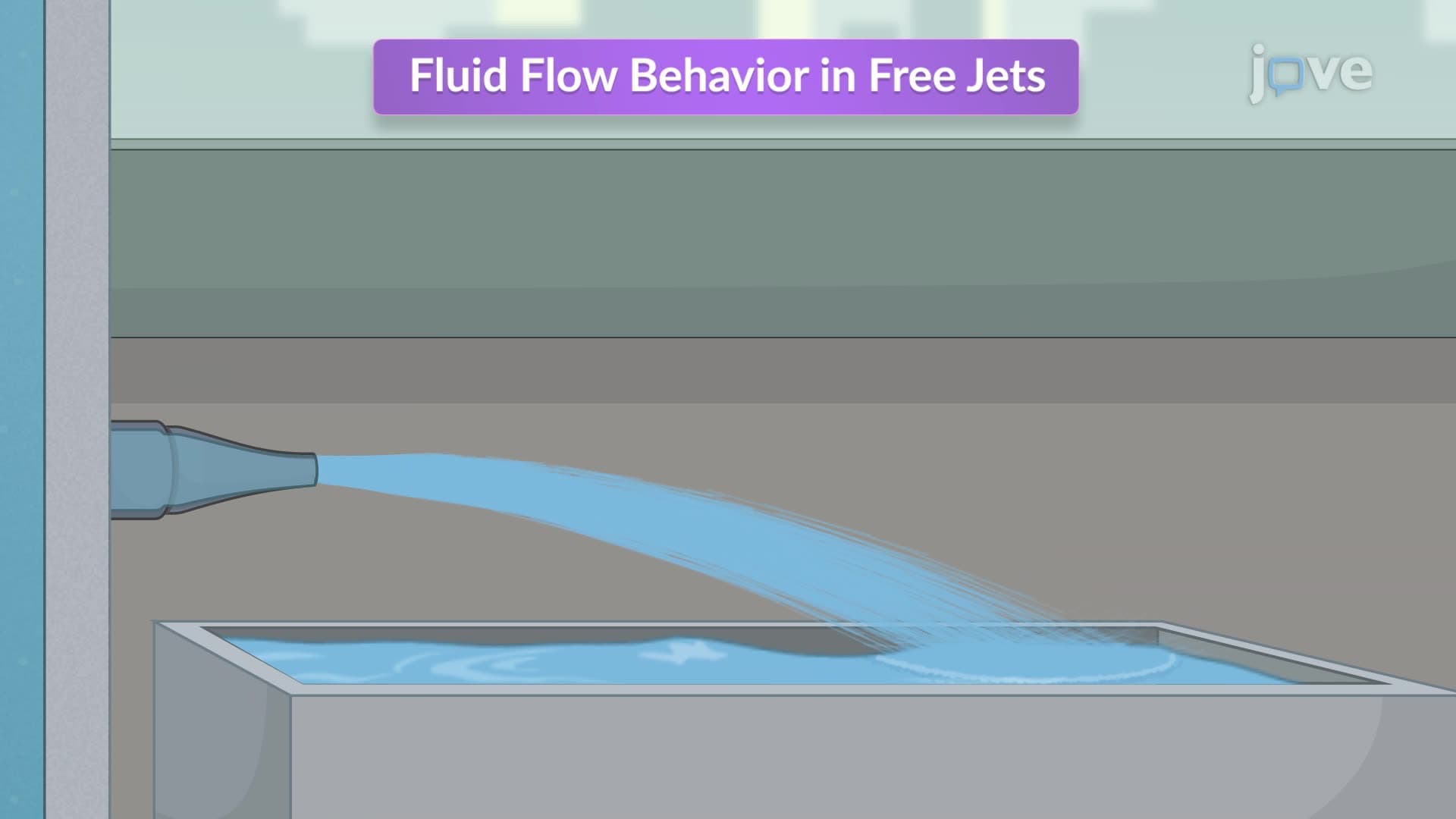

Video Summary: What Is Free Jet
Ever wondered why water shooting from a garden hose gets thinner as it falls? This fascinating phenomenon illustrates the continuity equation in action through free jet behavior. When fluid exits a nozzle-like in the Hoover Dam's spillway systems-it demonstrates how mass conservation governs flow patterns, creating the characteristic narrowing effect called vena contracta. Watch the full video on JoVE Coach to master this concept with expert-led visuals and step-by-step explanations.
A free jet represents one of the clearest demonstrations of fluid mechanics principles in action. When fluid exits a nozzle or orifice and flows freely through air, it creates a continuous stream governed by fundamental conservation laws. The continuity equation-expressing mass conservation in fluid flow-becomes visually apparent as the jet's behavior changes with distance from the nozzle.
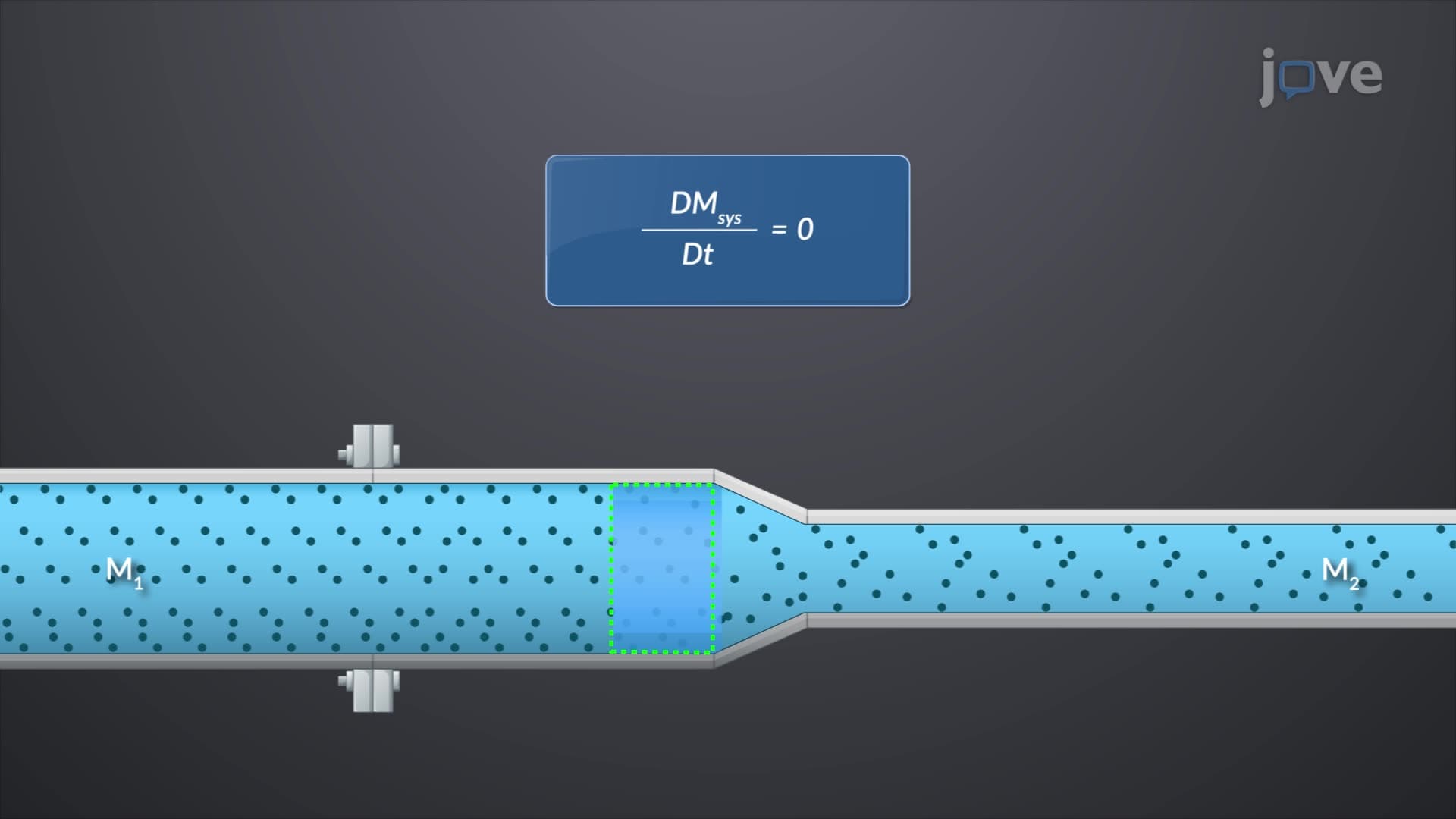
The continuity equation definition states that mass flow rate remains constant throughout a streamline: ρ₁A₁v₁ = ρ₂A₂v₂. For incompressible fluids like water, density remains constant, simplifying to A₁v₁ = A₂v₂. This means as cross-sectional area decreases, velocity must increase proportionally-exactly what we observe in free jets.
Understanding what is continuity equation in detail becomes crucial when analyzing the vena contracta effect. As fluid accelerates under gravity after leaving the nozzle, conservation of mass demands that the cross-sectional area decreases to maintain constant flow rate. This creates the characteristic "wasp waist" shape visible in water fountains across America, from the Bellagio in Las Vegas to Central Park's Bethesda Fountain.
Civil engineers apply free jet principles when designing spillways for dams like Glen Canyon or Oroville. The contraction coefficient-the ratio between vena contracta area and nozzle area-varies with nozzle design. Well-rounded nozzles achieve coefficients near 1.0, while sharp-edged designs typically yield 0.6-0.8.
Different nozzle geometries produce distinct flow patterns:
For AP Physics and college-level fluid mechanics courses, free jet problems frequently appear involving continuity equation calculations. Students must determine flow rates, exit velocities, or cross-sectional areas using conservation principles. MCAT physical sciences sections often feature similar applications in biological contexts, such as blood flow through varying vessel diameters or respiratory airflow patterns.
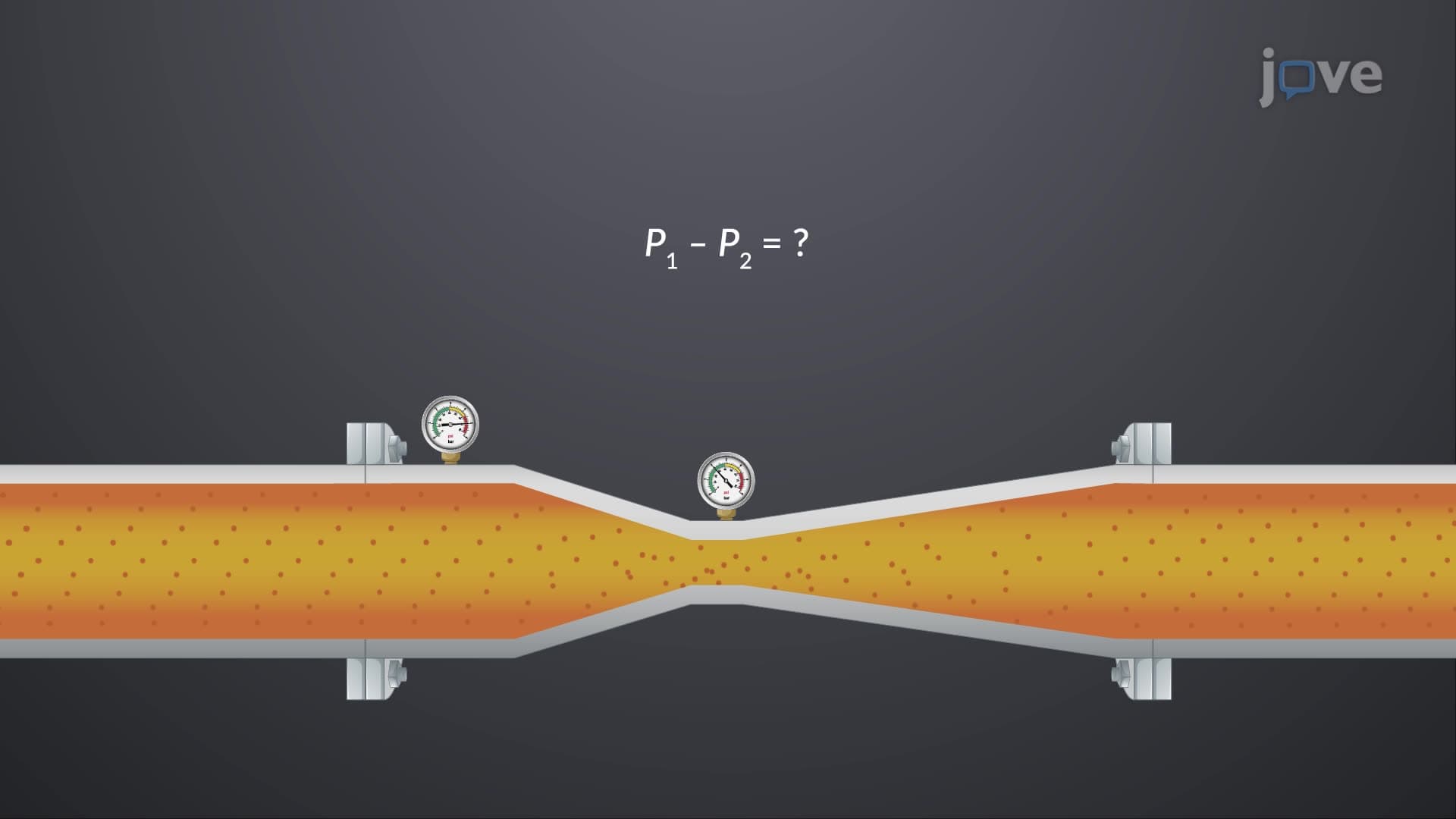
The continuity equation concept connects directly to Bernoulli's equation, creating comprehensive problem sets that test multiple fluid mechanics principles simultaneously. Mastering these relationships proves essential for engineering coursework and professional licensing exams.
Related Micro-courses