Loading video…


 13 Concepts
 18.7K views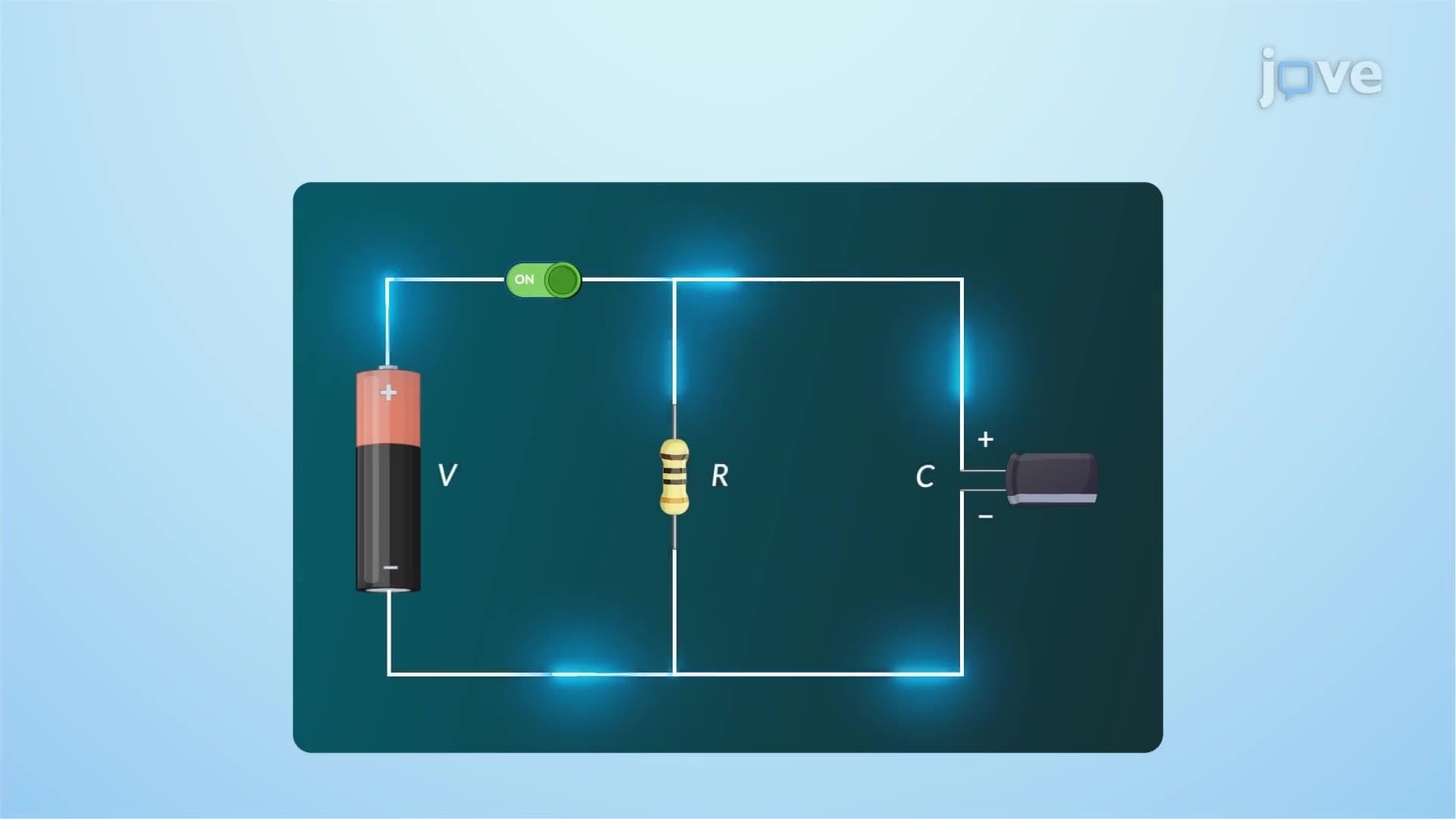

Video Summary: What Is Rc Circuit Without Source
Ever wondered why your smartphone's camera flash takes time to recharge after a photo? This delay demonstrates an RC circuit without source in action, where stored electrical energy gradually dissipates. When examining what is RC circuit without source, we discover how capacitors discharge through resistors following predictable exponential patterns. In hospital defibrillators across US emergency rooms, this same principle ensures safe energy release after patient treatment. Watch the full video on JoVE Coach to master this concept with expert-led visuals and step-by-step explanations.
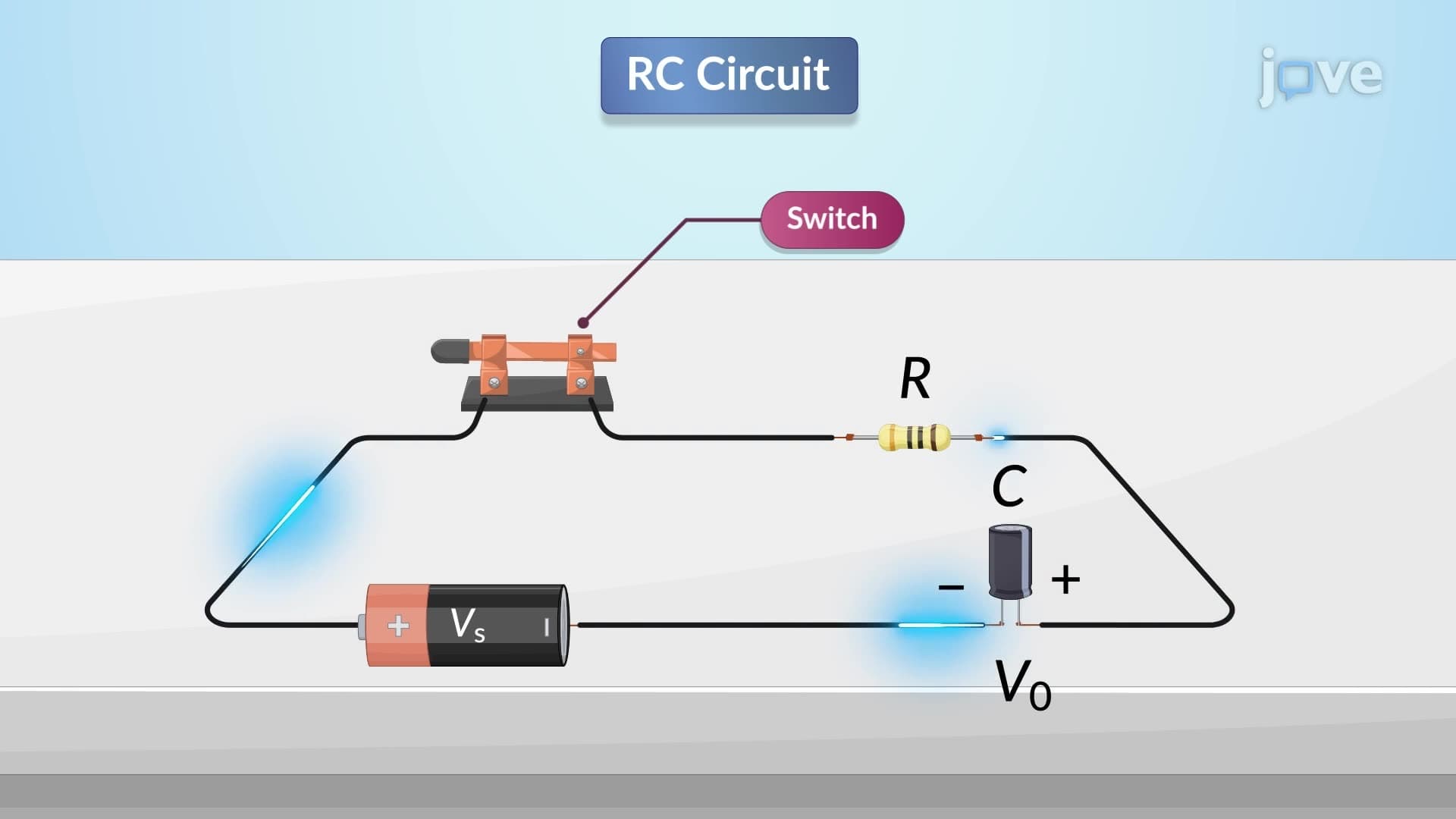
An RC circuit without source represents one of the most fundamental concepts in electrical engineering education. When a DC voltage source is suddenly disconnected from a resistor-capacitor circuit, the remaining stored energy in the capacitor creates what engineers call a "source-free" or "natural response" condition. This scenario occurs countless times daily in electronic devices across American households, from camera flashes recharging to automotive ignition systems cycling.
The mathematical foundation begins with Kirchhoff's current law applied at the circuit's primary node. Since current cannot flow into a disconnected node, the sum of currents must equal zero: i_R + i_C = 0. This relationship leads to the fundamental differential equation: RC(dv/dt) + v = 0, where v represents the capacitor voltage and t represents time.
The solution to this differential equation reveals the exponential nature of capacitor discharge: v(t) = V₀e^(-t/RC), where V₀ is the initial voltage and RC represents the time constant tau. This exponential relationship appears frequently in AP Physics and college-level electrical engineering courses, making it essential knowledge for students preparing for standardized exams.
The time constant tau = RC carries profound physical significance. After one time constant, the capacitor voltage drops to approximately 36.8% (specifically, 1/e) of its initial value. American engineering students often remember this as the "37% rule" for quick mental calculations during exams like the Fundamentals of Engineering (FE) exam.
Energy analysis reveals a beautiful conservation principle. Initially, the capacitor stores energy E₀ = ½CV₀². As the circuit discharges, this energy transfers to the resistor, where it dissipates as heat following the relationship P(t) = V₀²e^(-2t/RC)/R. Integration over infinite time confirms that all initial capacitor energy eventually dissipates in the resistor, demonstrating perfect energy conservation.
This concept appears extensively in MCAT physics sections, AP Physics C: Electricity and Magnetism exams, and undergraduate electrical engineering coursework. Students at institutions like MIT, Stanford, and state universities encounter RC discharge in laboratory experiments measuring actual time constants and comparing theoretical predictions with measured values.
Related Micro-courses