Loading video…


 9 Concepts
 5K views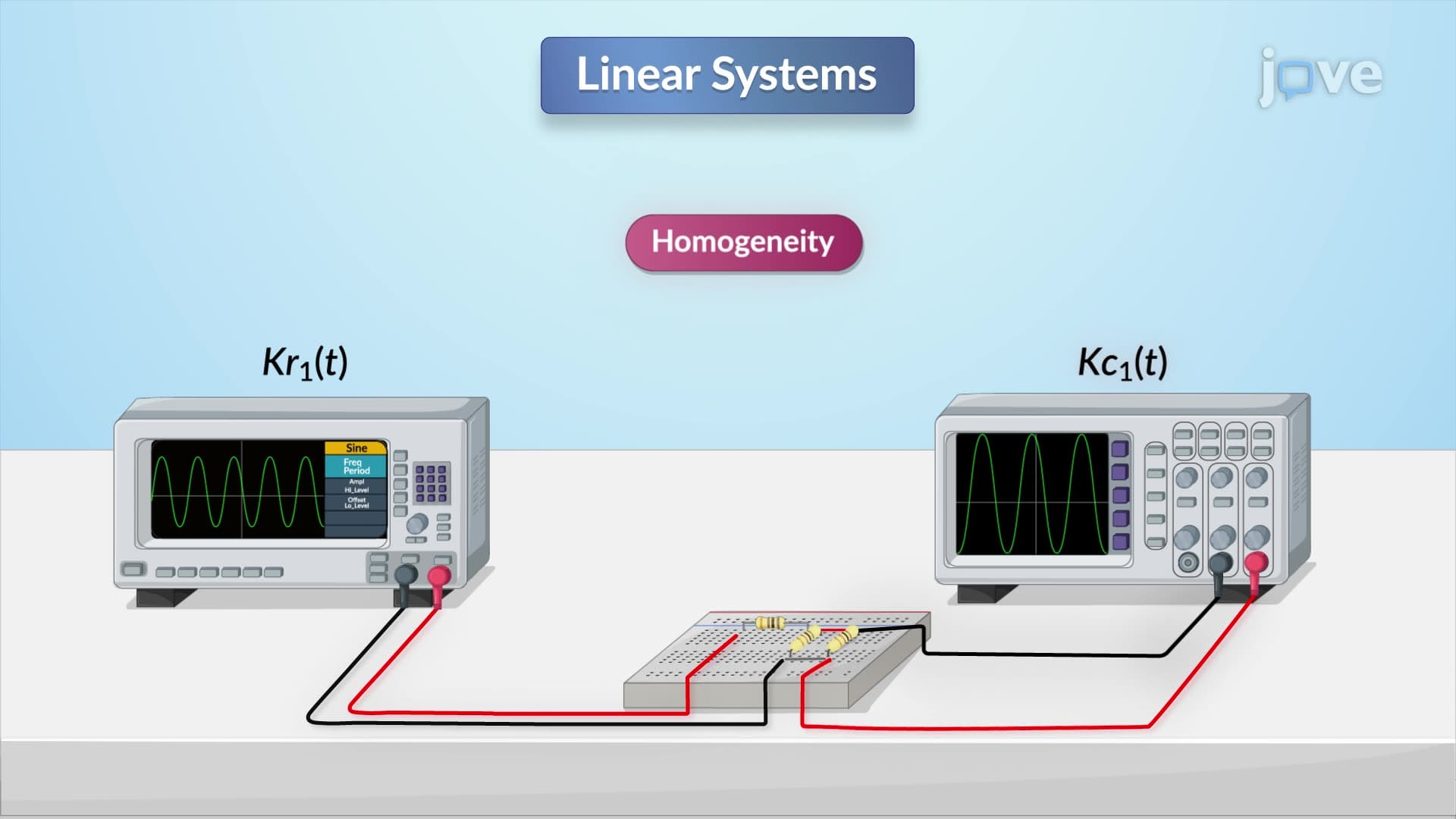

Video Summary: Frequency Domain Linear Approximation Methods
Ever wonder how Tesla's autopilot system processes thousands of sensor inputs simultaneously? State space representation provides the mathematical framework that makes this possible by organizing complex system variables into manageable matrices. This powerful technique transforms nonlinear systems into linear approximations around operating points, enabling engineers to analyze everything from Boeing 787 flight control systems to iPhone battery management circuits. Frequency-Domain Linear Approximation Methods demonstrate how Taylor series expansions and Kirchhoff's laws work together to create transfer functions from nonlinear differential equations. Watch the full video on JoVE Coach to master this concept with expert-led visuals and step-by-step explanations.
Frequency-Domain Linear Approximation Methods form the backbone of modern control system analysis, enabling engineers to tackle complex nonlinear systems that would otherwise be mathematically intractable. These methods leverage the fundamental principle that most nonlinear systems behave approximately linearly when operating near a specific equilibrium point, much like how a curved hillside appears flat when you're standing on it.
The mathematical foundation rests on two critical properties of linear systems. Superposition allows engineers to analyze complex inputs by breaking them into simpler components-the total response equals the sum of individual responses. Homogeneity ensures that doubling an input doubles the output proportionally. These properties make linear systems predictable and manageable, which is why linearization techniques are so valuable in engineering practice.
The Taylor series provides the mathematical bridge between nonlinear reality and linear approximation. When analyzing a nonlinear function around an operating point, the Taylor expansion expresses the function's value using derivatives at that specific point plus deviations from it. By neglecting higher-order terms for small deviations, engineers obtain a linear relationship that captures the system's local behavior.
This approach proves especially powerful in electronic circuits containing nonlinear components like diodes, transistors, or magnetic cores. Consider the power supply circuits in your smartphone-these contain numerous nonlinear elements that engineers analyze using linearization techniques to ensure stable operation across varying load conditions.
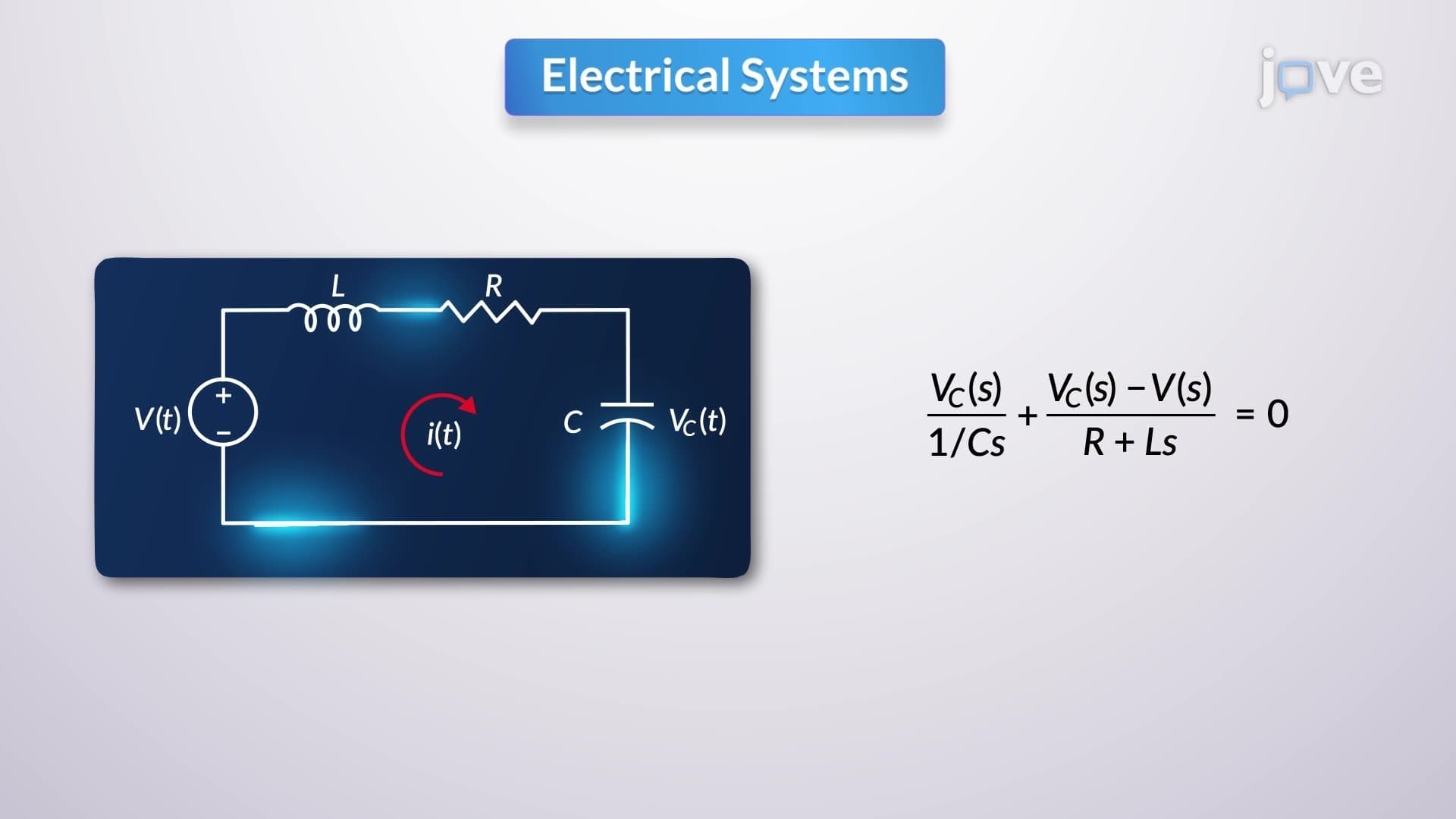
Real-world implementation involves systematic steps demonstrated through RL circuits with nonlinear resistors. Engineers begin by applying Kirchhoff's voltage law to establish the governing differential equation, accounting for the nonlinear resistance characteristics. The steady-state analysis requires setting small-signal sources to zero, revealing the equilibrium current that becomes the linearization point.
The linearization process transforms the nonlinear differential equation into a linear approximation valid for small perturbations around the operating point. This linearized equation readily accepts Laplace transform analysis, yielding transfer functions essential for frequency-domain design. These techniques appear extensively in AP Physics C exams and college-level circuit analysis courses, forming fundamental knowledge for electrical engineering programs at institutions like MIT, Stanford, and Georgia Tech.
These methods enable analysis of sophisticated systems from automotive engine control modules to NASA spacecraft guidance systems. Boeing's 737 MAX flight control system, for example, relies heavily on linearized models to maintain stable flight characteristics across different operating conditions.
Related Micro-courses