Loading video…


 9 Concepts
 5K views

Video Summary: Transfer Function to State Space Explained
Ever wonder how NASA engineers program spacecraft navigation systems? Converting state space to transfer function representations is the mathematical bridge that makes digital control possible. When SpaceX's Falcon 9 rocket adjusts its trajectory mid-flight, onboard computers use state-space equations derived from transfer functions to calculate precise thruster commands in real-time. Transfer Function To State Space Explained reveals the systematic process that transforms complex differential equations into matrix form, enabling engineers to simulate and control everything from automotive cruise control to industrial robotics. Watch the full video on JoVE Coach to master this concept with expert-led visuals and step-by-step explanations.
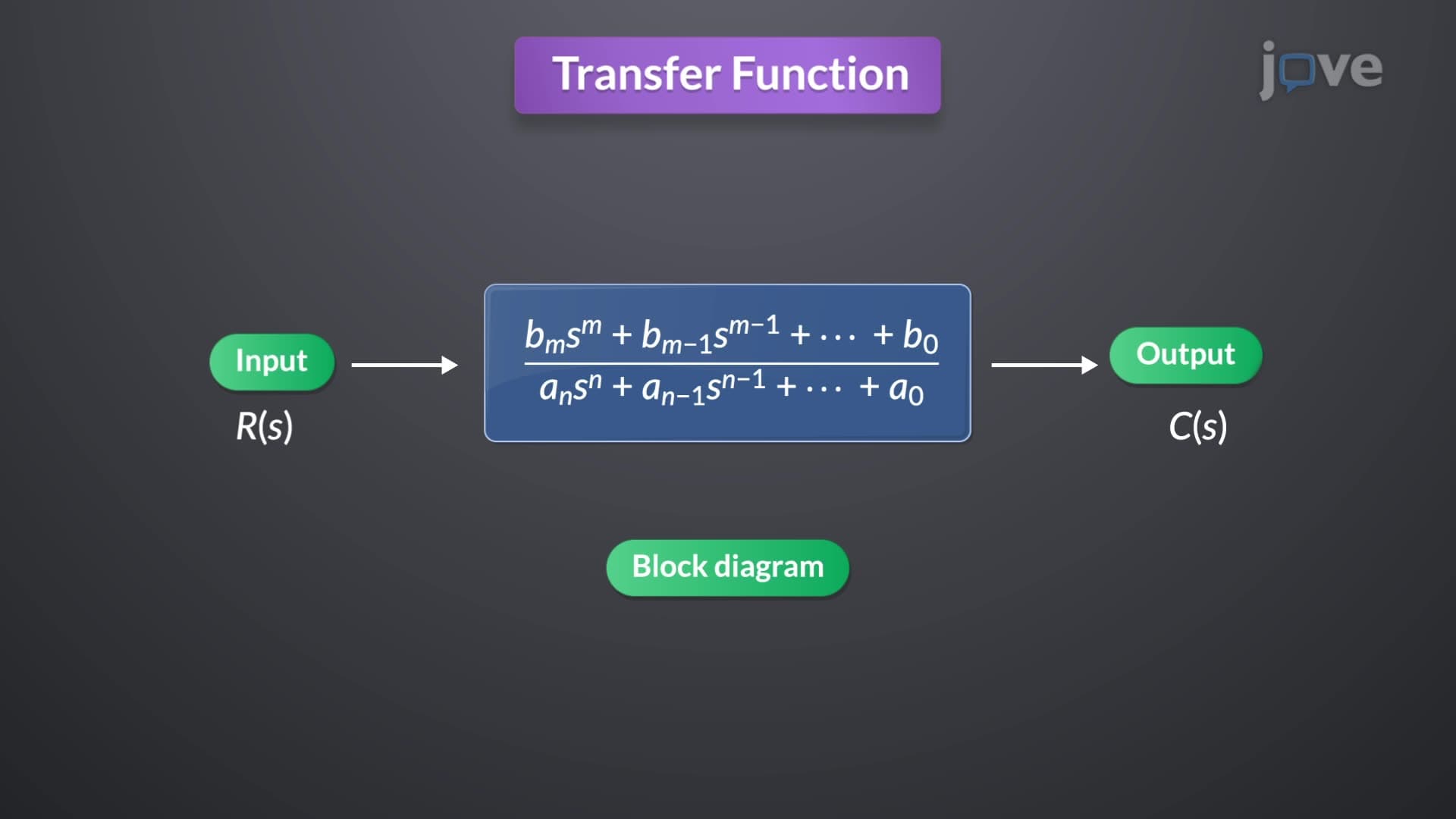
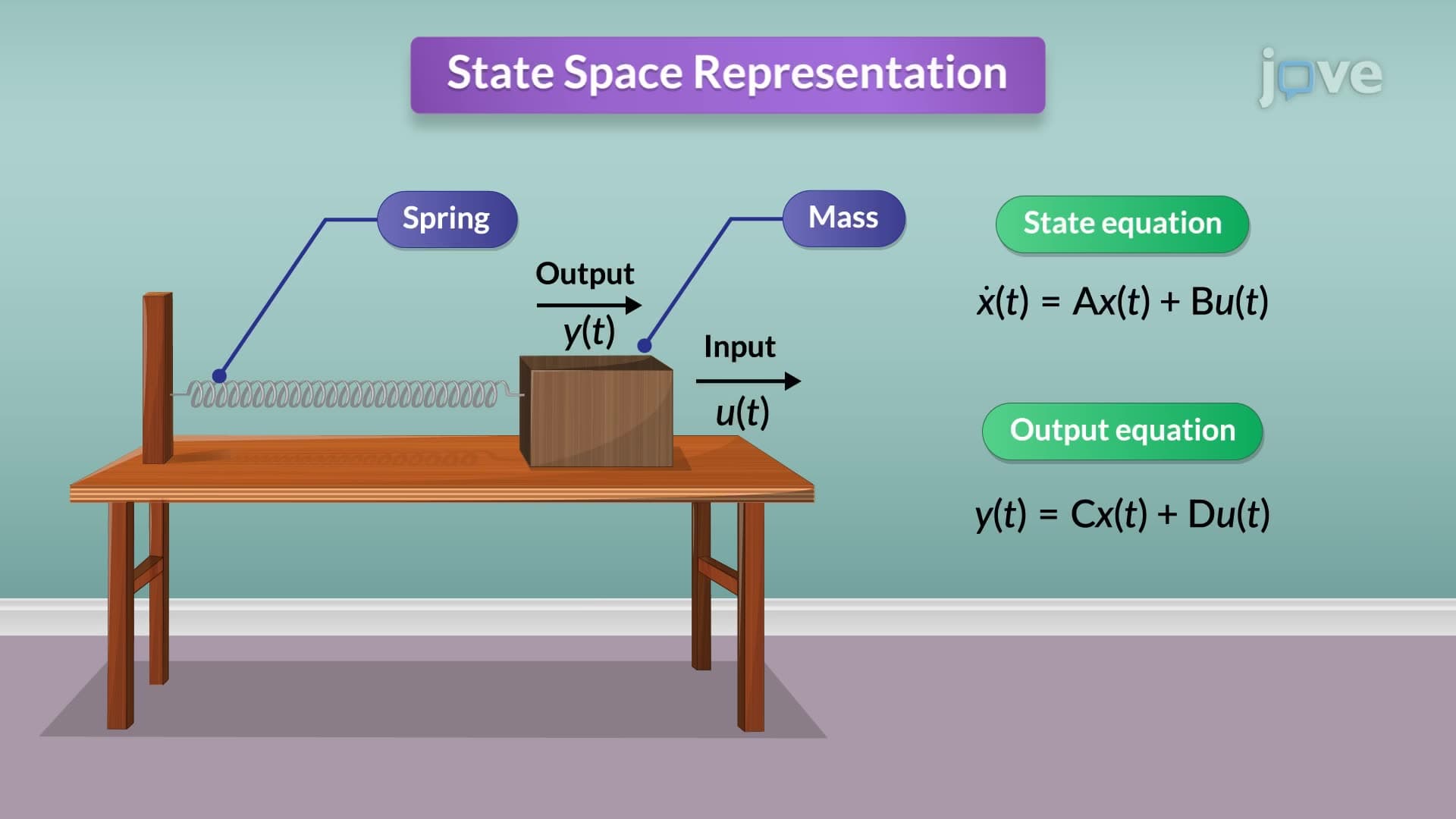
The transformation from transfer function to state-space representation forms the mathematical foundation of modern control systems engineering. While transfer functions excel at frequency-domain analysis using Laplace transforms, state-space models provide the time-domain framework essential for digital computer simulation and advanced control design.
This conversion process begins with an nth-order linear differential equation with constant coefficients. The key insight lies in strategically choosing state variables-typically the output and its first (n-1) derivatives. This selection creates a systematic approach where each state variable represents the derivative of the previous one, forming a cascading relationship that simplifies matrix representation.
The resulting state-space equations exhibit a distinctive pattern known as the phase-variable form. The state matrix A displays a unique structure: ones appear along the superdiagonal (representing derivative relationships), zeros fill most positions, and the bottom row contains the negative coefficients from the original differential equation. This structured approach ensures consistency and makes the conversion process predictable for engineering applications.
Consider how this applies to practical systems. When General Motors designs electronic stability control for vehicles, engineers convert tire dynamics transfer functions into state-space form. The resulting matrices enable real-time computation of wheel slip and steering corrections, demonstrating how mathematical abstraction translates into life-saving technology.
The systematic conversion follows a clear methodology. First, cross-multiply the transfer function to eliminate the denominator. Next, apply the inverse Laplace transform assuming zero initial conditions, yielding the corresponding differential equation. Then select state variables as successive derivatives of the output, creating the foundation for matrix representation.
This process proves invaluable for students preparing for Advanced Placement Physics or college-level control systems courses. The AP Physics exam often tests understanding of differential equations and their solutions, while undergraduate engineering curricula emphasize state-space methods for system analysis and design.
Modern control systems rely heavily on this mathematical framework. Boeing's autopilot systems convert aircraft dynamics from transfer functions to state-space form, enabling computers to process flight control algorithms efficiently. Similarly, Tesla's Autopilot feature uses state-space representations of vehicle dynamics to make split-second steering and braking decisions.
The conversion process also enables advanced techniques like optimal control and state estimation, which are essential for robotics, aerospace, and manufacturing applications. Students mastering these concepts prepare themselves for careers in cutting-edge technology sectors where mathematical precision drives innovation.
Related Micro-courses