Loading video…


 9 Concepts
 5K views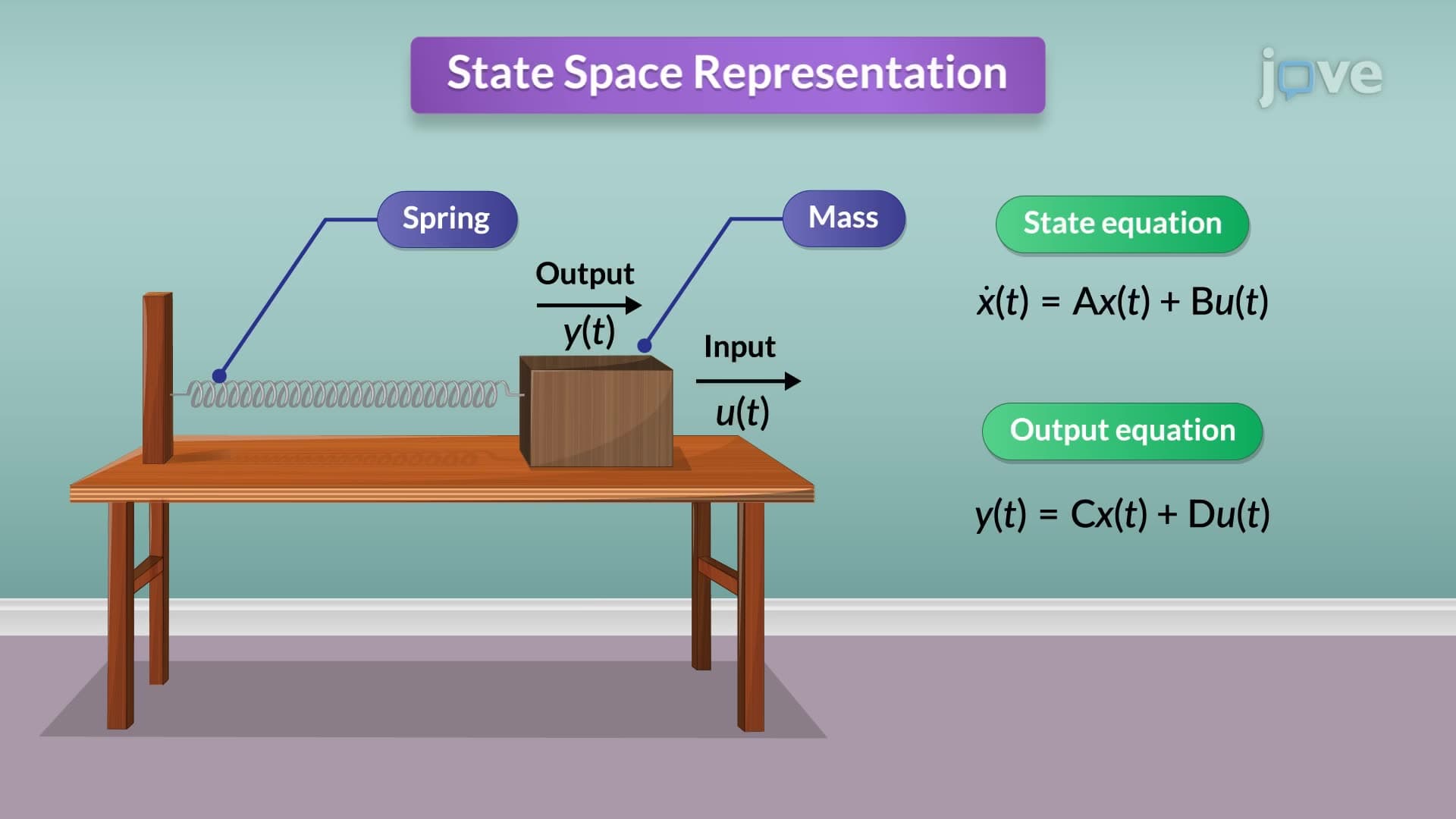

Video Summary: State Space to Transfer Function Explained
Ever wondered how NASA engineers predict spacecraft trajectories or how Tesla's autopilot systems respond to steering inputs? Time-domain linear approximation techniques form the mathematical backbone of these complex control systems. In Boeing's flight control systems, engineers routinely convert state-space models to transfer functions to analyze aircraft stability and response characteristics. The State Space To Transfer Function Explained process involves applying Laplace transforms to state equations, solving for system variables, and deriving the transfer function matrix that connects system outputs to inputs. Watch the full video on JoVE Coach to master this concept with expert-led visuals and step-by-step explanations.
The transformation from state-space representation to transfer function form represents one of the most powerful time-domain linear approximation techniques in modern control systems engineering. This mathematical process enables engineers at companies like SpaceX to design rocket guidance systems and analyze their stability characteristics using frequency-domain tools.
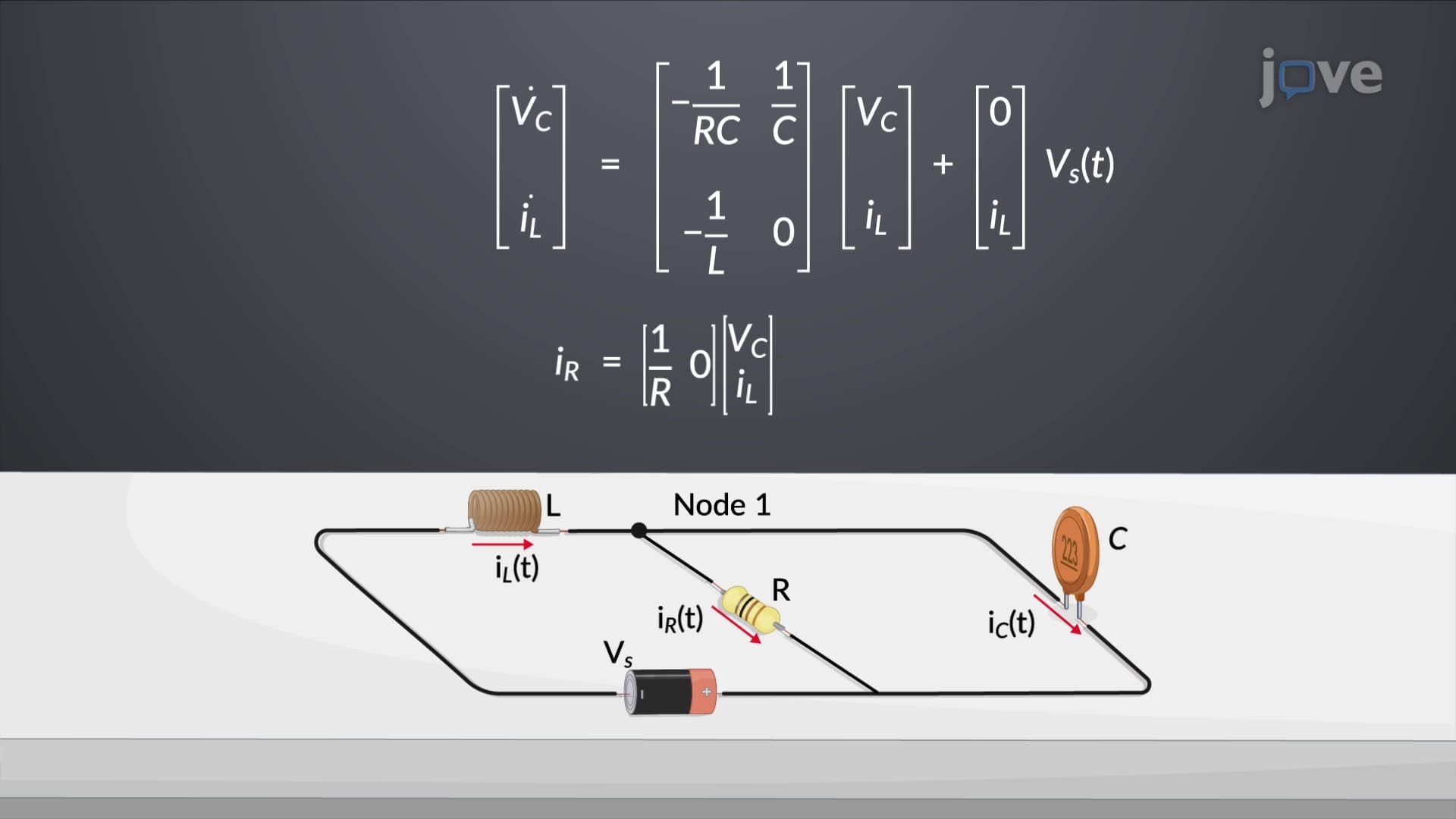
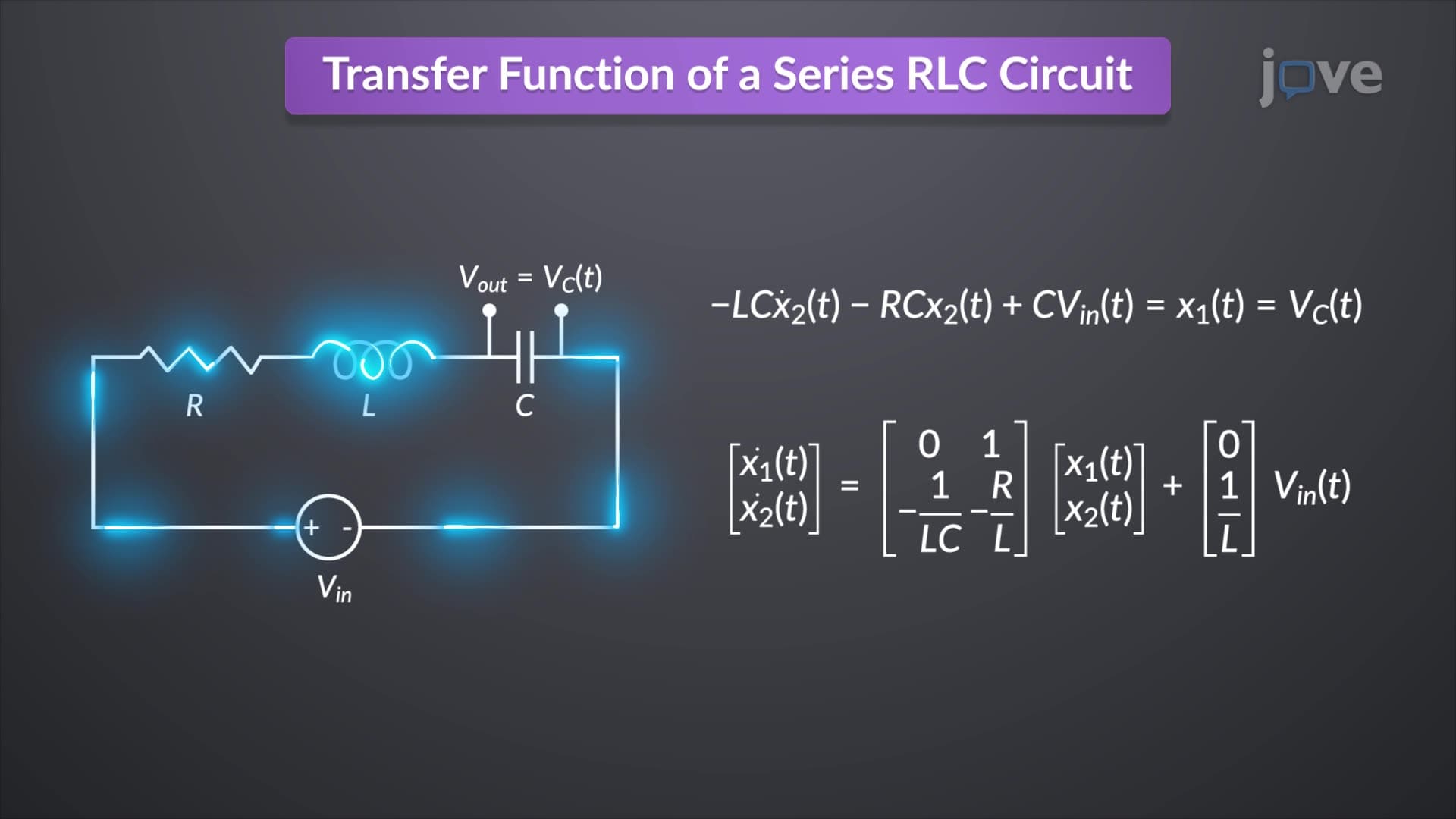
The conversion process begins with standard state-space equations: dx/dt = Ax + Bu and y = Cx + Du, where x represents the state vector, u is the input, and y is the output. Time-domain linear approximation techniques explained through this framework show how engineers apply Laplace transforms assuming zero initial conditions, transforming these equations to sX(s) = AX(s) + BU(s) and Y(s) = CX(s) + DU(s).
The critical step involves solving for X(s) = (sI - A)^(-1)BU(s), where I represents the identity matrix. This algebraic manipulation requires computing the inverse of (sI - A), a process that aerospace engineers at Lockheed Martin routinely perform when designing satellite attitude control systems.
Substituting the expression for X(s) into the output equation yields Y(s) = [C(sI - A)^(-1)B + D]U(s). The bracketed term represents the transfer function matrix G(s), establishing the fundamental relationship between system outputs and inputs. How to understand time-domain linear approximation techniques becomes clearer when students recognize that this matrix encapsulates the system's dynamic behavior in frequency domain.
This conversion technique appears frequently in AP Physics C: Mechanics problems involving damped oscillators and in undergraduate control systems courses at institutions like MIT and Stanford. Students preparing for the Fundamentals of Engineering (FE) exam encounter these concepts in the controls section, where understanding time-domain linear approximation techniques overview proves essential for solving multi-degree-of-freedom systems.
Modern applications span from Google's autonomous vehicle control algorithms to General Electric's wind turbine pitch control systems, where engineers must analyze system stability and performance across multiple operating conditions.
Related Micro-courses