Loading video…


 15 Concepts
 651 views

Video Summary: Evaluating Limits by Direct Substitution Explained
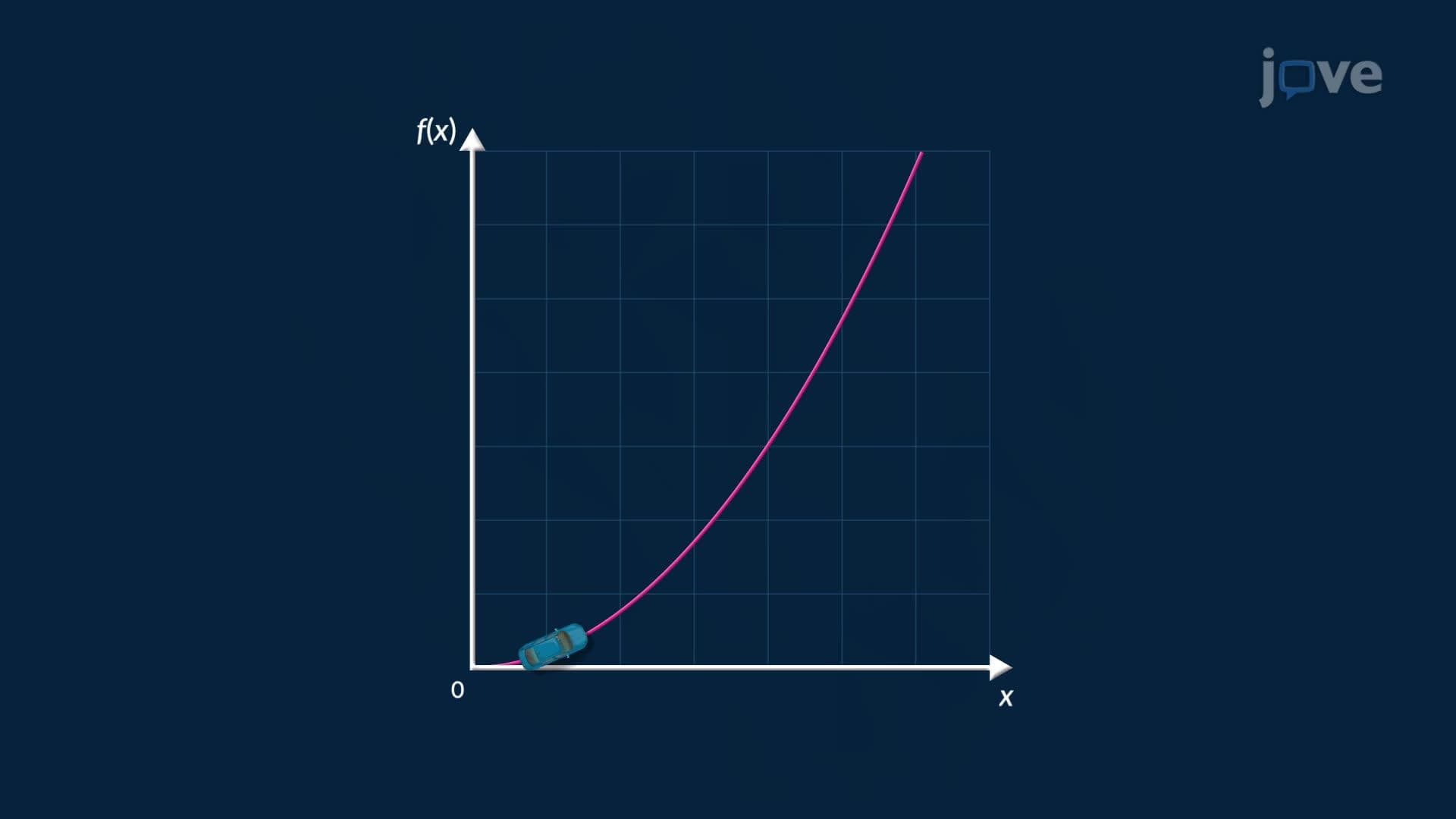
Ever wondered how NASA calculates a rocket's exact position at launch? Evaluating limits by direct substitution makes this possible by finding precise values when functions behave smoothly. Consider tracking a car's position on Interstate 95 using a quadratic function-as time approaches 4 seconds, direct substitution gives the exact location without complex calculations. This fundamental calculus technique works when functions are continuous, allowing mathematicians and engineers to substitute values directly into expressions. Watch the full video on JoVE Coach to master this concept with expert-led visuals and step-by-step explanations.
Evaluating limits by direct substitution represents one of calculus's most straightforward yet powerful techniques. When a function exhibits continuous behavior-meaning no breaks, holes, or jumps exist at the point of interest-mathematicians can determine limits by simply substituting the target value directly into the function. This method works because continuous functions maintain predictable behavior as input values approach specific points.
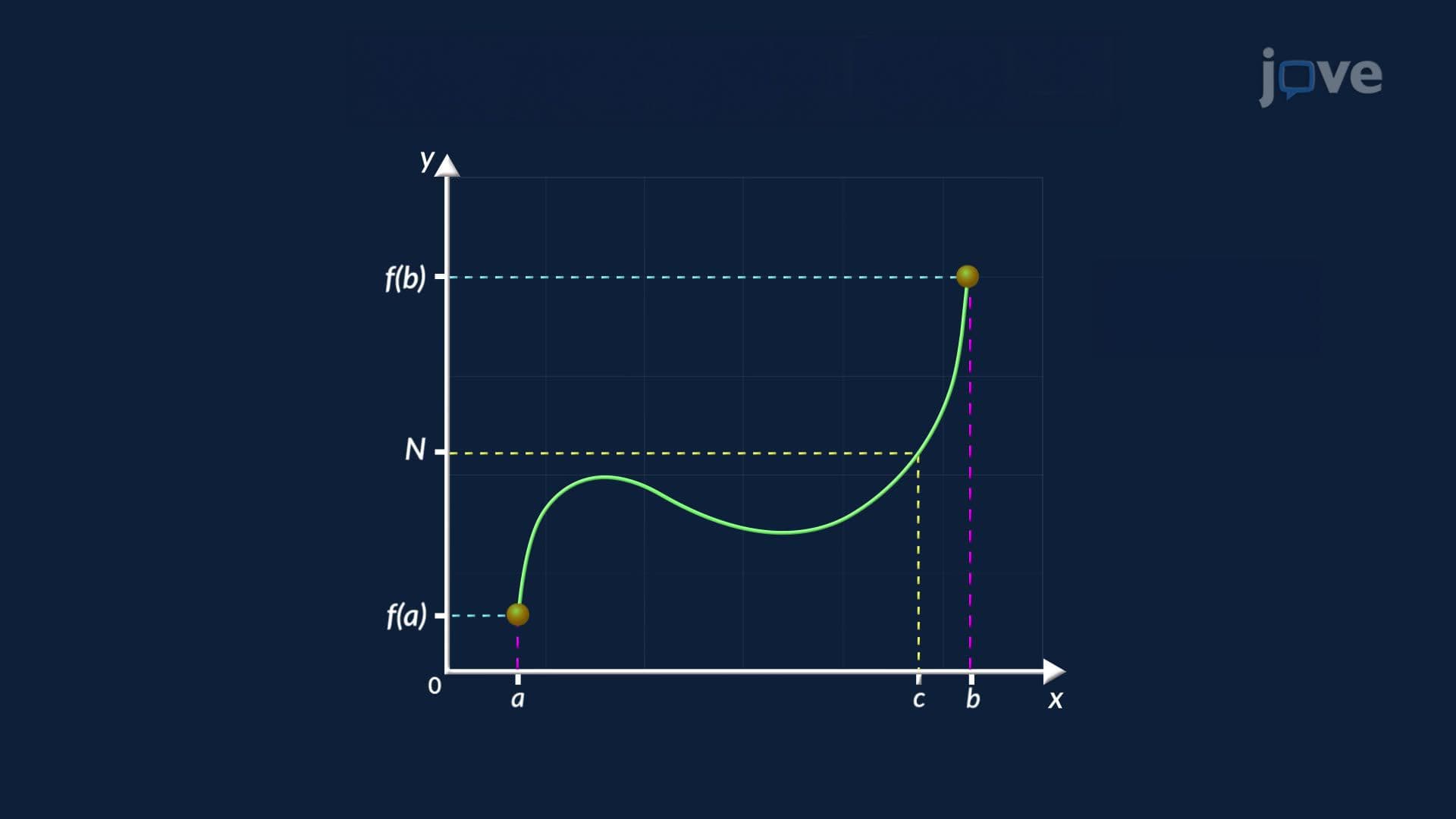
The mathematical foundation rests on continuity. For a function f(x) to be continuous at point c, three conditions must be satisfied: the function must be defined at c, the limit as x approaches c must exist, and this limit must equal f(c). When these conditions are met, direct substitution becomes valid and reliable.
Consider NASA's trajectory calculations for the Mars Perseverance rover. Engineers use position functions to model spacecraft movement through space. If the position function P(t) = 2t² + 3t + 1 describes the rover's position relative to Earth, finding its location as time approaches 5 hours requires evaluating the limit. Since polynomial functions are continuous everywhere, direct substitution yields P(5) = 2(25) + 3(5) + 1 = 66 units from the reference point.
Similarly, pharmaceutical companies modeling drug concentration in bloodstream use continuous functions. A concentration function C(t) = 100e^(-0.5t) remains continuous, allowing direct substitution to determine drug levels at specific times during clinical trials.
Students encountering direct substitution problems should first verify function continuity at the target point. Check for common discontinuities like division by zero, undefined logarithms, or square roots of negative numbers. If none exist, proceed with substitution.
For AP Calculus AB and BC exams, direct substitution problems frequently appear in multiple-choice and free-response sections. College calculus courses emphasize this technique as foundational knowledge for more advanced limit evaluation methods like L'Hôpital's rule or algebraic manipulation.
Polynomial functions, including linear, quadratic, and cubic expressions, always permit direct substitution since they're continuous everywhere. Rational functions allow direct substitution except where denominators equal zero. Exponential and logarithmic functions maintain continuity within their domains, making direct substitution applicable when input values fall within acceptable ranges.
Trigonometric functions like sine, cosine, and tangent exhibit continuity throughout their domains, enabling direct substitution for most limit problems. However, students must recognize points of discontinuity, such as tangent function vertical asymptotes at odd multiples of π/2.
Related Micro-courses