Loading video…


 15 Concepts
 651 views

Video Summary: What Is Limits with Oscillating Discontinuities
Ever wonder why a helicopter rotor blade appears stationary on film despite spinning at incredible speeds? This visual illusion mirrors the mathematical concept of limits with oscillating discontinuities, where functions behave unpredictably as they approach certain values. Consider the classic example of sin(1/x) as x approaches zero, like a NASA rocket's vibration sensor readings during engine startup, the values oscillate wildly without settling on any single answer. Watch the full video on JoVE Coach to master this concept with expert-led visuals and step-by-step explanations.
Limits with oscillating discontinuities represent one of the most fascinating and challenging concepts in calculus. Unlike standard limits that approach a specific value or diverge to infinity, these functions exhibit wild, unpredictable behavior that never settles down. The mathematical foundation lies in functions that oscillate with increasing frequency as they approach a particular point, making it impossible to determine a single limiting value.
The quintessential example of oscillating discontinuities is f(x) = sin(1/x) as x approaches 0. As x gets closer to zero, the term 1/x grows larger in magnitude, causing the sine function to cycle through its complete range of -1 to 1 with increasing rapidity. This creates an oscillating pattern that becomes infinitely dense near x = 0, much like how a seismograph reading during a major California earthquake shows increasingly rapid fluctuations.
This behavior appears frequently on AP Calculus AB and BC exams, where students must recognize that despite the function being bounded between -1 and 1, no limit exists because the function never converges to a single value. College calculus courses at institutions like UCLA and MIT emphasize this concept as a cornerstone for understanding more complex discontinuity types.
Understanding oscillating discontinuities requires comparing them with removable and jump discontinuities. While a removable discontinuity has a limit that exists but differs from the function value, and a jump discontinuity has different left and right limits, oscillating discontinuities have no definable limit at all. This distinction proves crucial for success on standardized tests like the SAT Subject Test in Mathematics Level 2, where students must identify discontinuity types graphically.
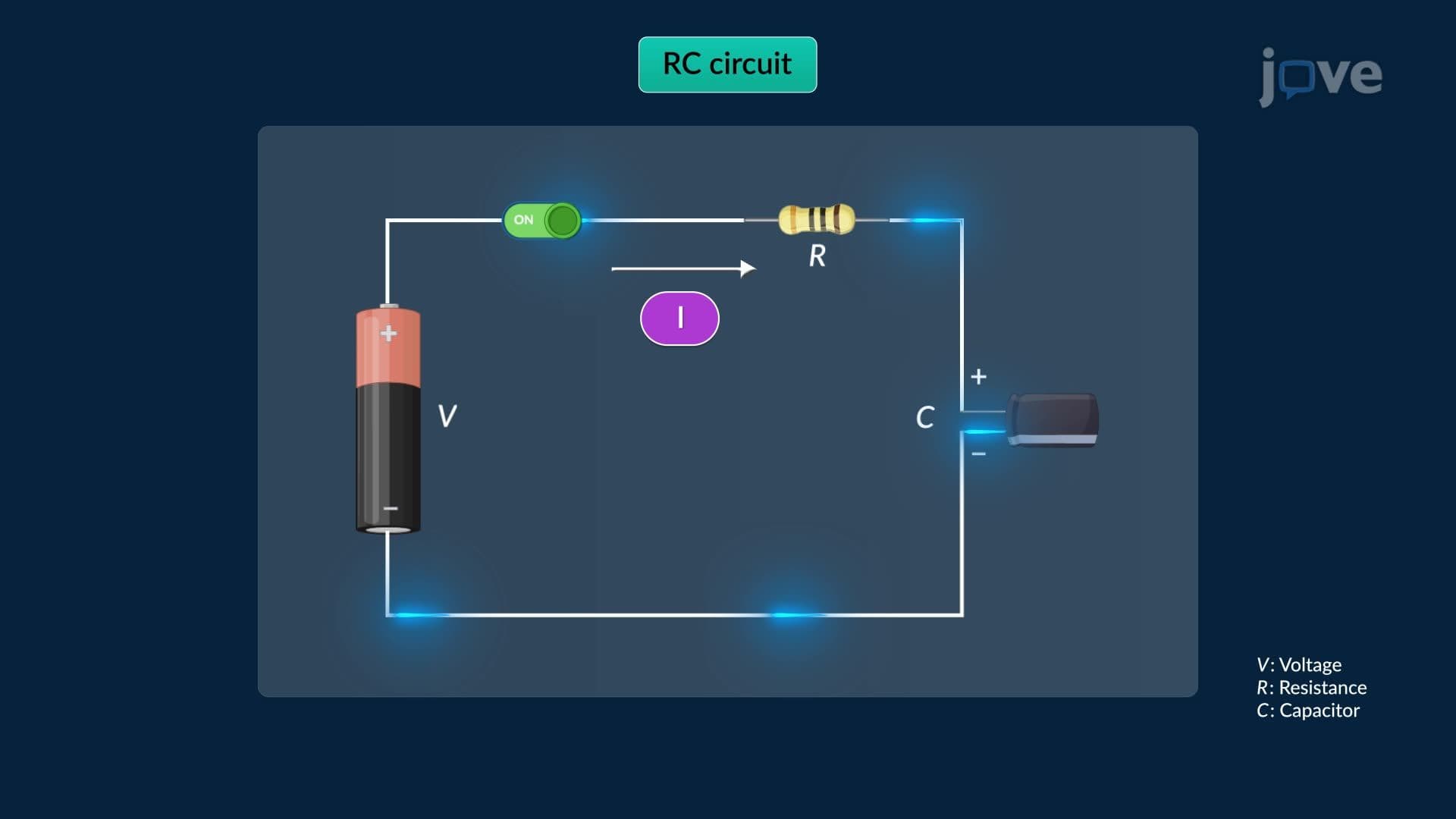
Oscillating discontinuities appear throughout engineering and physics applications. Consider the behavior of electronic circuits during power switching, where voltage readings can oscillate rapidly before stabilizing. Similarly, fluid dynamics engineers at companies like Boeing encounter oscillating pressure readings when analyzing airflow over wing surfaces at critical angles of attack. These real-world examples help students understand why mastering this mathematical concept proves essential for STEM careers.
Related Micro-courses