Loading video…

 15 Concepts
 651 views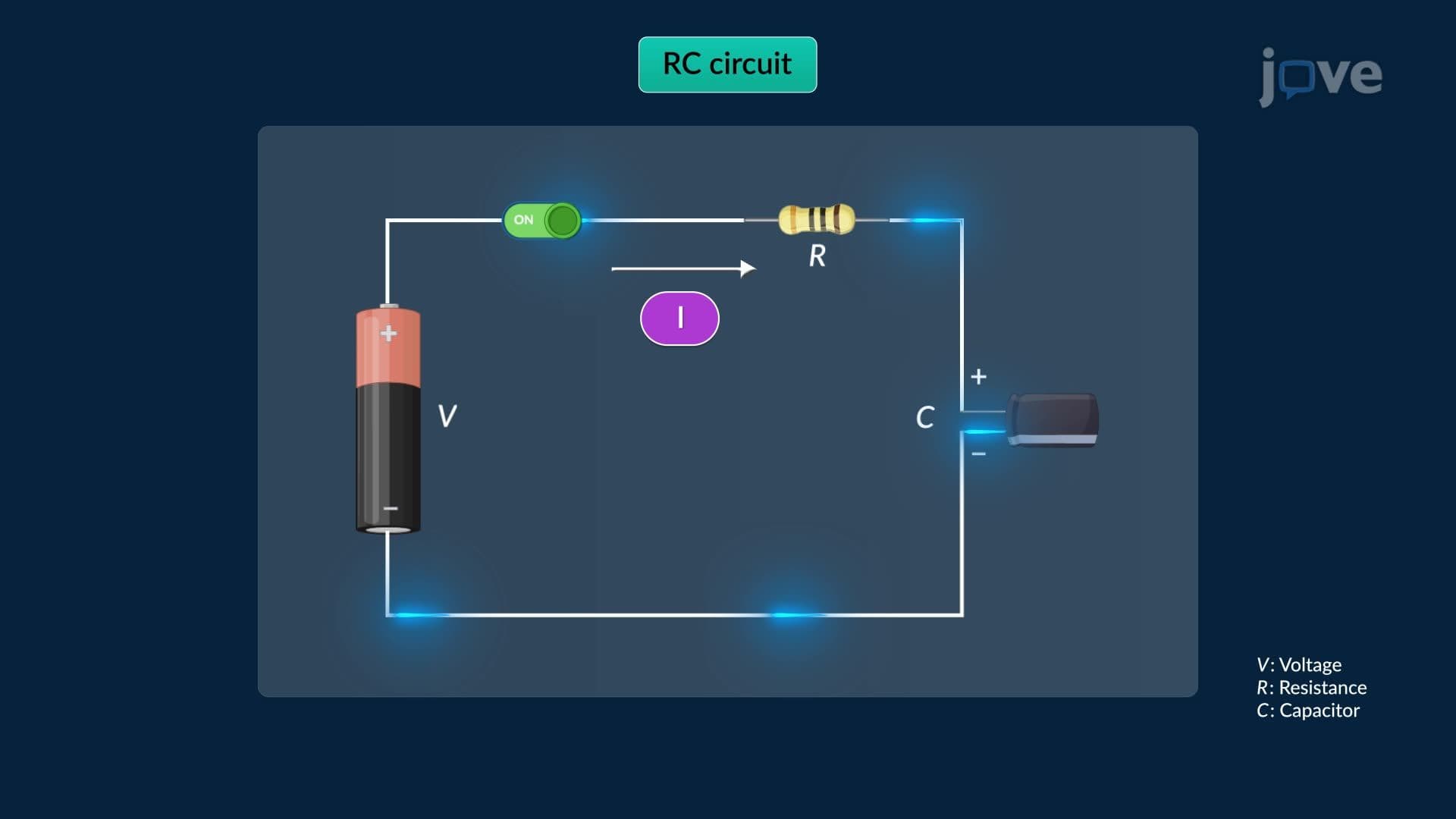

Video Summary: What Is Limits at Infinity
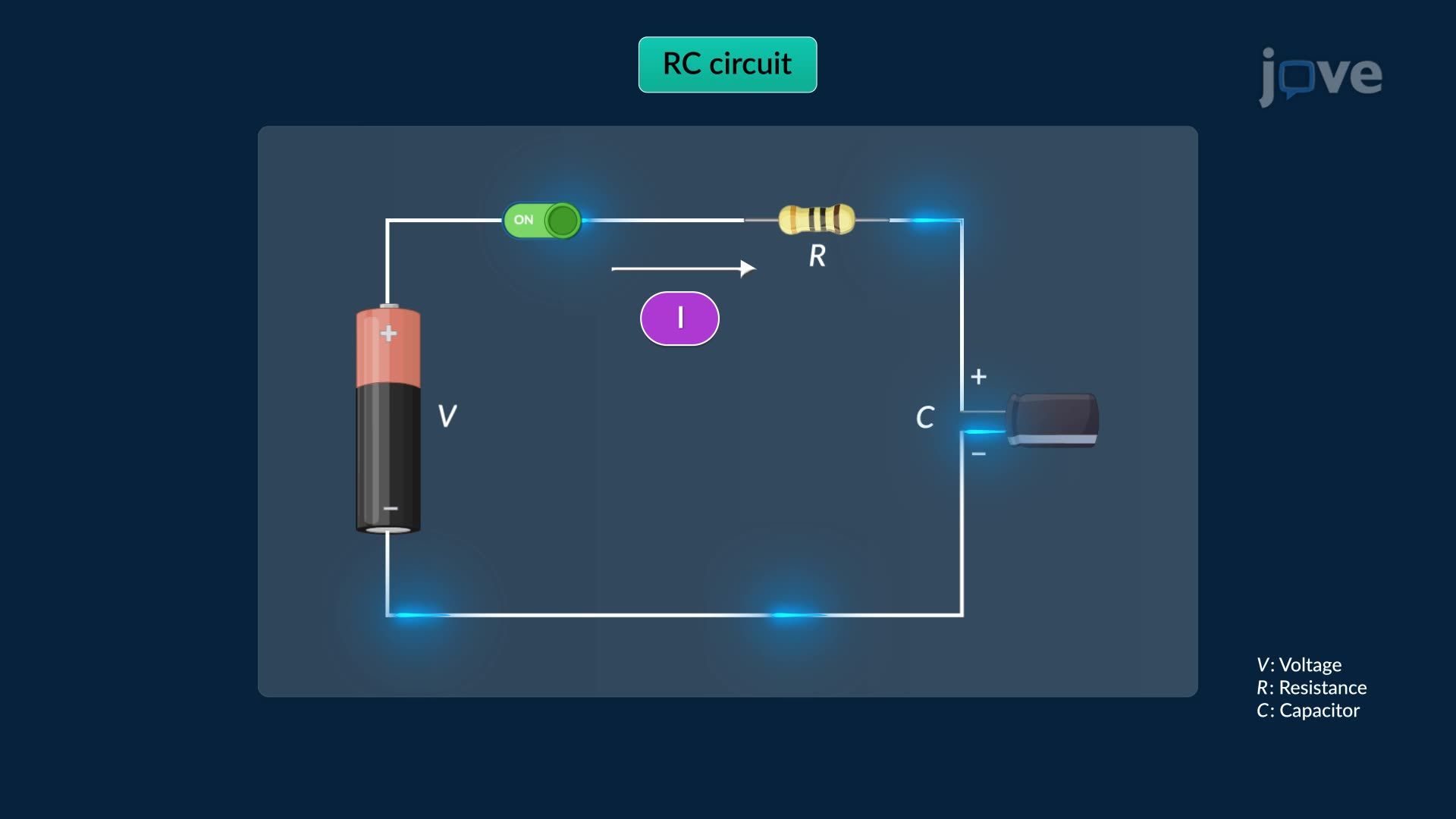
Ever wonder why your smartphone battery eventually stops charging at 100%? This phenomenon relates directly to limits at infinity, a fundamental calculus concept where functions approach specific values as variables grow infinitely large. Just like how a capacitor in an RC circuit reaches maximum charge over time, many real-world systems exhibit this behavior. Understanding What is Limits At Infinity helps students analyze everything from population growth models to electronic circuits in AP Calculus and college mathematics. Watch the full video on JoVE Coach to master this concept with expert-led visuals and step-by-step explanations.
Limits at infinity examine how functions behave as the input variable approaches positive infinity (∞) or negative infinity (-∞). Unlike standard limits where we approach a finite number, these limits investigate function behavior at the "ends" of the number line. This concept is crucial for AP Calculus AB/BC students and appears frequently on college calculus exams.
Functions exhibit three primary behaviors as x approaches infinity. First, unbounded growth or decay occurs when functions like x³ increase or decrease without limit. As x approaches positive infinity, x³ grows infinitely large, while approaching negative infinity yields infinitely negative values.
Second, convergence to finite values happens when functions approach specific numbers. The function 1/x + 2 demonstrates this beautifully, as x increases, 1/x approaches zero, leaving the function approaching 2. This creates a horizontal asymptote at y = 2, representing the function's limiting value.
Third, oscillating behavior prevents limit existence. The sine function continuously oscillates between -1 and 1, never settling on a specific value, so its limit at infinity is undefined.
Limits at infinity appear throughout engineering and science. In electrical engineering, RC circuits demonstrate this concept perfectly. When charging a capacitor through a resistor, the charge follows Q(t) = Q_max(1 - e^(-t/RC)). As time approaches infinity, the exponential term approaches zero, and charge approaches Q_max, the horizontal asymptote.
Population biology provides another example. Logistic growth models like P(t) = K/(1 + ae^(-rt)) show populations approaching carrying capacity K as t approaches infinity. This horizontal asymptote represents maximum sustainable population.
For AP Calculus and college exams, focus on rational functions first. When evaluating lim(x→∞) of f(x)/g(x), compare the degrees of numerator and denominator polynomials. If degrees are equal, the limit equals the ratio of leading coefficients. If the denominator's degree is higher, the limit is zero. If the numerator's degree is higher, the limit is infinite.
Practice identifying horizontal asymptotes graphically and algebraically. Remember that functions can cross horizontal asymptotes, they only represent long-term behavior, not barriers the function cannot cross.
Related Micro-courses