Loading video…

 15 Concepts
 651 views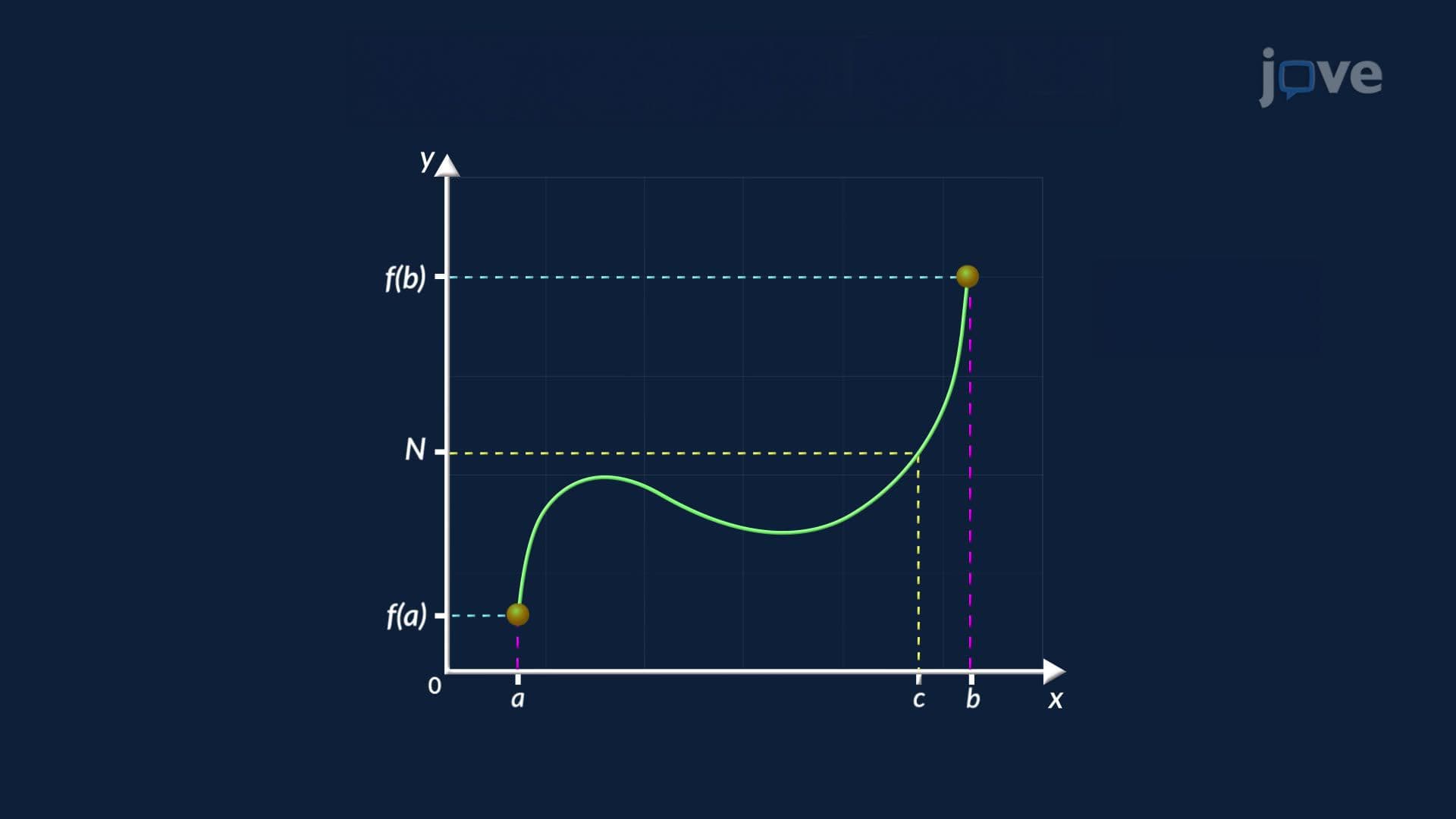

Video Summary: What Is the Intermediate Value Theorem
Ever wonder how NASA engineers guarantee a spacecraft will hit its target altitude during launch? The Intermediate Value Theorem explains why continuous functions must pass through every value between their endpoints. Consider a rocket's altitude function: if it starts at sea level (0 feet) and reaches 50,000 feet, this mathematical principle guarantees it crosses every altitude in between, including the critical 10,000-foot mark for stage separation. Watch the full video on JoVE Coach to master this concept with expert-led visuals and step-by-step explanations.
The Intermediate Value Theorem represents one of calculus's most intuitive yet powerful principles. This theorem bridges the gap between abstract mathematical theory and practical problem-solving, making it essential for students preparing for AP Calculus, SAT Subject Tests, and college-level mathematics courses.
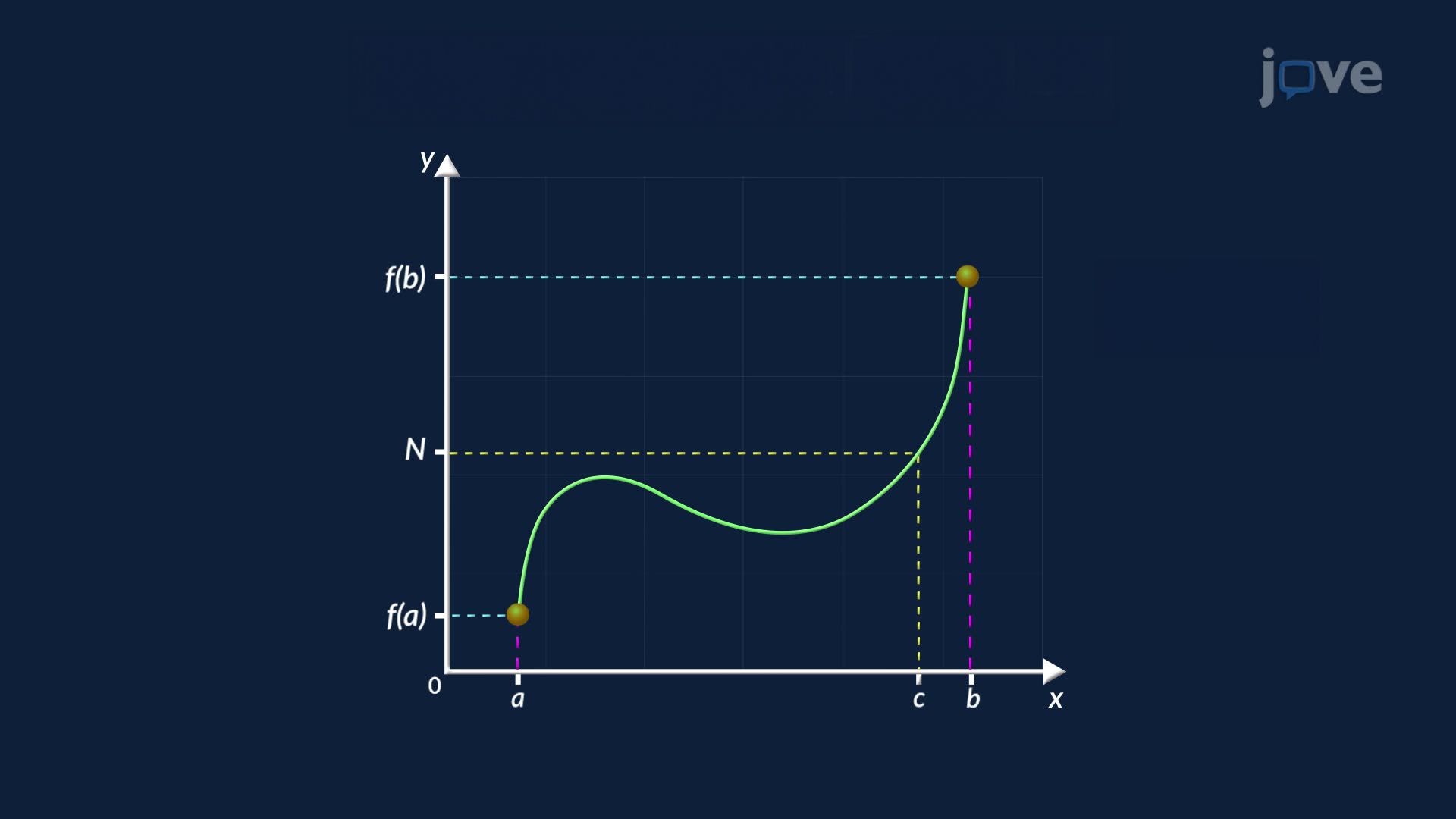
The theorem's formal statement requires three key conditions: a function f must be continuous on a closed interval [a, b], and for any value N between f(a) and f(b), there exists at least one point c in the open interval (a, b) where f(c) = N. This seemingly simple statement has profound implications for mathematical analysis and real-world applications.
Understanding the intermediate value theorem definition begins with recognizing why continuity is crucial. Continuous functions have no breaks, jumps, or holes in their graphs. This property ensures that as the function moves from one value to another, it must pass through every intermediate value along the way.
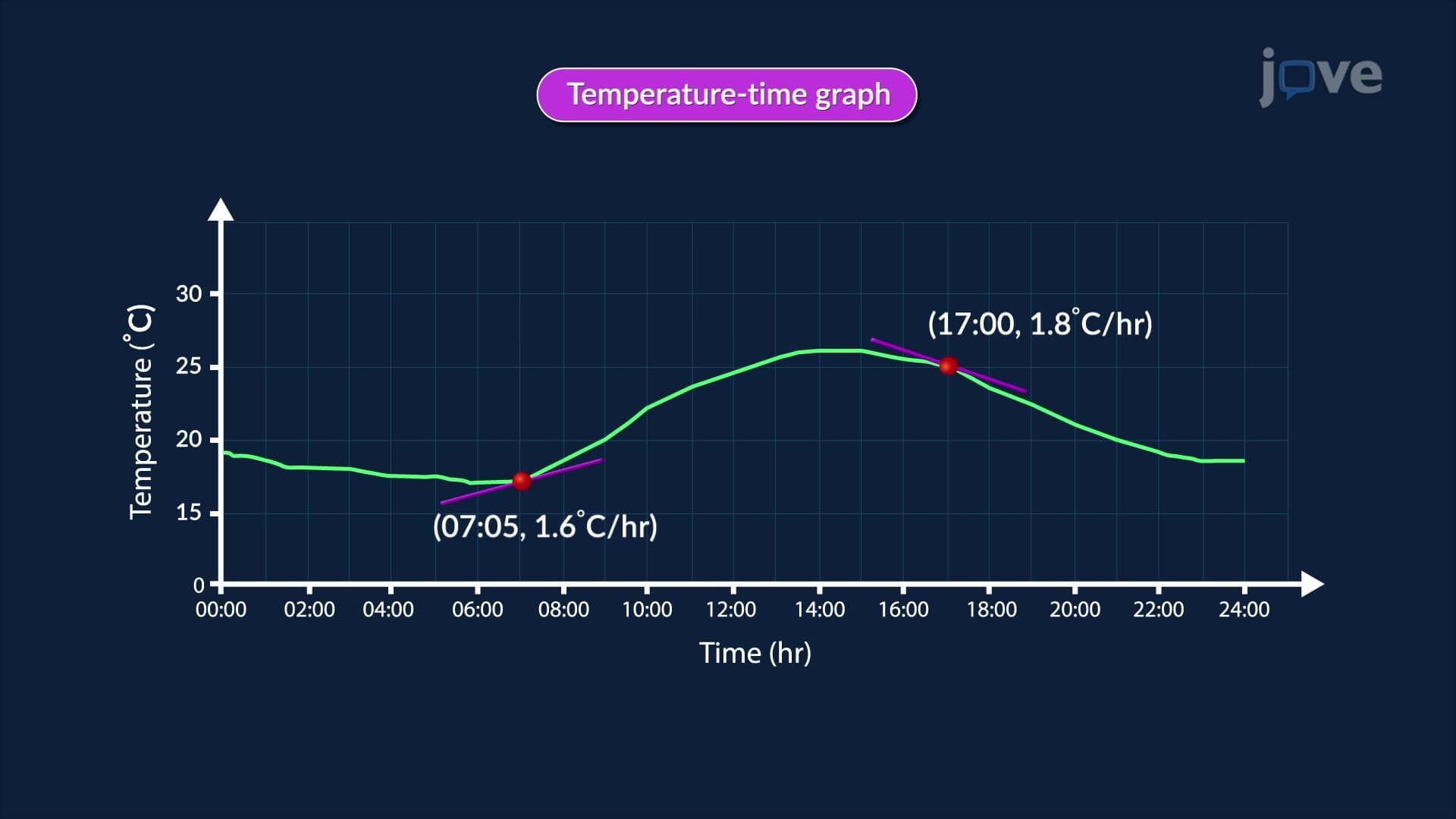
Consider a temperature function modeling weather patterns in Chicago throughout a day. If the temperature is 32°F at 6 AM and 68°F at 6 PM, and temperature changes continuously, the Intermediate Value Theorem guarantees that every temperature between 32°F and 68°F occurred at some point during the day. This includes the critical 50°F mark that determines whether morning frost forms.
What is the intermediate value theorem in detail becomes clearer when examining its role in locating function zeros. This application proves invaluable for engineering calculations, economic modeling, and scientific research. If a polynomial function has negative values at one endpoint and positive values at another, the theorem guarantees at least one zero exists within that interval.
For instance, engineers designing suspension bridges use polynomial functions to model cable tension under various load conditions. When analyzing safety factors, they need to find where stress functions equal zero to identify equilibrium points. The Intermediate Value Theorem provides mathematical certainty that these critical points exist.
Students encountering this theorem in AP Calculus AB/BC exams or college midterms should focus on identifying the three essential components: continuity, closed interval, and intermediate values. Practice problems often involve polynomial, trigonometric, or exponential functions where students must verify continuity and apply the theorem to locate specific values or prove existence statements.
The theorem also appears frequently in MCAT Physical Sciences sections, where understanding continuous functions helps solve physics problems involving motion, thermodynamics, and wave behavior.
Related Micro-courses