Loading video…


 12 Concepts
 9.6K views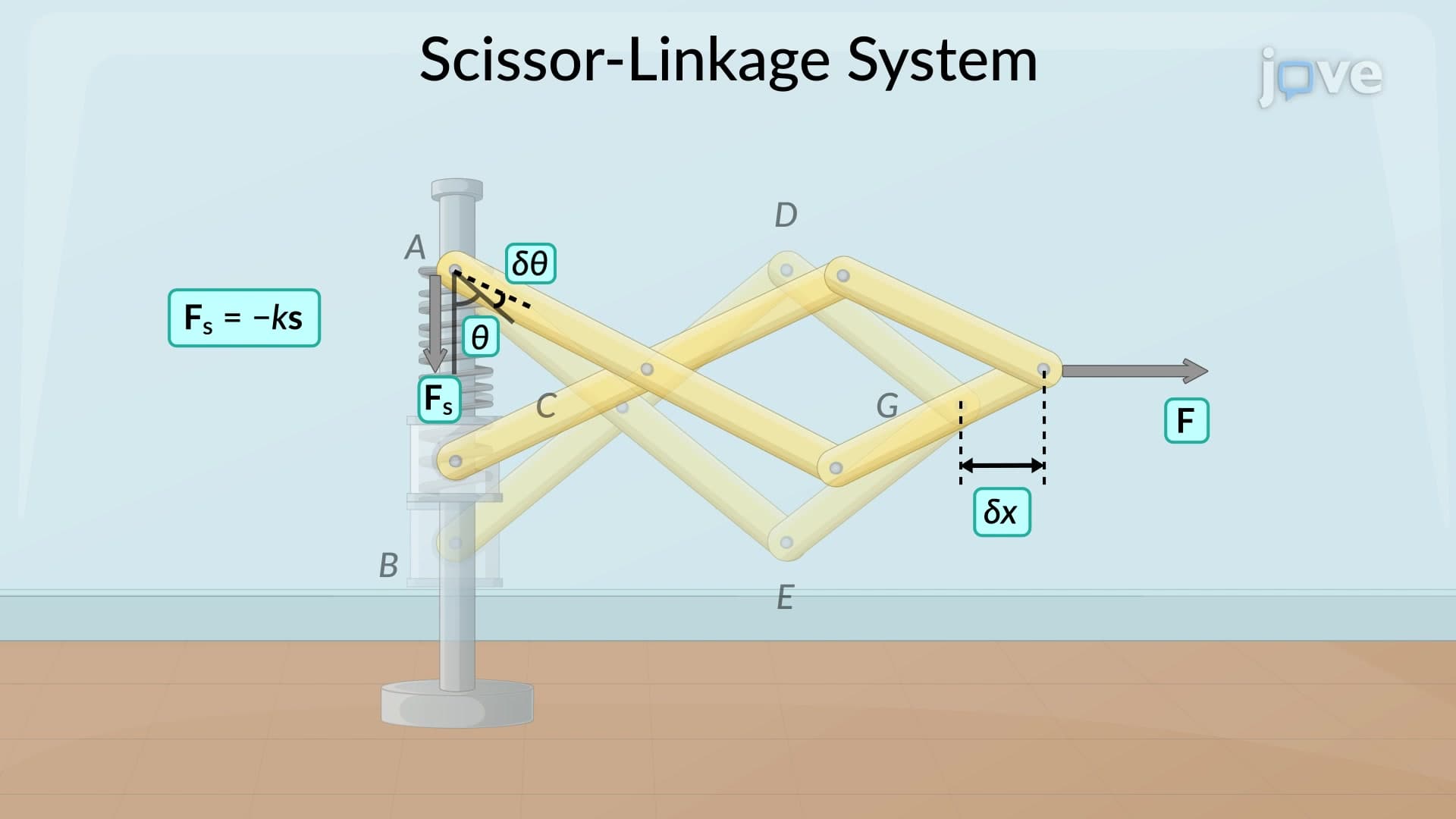

Video Summary: Principle of Virtual Work Problem Solving Explained
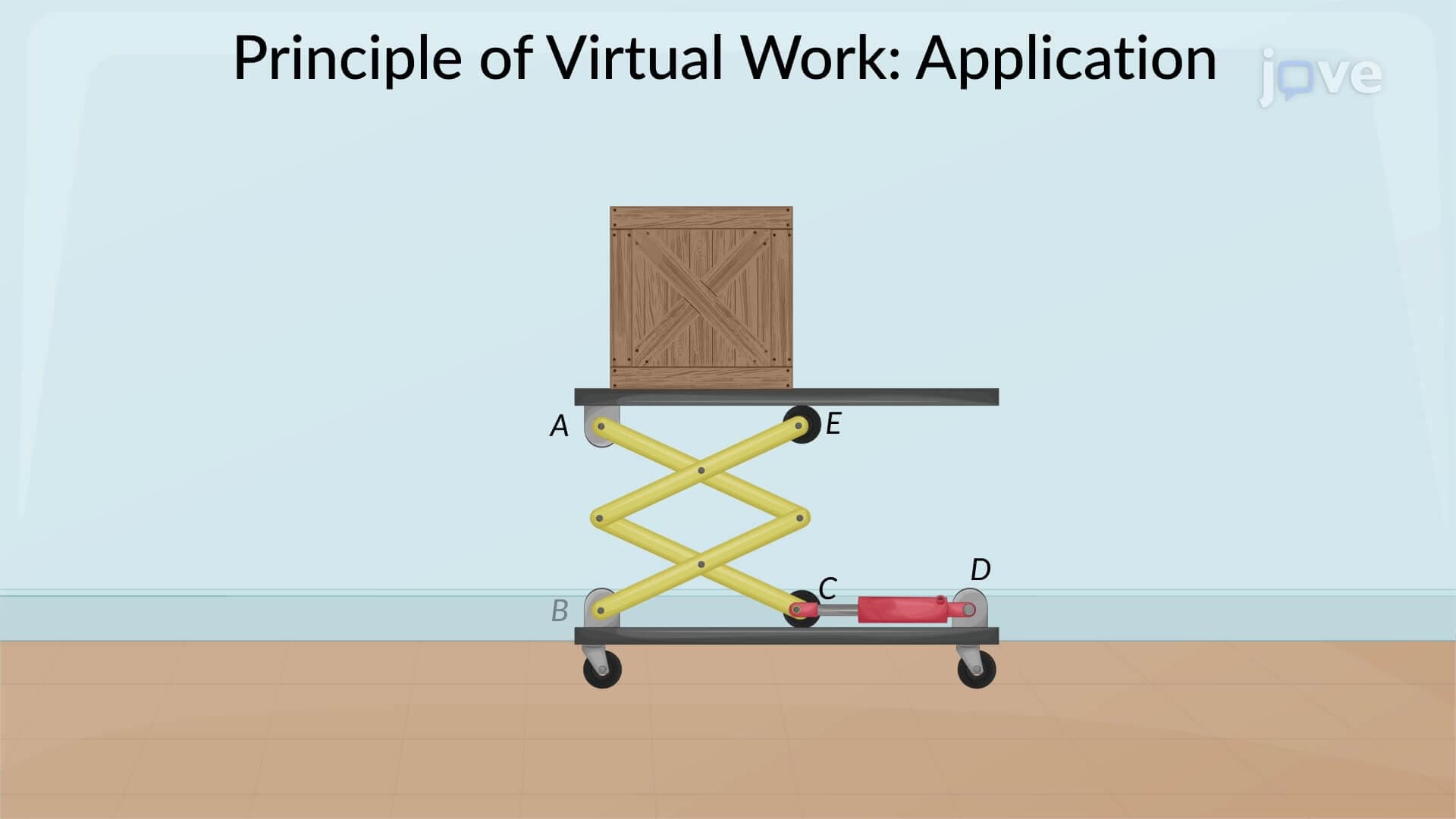
Ever wonder how engineers design stable robotic arms or construction cranes that maintain perfect balance? Principle of virtual work problem solving reveals the elegant mathematical approach behind these engineering marvels. This powerful method analyzes forces in mechanical systems like scissors linkages connected to springs, similar to the hydraulic lifts used in automotive repair shops across America. The Principle of Virtual Work Problem Solving Explained demonstrates how imaginary displacements help determine equilibrium conditions in complex mechanical systems. Watch the full video on JoVE Coach to master this concept with expert-led visuals and step-by-step explanations.
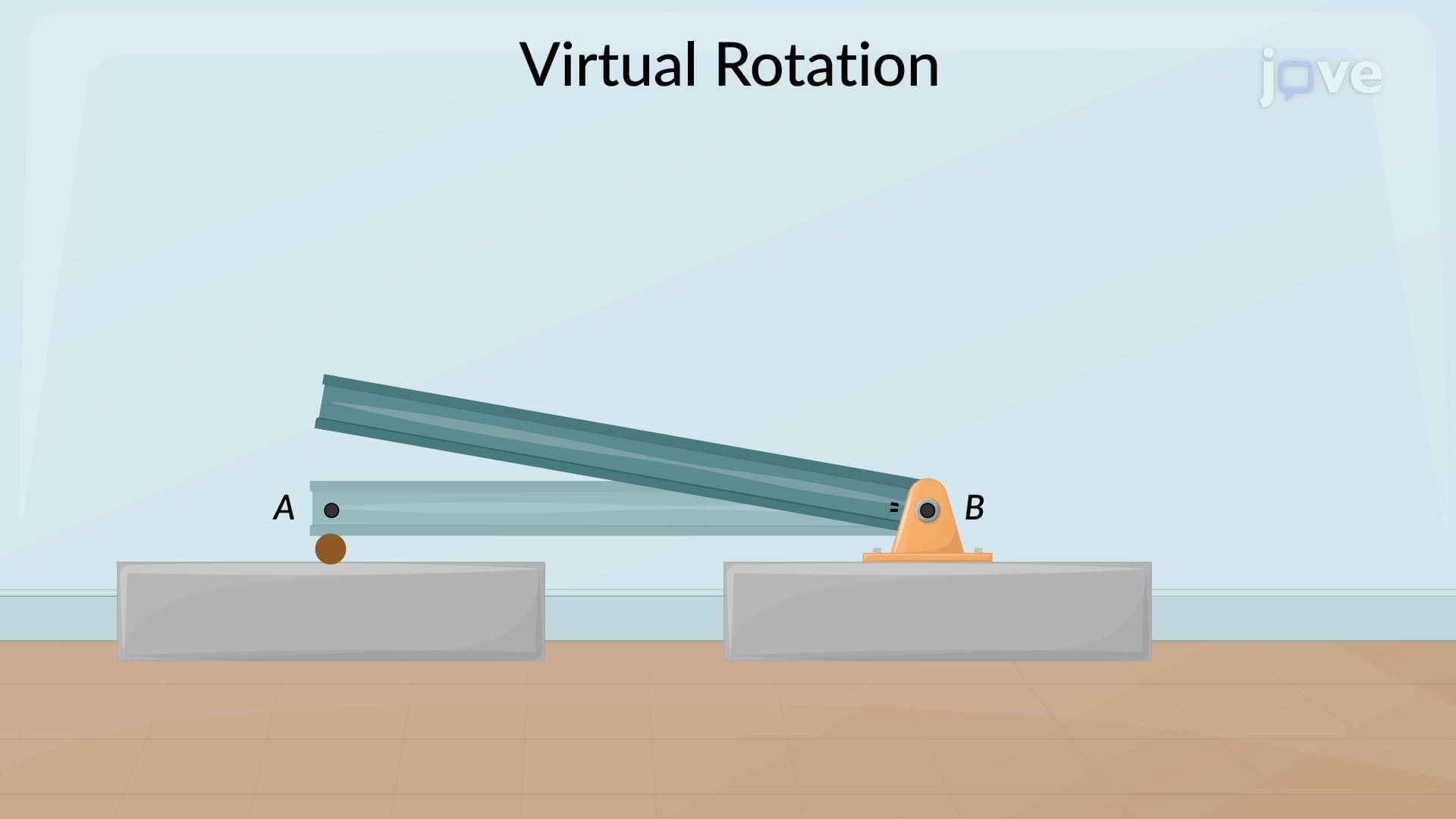
The principle of virtual work problem solving represents a fundamental approach in mechanical engineering for analyzing static equilibrium conditions. Unlike traditional force balance methods, this technique uses imaginary (virtual) displacements to determine equilibrium states without actually moving the system. This method proves particularly valuable when dealing with complex linkage mechanisms where direct force analysis becomes cumbersome.
Virtual displacements form the cornerstone of this analytical approach. When examining a scissors linkage system, engineers establish position coordinates for critical points relative to a fixed reference frame. By differentiating these position functions, we obtain virtual displacement expressions that describe how each point would move during an infinitesimal displacement. This mathematical framework appears frequently in AP Physics C mechanics problems and forms essential groundwork for college-level statics courses.
The power of virtual work analysis lies in systematically evaluating how different forces contribute to system equilibrium. External applied forces typically perform positive work when acting in the same direction as virtual displacement, while internal forces like spring reactions often generate negative work when opposing the displacement direction. For scissors linkages with spring attachments, the spring force calculation requires determining compression or extension from the unstretched configuration, then applying Hooke's law: F(spring) = k × displacement.
This problem-solving methodology finds extensive application in American engineering practice. Automotive suspension systems, construction crane designs, and robotic manipulator arms all rely on virtual work principles for optimal design. Students preparing for the Fundamentals of Engineering (FE) exam frequently encounter virtual work problems in the statics and mechanics sections. The method's elegance lies in reducing complex multi-force problems to a single equilibrium equation, making it invaluable for preliminary design calculations in mechanical systems.
Understanding virtual work problem solving provides students with powerful analytical tools applicable across mechanical engineering disciplines, from simple static structures to complex dynamic machinery found throughout American manufacturing industries.
Related Micro-courses