Loading video…


 12 Concepts
 9.6K views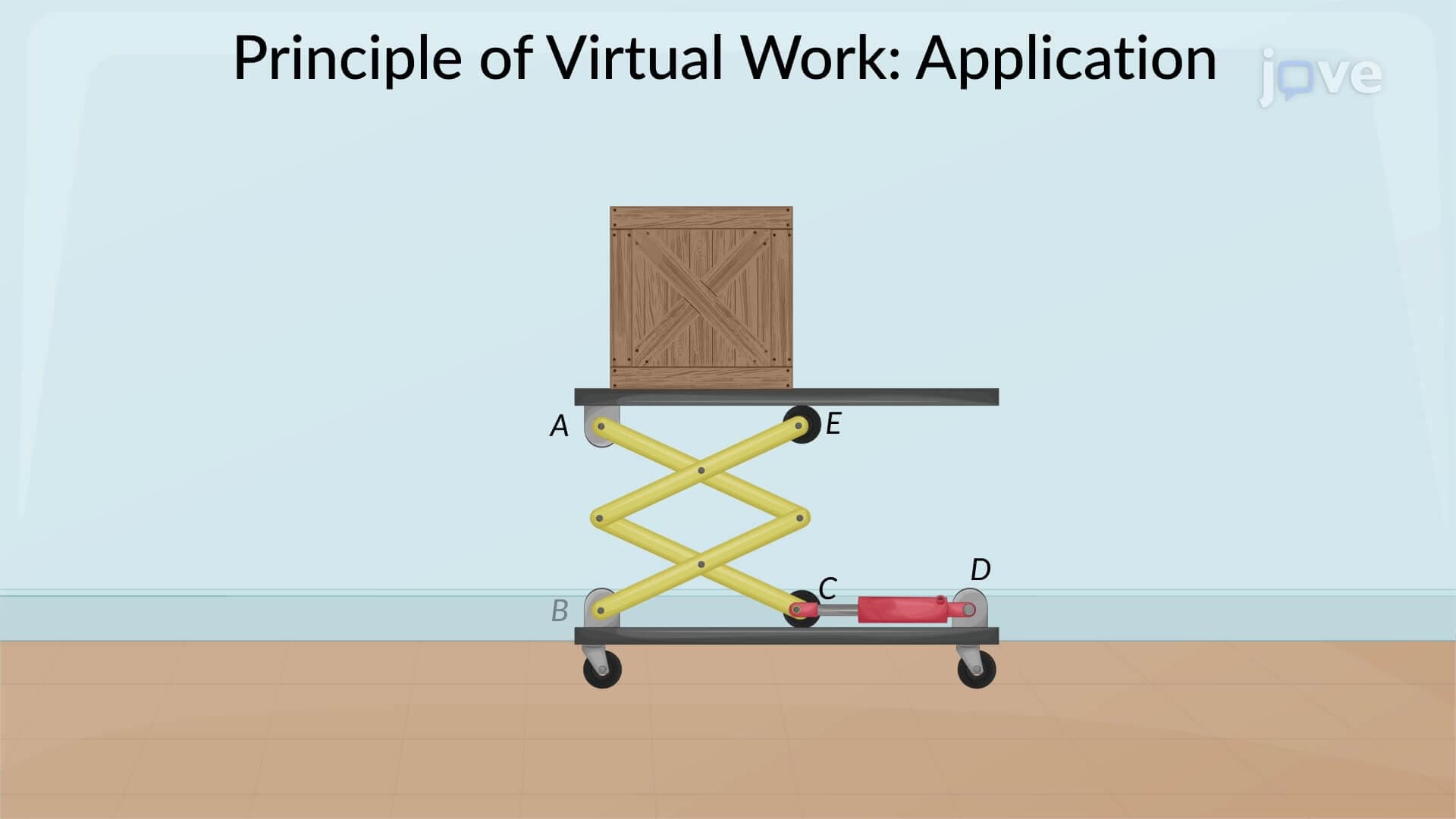

Video Summary: Virtual Work for a System Explained
Ever wonder how engineers design car jacks that can lift thousands of pounds with minimal effort? Virtual work for a system reveals the elegant physics behind mechanical advantage in connected rigid bodies. This principle helps solve complex problems involving multiple forces acting on interconnected parts, like the toggle vise used in machine shops across manufacturing facilities from Detroit to Silicon Valley. Virtual Work For A System Explained demonstrates how setting total virtual work to zero unlocks powerful problem-solving techniques. Watch the full video on JoVE Coach to master this concept with expert-led visuals and step-by-step explanations.
Virtual work for a system extends beyond single rigid bodies to analyze complex mechanical assemblies. When multiple components connect through joints, pins, or linkages, traditional force analysis becomes cumbersome. The virtual work principle elegantly handles these situations by focusing on energy relationships rather than individual force components.
Consider automotive brake systems used in Ford or General Motors vehicles. Multiple linkages transfer pedal force to brake pads through a series of connected rigid bodies. Virtual work analysis determines the mechanical advantage without tracking every internal force, making design calculations more efficient for engineers.
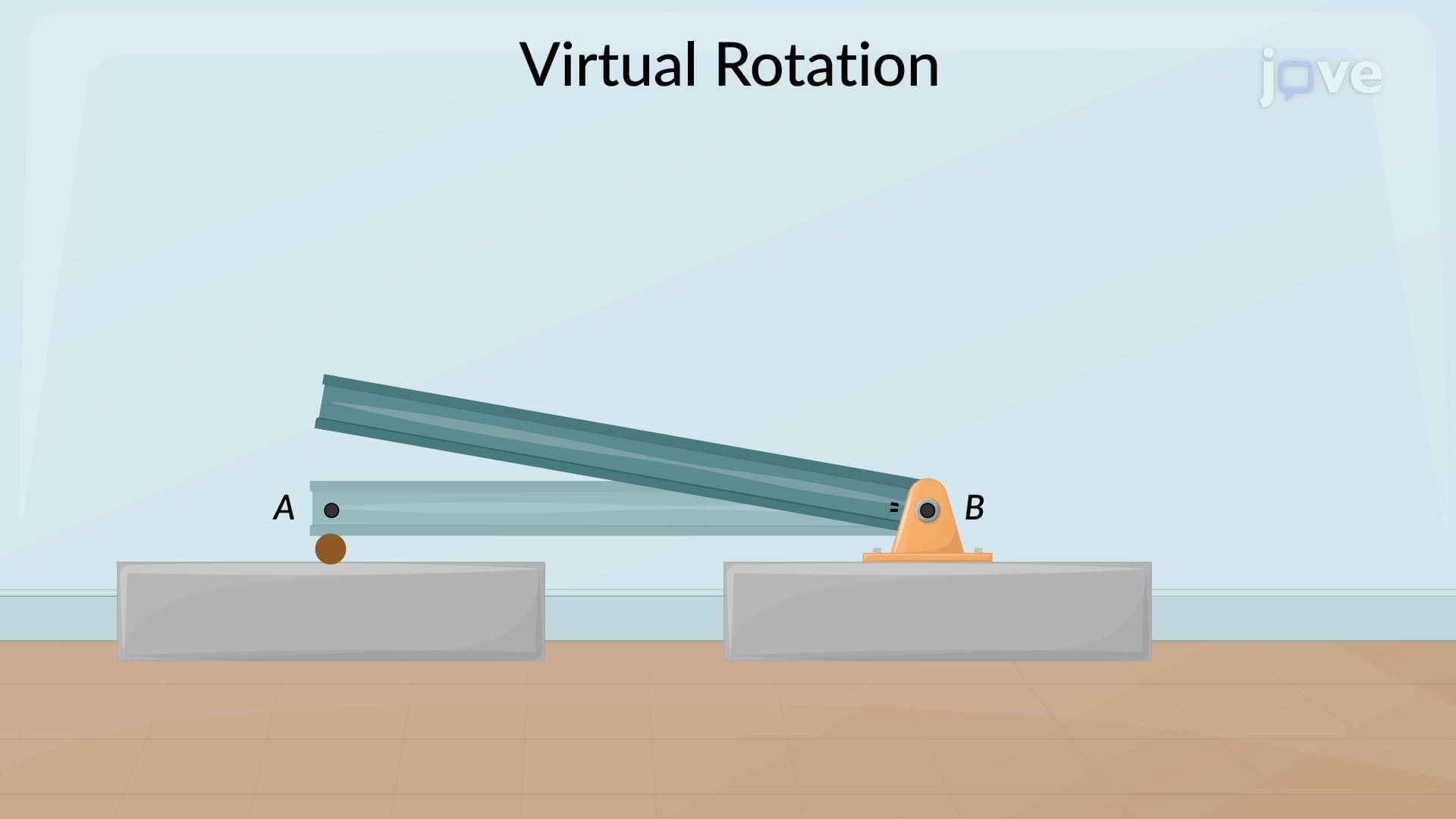
Virtual work for a system tutorial begins with selecting appropriate coordinate systems and defining positive displacement directions. Unlike actual motion, virtual displacements represent infinitesimally small, imaginary movements that maintain system constraints. These displacements help identify which forces perform work and which remain perpendicular to motion.
The toggle vise example demonstrates this concept clearly. Pin reactions at fixed supports do no work because they're perpendicular to virtual displacements. Only forces aligned with displacement directions contribute to the virtual work equation, simplifying calculations significantly.
How virtual work for a system works mathematically involves expressing position coordinates in terms of a single parameter (often an angle), then differentiating to find displacement relationships. This technique, taught in engineering mechanics courses at universities like MIT and Stanford, transforms complex geometry into manageable algebraic expressions.
For AP Physics C students preparing for mechanics exams, mastering this approach proves invaluable. The method appears frequently on college-level statics and dynamics assessments, particularly in mechanical and civil engineering programs.
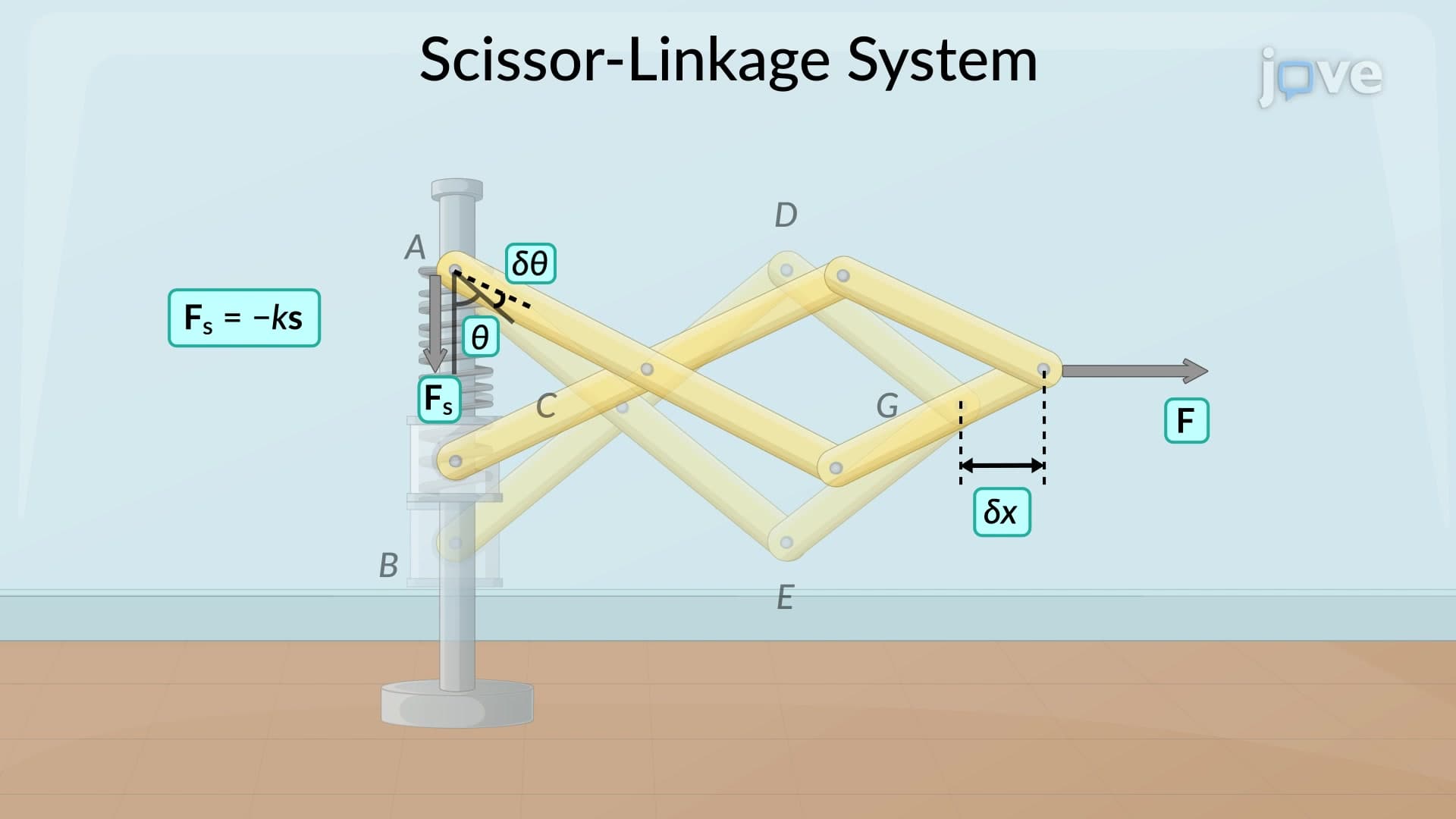
Virtual work for a system concept finds extensive use in designing mechanical advantage devices. Scissor lifts used in construction, plier mechanisms in manufacturing tools, and robotic arm joints all rely on these principles. Understanding force relationships helps engineers optimize designs for maximum efficiency while ensuring structural safety.
Students studying for MCAT physics sections or engineering entrance exams benefit from recognizing these patterns. The principle connects theoretical mechanics with real-world applications, making abstract concepts more tangible and memorable for exam success.
Related Micro-courses