Loading subject page…


141,005 views

Video Summary: What Is Sexually Transmitted Infections
Did you know that over 26 million new sexually transmitted infections biology cases occur annually in the United States, with young adults aged 15-24 accounting for nearly half of all infections? Understanding what are sexually transmitted infections reveals how these diseases affect millions of Americans through various bacterial, viral, and parasitic pathogens that target different body systems. From common bacterial infections like chlamydia affecting college students nationwide to complex viral infections like HIV that impact immune function, these biological interactions demonstrate critical concepts in microbiology and human health. Watch the full video on JoVE Coach to master this concept with expert-led visuals and step-by-step explanations.
Sexually transmitted infections biology encompasses the study of diverse microorganisms that specifically target human reproductive and urogenital systems. These pathogens have evolved sophisticated mechanisms to survive in intimate human contact environments, making them particularly effective at spreading through sexual activity. In the United States, the CDC reports that STIs represent one of the most pressing public health challenges, with economic costs exceeding $16 billion annually in direct medical expenses.
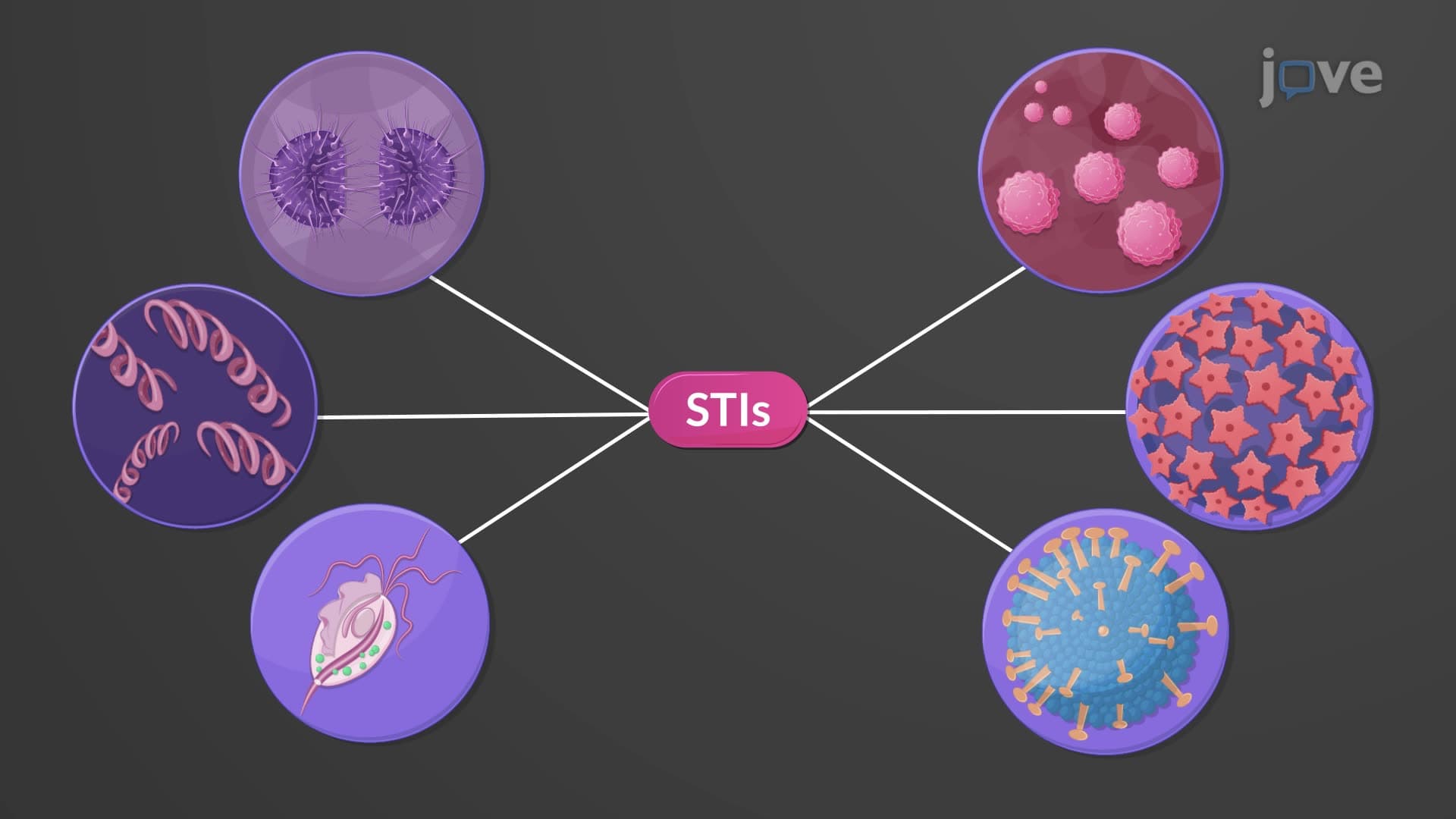
Bacterial sexually transmitted infections demonstrate classic principles of microbial pathogenesis taught in AP Biology and college microbiology courses. Chlamydia gonorrhea STI represents two of the most common bacterial infections affecting American students and young adults. Chlamydia trachomatis operates as an obligate intracellular pathogen, meaning it can only survive and reproduce inside host cells. This bacterium specifically targets columnar epithelial cells in the urogenital tract, causing urethritis in males and potentially leading to pelvic inflammatory disease (PID) in females.
Neisseria gonorrhoeae, the causative agent of gonorrhea, employs different virulence mechanisms. This gram-negative diplococcus attaches to mucosal surfaces using specialized pili and can rapidly develop antibiotic resistance-a growing concern in U.S. healthcare settings. Students preparing for the MCAT should understand how these bacteria evade immune responses and cause tissue inflammation.
Treponema pallidum, causing syphilis, represents perhaps the most complex bacterial STI. This spirochete can cross tissue barriers and spread systemically, potentially affecting cardiovascular and nervous systems. Historical cases like the Tuskegee Study highlight the importance of understanding syphilis progression in American medical education.
Herpes HPV STI type infections demonstrate key virology concepts essential for pre-med students. Herpes simplex virus (HSV) establishes latent infections in nerve ganglia, periodically reactivating to cause recurrent symptoms. This viral persistence mechanism appears frequently on USMLE Step 1 examinations.
Human papillomavirus (HPV) represents over 100 different viral strains, with certain high-risk types linked to cervical cancer development. The introduction of HPV vaccines in American schools demonstrates practical applications of immunology principles taught in college biology courses.
HIV AIDS sexually transmitted infections showcase complex retroviral biology. HIV's ability to integrate into host cell DNA and target CD4+ T cells illustrates advanced molecular biology concepts covered in upper-level undergraduate courses and medical school curricula.
Trichomonas vaginalis infections demonstrate eukaryotic parasite biology, contrasting with bacterial and viral pathogens. Understanding STI transmission prevention requires knowledge of pathogen-specific characteristics and host-pathogen interactions fundamental to public health approaches taught in American universities.
Related Micro-courses