Loading…
Loading video…

1,181,000 views
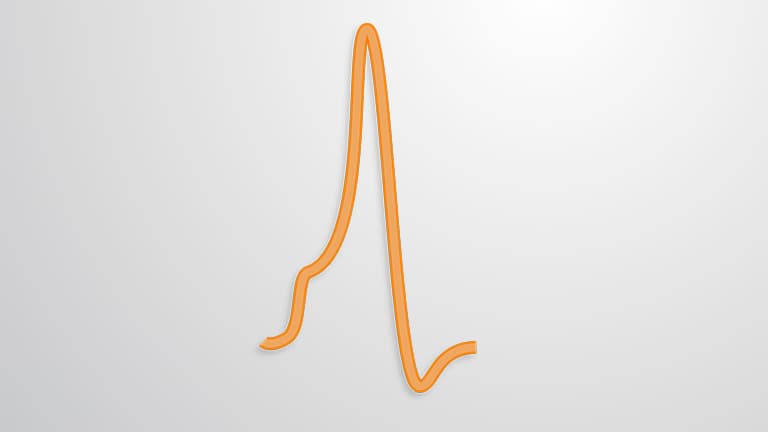
Ever wonder how your brain signals your hand to pull away from a hot stove in milliseconds? Action potentials are the electrical "lightning bolts" that make this possible, transmitting nerve signals at speeds up to 120 meters per second. These rapid changes in electrical charge across neuron membranes—from -70mV to +40mV and back—are how your nervous system communicates everything from reflexes to complex thoughts. Consider that every time you text a friend, millions of action potentials fire across your brain and down your spinal cord to coordinate precise finger movements. Watch the full video on JoVE Coach to master this concept with expert-led visuals and step-by-step explanations.
Action potentials represent one of biology's most elegant electrical phenomena—rapid, self-propagating changes in voltage across neuron membranes that enable everything from basic reflexes to complex cognitive functions. Unlike simple electrical circuits, neurons generate these signals through sophisticated biological machinery involving ion channels, concentration gradients, and membrane properties that have been fine-tuned through millions of years of evolution.
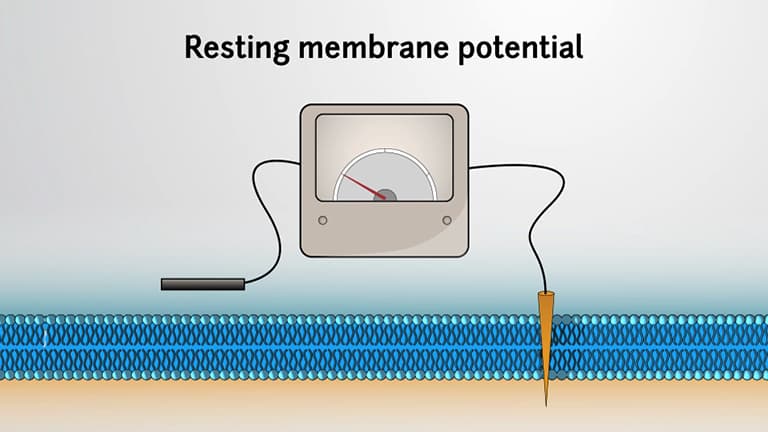
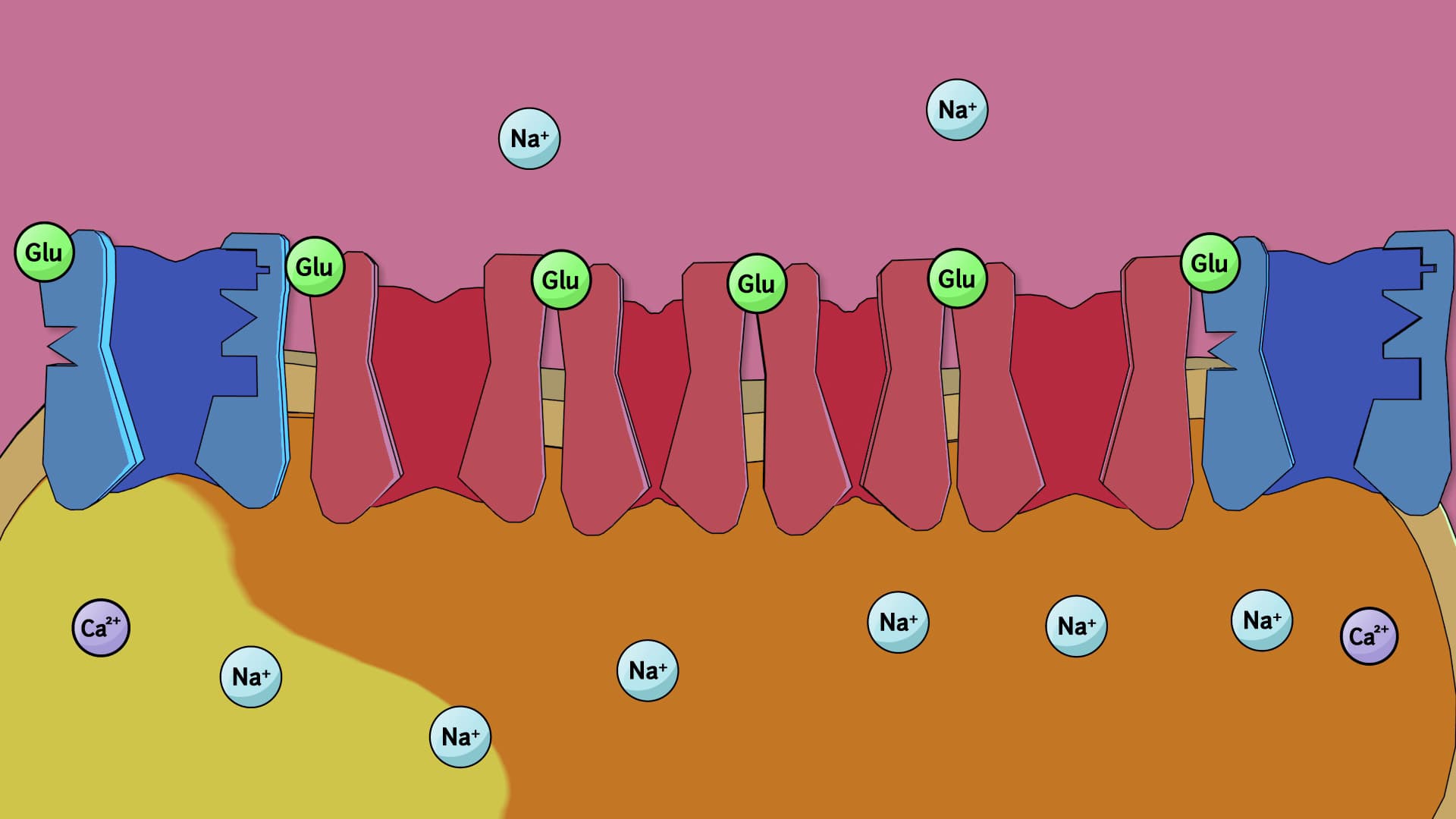
Neurons maintain a resting potential of approximately -70 millivolts, established primarily by the sodium-potassium pump that continuously exports three sodium ions while importing two potassium ions. This creates an electrochemical environment where sodium concentrations remain roughly 10 times higher outside the cell, while potassium concentrations are about 30 times higher inside. When neurotransmitters or other stimuli cause the membrane potential to reach threshold (typically around -55mV), voltage-gated sodium channels snap open like molecular floodgates.
The resulting sodium influx drives membrane potential rapidly toward +40mV—a swing of over 100 millivolts occurring in just 1-2 milliseconds. This dramatic depolarization phase is followed by sodium channel inactivation and potassium channel opening, which repolarizes the membrane. The process briefly overshoots resting potential during the hyperpolarization phase, creating a refractory period that prevents immediate re-firing and ensures unidirectional signal propagation.
Understanding action potentials proves crucial for students pursuing healthcare careers, as these mechanisms underlie numerous medical conditions and treatments. Local anesthetics like lidocaine work by blocking sodium channels, preventing action potential generation in pain neurons. Epilepsy involves abnormal action potential firing patterns, while multiple sclerosis damages myelin sheaths that normally speed action potential conduction through saltatory jumping between nodes of Ranvier.
For AP Biology and college neuroscience courses, action potentials serve as excellent examples of structure-function relationships, feedback mechanisms, and bioelectricity. MCAT questions frequently test understanding of ion gradients, channel kinetics, and conduction velocity relationships. Students should focus on connecting molecular mechanisms (channel behavior) to physiological outcomes (signal speed and reliability) to succeed on standardized exams.
Frequently Asked Questions
Action potentials are rapid electrical signals that neurons use to communicate over long distances, involving a quick change from -70mV to +40mV and back. They're essential because they allow your nervous system to transmit information reliably and quickly—from sensory input about touching something hot to motor commands that pull your hand away. Without action potentials, complex behaviors, reflexes, and even basic life functions like breathing and heartbeat regulation would be impossible.
AP Biology often includes action potential questions in multiple choice and free response sections, focusing on membrane potential changes, ion movement, and channel function. Expect to analyze graphs showing voltage changes over time, explain the roles of sodium and potassium channels, or predict how drugs affecting ion channels would alter signal transmission. Practice connecting molecular mechanisms to physiological outcomes and understanding experimental design questions involving action potential research.
MCAT Biology sections frequently test action potentials alongside topics like membrane transport, electrochemistry, and nervous system organization. You'll need to understand concentration gradients, electrical potential energy, and how structure relates to function in ion channels. Physics concepts like capacitance and current flow also appear in action potential contexts, making this an interdisciplinary topic that bridges biology and physical sciences sections.
Action potential dysfunction underlies many common neurological conditions treated in US hospitals and clinics. Multiple sclerosis affects myelin sheaths, slowing action potential conduction and causing symptoms like muscle weakness and coordination problems. Epilepsy involves abnormal action potential firing patterns, while peripheral neuropathy from diabetes damages neurons' ability to generate proper action potentials, leading to numbness and pain in extremities.
Basic algebra and graph interpretation skills are sufficient for understanding action potentials at the high school and introductory college level. You'll work with simple voltage measurements, time scales, and concentration ratios rather than complex calculus or advanced physics equations. The most important math involves reading voltage-time graphs and understanding proportional relationships between ion concentrations and electrical driving forces.
Create a step-by-step flowchart showing the action potential sequence: resting state → threshold → depolarization → repolarization → hyperpolarization → return to rest. Practice drawing voltage-time graphs from memory and explaining what happens to sodium and potassium channels at each phase. Use active recall by covering parts of diagrams and testing yourself on ion movements, channel states, and voltage values.
Action potentials connect to virtually every aspect of neuroscience, from synaptic transmission (where action potentials trigger neurotransmitter release) to muscle contraction (where motor neuron action potentials activate muscle fibers). Understanding action potentials provides the foundation for studying sensory systems, reflexes, brain function, and neurological disorders. They're also crucial for understanding how medications affecting the nervous system work at the cellular level.
Myelinated axons use saltatory conduction, where action potentials "jump" between nodes of Ranvier rather than traveling continuously along the membrane. This dramatically increases conduction speed because the signal only needs to regenerate at widely-spaced nodes (about every 1-2 millimeters) rather than at every point along the axon. Think of it like express train stops versus local stops—fewer regeneration points means much faster overall signal transmission.
Related Micro-courses
Related Subjects