Loading subject page…

- Chemistry
- Acids and Bases
- Polyprotic Acids
Micro-course: Acids and Bases
641,500 views
Learn key concepts and earn your certificate.



Polyprotic Acids

00:00
03:38
Video Summary: What are Polyprotic Acids
Ever wonder why citric acid in lemonade tastes so sour compared to vinegar? Polyprotic acids like citric acid can donate multiple protons, creating more complex pH behaviors than simple acids. Unlike monoprotic acids such as hydrochloric acid found in stomach acid, polyprotic acids undergo sequential ionization steps, each with distinct equilibrium constants. Phosphoric acid in Coca-Cola exemplifies this concept with its three ionizable protons. Watch the full video on JoVE Coach to master this concept with expert-led visuals and step-by-step explanations.
- Understand what are polyprotic acids and distinguish them from monoprotic acids based on the number of ionizable protons
- Identify types of polyprotic acids including diprotic (sulfuric acid) and triprotic (phosphoric acid) examples
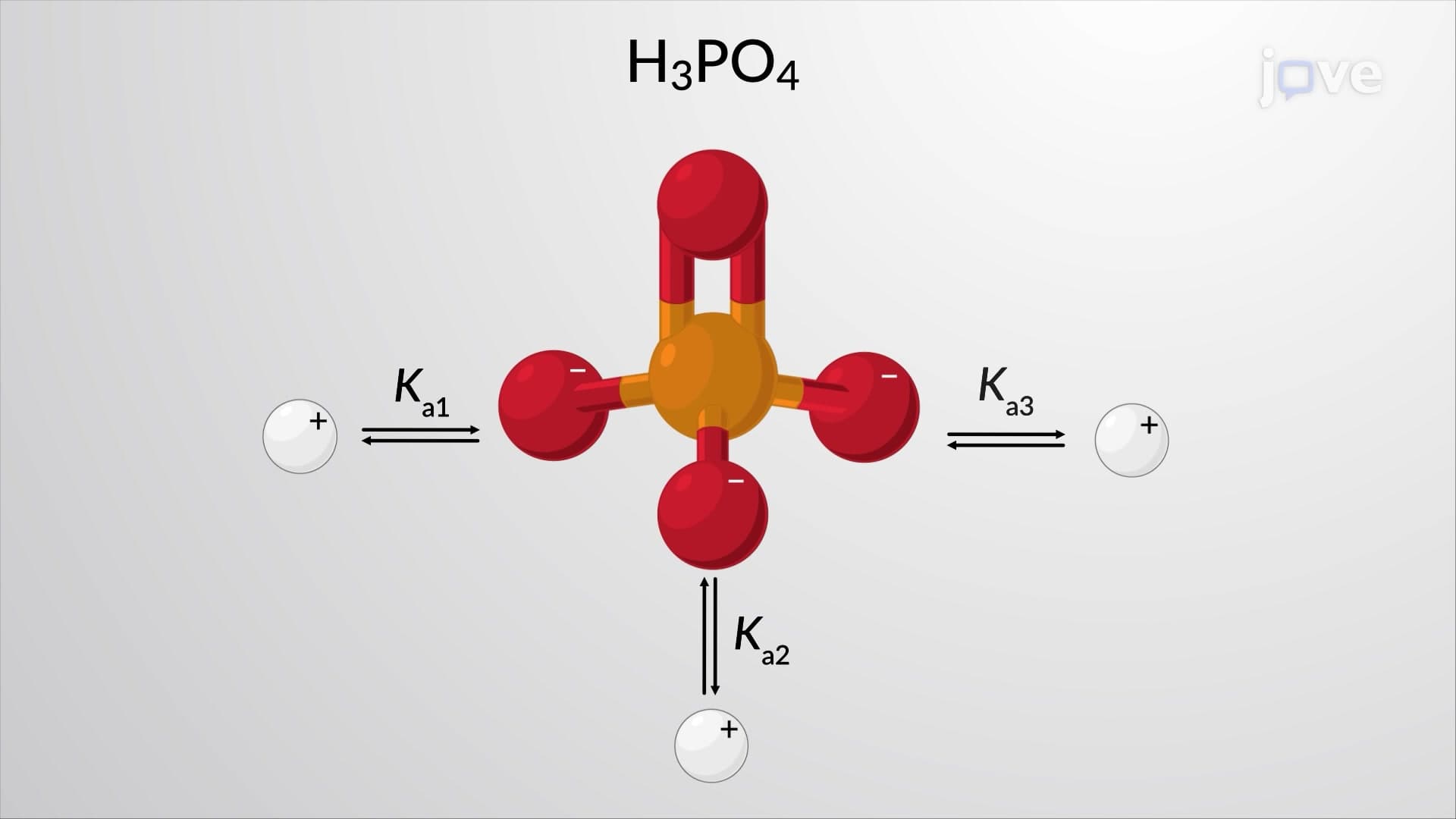
- Analyze the sequential ionization process and why Ka1 > Ka2 > Ka3 for polyprotic acid dissociation
- Compare the relative magnitudes of successive acid dissociation constants and their underlying chemical reasons
- Apply ICE tables and equilibrium expressions to calculate pH of polyprotic acid solutions
- Evaluate when the first ionization step dominates pH calculations using the 1000:1 rule
- Recognize real-world applications of polyprotic acids in food chemistry, industrial processes, and biological systems
- Explore how electrostatic effects influence proton removal difficulty in charged species
Understanding What are Polyprotic Acids
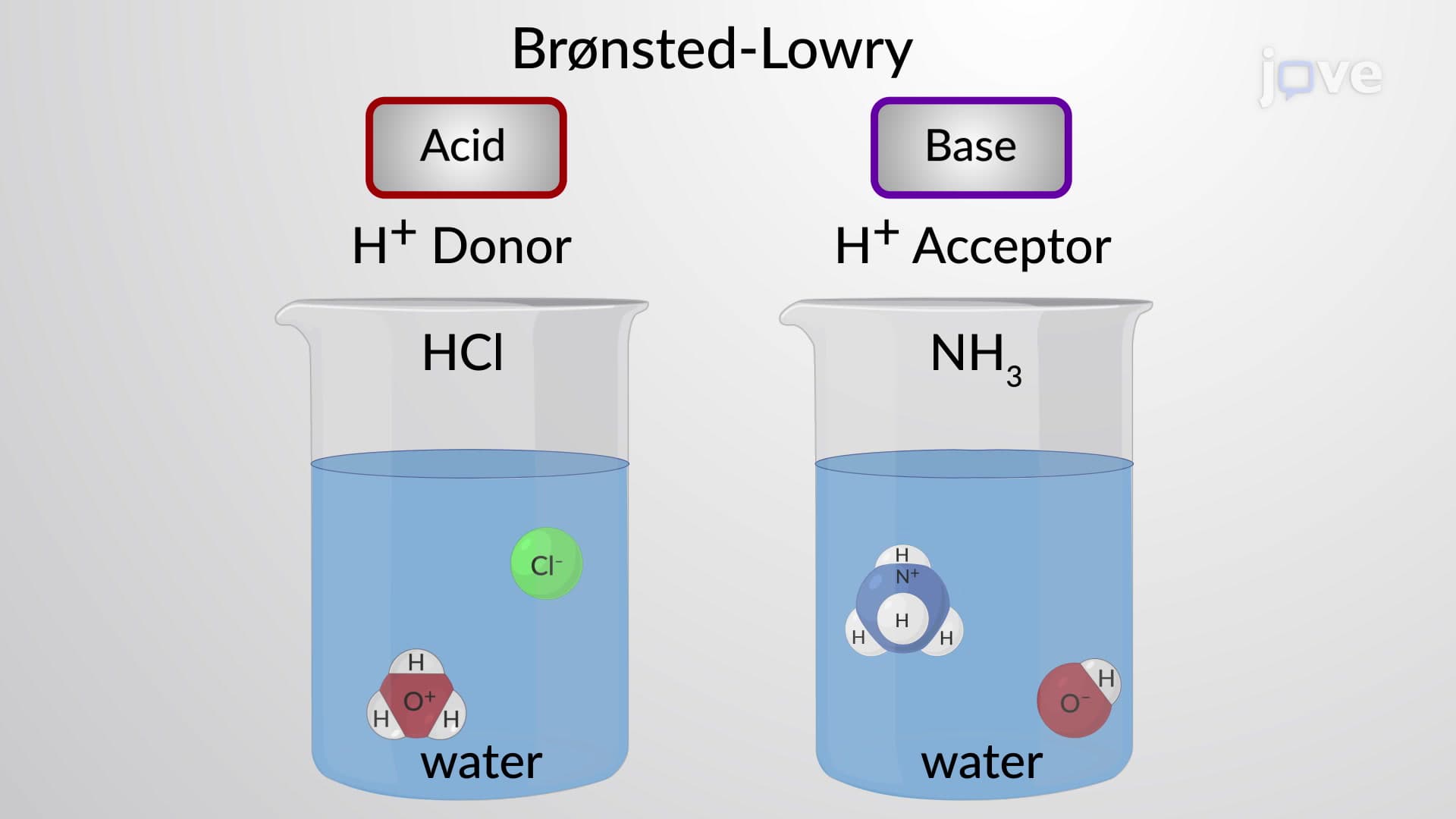
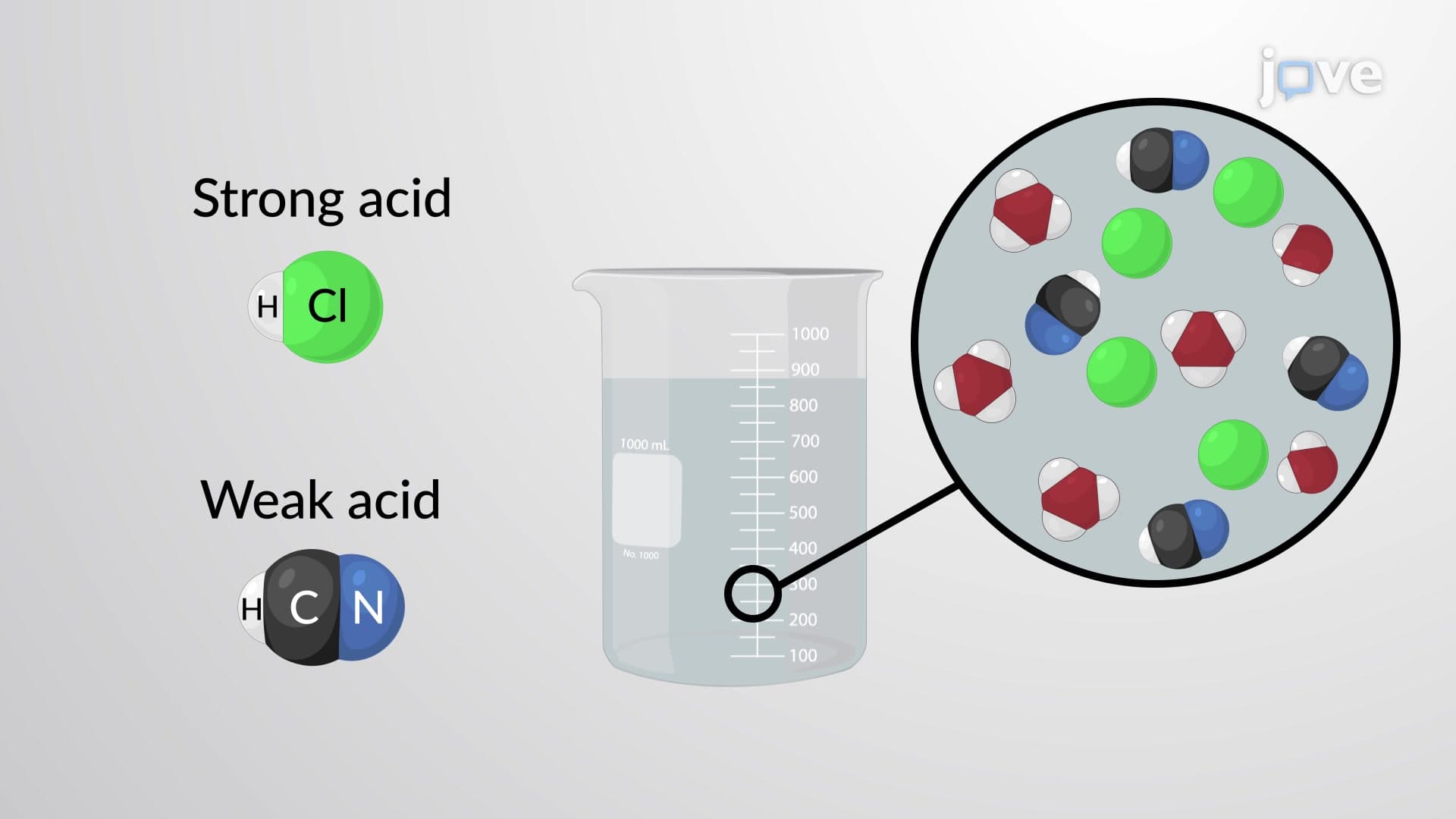
Polyprotic acids represent a fascinating class of compounds that can donate multiple protons (H⁺ ions) in aqueous solution. Unlike their simpler monoprotic counterparts such as hydrochloric acid (HCl), these acids undergo multiple, sequential ionization steps. This behavior creates complex acid-base chemistry that appears frequently in AP Chemistry exams and college-level analytical chemistry courses.
The fundamental distinction lies in molecular structure. While acetic acid (found in household vinegar) contains only one ionizable hydrogen, sulfuric acid (H₂SO₄) possesses two, and phosphoric acid (H₃PO₄) contains three. This structural difference profoundly impacts their solution chemistry and practical applications.
Types of Polyprotic Acids and Sequential Ionization
Types of polyprotic acids are classified by the number of ionizable protons they contain. Diprotic acids like carbonic acid (H₂CO₃) in carbonated beverages undergo two ionization steps, while triprotic acids such as citric acid in citrus fruits can release three protons sequentially.
Each ionization step occurs with decreasing ease, represented by progressively smaller acid dissociation constants: Ka1 > Ka2 > Ka3. This pattern results from electrostatic effects—removing a positively charged proton becomes increasingly difficult as the remaining ion accumulates negative charge. For phosphoric acid used in rust removal products, Ka1 = 7.5 × 10⁻³, Ka2 = 6.2 × 10⁻⁸, and Ka3 = 4.8 × 10⁻¹³.
Calculating pH of Polyprotic Acid Solutions
The mathematical treatment of polyprotic acid pH calculations often simplifies significantly. When Ka1 exceeds subsequent dissociation constants by factors of 1000 or more, the first ionization step dominates the solution's pH. This approximation proves invaluable for MCAT preparation and college chemistry problem-solving.
Consider ascorbic acid (vitamin C) with Ka1 = 8.0 × 10⁻⁵ and Ka2 = 1.6 × 10⁻¹². Since Ka1/Ka2 > 1000, pH calculations can focus solely on the first dissociation step using standard ICE table methodology.
Real-World Applications and Exam Relevance
Polyprotic acids appear extensively in biological systems, industrial processes, and environmental chemistry. Carbonic acid regulates blood pH through bicarbonate buffering systems, while sulfuric acid serves as a key industrial chemical in battery acid and fertilizer production. Understanding these concepts proves essential for success on standardized exams including the MCAT, AP Chemistry exam, and college placement tests, where polyprotic acid calculations frequently appear in equilibrium and pH-related questions.
Frequently Asked Questions
Polyprotic acids are compounds that can donate two or more protons (H⁺ ions) in solution, unlike monoprotic acids which donate only one. Examples include sulfuric acid (diprotic) and phosphoric acid (triprotic), while hydrochloric acid is monoprotic. This difference creates multiple ionization steps with distinct equilibrium constants, making their solution chemistry more complex.
Common polyprotic acids on AP Chemistry include carbonic acid (H₂CO₃), sulfurous acid (H₂SO₃), phosphoric acid (H₃PO₄), and ascorbic acid (vitamin C). You'll need to identify their ionization steps, write equilibrium expressions, and calculate pH values using ICE tables. These problems often appear in free-response questions worth significant points.
For MCAT success, master the 1000:1 rule—when Ka1 is at least 1000 times larger than Ka2, focus only on the first ionization step. Set up ICE tables using the dominant Ka value, make appropriate approximations, and solve for [H⁺]. This strategy saves time and reduces calculation errors on test day.
Polyprotic acids form the foundation for understanding buffer systems, titration curves, and complex equilibria in advanced chemistry. They appear in pharmaceutical analysis, environmental monitoring, and biochemical research. Mastering these concepts prepares students for graduate-level coursework and professional laboratory work.
Polyprotic acids are everywhere in daily life! Citric acid gives citrus fruits their tartness and acts as a preservative in processed foods. Carbonic acid creates the fizz in sodas and regulates your blood pH. Phosphoric acid appears in cola drinks and rust removal products, while ascorbic acid (vitamin C) prevents scurvy and acts as an antioxidant.
No advanced mathematics is required—just solid algebra skills and systematic problem-solving approaches. Most calculations involve quadratic equations that simplify through approximations, making them manageable for high school and early college students. Practice with ICE tables and equilibrium expressions builds confidence quickly.
Focus on understanding patterns rather than memorizing specific values. Remember that Ka1 > Ka2 > Ka3 always holds true, with ratios often differing by factors of 10³ to 10⁶. Create flashcards linking common acids to their applications (phosphoric acid in colas, carbonic acid in blood), which helps recall during high-pressure exam situations.
Progress to polyprotic acid titrations, buffer systems involving polyprotic species, and amino acid zwitterion behavior. These topics bridge general chemistry with biochemistry and analytical chemistry, preparing you for advanced coursework in chemical engineering, biochemistry, or pre-medical studies.
Related Micro-courses